
What We All Saw by Mike Lucas
Inside the CBCA Shortlist
Inside the 2023 CBCA Shortlist
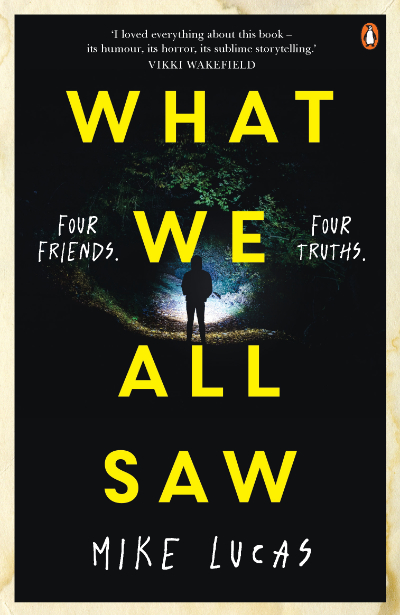
What We All Saw by Mike Lucas (published Penguin Random House Australia)
What We All Saw is a high-stakes tale of friendship, risk and danger. It is well balanced with thought-provoking themes. It defies genres but could be described as literary horror. It is atmospheric, gripping and contains a well-constructed mise-en-abyme, a story within a story. It is shortlisted in the CBCA 2023 Book of the Year Older Readers category.
Author Interview with Mike Lucas:
“‘Well, sooner or later,’ said Shell, ‘somebody is going to put two and two together and realise that nobody has seen him since that afternoon at the river.’
‘None of us saw him after that,’ said Gray. ‘Remember that.’ But there was no vehemence in his voice, no warning to us all. there was just a resignation that, at some point in the near future, we were all going to have to face some kind of music. What the song was depended on our ability not only to sing, but to sing the same tune.” (What We All Saw)
Thank you for speaking to PaperbarkWords, Mike.
Where are you based and what is your background in the book industry, and specifically in children’s book? What have you written?
I live in Adelaide, where I work full time as an engineer. I also own a bookshop, which is run by my wife, Becky. I started writing silly poetry to my children when they were small and self-published a few poetry anthologies. I’ve written several picture books, including Olivia’s Voice, Vanishing and Let’s Build a House. I have more picture books and a second YA novel due for release in 2023 and 2024.
What We All Saw is your debut YA novel and it is CBCA shortlisted! There are many good things in this book but what about it do you think impressed the judging panel?
I think the authenticity of the characters and the story as a whole went a long way towards it becoming shortlisted. Despite it being a horror novel, which is really a form of fantasy, I wanted the setting, the characters, their actions and motivations to be as believable as possible. The book deals with some real social and human issues, but there are also some fun interactions between the children.
Who is your intended readership?
This book is written for anybody twelve and above. There are some scenes and themes which could upset younger children, but I started reading Stephen King at eleven. So I think every child should be treated individually, and some younger children would be okay with the story. Adults will also enjoy this book, especially if they grew up in the Seventies.
How does the cover of What We All Saw match your vision of the novel?
I loved the cover the moment I saw it. The lone individual shining a light into the dark wood is fabulous, and the font used for my name is classic horror. It represents the mystery and fear of the unknown that I wanted to capture in the story.
Why have you set the story in 1970s England?
I grew up in England in the 1970s and used to disappear in the woods for hours on end with my friends. There was always a fear of being left there after dark. Especially alone. So I wrote about what I knew. And what I feared.
Please briefly introduce us to your protagonists.
Sam – the narrator and, he likes to think, the more level-headed one. He tries, not always successfully, to be a peacemaker.
Gray – the rebel, risk taker and friend you need to have around when trouble calls. From a broken family and reluctant to show any weakness.
Shell – the voice of reason and the glue that sticks them all together. She has been blind since birth, but doesn’t let it hold her back.
Charlie – the storyteller. Questions everything and proceeds with caution. More emotional than the others.
Could you please elaborate on the relationship between two of these characters?
Gray and Shell. Gray will always protect his friends from outside forces. But he won’t let them control him in any way and can be known to cause trouble within the group, especially with Charlie. Shell is the only one who can take him down a peg and bring him back in line. And Gray appears to respect her for that.
How does bravado influence the characters’ actions?
Gray, in particular, puts on a hard exterior, mainly due to his upbringing. He doesn’t at first appear to fear anything, but there are times when Sam, as narrator, sees through to the more vulnerable Gray underneath. It’s a shared bravado that gets three of them to walk to the very edge of Hags Drop and takes them all to the old manor house. And though Charlie stays back from the edge of the quarry, he is the only one brave enough to own up to his fears.
‘I admit it. It freaks me out. If you want somebody to own up to being the coward in our gang, I’ll do it.’ Which, ironically, looking back, was the bravest thing I ever heard any of my friends say.
What is so terrifying about the novel’s setting and occurrences?
I had a childhood fear of witches and always had this image of a witch creeping up the stairs to take me away. I tried to project this fear into the story in as realistic way as possible and to have the characters, who are old enough to know better, come to believe that witches (the iconic Wizard of Oz representation) really exist. A large part of the story takes place in the woods, where many children would fear being after dark. And it wasn’t until I was a good way into the story that I remembered playing around a deserted old manor house (I thought it was my imagination until I Googled Leigham Manor). This house became an important, very creepy setting toward the end of the book.
What imagery or symbolism runs throughout the book and how have you employed this?
As well as some of the settings (dark woods, old manor house) Sam has dark dreams following his injury, where the witch is climbing up the cliff of the quarry toward him. Each time he has this dream, the witch is closer, as is the answer to the mystery faced by the children. The image of the witch, real or imagined (no plot spoilers here) is crucial to how the fears of the children play out in the book. And the whole story symbolises how we manage the truth and fiction behind folklore and tales handed down over long periods of time.
How have you told a story within a story?
There are a few examples of the story within a story. The first is mostly unrelated to the overall tale being told but serves to instil fear into the readers, some of the characters listening and even Charlie, the storyteller. Other stories are based on some of the characters’ recollections of past events or tales that have been handed down. We’ve all heard or read stories; we all have a history and we all have tales we can tell. How close to the truth these stories are when we retell them depends on our own ability to remember them and our willingness to stick to the original. But most of the time, they will change on every telling.
What impact has What We All Saw being made a notable book and now shortlisted for the 2023 CBCA Book of the Year: Older Readers had on you or the book?
It has definitely heightened my profile within the writing industry and on social media. And also increased my confidence and motivation. A lot of creators suffer from impostor syndrome especially if, like me, they’ve never studied literature or creative writing. The book has also had a couple of reprints and received a beautiful, shiny sticker.
What have you been reading that you would like to recommend?
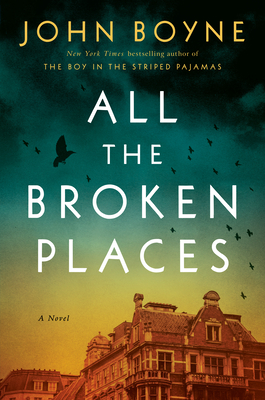
I’ve just finished reading All the Broken Places by one of my favourite authors, John Boyne. I’m also reading The Call of Cthulhu and Other Tales by H P Lovecraft and reading Danse Macabre by Stephen King. A lot of light, jolly reading there.
What are you writing next?
I’m currently working on rewriting a third novel and am always working on picture book ideas.

How would you like readers to contact you?
Either on social media (Facebook or Instagram) under mikelucasauthor, or email me at info@mikelucas.com.au
Thank you for answering these questions in such an interesting way, Mike, and congratulations and all the best with What We All Saw and your other books.
What We All Saw at Penguin Random House Australia

 paperbarkwords.blog
One thought on “What We All Saw by Mike Lucas”