

Honey and the Valley of Horses by Wendy Orr
(published by Allen & Unwin)
Wendy is the acclaimed author of many books for different age-groups throughout childhood to young adult.
Personal favourites are her Ancient Crete trilogy: Dragonfly Song (winner of a Prime Minister’s Literary Award – of which I was a judge!), Swallow’s Dance and Cuckoo’s Flight; Peeling the Onion; Ark in the Park; the picture book Arabella (illustrated by Kim Gamble) and of course Nim’s Island and Return to Nim’s Island (both also celebrated movies).

Canadian-born, long-time resident of Australia, Wendy writes with intelligence, authenticity and heart. She is a fine writer and one of our national treasures.
Thank you for speaking to Joy in Books at Paperbark Words blog about your wonderful new middle-fiction book, Honey and the Valley of Horses, Wendy.
This article is a beautiful piece that explores experiences of dark times lifted by glimmers of light in between.
Guest Author Post by Wendy Orr
Honey and the Valley of Horses
In the mountains there was a valley, and in the valley were the horses.
I don’t know how long ago this phrase floated into my mind. I knew it had a story, but it took me several years to find it – probably because it was easy enough to see the light (at least for someone like me, who associates mountains, valleys and horses with joy), but I didn’t know what the darkness was. And as we all know, a story of peace and joy with no problem to overcome is no story at all. Nice place to be in, terrible story.
Then life, as it does, came up with the story’s conflict: the pandemic, lockdown, and the pervasive, insidious fear that came with them. I felt that the full extent of it didn’t truly become apparent until the world started opening up a little, at the end of 2020 (of course we didn’t know then that, especially in the Melbourne metropolitan area, which we had unexpectedly learned we were part of, that lockdown would also take up much of 2021)
Our son, daughter-in-law and their two nine months and two and a half year-olds, moved in with us for most of that first year of lockdown. We were all aware, not only of the toddlers shyness and overwhelm around strangers, but that these uncertainties were now the norm. As schools began to reopen, neighbours expressed their fears, some deciding to continue home-schooling, others struggling with their children’s fears of leaving the home to attend. And the more honest we were, the more we realised that we all had to face our own fears as well. The outside world had become a threat, and it was difficult to convince ourselves that it was safe again.
On the other hand, there’d been a lot of joy in that year of togetherness. If I had to choose an image to encapsulate it, it would be my daughter-in-law and I sharing a smile over the head of the baby between us, as we watched him learn to sit, crawl, walk and begin to talk. For my husband it would be lying on the bed sharing Peppa Pig with the bouncy three year-old. To remind ourselves of how lucky we all were, we introduced that bouncy three year-old to a dinnertime ritual of choosing the day’s favourite things – a habit that I gave to Honey’s family. I imagined them creating traditions to build as normal a life as possible in their extraordinary circumstances.
I never know exactly how different story ideas begin to fuse but somehow it became clear that this was the story that belonged to the valley of horses. I said to my publisher, ‘Think Nim’s Island with horses,’ but as it took shape, I saw that although I hope it has the same sense of wonder, self-reliance and union with the natural world, the two stories’ conflicts were diametrically opposed.
Like Nim and her father, Honey’s family flee the world to recover from grief and end up in an idyllic environment. Their self-sufficient ways of life are quite similar; the difference is all in the choice – the freedom to leave. Nim and her father, who have the means to communicate with the outside world and a boat that would take them to it, will do anything to stay there and defend their paradise.
Honey’s family wander into their beautiful valley without any intention of staying permanently. It’s the valley itself – or perhaps the horses – that prevent them from leaving or communicating with the world outside. The question keeps looming: Is it really paradise if you can’t get out?
I first envisaged this story in a northern European, Grimms fairytale forest, but as it took shape it turned into a very different landscape. Many years ago, my husband and I were utterly entranced by the Maleny rainforest on the Sunshine Coast hinterland in Queensland. Later, visiting the filming of Return to Nim’s Island, I fell in love with Mt Tamborine, on the Gold Coast hinterland. With a few touches of magic realism, the valley grew from these two places.
Although our son’s family moved out on New Year’s Eve, 2020, life remained tumultuous throughout the writing of this book. I formalised the synopsis the week my father died; my mother died while I was working on structural edits (I’m grateful that she had time to read a fairly final draft). There were a ridiculous number of other traumas and illnesses in between – including a mini-tornado that ripped out 80 eucalypts to make a wide laneway through our bush. In our shock and horror, there was one literal glimmer of light, when we realised we could now see the sunset. That bit of joy led me to modify the event for the family in the bush.
And so, even as life lurched from one disaster to another throughout this time, in between I was able to find consolation and joy in my story. I hope that it provides the same for my readers.
Honey and the Valley of Horses at Allen & Unwin
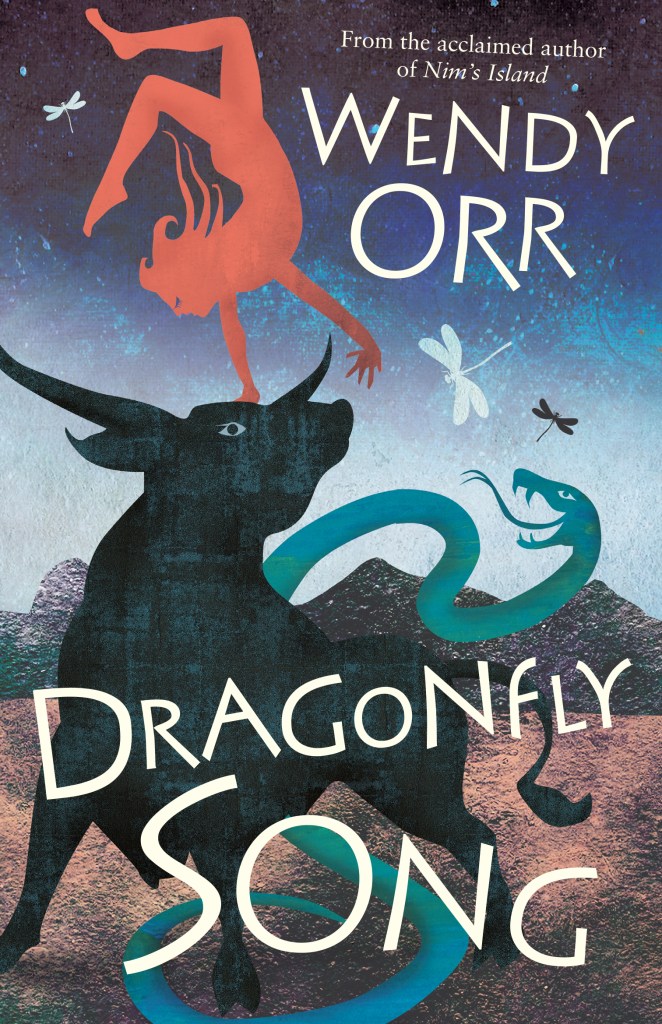
Wendy’s Ancient Crete trilogy teacher notes:
Wendy wrote the teacher notes for the first book, Dragonfly Song
I wrote the teacher notes for the final two books:
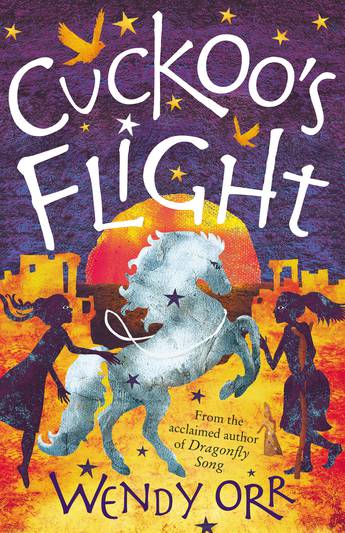
My interview with Wendy Orr about Cuckoo’s Flight at Paperbark Words blog

 paperbarkwords.blog