
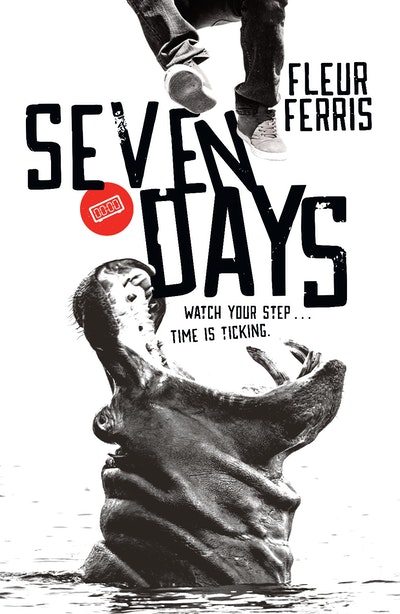
Fleur Ferris, Seven Days & other books
“It blows my mind to think what we do today matters – not just to us, but to those who come after us, to those who aren’t even born yet. It can impact someone one hundred years from now.” (Seven Days)
All of Fleur Ferris’ novels (published Penguin Random House) are ideal Christmas gifts and holiday reads. Most of her books are for young adults, Nullaboo Hullabaloo is for children and her new thriller, Seven Days, is middle-fiction (for older children and younger teens). She has a great gift for writing absolutely action-packed stories that also have layers of ideas.
Fleur’s writing is intelligent, insightful and well-plotted. Her stories are rich, although written succinctly – an ideal but rare combination.
Her most recent book Seven Days is one of my favourites of Fleur’s books. It has secrets, cryptic clues, a longstanding feud, jewels, a scary kangaroo and goose, and a zoo heist.
It won the Davitt Sisters in Crime 2023 YA Crime Novel.
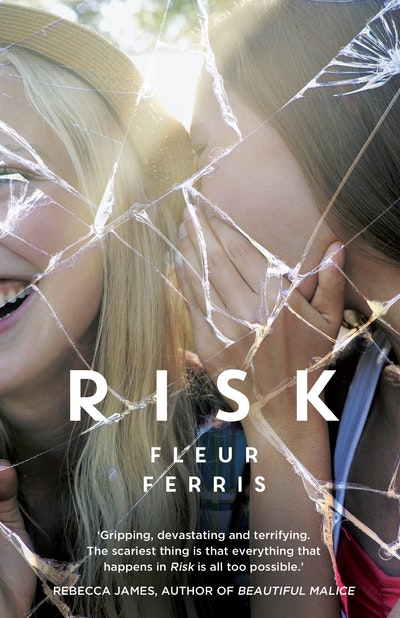
I first met Fleur in 2015 when her debut novel Risk was published. I was so excited to interview her as part of the Penguin Random House Road Show in North Sydney. The interview appeared in Magpies magazine and an extract is reproduced at the end of this post ( with permission).
Author Interview with Fleur Ferris
Thank you for speaking to ‘Joy in Books’ at PaperbarkWords blog, Fleur.
Your career has been diverse. What are some of the ways you have been employed? How has one of these impacted on one (or more) of your books?
I have been employed as a swim teacher, cleaner, shop attendant, waiter, bar staff, police officer, paramedic, electorate officer, farmer, sales representative, and a writer. When I write I draw from all areas of my life, including my careers, to create realistic fiction. An example of this is a scene in Found that came from an experience I wish I had never had as a paramedic. Trying to resuscitate a person when you already know in your heart that it is too late for them to survive, family all around, desperate for a miracle, desperate for them to be okay. I cried writing that scene.
You have recently been through the wringer with your property in NSW flooding. What was the worst and best thing about your experience of the flood. Where you are at now?
Our farm at Moama, NSW, was inundated during the October 2022 floods. The Murray River floodwater moved silently and slowly through the Barmah Forest and onto our property, destroying our crops, buildings, and too many things to list. We weren’t sure how bad it was going to be, so we moved most of our furniture and household items into a container, then received evacuation orders. We moved to an old farmhouse, but in the first three days we had received another five inches of rain. The septic flooded, water from inside couldn’t drain away, the place quickly became uninhabitable… and just like that we were homeless. We packed a few belongings, and with our dog and cat in tow, we presented at the NSW emergency evacuation shelter.
This vulnerability, of being totally reliant on others, was my worst moment. I was physically and emotionally exhausted and I felt like I had failed in protecting our family and home.
The best thing about the flood crisis were the acts of kindness and generosity we saw and received from the NSW Government, family, friends and total strangers. The NSW Evacuation Centre found a unit that allowed us to stay with our beautiful pets. We stayed there for eight weeks. The kids could still go to school and stay connected with their friends. Our community showed such strength and resilience over that time, and I have never been prouder to be a part of it.
[Joy: having experienced firsthand the Brisbane floods of 2011 and losing most of our home, I completely understand the trauma and displacement and also recognise the role of friends and community in getting us through such a devastating experience.]
Some general questions that you could answer from any of your books:
Your book covers are amazing and entice readers into your first-rate stories. Please choose 1 cover that you particularly like and explain why.
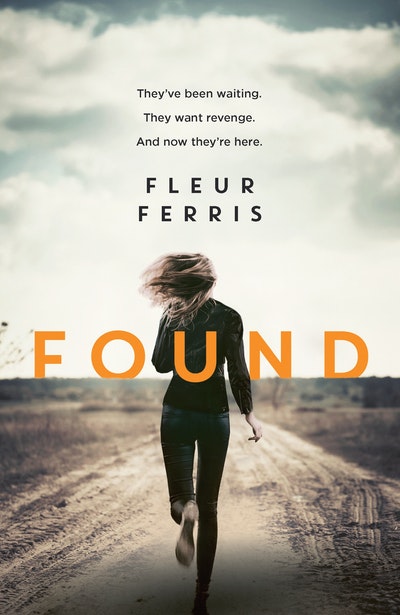
I love all of the covers of my books – my publisher does a brilliant job. Found would have to be a favourite as it is set on my rice farm in Bunnaloo, NSW. The image used for the cover looks exactly like the landscape of the true setting.
How would you describe your writing style?
I have a direct writing style, which may have been shaped by my statement taking when I was in the police force. My first draft is scant of description and word count, I then build from there, adding detail until the story is how I want it to read.
Do you think that all your books have high-stakes plots? Please give an example from one of your novels.
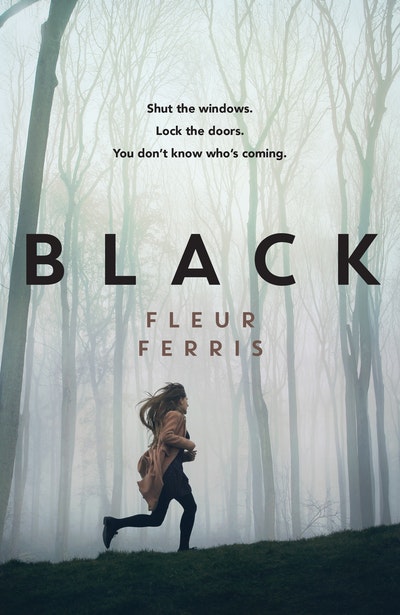
Yes. My characters, and/or members of their families, usually face a number of life-threatening situations. An example of this is when Ebony in Black risks her life and walks back into the face of danger when her mother’s life comes under threat.
I know that all or most probably do, but which one of your characters has a special place in your heart, and why?
I love all of my characters and miss spending time with them after the book is written, however, Gemma, Ivy and Meg from Nullaboo Hullaboo have a special place in my heart because they are based on my three daughters.

What is something that gives your books an Australian feel?
Setting. So far all of my books are set in Australia and this gives my books an Australian feel.
Please tell us about art and how it sustains you.
Viewing art, whether it be a painting, sculpture or other, touches something deep in my soul, feeds my creativity and inspires me to create and do better. I love original artworks on my walls at home and I was thrilled when my husband bought me a David Bromley painting for my birthday. I have been a fan of David Bromley’s work for decades, but never thought I’d own one.
How have you incorporated your love of art into one of your books?
In Wreck I refer directly to a painting on the wall. The painting I had in mind was a Wendy McDonald original. Wendy, a personal friend, is an award-winning artist and I love her work.
And I have to mention Nullaboo Hullabaloo, illustrated by Briony Stewart. This is set in Bunnaloo, my kids, pets, neighbours and my kids’ primary school. The artwork Briony did touched my heart, they are of my family, friends and home, and I loved them so much I purchased all of the originals as a collection and exhibited them at the book launch.
It’s quite unusual for an author to have all their books still in print like yours are. Why do you think this may be the case?
The short answer is that the books must still be selling. I’m not sure the author is the best person to say why a book may or may not sell. I write stories I want to tell. I’m just thankful people are reading them.
Screenwriting: What have you worked on? What are one or more ways that screen-writing is different from novel writing? When might we see one of your books on screen?
I am currently writing (paused for the strike) a feature film for an American Production Company. I can’t speak too much yet about this project. I am also writing my own TV show, a political thriller, that I will pitch mid next year. Black has been optioned for TV series and I have written the pilot episode. The Nullaboo Hullabaloo feature animation film is progressing, and a sensational teaser has been made. I have no release dates for any of my screen work, so can’t say when one of my books will be on the screen.
I enjoyed your re-post on socials, ’10 Plot Devices to Use in a Screenplay’. Some of these devices are Chekhov’s Gun, Framing Device, Deus Ex Machina and Race Against Time. Which one (or more) have you used in your books? Which device would you like to use?
Yes. I use any device that helps me to tell a story in the way I want the reader to read it. I write fast paced thrillers, so the Race Against Time device features regularly in all of my books.
Now, some questions about Seven Days:
The structure of this novel set during seven days gives an electrifying ticking-clock effect. Why did you use it? What was difficult about writing using this structure?
I structured the story of Seven Days over one week of the school holidays because it is a period of time familiar to the target readership, and because I wanted to story to fly along at rocket pace. One of the themes of the story is the difference a week can make to someone’s perspective, their life, to a family, town, area, or even to the world, and I hoped that the structure would magnify this point. Using this structure came naturally with the telling of the story so, although I hit many difficult hurdles when writing a novel, this wasn’t one of them.
As well as having your trademark gripping plot, Seven Days is a classic Fleur Ferris novel because it also has complexity and the unexpected in its major relationships. Please give an example of one of these.
An example of “the unexpected” in a major relationship is with Ben and his Uncle Ian. We see Ben’s relationship with his uncle through Ben’s eyes, and are as shocked as he is when certain behaviours are revealed.
How are your characters, cousins Ben and Josh, a foil to each other? What adds conflict to their relationship?
Josh and Ben admire one another, however they both harbour jealousy. Ben sees Josh as big and strong physically, great at everything, fearful of nothing, with loving, attentive parents who are very much involved in his life. These are things Ben is lacking in his life. Josh sees Ben as a smart, rich, sophisticated city kid who has everything he wants, including the unwavering admiration of Josh’s dad, Uncle Ian. When incidents occur that cause Ben and Josh stress, their jealousy of one another rises to the surface and they strike out at each other, verbally and physically. But when Ben and Josh trust each other and work together, combining their strengths and skillsets, they are a force to be reckoned with.
How have you incorporated humour, history and/or romance into the tale?
I have incorporated humour, history, and romance into Seven Days because life can have all of these things at once, even during a crisis. Introducing animals for comedic effect was one way to bring in humour. Adding Ben’s zoophobia and forcing him into a zoo environment added to that. History is a part of everyone’s lives because it is what shape us as individuals and as a society. I wanted to highlight the impact that our actions have, not only on the present and near future, but far into the future even after we die. We have one life, and what we do in our lifetime matters. Romance makes life sweet, and in a story, if it’s forbidden, it can raise the stakes, drive character’s agendas and actions.
Final questions:
Which award has meant a lot to you, and why?
I can’t choose! They all mean so much. Seven Days has just been shortlisted for a Sister’s In Crime Davitt Award in the YA category. Writing for a middle-grade audience is new to me and sometimes you doubt yourself and wonder if you are hitting the mark. So, I was mega-thrilled to have this book receive this honour and recognition.
What are a few memorable books that you have read this year?
Scar Town by Tristan Bancks, The Hidden Girl by Louise Bassett, Defiant by Janine Shepherd.
What do you hope to write in the future? Do you think you will ever write about your flood experience?
I may write about my flood experience one day, but I am not ready to so just yet. Just thinking about it still makes me so emotional. There are too many people in our community who are still suffering and traumatised by the experience.
I am about to begin my Graduate Certificate in Screen Development at the University of Canberra. Over the next twelve months, as part of this course, I am developing a TV series, writing the pilot episode and an accompanying novel. It’s a pacy political thriller packed with drama and action, secrets and lies, twists and turns…and I am SO EXCITED about it. Watch this space…
Seven Days at Penguin Random House
******
Magpies magazine interview extract 2017 (reproduced with permission)
The Everyday Interrupted: Fleur Ferris
by Joy Lawn
Fleur Ferris has catapulted onto Australia’s young adult literary scene. She is carving a niche for herself as a writer of thrillers for teens. This wasn’t a deliberate decision at first but her heart does lie with thrillers, movies as well as books. She explains that all thriller readers will find thrillers and YA readers are embracing thrillers as they become more prevalent. Ferris’s second novel, Black was Australia’s best-selling ‘new release’ Australian YA book of 2016, an impressive achievement. Her first novel Risk (2015) co-won the YA category of the ‘Sisters in Crime Davitt Award’ (and other awards) and quickly developed a strong following through ‘word-of-mouth’, particularly by those craving high interest, fast-paced works without excessive description. Her third novel, Wreck (2017), follows suit.
Fleur Ferris’s three novels, Risk, Black and Wreck, are characterised by their signature one syllable titles. The words in these titles all end with the letter ‘k’ as well.However, Ferris also wrote an early manuscript, unpublished so far, entitled Jolted. Perhaps she will change the title if she reworks it for possible future publication.
Originally ‘Risk’was the name of the blog created by one of the major characters in Ferris’s first novel, Risk but it also became the book’s title. This book was written very quickly in 35 days, with writing stints from 4 to 7am after only sleeping for five hours each night, although the story was simmering in her head after extensive prior research. Generally, she works around family commitments of looking after three primary-school-aged children and running a rice-farm.
‘I spent much of my younger adult life moving around Victoria and South Australia with work, but now I live a quieter life with my family on a rice farm in Southern NSW. During the summer months I help to maintain the rice fields by checking and regulating water levels in the bays. Rice season runs from October to April/May.’
Risk is a cautionary tale about two girls who spend hours online but don’t realise that their web trail, their online movements, can be tracked by predators. Both Taylor and her friend, stunning Sierra, encounter gorgeous 18-year-old Jacob Jones in an online chat room. They share some interests and exchange photos. Jacob is undoubtedly handsome even though the angle of the photo makes it difficult to see his face clearly. Taylor is infatuated but Sierra goes further and meets him in person. She disappears. The police collect Sierra’s friends’ phones and devices. The predator had posed as a young man using an untraceable email address and proxy box, which disguised his identity from the police.
Point of view was an issue for Ferris in Risk. She decided to use the close friend of the victim (rather than the victim herself) as the focaliser because the denouement had to remain concealed for as long as possible and so that the reader could consider, along with Taylor, what if that happened to me? Readers could inhabit the role of the close onlooker. Ferris considered introducing a different perspective towards the end, but decided to sustain Taylor’s viewpoint. It could be intriguing for readers to imagine an alternative voice here.
I was captivated by Risk when it first appeared and have since tried to analyse why it stood out. I believe it’s because the author did something original in Australian YA fiction. The thriller element encircles a plausible scenario about the risk of social media to generate real fear for the protagonist in the reader. Like Ferris’s subsequent two novels, Risk is unpredictable and we are scared for the characters. I admit to having nightmares while reading Wreck.
Her experiences as a police officer and paramedic have enabled Fleur Ferris to unearth and give a distinctive outlook to her plot and characters. Being part of life-threatening situations and working as a professional counsellor have fed into the novels, particularly as she explores human behaviour under threat, and witnesses people at risk. These experiences can’t be unseen. Their effects can’t be unfelt. Ferris’s stories capture the everyday interrupted, when people in the everyday are not driving the change. Behaviour in an emergency is responsive. When discussing the types of cases that influenced Risk, as a police officer, Ferris ensured that the victim never felt judged. They had reasons for making those decisions. People, such as the police, don’t know the whole story. As situations unfold, then they understand why people may have acted in a certain way. Consequently, young readers of Risk will perhaps recognise their own naivety and hopefully tighten their online sharing and security in a natural response to the book.
‘In my work I often draw from personal experience. Some of the character’s responses to situations are drawn from my responses to similar real life situations. For instance, in the opening scene of Wreck, Tamara’s life is threatened. I drew her thoughts from some of mine when my life was threatened and I was incapacitated by fear. I will never forget what went through my mind in those seconds, those minutes, when I thought they were my last. Also in Wreck, Tamara finds herself in a car chase, this scene was drawn from car chases I had been in many years ago. So although I never include details of the real life incident, I do give my characters my real life responses to similar fictitious situations they face.’
The author explains that her style of writing comes from years of statement-taking. She was the only female police officer working at Brunswick police station and she could write clearly, so was often given the task of interviewing and writing statements. Victims would often open up to her and, because she wrote without embellishment, her reports would hold up in court. This style is particularly evident in Risk where police procedurals are told with an authoritative pace and voice.
Unlike most authors whose word-count needs pruning, Ferris’s writing background has influenced her novel-writing and her first drafts are skeletal. Editors, including the legendary editor-publisher, Zoe Walton, request more detail and elaboration. She sees herself as a plain writer who enjoys the editing process, especially when finally viewing the end result.
Concise, pacey writing and interesting subject matter and plotting are a magnet for less avid readers. Young readers and students are glad to avoid description. As well as teen ‘word-of-mouth’ promotion, booksellers and schools have got behind these books, with English teachers commenting that kids who don’t read, those for whom reading is a chore, like Risk. The strong loyalty established with Risk has snowballed onto Ferris’s second novel, Black.
Black took longer to write than Risk, partly because Risk was written in an astounding 35 days but also because Ferris was simultaneously editing Risk. Ferris explains her writing process as, I see scenes like a movie in my head. Then I join them together…
‘For instance, in the opening scene of Black I saw Aiden asking Ebony out and the knuckleheads sniggering behind the hedge at school. The next scene in my head was Father Ratchet looking over the crowd at Ebony walking past the church, giving her the creeps. To link these scenes together I extended Aiden and Ebony’s conversation while she walked from the school towards home and withdrew Aiden from the scene just before she reached the church. The purpose of this conversation was to develop their characters, to make the reader like them and to hint at a romance blossoming between them, but this “walking conversation scene” was made up as I typed. It wasn’t one of the scenes playing out in my head like a movie.’
Ebony Marshall is nicknamed ‘Black’ because of her name and because she seems cursed. Three of her close friends have died and sinister Father Ratchet, the leader of the Pure Apostles cult, has targeted her. He has recruited and brainwashed Ged, her former best friend.
Black is living alone because her father is working in Antarctica. After school, she helps young scientist, Ed, maintain the local water plant. New boy, Aiden, seems interested in Black but she is suspicious when he invites her to the Year 12 formal because she is a pariah to almost everyone else in the claustrophobic community. Without spoiling the romantic conclusion of Black, many readers have been surprised about Black’s choice of a boyfriend but Ferris counters, it was true to the character of Black to choose who she did. Black is a gripping, suspenseful read.
When I asked if she is drawn to the unexpected, Ferris replied in the affirmative, and explained that this is perhaps another consequence of her work as a paramedic and police officer, where she continually responded to the unexpected. Before writing each novel, she has the main plot in her mind but then unforeseen subplots happen on the page once she is writing.
‘It’s usually only the main plot line that I see in my head, and subplots happen unexpectedly as I’m writing. For instance, in Risk, Riley’s ongoing conflict with Sierra and her internal struggles after Sierra disappeared were made up on the keys. In Black, Ebony’s ongoing conflict with Ged was also made up as I typed. Although these subplots are made up on the spot, they must wrap around and push the main plotline forward and if they don’t I delete them. The biggest and most shocking thing that happened while I was writing Black was Ged’s fate. I stopped typing, felt a bit sick and walked around for a while asking myself, “Can I do that to her?” and I contemplated changing it. But I had no idea that was going to happen until Rebecca [a minor character] told Ebony.’
When I asked about the progression of her novels, Ferris replied that Risk had a few creepy moments, Black honed in on the creepiness and eeriness and Wreck is the most challenging and complex story… I wrote two separate thriller stories with two points of view for it and I had to have a reason for everything I included in each. Ferris wrote 18-year-old Tamara’s story first and then 15-year-old William’s tale, which is set in the past. It was very technical linking the stories … and to also ensure the readers are getting enough interesting information to keep turning the pages.
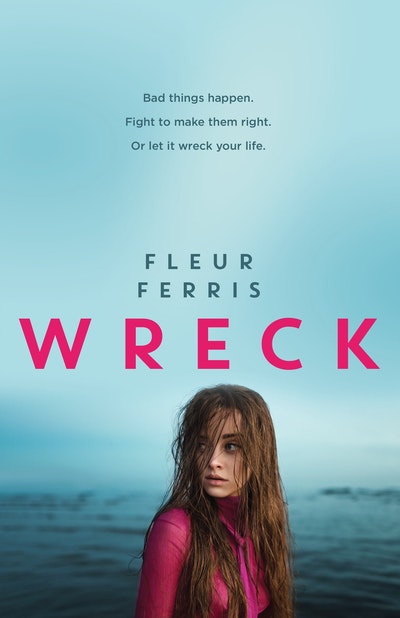
Ferris wrote Wreck under a six-week deadline, an extraordinary achievement considering the interwoven plot strands. In one narrative, protagonist Tamara is about to start university and aspires to being the first journalist who only reports good news. This idea sprang from Ferris’s own young children playing ‘journalists’ in the car, reporting on things like not seeing snow yet while we’re driving. Ferris turns the radio off when some news is not appropriate for them to hear and her eight-year-old daughter has asked, “Why isn’t there a channel that just reports good news?”
Tamara arrives home to discover her house has been ransacked and an intruder is searching for the note she had found washed up in a bottle. Another man fights off the attacker but abducts her.
The story then reverts to the past where William’s family is shipwrecked on an island and Christian, his charismatic and kind cousin, goes missing. Fleur Ferris explained to me that something happened then to ‘wreck’ more lives in the future. The narrative oscillates between the present and past whilst the truth is being uncovered. Truth is an important theme of the book, culminating in Tamara’s desire to report truth without fear.
Ferris found that writing William was a challenge. I do feel more comfortable writing from a female point of view. The protagonists in her other novels are also female and it was exciting to hear some insider news that the character of Black may feature in a later novel, encouraged by fervent fan requests.
She is supported by, and supports in return, a well-known community of Australian YA authors, which include Trinity Doyle, Gabrielle Tozer, Rebecca James, Ellie Marnie, Rachael Craw and Nicole Hayes. They read and discuss their works-in-progress. Most of this interaction happens online, important for Ferris who lives in a remote part of southern NSW but they have also become friends in person, usually when catching up at writers’ festivals.
Touring, particularly writing on tour, and presenting her books to audiences was a little difficult at first but she is more prepared and confident now. She has a natural energy and is so passionate about her work that she doesn’t have to muster enthusiasm but feels she must, instead, tone it down. She is fully immersed in her stories and characters but ultimately breathes, lives and works around her family.
When talking about her status as an author, she says, I still feel new. I’m still developing, learning, challenging myself. Three books in three years with high sales has been a meteoric rise. She already knows the plot of her next book and has completed a short screen-writing course, ready to adapt Black into a screen-play. She hopes that she will be known as a writer who can deliver a thrilling story, one that people can really enjoy.
With another thriller on the way, I wonder if Fleur Ferris has begun compiling a list of more one-syllable book titles ending in ‘-k’. We look forward to her next exciting story, where once again, the everyday will be interrupted.
******
My review of Risk (and other YA) in the Weekend Australian
(NB I’ve reproduced these reviews in full because they are now generally inaccessible and may be of interest.)
WEEKEND AUSTRALIAN NEWSPAPER
Young adult fiction: teenage love and hardship
by JOY LAWN
august 1, 2015
Much of the best Australian YA literature has a singular freshness, perhaps formed from our open spaces and crisp, revitalising water. This may have caused a certain freedom in our lifestyle and creativity. Four debut or emerging female Australian YA novelists build on the innovative, fresh style of our YA literary legacy.
Newcastle-based Trinity Doyle is an exciting new voice who shares the searching and experimentation of teen life with authenticity and empathy. Her novel, Pieces of Sky (Allen & Unwin, 290pp, $16.99) begins in an arresting way, “Mum painted my brother’s coffin.” Lucy’s brother Cam recently drowned in the night surf at Byron Bay. His parents aren’t functioning and his almost 16-year-old sister, Lucy, a champion backstroker, can’t get back in the pool. Her swimmer’s body knows its capacity and limitations. Her life revolved around the training demanded of an elite swimmer as well as roaming the beach and bay with glimpses into “the stories, the hook-ups, the pot” of Cam’s mates at the cove.
Lucy is now drawn to this scene to escape her trauma and grief. She gets drunk but is helped by her childhood friend Steffi and Steffi’s cousin, Evan, who has just moved to the coast. Evan doesn’t seem to drink or smoke. He’s been burned by the accusation of trashing a car after spending most of the past year drunk.
When some of the swimmers and potheads wag the swimming carnival, Lucy leads them to a derelict, half-built resort in the bush. They use the empty pool for skating. Evan is a pro. He’s also into some of the retro and indie music that Cam shared with Lucy. Gang of Four, Kate Bush, Flaming Lips and The Shiver and the Shake, a band Lucy and Evan see in Sydney. Their relationship quickly becomes intimate. He didn’t expect to find a girl like her in the Bay but she is confused by her long-term crush on Cam’s best mate.
Evan’s hang gliding reflects some of the “sky” imagery of the title. Lucy is initially fearful to fly but ultimately embraces its exhilaration and freedom. The title’s “pieces” suggest fragments needing wholeness, particularly in the characters’ lives. Cam’s life also had missing pieces, some of which the author wisely restrains from exploring although she skilfully renders and reveals the secret girl who still texts snatches of poetry to his phone.
Secret relationships also cause tension in Melbourne-based Nova Weetman’s second YA novel, Frankie and Joely (UQP, 257pp, $19.95). Unlikely best friends, Frankie and Joely leave Melbourne for a sweltering summer holiday on Joely’s relatives’ rural property. At first the farm looks “full of promise and hope” but later it just seems to be dead grass and trees, and hungry cows.
What can 15-year-old girls do in the country? There are the routines and traditions of the farm such as the cooking and cups of tea, the pool, the dam, the cinema and the shops. The op shop is a gateway to a more exotic life for Frankie. The perfect leather coat she finds there makes her feel glamorous and sophisticated.
Frankie had previously come across the book, Picnic at Hanging Rock, in another op shop. She likes to linger in Miranda and Irma’s literary world and wonders “if she would have followed them through the crack in the rock or stayed behind screaming like Edith with her great, trembling fear”. When Joely disappears after New Year’s Eve, Frankie remembers that Miranda was never found at the rock.
Frankie is beautiful and people love her. They don’t see her insecurity or vulnerable home-life. Joely is freckled, thinks she’s the smart one of the two, and can be perceptive and affirming. Their friendship seesaws during their holiday. The author smatters their relationship with small moments where actions or words cause intense, but often fleeting, reactions. Thoughtless vagaries such as Frankie’s shrugging and Joely changing the place in Frankie’s book characterise their friendship but each girl is better and stronger because of the other.
Risk (Random House Australia, 288pp, $19.99) by NSW-based debut novelist Fleur Ferris also showcases two 15-year-olds: one a beauty like Frankie and the other like Joely, an “ordinary” girl with lower self-esteem who is jealous despite her better nature and who longs to be the one chosen by a boy instead of always missing out to her friend.
Taylor and Sierra spend hours online. Gorgeous Sierra meets 18-year-old Jacob Jones on Mysterychat, an online chat room her parents have banned. She secretly passes on Taylor’s email address and Taylor is soon deep in conversation with him, doodling her signature as “Taylor Jones”. They swap photos but, even though he looks gorgeous, it’s hard to see his face because of the camera angle.
Before Taylor can tell Sierra about Jacob, Sierra bursts out with the news that she’s meeting Jacob on Friday afternoon. They’ve also been talking online and discovered they were in the same crowd at the Winter Olympics and a Pink concert. Sierra wants Taylor to cover for her over the weekend but when Sierra still hasn’t turned up two days after her date, Taylor finally believes she isn’t just staying out like she’s done before and tells her mother.
Author Fleur Ferris has worked as a police officer and paramedic so her voice and pacing is authoritative in outlining what happens next: the collection of Sierra’s friends’ phones and devices by the police and the descriptions of online predators’ use of untraceable email addresses and proxy boxes, and “Vapour Cases” where perpetrators disappear without trace.
Two naive girls don’t realise that their online trail shows exactly where they are whenever they’re online. Although uplifting in a way, this cautionary tale is suspenseful and shattering. Sierra “didn’t even realise she was taking a risk”.
Risk is inherent in Fremantle-based Meg McKinlay’s exquisitely formed A Single Stone (Walker Books Australia, 271pp, $16.95). The novel’s opening is enigmatic and intriguing. “… Seven girls nose to toe, wearing stone like skin as they make their way towards the harvest … A finger extended, an elbow scythed onto rock, hunting leverage.”
Whilst content to absorb and relish the sensory, poetic language we also want to know where these girls are and what they are doing. McKinlay doesn’t disappoint, gradually revealing a story and setting of rich originality.
Jena knows the paths and intersecting patterns inside the mountain. She leads a line of other lean girls through its clefts and fissures to harvest the mica the village needs for warmth. Her home has scant resources, pinned inside “the towering ridges of the mountain, the strong stony fingers that encircled the valley, cupping the land in the palm of its hands”.
The girls are tightly wrapped from birth and taught not to eat their fill. They are either “cleanskins” or “adjusted” by the breaking and compressing of bones. When Jena realises that the Mothers are rearing a line of small tunnellers, she risks moving “a single stone”.
Inspired by images from Franz Kafka’s The Zurau Aphorisms and C.S. Lewis’s underground world of Bism in The Silver Chair, McKinlay has created what I hope will become an Australian YA contemporary classic.

 paperbarkwords.blog