
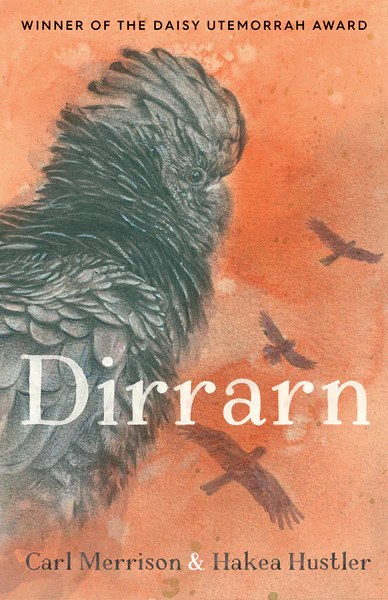
Dirrarn by Carl Merrison & Hakea Hustler
Illustrated by Dub Leffler
Published by Magabala Books
“Mia felt so far from home. Growing up in a remote outback community, she had still faced her share of bullies. She’s dealt with it in her own way then. Telling a teacher sometimes worked, other times a big brother or sister or family put a stop to it. Everyone back home knew how things worked…” (Dirrarn)
Interview with Carl Merrison & Hakea Hustler about Dirrarn
Thank you for speaking to ‘Joy in Books’ at PaperbarkWords, Carl and Hakea.
Our pleasure, Joy. Thank you for having us.
Please tell us about yourselves.
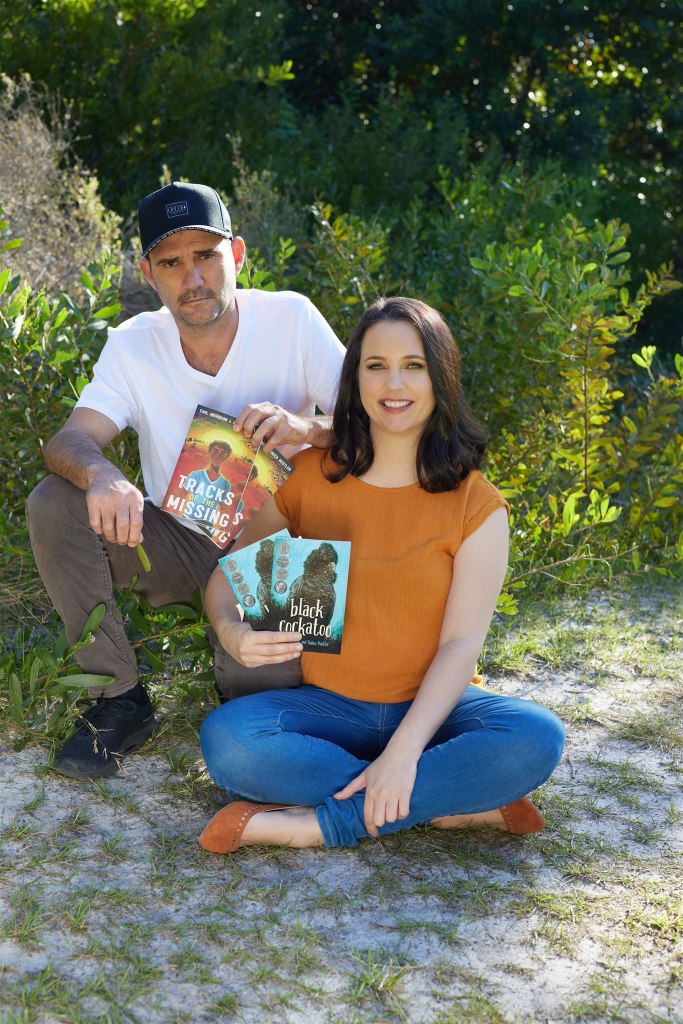
Carl Merrison is a Jaru and Gija educator, author and football coach who was born and raised in the Kimberley Western Australia.
Hakea Hustler is an experienced English teacher who has taught in rural and remote schools around Australia.
As friends, we met in Halls Creek, and write books with the common themes of outback plots, sports, identity, empowerment and diverse characters.
You have written several very well-received books together. These include My Deadly Boots, Tracks of the Missing and, of course, Black Cockatoo and now Dirrarn. How do you write a novel together? Who does what?
We knew each other for two years before we even tried writing a book. So we had already shared many experiences together and many stories. We had a good understanding of each other’s strengths. We also share some passions – like outback education and First Nations literacy, work we can do to help ‘Close the Gap’ for kids in the outback. When we had a few months over on the East Coast in 2016, away from the Kimberley Western Australia, we finally wrote down some ideas – and ‘Black Cockatoo’ was created. We were 30 and 36 years old – and didn’t realise we could write stories that were good enough for publishing or that we had many stories to tell.
We yarn on long drives about our lives and experiences which inspire stories or parts of stories. We each help find the gold in our lived experiences that can be put in a book – sometimes it’s not until you tell someone else something that you realise that it was actually an interesting experience. Your lived experience can just feel ‘normal’ to you but turns out it’s different from people with different backgrounds or the way they grew up.
Then we sit down and chat about story directions. Hakea is the faster typer so she scribes what we say. Sometimes we use ‘voice to text’ to transcribe audio parts of the story. Then we go back and forth together over sections- editing, fixing and tying the story together. We each think of parts of the story and weave them together.
We always have outback kids in mind when writing our books. We are reminded of their strengths and vulnerabilities. We are aware of the need for representation and diversity in Australian literature.
Carl has been the kid in an outback school who couldn’t relate to the books in his classes, he has worked with ESLD or low literacy youth and wanted to make change. Hakea had spent some time in foster care and used stories to escape, to find characters who were in control of their story. She had worked with disengaged youth – and wanted to create books to hook them in.

I wrote about your multi-awarded Black Cockatoo previously on the blog.
What is the significance of the title of its sequel, Dirrarn?
‘Dirrarn’ is the Jaru word for ‘Black Cockatoo’. It made sense for the sequel to connect the two books.
How have you linked Dirrarn into Black Cockatoo?
We wrote three rough versions of what ‘Dirrarn’ could have been. Finally we found the right feel. We are pretty proud of the finished story and the techniques we have used.
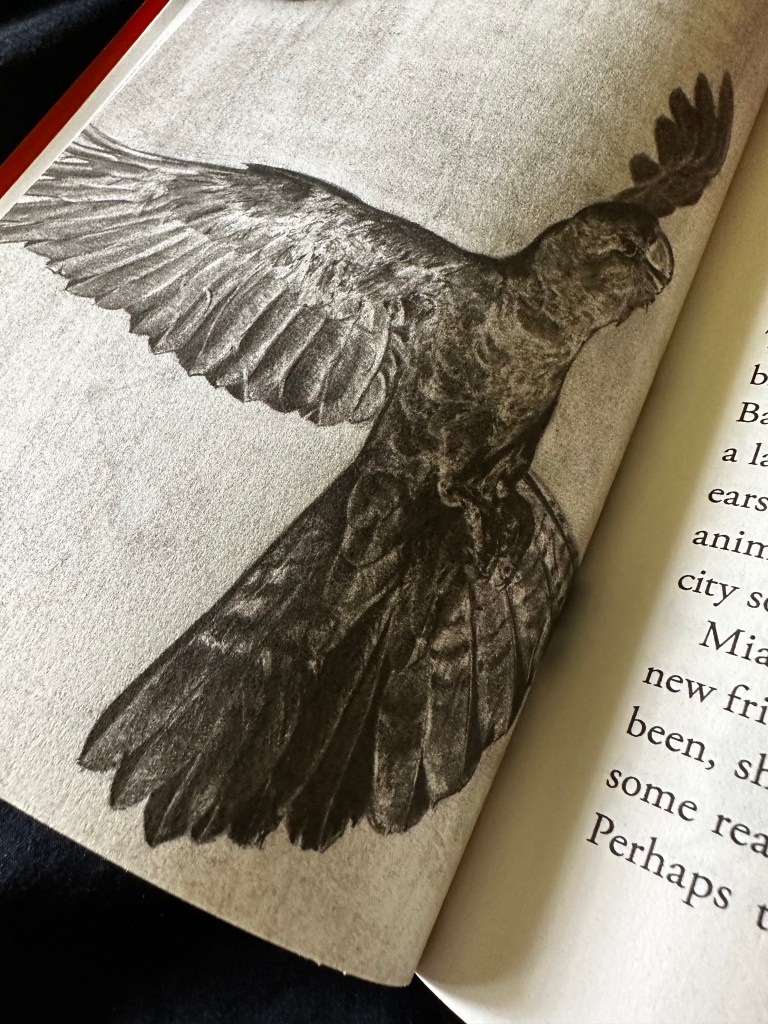
The links begin at the covers that both feature a black cockatoo- ‘Dirrarn’ has some birds flying in the background. ‘Black Cockatoo’ has dark start-of-chapter images only, while ‘Dirrarn’ has a mixture of lighter and darker images at the start of chapters, as well as some simple images throughout the text.
This was from Dub Leffler’s expertise under Rachel Bin Sallah (publisher)’s guidance.
We found our way into the story by writing similar first sentences for most chapters of ‘Dirrarn’ as there are in ‘Black Cockatoo’. This helped us to keep consistent feel, structure and to tie the stories together. So if you read the first sentence of Chapter 1 in ‘Black Cockatoo’ you will see the similarities to the first sentence in ‘Dirrarn’.
The beginning and end of both texts is similar in events and feeling evoked in the reader- but show a new stage of life for protagonist, Mia. This helps to connect the books, keep the similar feel and length.
Both texts use Jaru words (italic for first time with Standard Australian English word next to them when first introduced) and have a glossary at the end of the book.
Mia, her grandmother, and her brother are common characters across the two books. Mia’s grandmother plays a bigger part in ‘Dirrarn’ compared to her grandfather in ‘Black Cockatoo’. Grandparents are the guide and mentor role in both books- both authors, Carl and Hakea, lived with their grandparents for significant parts of their lives. Elders play a large role in Carl’s Jaru and Gija culture. New characters are introduced in ‘Dirrarn’ including boarding house workers, boarding house friends, bullies at school, and other smaller auxiliary characters such as school teachers and principals. We limited new characters on purpose to reduce confusion and to keep plot simple and clean in a short novella.
We also used similar literary devices including the use of symbolism of the black cockatoo and rainbow bee-eater.
We carefully considered each chapter to make sure we were tying the books together- while also allowing Mia to grow as a character.
How have you incorporated Language so seamlessly into the story?
This was really important to us when we wrote ‘Black Cockatoo’, our first ever book. Carl, and kids in the Kimberley, often speak Aboriginal English and/or Kriole with traditional words interspersed throughout. Many First Nations people can ‘code-switch’ between speaking Standard Australian English then Aboriginal English or Kriole or traditional language- which just means they can speak whichever language or dialect depending on the situation. So when talking to friends or family in community they might speak traditional language and Aboriginal English, but at the shop or school or police station they might be able to switch to speaking Standard Australian English. This is a skill that requires awareness and practise before you can do it seamlessly with control.
So for ‘Black Cockatoo’ and ‘Dirrarn’ it is a chance for Aboriginal readers to see First Nations words ‘holding their own’ in a text, as well as sharing language and feeling ‘seen and heard’. For non-Indigenous readers, it’s a chance to learn more about First Nations language and culture. To see Jaru words written and being valued alongside Standard Australian English.
Magabala Books were great at mentoring and supporting us in this process as well. While we had the words, they helped with the italics and glossary and advice around extra words to include. They are a First Nations only publishing company based in Broome so have a deep understanding of First Nations language and experiences.
While dealing with important and in fact profound ideas (which we will come to soon), Dirrarn and Black Cockatoo are also ideal for reluctant readers or those who may find reading a whole book difficult. How have you written and structured these two books to overcome these obstacles?
Both of us are experienced educators with experience working with disengaged students, reluctant readers, and First Nations students. We had both seen good and less effective books that had been used with these types of students.
Both texts are novellas and short on purpose- but have lots of ‘jumping off points’ to explore for readers. It is easy to engage in with lower ability readers- who can feel success reading a ‘chapter book’, but can also have lots to investigate in depth for extension students. We have also developed free education resources that are comprehensive and differentiated to support teachers.
We are so mindful not to ‘dumb down’ our books- to respect older, lower literacy readers with quality texts. Many of our disengaged or low literacy students have felt shamed or embarrassed by ‘baby books’. We are inspired by ‘hi-lo’ readers that are books with high interest content for low literacy readers- they provide access points, discussion points and teaching points.
Some of the important themes in the books include “culture shock” for First Nations young people. What can be so difficult and damaging about “culture shock” for these young people?
Many First Nations remote outback students have never left their region. They likely speak Aboriginal English or Kriole, a traditional language or even a few, and then are learning Standard Australian English. As you can imagine leaving the outback where First Nations peoples and cultures are the majority, to Perth, where Standard Australian English is the main language, and First Nations people are a minority- can be a big shift and culture shock. Your culture, lived experience and language are not the lived experience of people around you. Suddenly, young people, like our character Mia, have to learn about busy roads, bus timetables, code-switching, different cultural-norms, different environment all together. They are very aware that they are off Country, and on the Country of another First Nations group. For Mia- she was 2700 kilometres away from home- a very large physical distance and many hours of travel.
This might be relatable for readers, who have travelled from their hometown to a different Country. Suddenly the food is different, the language is different, the traffic and road rules feel different or chaotic, the smells and sounds are different, the laws are different. If you have travelled overseas you might relate to the sensory overload, the sense of ‘culture shock’, the feeling of overwhelm.
In our story, Mia is in lower secondary- so likely 12 or 13. So imagine all that you experienced when travelling overseas… but alone…. at 12 or 13.
We hope our book, ‘Dirrarn’, provides some sense of all that. And at very least sparks the curiosity of readers to learn more about what life is like for First Nations students who attend boarding school. And for First Nations readers- we hope this book helps prepare them for what they might feel and experience if and when they go to boarding school.
How strong and important are Mia’s links with family and her Country in the Kimberley?
Country, culture, language and family are some of the most important things for First Nations peoples in the Kimberley. The importance of this is explored in both ‘Black Cockatoo’ and ‘Dirrarn’.
These are things that are engrained in and shape the identity of First Nations peoples, like Mia and her family and her community. We hope that our book helps others to understand the depth of importance that family and Country have for First Nations people.
Mia finds strength in her language, culture, Country and family in both ‘Black Cockatoo’ and ‘Dirrarn’ that allow her to face and overcome her challenges.
How involved were you in collaborating with Dub Leffler and his illustrations for the book?
‘Black Cockatoo’ was our first ever book. We did not know anything about publishing, illustration or the process of getting a book from manuscript to print. We think Dub’s art is amazing- and we have little input into his creative process. We had more input into ‘Dirrarn’ to make sure the illustrations maintained consistency between the two – especially the use of large images at the start of each chapter.
Dirrarn won the Daisy Utemorrah Award. What has this meant for the book?
We submitted a first draft to win the Daisy Utemorrah award- but the award meant that we had time to re-draft and refine the story, to find the threads to pull the two texts together, to give the manuscript the time it deserved. We both work, are parents and run a business remote outback teacher consultancy business called ‘The Remote Teacher’- so life is very busy. This award helped us make space to write together to finally finish the story. It was a huge boost to our writing career.
Daisy Utemorrah was an Elder, author and teacher- it was an honour to have been granted an award in her name.
What have you been reading that you would like to recommend?
Hakea: I have an ever growing ‘to-be-read’ list. As a busy teacher, remote outback teacher mentor and consultant, author and mother… I don’t get a lot of time to read. I have been reading a self-published book by my colleague, Steve Trotter called ‘The Snake and the Magpie’, and recently enjoyed reading the ‘Teacher, Teacher’ anthology as well.
Carl: ‘Big Magic’ and ‘Magic Awry’ by Sarah Armstrong- I have been reading these to my 7 year old daughter. They are interesting books about circus life and magic. I like reading sports biographies and non-fiction… so reading to my daughter since she has been born has been interesting and helped inspire the types of books we write too.
What are you writing next?
We have lots of upcoming books including: outback middle reader books ‘Kimberley Kickers- Jy’ and ‘Kimberley Kickers- Krstel’ with Harper Collins in 2024, picture book ‘Beautiful Night’ Lothian Books 2024 about travelling Australia, picture book ‘Loved You Then’ (working title) with Hachette 2025 about the different ways we can express love, ‘Our Lake’ with Hachette in 2026 about greed and the ways that remote communities can be taken advantage of. Carl also has: ‘Backyard Tennis’ coming out in 2024 with Lothian.
We have a few picture book manuscripts on the go together and are both exploring our independent writing. Hakea had a chapter in the ‘Teacher, Teacher’ anthology (Affirm Press, 2023) this year and Carl had his Blak&Write Fellowship winning ‘Backyard Footy’ published with Hachette this year as well. So writing independently has been exciting and interesting for both of us.
How can your readers contact you?
We would love to chat with readers, librarians and teachers. We are active on social media: www.facebook.com/carlandhakeaauthors and www.instagram.com/carlandhakeaauthors. Our website also has links to free, author created education resources www.carlandhakea.com.au/extras/teachers-and-librarians
Carl and Hakea, thank you for creating such important, and easy-to-read books and also for answering these questions so generously and wisely. Your work is ground-breaking and inspirational.
Carl Merrison & Hakea Hustler’s website

 paperbarkwords.blog
2 thoughts on “Dirrarn by Carl Merrison & Hakea Hustler”