

Smoke & Mirrors by Barry Jonsberg
Author Interview at PaperbarkWords
“ ‘I want to be a magician,’ I said. ‘That’s what I want to be. It’s all I want to be. I don’t know if I can earn a living from it. Maybe I can’t. But when I think about the future, that’s what I see. Getting better at what I do. Pushing the boundaries as far as I can. Taking the skills I have and working on making them better.’
‘And that will make you happy?’”
(Smoke & Mirrors)
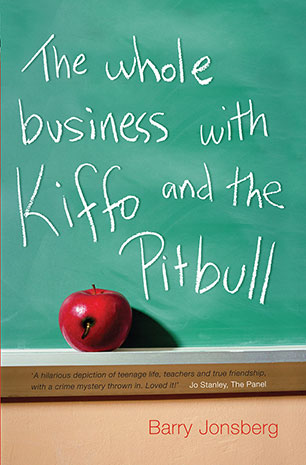
Barry Jonsberg has an impressive and popular backlist of novels for young adults and younger readers. I cannot speak highly enough about the hilarious The Whole Business with Kiffo and the Pitbull and its sequel It’s not all about YOU, Calma. Other personal favourites are Dreamrider and Game Theory.
Barry’s Jonsberg’s novel My Life as an Alphabet has become the successful movie H is for Happiness.
Smoke & Mirrors, Barry’s new middle-fiction novel, is a perfectly tuned contemporary tale of magic and miracles.
Smoke & Mirrors is published by Allen & Unwin.
******
Thank you for speaking to ‘Joy in Books’ at PaperbarkWords, Barry.
My pleasure.
Grace has a difficult past and home-life. However, she seems to be more mature than her mother. What is the source of her resilience?
It’s always difficult to work out the source of a character’s personality or what motivates them, but I guess the very nature of her past and present life, with all its problems, stresses and strains, might hold the clue. Very bad things happen to Grace. You either become resilient or you buckle under. I think early on it seemed clear to me that Grace is not the kind of person to buckle for anyone or anything. Her mother is a different story.
Gran is the heart of the story as well as a great source of humour. What funny scene or mannerism of hers did you enjoy writing? What attracts Grace to her Gran’s personality.
I really liked her “I don’t give a stuff about anything [apart from magic]” attitude. It’s a tricky personality to have to deal with, as Simon finds out, but there is something admirable about being so apparently self-sufficient that other people’s opinions really don’t matter. As becomes clear, she isn’t as detached as she would like to appear – Gran is the obvious example here, the one person who breaks through her emotional barricade. So, I really liked writing her interactions with others where her prickliness is most apparent. And Gran is very similar in her I’m happy with who I am attitude, so Grace and Gran were always going to get on together. Mostly.
Although prickly, Grace is actually full of love – that she feels and demonstrates. Why have you named her ‘Grace’?
The name popped into my head and felt right. That’s how all of my characters are named. I occasionally change them if the character really doesn’t like it, but most times they name themselves. It’s like magic.
Grace is such a difficult to get-to-know person. In contrast, Simon has a sunny personality. Why does he persist despite all her put-downs?
I think Simon himself partly explains this. He finds Grace refreshing and different and he is fascinated with how she does her magic. In some ways, Grace is Simon’s complete opposite, in terms of social skills, and maybe opposites attract. Well, they do for Simon. Grace doesn’t really care, though I think she gains a grudging admiration [maybe even affection?] for the way he stands by her when others would have given up. Maybe it’s as simple as he’s a nice guy who wants to help!
Grace understood that the two essential ingredients to magic are manipulation of objects and misdirection. Grace hones her skills on both but is misdirected herself at times. How does one of your characters use misdirection?
I suppose the therapist, right at the end of the book, deliberately misdirects Grace when she says she thinks Grace is lying about how she performed her trick – prompting Grace to think about how she views the world. Grace likes that. She responds to trickery. But I’m not sure too many other characters deliberately misdirect Grace. She does that to herself by always believing that someone has an angle, that they are cynically trying to mislead her. In doing that, she misleads herself. Which is quite neat. Or ironic. Or something…

I assume you would have had to learn how to do some magic for the book. What is your favourite trick or magic in the book, and why? What trick or magic do you enjoy performing?
I watched lots of YouTube videos. I loved the Shin Lim performance on Penn and Teller’s Fool Us program. Probably my favourite trick in the book is the one where Grace makes a mobile phone dissolve and then re-appear. That’s pretty spectacular. As far as my own tricks are concerned, I have a few but they are strictly the ones where not much skill is required. I’m performing one for the book launch which is taking place in Darwin. I find the card taken from a pack by a spectator, even though there is no obvious way how I can do it.
I’ll probably mess it up!
How do you prefer to shuffle cards? What is the best method for card tricks?
I used to play Bridge [my father was an international Bridge player] so I know my way around a deck of cards. The riffle shuffle. Always. As far as tricks are concerned, if a magician is good, it doesn’t matter how someone shuffles the deck.
Tricks or magic? Magic or miracles? Is there a place for them all or does one triumph? Why?
Hmmm. Tricky. Like Grace, I don’t believe in miracles, though when I look at my granddaughter [aged four], that belief wavers a little. I have another granddaughter arriving in a couple of months. She’ll be a miracle too. Yup, I understand the biology behind all that, all the science, but it feels likes a miracle. So I suppose yes, there’s a place for all of them.
Wagon Wheels or Polly Waffles? Which do you prefer? Why?
Wagon Wheels. Iconic. I know Polly Waffles are as well, but I grew up with Wagon Wheels. Gran is right, incidentally. They were a lot bigger than they are now.
You do a superb job writing about the fraught issue of voluntary assisted dying. How did your views modify, change or solidify as you looked into it?
I’ve always been in favour of VAD. The NT, where I live, was the first place in Australia to introduce it [see the film Last Cab to Darwin] but it was quickly thrown out federally. Being a Territory we don’t have the automatic right to self-determination. Now we will probably be the last to introduce it. It just seems obvious to me – in the same way that a woman must have control over her own body [and any man who thinks otherwise can get stuffed], then people should have the right to determine when they die. There are caveats, obviously [not being coerced, having come to a rational decision, etc], but it seems like a basic right to me.
How do you use sleight of hand in this story?
By making readers believe that the characters, places and situations in the book are real. There’s nothing up my sleeve.
Readers and viewers of fiction happily misdirect themselves. I’m banking on it.
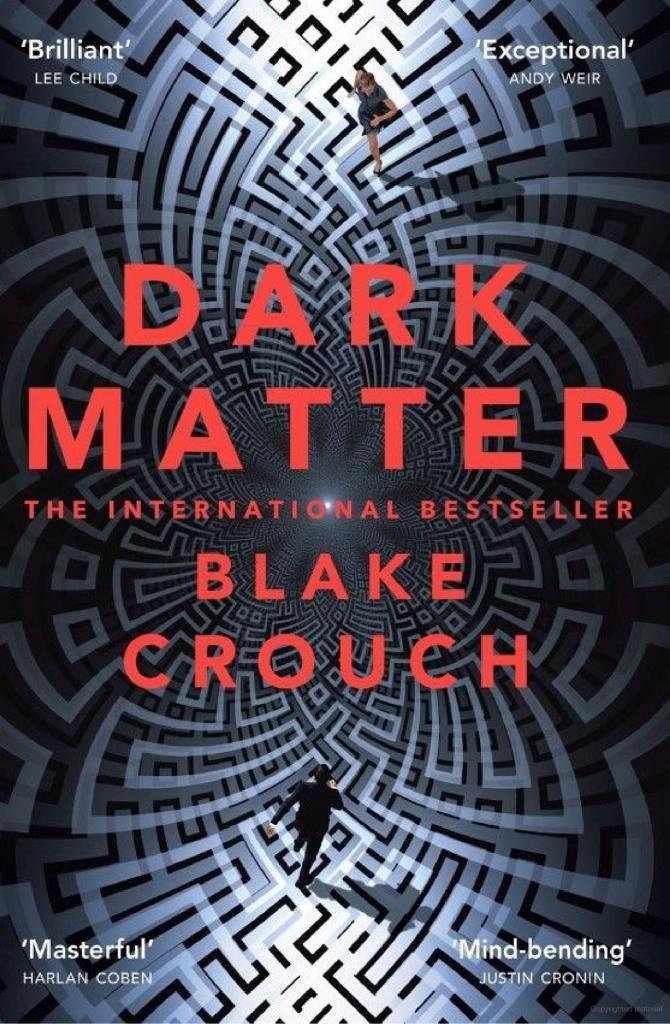
What have you enjoyed reading recently?
Blake Crouch’s Dark Matter. It’s a mind-bending sci fi.
Thank you for speaking with PaperbarkWords, Barry, and for everything you have contributed to our YA and teen literature. You should be very proud of your legacy in books, which are both critically acclaimed and instrumental in getting and keeping young people reading.
You are onto another winner with Smoke and Mirrors and all the best with it.
*****
My interview with Barry Jonsberg about an earlier novel Catch Me If I Fall at Paperbark Words blog
Smoke & Mirrors at Allen & Unwin
*****
My review of Game Theory (bolded) by Barry Jonsberg in a multibook YA survey in the Weekend Australian in 2016.
Scroll down to the bolded review.
Young adult fiction: Fraillon; Herrick; Jonsberg; Griffin; Bradley
- By JOY LAWN
- 12:00AM SEPTEMBER 3, 2016
Family is critically important for the healthy development of children and young adults. Those who are unsupported or abandoned are vulnerable. Those who have loving families, of which even the best are imperfect, have physical and emotional shelter.
Melbourne-based Zana Fraillon’s The Bone Sparrow (Hachette, 234pp, $19.99) is longlisted for the international Guardian children’s fiction prize. Fraillon has crafted a unique voice in her exquisitely written universal refugee tale.
Subhi’s family is from Burma, now Myanmar. Its Rohingya people were told they didn’t exist, and were tortured and killed as they tried to leave their country. They fear they have been forgotten by the world.
Subhi has grown up in an isolated Australian detention centre with his ailing mother, older sister and friend Eli, the only survivor of a truckload of passengers, who is now at risk of being sent overseas. The detainees aren’t medicated and good food is provided only when people from Human Rights Watch visit. Newcomers to the camp quickly lose their optimism, and lip-sewing and hunger strikes escalate.
In a surreal encounter redolent of John Boyne’s The Boy in the Striped Pyjamas, Jimmie, an illiterate girl who carries a book written by her mother, now dead, finds a weakness in the fence and discovers Subhi. He loves to draw and read and, while Jimmie tells him about the “Outside”, he unravels the serendipitous story of her ancestors. There are many parallels in their dual narratives: birds, rats, sickness and the stories that are essential to preserve memories, though Subhi figuratively loses his story after one horrific death and betrayal too many. He wishes he hadn’t reached an age when he knows the truth about his life because understanding makes it worse.
Subhi is waiting for his father who seems to be sending him treasures on the Night Sea. The author layers metaphorical images of the red dirt lapping at the tent, the family photo and other treasures half buried in the sand, and the whale and other Night Creatures that appear to Subhi. Story as a “whispered memory” is entwined in the deep song of the imagined sea and the entrancing stars and lights.
The bone sparrow is a potent symbol from both Jimmie and Subhi’s heritage. Is the sparrow a harbinger of death or a symbol of change and hope in this exalted, flawless book?
The mullet fish is the recurring motif of Blue Mountains author Steven Herrick’s Another Night in Mullet Town (UQP, 224pp, $19.95). Herrick is Australia’s premier verse novelist for children and young adults with highlights that include The Simple Gift and The Spangled Drongo. He has spearheaded this form to capture and portray realistic youthful voices in a poetic yet accessible and colloquial style.
In the lakeside town of Coraki, Manx describes himself as a mullet cruising in the shallows when he should be tackling the ocean. But he knows that ugly bull sharks have been let loose in the lake and they eat more than their share of the fish.
Manx looks older than the other 16-year-olds in the community and buys their beer. A drug and drinking culture takes place between the sand hills and lakeside pier. Manx thinks he and best mate Jonah, our narrator, “drag down the price of everything we touch”.
Jonah’s parents are fighting. His father is a sweat-stained, big-drinking truckie and his mother, once the prettiest girl in the town, works in the filleting line at the fish factory. They both love Jonah but decide to separate.
Jonah is handsome and attracted to Ella but too shy to speak until a deliberately awkward scene where he frames three-word sentences: “Ella reads quietly”, “Ella smiles imperceptibly”. Their relationship then somehow ignites.
A social and wealth divide is growing between the locals in their rundown houses on the only coastal road without a view and beach with a rip and the weekenders in their mansions. The developers have paid out the council and lured tourists with espressos. Through skirmishes and charges of graffiti, the boys protect each other: “We trust mullet with mullet / no matter what.” Fishing is the time they communicate, absorbed in a shared ritual.
Darwin author Barry Jonsberg also recognises the connection between males who share experiences without looking at each other. In Game Theory (Allen & Unwin, 320pp, $19.99), maths whiz Jamie’s best friend is overweight Gutless, who is so obsessed by slaughter video games he urinates into bottles to avoid leaving his festering room. Jamie isn’t so reclusive. He has friends at school but can talk most honestly to Gutless.
Jamie’s family is polarised by their different personalities. His parents do their best but his father seems useless and clearly resents his wife. His younger sister Phoebe is innocent and they have an affectionate relationship, but older sister Summerlee despises most of the family. When she wins Lotto after taking Jamie’s advice on possible numbers, she becomes even more toxic and is arrested for trashing a hotel room and other offences.
When Jamie and Phoebe are at the supermarket, where Summerlee previously had sprayed her boss with Coke, Phoebe disappears. Has she been kidnapped because of Summerlee’s new wealth?
The story is humorous but also becomes an exciting thriller when Jamie uses his mathematical knowledge of game theory to predict how the kidnapper may think and react. Jamie tries to change the balance of power by not following the rules and disorienting him. When the kidnapper first calls, Jamie audaciously tells him to phone back later because he’s busy. He also observes that the kidnapper “likes the juxtaposition of articulate vocabulary like ‘sensibilities’ with slang like ‘slut’ ”. As a mathematician, Jamie isn’t comfortable with narrative though he does use game theory to invent violent stories for Phoebe.
In New Yorker Paul Griffin’s luminous, empathetic novel When Friendship Followed Me Home (Text Publishing, 256pp, $16.99), Ben loves stories and books. He particularly enjoys sci-fi and believes “some books change the way you see the world, and then there’s the one that changes the way you breathe”.
Ben has had an uprooted life. He has been in foster care since birth, unable to find a permanent home because drug traces were discovered in his blood, making potential families wary. He is a hardworking, honourable though displaced boy who is finally adopted by his speech pathologist. They have a wonderful two years together before she unexpectedly dies, leaving him adrift and at risk once more.
He is drawn to the warm school librarian and finds shelter and escape in the library, where he also meets her daughter who looks like a rainbow with bright clothes and multicoloured wigs. Halley has cancer and their friendship, like the books and story they devise together, create perfect moments of light and hope.
The elusive magic of nearby Luna Park and Coney Island is reflected in the illusions of Halley’s magician father. Halley urges Ben to transform his bad experiences into treasure and, even when he is forced to sell his fine book collection, he tries to heal the lives of others.
Love springs from new sources, including stray dog Flip, who Ben trains as a reading therapy dog. Flip becomes successful at encouraging children to read.
The War That Changed My Life (Text Publishing, 316pp, $16.99) by American author Kimberly Brubaker Bradley is a Newbery Honor book. It is an inimitable, robust, yet lyrically written bildungsroman. Its gentle humour is poignant and heartwarming.
Even though she may be 10, Ada cannot read. As a “cripple”, she isn’t allowed to disgrace her ignorant, vicious mother by leaving her room. During World War II, Ada secretly teaches herself to walk, even though the pain of her untreated clubfoot is excruciating, so that she can leave London with other young evacuees. Much of her childhood has been spent locked in the cabinet under the sink so she is amazed by the outside world. She wonders at grass but is scared when leaves change colour and fall.
Ada and her younger brother Jamie are not chosen by any of the Kent foster families and are forced on to Miss Susan Smith, who tells them that she isn’t nice and doesn’t want them. However, she does provide food and clothes and their first bath, bedsheets, books and Christmas presents. Ada even teaches herself to ride and eventually learns to read and write.
She is angered and stunted by the realisation that this new, golden life is temporary. Even though there is rationing, raids and bombs, and Ada helps care for wounded soldiers, she is saved and set free by this war. Susan nurtures the children, but when she tells them that they have saved her life Ada feels something unfamiliar: “It felt like the ocean, like sunlight, like horses. Like love. I searched my mind and found the name for it. Joy.” Love can enable a deprived childhood to blossom.

 paperbarkwords.blog
One thought on “Smoke & Mirrors by Barry Jonsberg”