

Look Me in the Eye by Jane Godwin
Author Interview at PaperbarkWords
“ ‘I can never spot the cameras,’ I say.
‘What, are you blind?’ says Mish.
Maybe I am, I think. Blind to all the things Mish sees. Maybe we’re all blind. Who knows what anyone else is doing, saying, thinking?”
(Look Me in the Eye)
Jane Godwin is a master of writing across age-groups and genres. She creates amazing picture books as well as novels. Her new middle-fiction novel is Look Me in the Eye and it is another winner.
Look Me in the Eye is published by Lothian Children’s Books (Hachette Australia).
******
Thank you for speaking to ‘Joy in Books’ at PaperbarkWords, Jane.
How does your title Look Me in the Eye and the cover magnify your story?
The story is about honesty, truth, and trust. The title suggests a plea to be direct with someone, but in this story the characters are not always honest with each other. I’m also exploring ideas around surveillance, so the eye as a camera (and the little red ‘recording on’ button) made sense to me. The cover was created by Alissa Dinallo – I think she did a great job!
You sometimes combine a mixture of genres in your novels. What genre/s is Look Me in the Eye?
Well, a friend told me a couple of years ago that really what I write is crime fiction. I never thought of it like that, but now I see what she means. There is usually a crime in each of my stories! I suppose I’d call this one contemporary realism/crime fiction!
You mentioned in our last interview that you try to set yourself a technical, structural or other challenge in your books. What challenge did you set yourself in this novel?
Yes, I do! In this novel I tried to write more organically and unconsciously than I usually do. I deliberately avoided a plan, and I tried not to write so chronologically when I was drafting. I knew the ideas I wanted to explore, but my particular challenge with this book was to write in a more freeing, less structured way. Other people will be the judge of whether this paid off!
Why have you set this story in Year Seven, the first year of high school?
What a minefield that first year of secondary school is! And even more challenging for kids who have spent the previous couple of years in the weird world that was the covid pandemic. I didn’t consciously decide to have my characters in Year Seven, but as Bella and Connie became clearer to me as characters, this is the age I felt they were. In my previous book, A Walk in the Dark, I originally had the characters in Year Eight, but then changed them to Year Nine because of some of the themes and situations in the book. That one was difficult to get a handle on, but I always felt very clearly that Connie and Bella are in that liminal stage of the beginning of secondary school.
As always, an absolute highlight and the foundation of your novels is your authentic portrayal of your characters and their relationships. Could you please introduce your three major characters (and their relationships and some differences between each) in Look Me in the Eye?
Thank you, Joy, that is very generous of you.
Okay, the three main characters are:
Bella, an only child who lives with her mother, Cara, and her mother’s partner, Pete. Their home is an old railway station. Cara became a mother at eighteen, so she’s only in her early thirties when the story takes place, and Pete is a bit younger still. Bella and her family live an unconventional life – they avoid spending money, and Pete’s job of trading old toys is so different from the jobs of Bella’s friends’ parents. Bella loves both her mother and Pete, but sometimes she wishes they were a bit more like a regular family. The story is told in the first person, from Bella’s point of view.
Connie is Bella’s best friend, and she’s a great best friend – kind, reliable, fun and understanding. Connie’s family is much more conventional than Bella’s. Both girls live on the outskirts of Melbourne, but whereas Bella’s home is a converted old railway station, Connie lives in a housing estate full of new, neat houses. Connie has a little sister, June, who was born prematurely and has some health complications. Connie’s parents are more protective than Bella’s parents. They like to know where she is at all times, and Connie’s okay with that. She’s not a rebellious person, and likes to do the right thing, and not worry her parents because they have enough worries with June and her health issues.
Mish is Connie’s cousin, a few months older than Connie and until recently was in the school year above her. But then Mish repeated a year, and moved into the area, and now attends the same school as Connie and Bella. Connie and Mish used to be close, but during the pandemic they hardly saw each other and now Mish seems different – she looks different, she speaks differently, she dresses differently, and she’s certainly not as nice to Connie. Mish disrupts Connie and Bella’s friendship, with disastrous results. Mish is dishonest, and difficult – but she’s also vulnerable and lonely. Her father keeps tabs on her using various tracking devices, and the more he tracks her, the more risks Mish takes. Bella and Connie get caught up in Mish’s deceit and her father’s obsessive surveillance, and it all builds to a dramatic climax.
Why have you named your character ‘Mish’?
Names are very important to me in stories, and I can’t fully explore a character until I have a name that really fits them; a name that when I say it I can conjure up their image clearly. Occasionally I’ll change a name, for example Mish’s dad Mark was originally named Ray, but the editor thought Ray sounded like an older man, so I changed his name to Mark. Mish was always Mish, from the moment I envisaged her standing skinny and alone on the train tracks. It’s a soft name, but also a bit mysterious, unknowable. Connie on the other hand is a strong, sensible, unambiguous name to me.

Connie has a vulnerable younger sister, June. Why have you included vulnerable youngsters in your recent novels?
This is so interesting (annoying!?) that I’m always including a vulnerable young child. Carl Jung would probably say something about there being a part of myself that I’m trying to rescue or protect! I’m starting something new at the moment and several times in this early draft I felt myself tempted to add a young child but I keep shutting that idea down! One rule in this new book is NO YOUNG LOST VULNERABLE CHILDREN! So who knows why I unconsciously include young children. On a conscious level it’s sometimes to show another aspect of one of the other characters, eg Fred’s compassion in A Walk in the Dark, and Mish’s genuine, if distorted, love for another human being in Look Me in the Eye. I’m also interested in children who grow up with a seriously ill sibling (I was one such child) and how it affects them and influences their personality as they grow older.
How does the post-covid setting impact the atmosphere?
The more I look around me, the more I still see the effects of the covid pandemic on us all. (Bear in mind that I live in Melbourne and we were one of the most lock-down populations in the world.) I think everyone, children and adults, has been affected by the lockdowns. Kids missed out on many rites of passage – school graduations, camps, sporting competitions, parties and festivals, holidays, and even just being able to see their friends and family. Or go to the playground! Home-schooling worked for some but not for others. I think many kids and young people have poorer social skills as a result of the pandemic and lockdowns. Maybe it has made us all a little less trusting of what the world might throw at us. Many kids are more vulnerable (and often more protected) now because didn’t go out during covid. Suddenly they’re seventeen or eighteen but their early and mid teenage years weren’t really spent preparing for being out in the world at this age. I heard that when the restrictions lifted and young people were allowed out again, crowds at pubs and at music gigs were quite out of control – they just hadn’t had that gradual experience of growing up in the context of the real world around them. A lot of their growing up was through screen communication and social media.
I set the book in 2022, i.e. the year following two years of lockdowns, school closures etc. So Bella, Connie and Mish had very disrupted final years of primary school and they missed out on those vital rites of passage, and opportunities to mature. Covid has also made many parents more anxious because their kids were online so much, and Mish’s father in particular suffers this anxiety almost to the point of obsession.
Connie and Bella like hanging around in the paddock and the older kids gravitate to the dam. How are these two places a contrast to each other? What is the importance of “nothing land” and the “last wild place” for young people?
I think ‘nothing land’ is very important in that it provides for daydreaming and creativity. Kids will seek out wild places, if there are any left for them to find. Not being constrained, having time and space to explore, to me is the beginning of a creative life. The natural world has always been an important part of every aspect of my life. I’m one of those people who goes a bit stir crazy if I can’t get out in nature quite regularly. The paddock is a place where Connie and Bella don’t feel observed, they’re not confined, and even though it’s not an attractive piece of land, it represents a certain freedom to them.
During lockdowns in Melbourne, I observed kids taking over the small parks in their own ways – making cubbies and makeshift tree houses, building bike tracks, and claiming the land in various ways. It felt nostalgic, and perhaps one of the silver linings of covid – kids had to make their own fun on their own small patch of neighbourhood land (when they weren’t on screens!). I suppose the paddock is fairly benign, but the dam is a more potentially dangerous place, and there’s that story of a child drowning there, there are myths surrounding it and a sense of foreboding.
Bella and her family live in an old railway station building. I found it fascinating that the protagonist of Lucy Treloar’s recent literary crime novel Days of Innocence and Wonder (one of my 6 best books for 2023 in the Australian) also lives in a station, quite an unusual home. Why have you set their home in such a place?
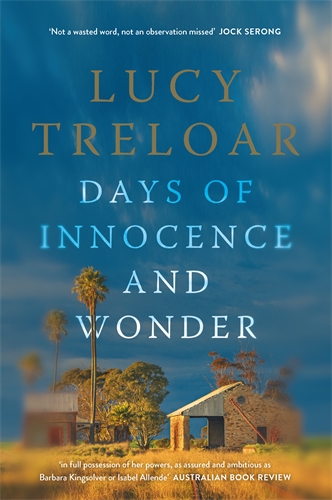
Oh that’s interesting! I haven’t read that book but I will read it!
I’m fascinated by houses that weren’t originally designed for that purpose. Actually, in the book I’m writing now, the family lives in a converted church. I live in a very pedestrian house that was built as a house, but in another life (or if I had a lot of money!) I’d love to live in a converted building that was originally built for a different purpose. A warehouse, factory, church, station or something like that. It sort of suited Bella’s family to live in an unconventional space, as it reflects their unconventional family structure. I’m also interested in new fringe suburbs that not so long ago were country towns, but the city has expanded to reach them. Melbourne is such a sprawling city and there are many areas where housing estates are butting up against hamlets and small towns.
Conservation, environmental, recycling and revering vintage, mintage and organic lifestyle choices are important to characters in your book. Could you tell us a little about this please?
I suppose they are just things that concern me and that I think about, like all of us. Due to climate change, this generation of young people are very aware of all the challenges that we face, and my heart goes out to them as it’s a fairly bleak picture despite our efforts with sustainability and clean energy etc. I try not to be didactic, just to show a range of ways of living and different ways people think about and deal with these overwhelming issues of our time.
You subtly incorporate many other issues into the novel. Could you please outline a couple, including one that recurs in your other work.
Well I’m a bit obsessed with the perils of social media, so I’d say that is probably something that recurs in my work. That comes from lived experience, I suppose, and observing young people in my own life engaging with this whole new way of communicating that affects every aspect of their culture and lives. I’ve said before that as it’s a new technology, we are all just part of a huge experiment, and the rules are being invented as they are deemed necessary, often once there’s been some disastrous situation. An example is just recently with the federal government introducing new doxing laws – although already there is discussion of how on earth do you enforce them, as there are many ways of remaining anonymous and un-traceable on line.
The other issue in this novel particularly is the surveillance of children by their parents. Talking with the young people I know (and their parents!), I’ve been surprised and alarmed by the level of tracking that seems ‘normal’. Young people are often frustrated or angry that their parents keep tabs on them, and the kids feel they have a right to some privacy. Their parents say that it’s for their own good that their kids are tracked with apps on phones or other devices. I think it’s an interesting dilemma for kids today, and I found myself asking whether we have a right to know everything about the people we love. I suppose it comes down to the notion of trust – how do we trust, and what happens when trust is violated?
You build a palpable sense of unease and foreboding right from the start of the book. How do you do this?
It’s hard to see one’s own writing style objectively, but possibly part of it is the sense that the characters are always being watched. Being watched is an unnerving feeling, and the reader understands this, too. The book also starts in a kind of abrupt way with quite a lot of short sentences, and the early chapters are short too, possibly giving it a kind of disruptive feel. Also, Bella and Connie’s interactions with Mish are uneasy from the start, because neither the characters nor the reader know what’s going on with her, but we sense it’s dark and complicated and will lead to something exploding – it’s only a matter of time.
I love your lists of the paint swatch colours. What is your favourite? Why?
Thanks, Joy! I also mention paint swatch colours in my picture book Tilly! When I was a young kid, my dad used to work for Dulux paints, and I loved those little swatches! Dad worked in the marketing department, and he would delight in all the different names and sometimes tell them to us. I remember he was very proud of one he thought of – a bright pink/purple he called Fuchsia Shock. I don’t know whether they ever used that name!

I think my favourites would be Soft Fern, Teal Sting and Musk Memory. They are so evocative, aren’t they!
Barbies or Cabbage Patch dolls?
Eeek! Probably neither, but definitely not Barbies! Like Bella, I had a love-hate relationship with Barbie when I was a kid. I still feel anxious when I look at Barbie dolls! I was a fairly androgynous kid (I was constantly mistaken for a boy as a child), and not particularly comfortable with femininity. Bella also has this aspect to her personality. I remember being allowed to buy a Barbie once, and I chose the ‘Julia’ Barbie. She was one of the first celebrity Barbie dolls, based on a 1968 American sitcom which was groundbreaking because it starred a black American woman (Diahann Carroll) in a non-stereotypical role. So Julia was a black Barbie, with very short dark hair. She was the most ‘un-Barbie’ Barbie I could find in the shop. I had no idea about the TV show or the actress, but Julia was the doll I chose.
Cabbage Patch dolls kind of passed me by as a phase, as I am too old to have had them as a kid, and my own kids too young. Still, their faces never appealed to me!
Trust or truth – which is more important? Why?
That’s a huge question, as both are so important. But I’d go with trust, because it’s all we really have. We all have experiences (if you’re lucky, only small ones) in our lives when we are deceived and as a result become older and wiser, but the human instinct I believe is still to trust. Otherwise society would just break down completely. (And there are certainly instances where it looks like that’s happening.)
Of course truth is also important but I see part of that as understanding or empathy – people believe their own ‘truths’ for reasons that are almost always complex and multi-layered, and it helps everyone if there’s an attempt to understand some of that. I hope Look Me in the Eye explores these ideas in a compelling way.
What have you enjoyed reading recently?
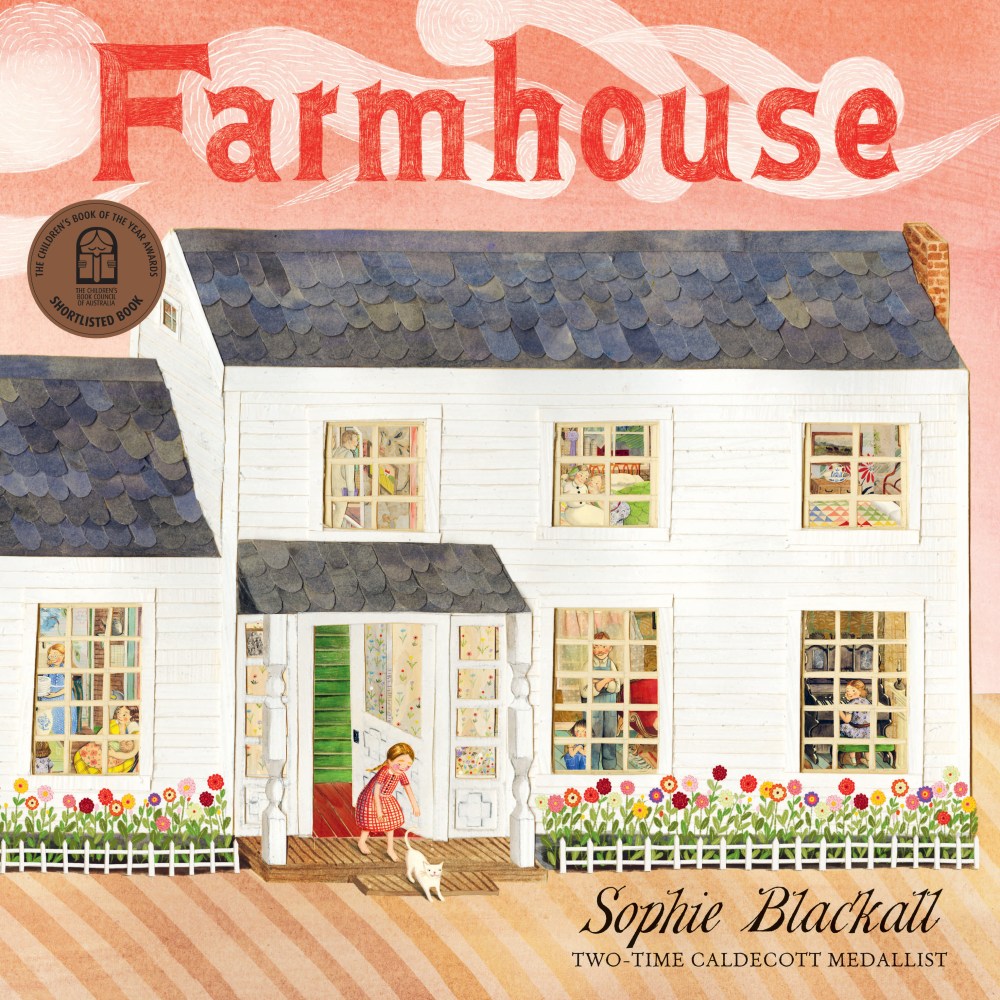
I adored Claire Keegan’s Small Things Like These and Foster. I’m currently reading A Swim in a Pond in the Rain by George Saunders. He’s so funny and also a genius if you ask me! And picture books I’ve loved are Farmhouse by Sophie Blackall, Hot Dog by Doug Salati, and King Baby by Kate Beaton.
Thanks, Joy! Thank you for your interest in the book and my work.
Thank you Jane. You always write such thoughtful, interesting, generous answers to my questions. No doubt Look Me in the Eye will be snatched up by readers. All the very best with it.
A Walk in the Dark Interview with Jane Godwin at Paperbark Words blog
When Rain Turns to Snow Interview withJane Godwin at Paperbark Words blog

 paperbarkwords.blog