
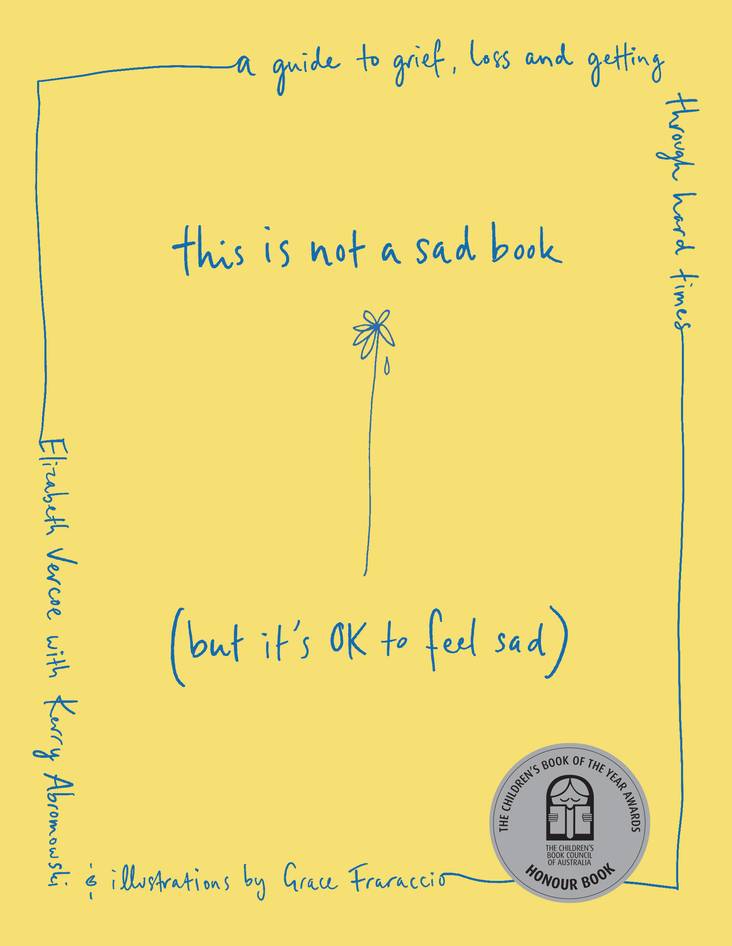
This Is Not a Sad Book (But It’s OK to Feel Sad) by Elizabeth Vercoe, illustrated by Grace Fraraccio
(A guide to grief, loss and getting through hard times published by Affirm Press)
This Is Not a Sad Book (But It’s OK to Feel Sad) was originally The Grief Book – now in a new iteration and with changes that Elizabeth Vercoe explains in her guest author post below.
I promoted the book widely years ago (when in its original form) because it was such a helpful manual. I particularly recall the advice about going to the water if grieving or feeling down for any reason and am prompted of this whenever I’m at the beach.
Liz has answered my questions about The Grief Book‘s journey to its new iteration as This Is Not a Sad Book (But It’s OK to Feel Sad), how she decided what to include this time or not, her favourite sections and parts she deems most important and helpful, as well as responses to the book over the years.
Guest author post about This Is Not a Sad Book (But It’s OK to Feel Sad) by Elizabeth Vercoe for Joy in Books at PaperbarkWords blog
The story behind the book and its new iteration
Walking
I’m walking the dog, it’s drizzling and Toffee insists on crossing the main road right this very second. Never mind that there are cars splashing up puddle water which soaks my feet. Never mind that she’s wrenching my good arm out of its socket, or that she’s steering me into the oncoming traffic. Because I’ve got more important things to attend to – like the voice on my shoulder.
Kerry’s here again. And while I’ve been thinking about revising our book and pondering a suggested editorial change, she’s inside my head, saying “You can’t use that. It makes me want to puke.’
Kerry, my friend and co-author. She died over ten years ago, but she constantly barges into my head with ideas and today it’s intense. I literally cannot get anything past her. I know, I know. It’s all a bit woo woo (and weird and inconvenient, to be honest). But I’ve come to accept that this is just how I roll and that it’s okay. Plus, physicists tell us that energy never dies, it just changes form…
The Grief Book
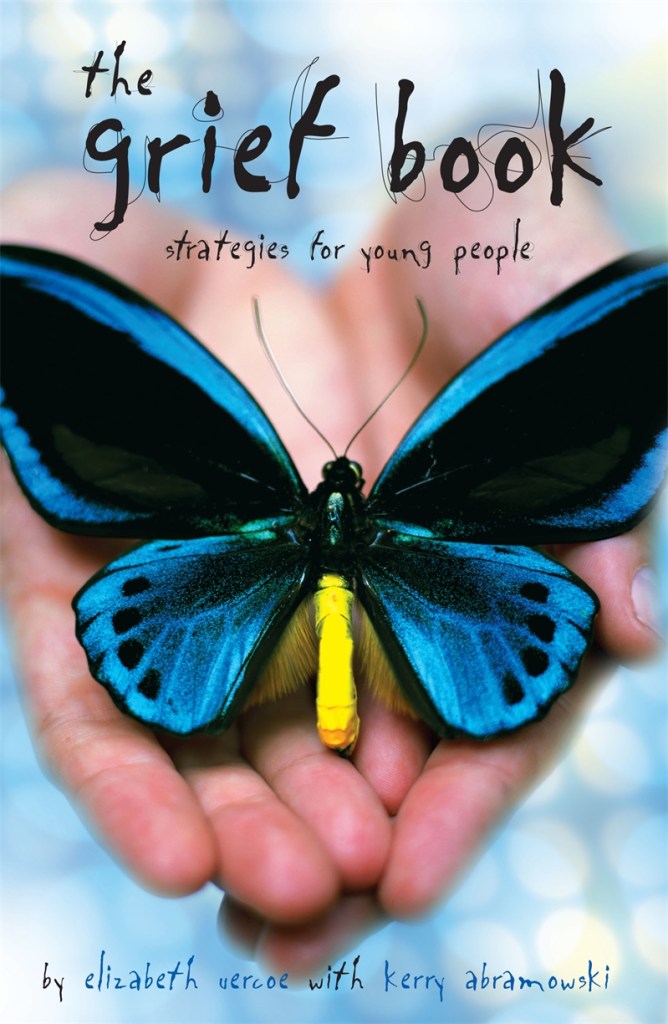
Kerry Abramowski and I first published This Is Not A Sad Book as The Grief Book – Strategies For Young People in 2004. Back then, she was a grief worker and the head of CanTeen Victoria, where I volunteered in my capacity as a cancer survivor and high school performing arts teacher.
The Grief Book was borne from conversations and experiences with teens who needed – but didn’t have – a book on Grief, Loss and Hard Times. This was way before everyone had a mobile phone, and there was no such thing as an online support group or viral cat video!
Kerry was quite the visionary and good at delegating, so she enlisted me to help run ‘Good Grief’ weekends for CanTeen. We both soon recognised the need for a tool that reached further than CanTeen’s camps and meetings, because sometimes young people couldn’t make it to these. There are lots of ways to do it tough, and kids who were isolated through illness or geography (stuck in the geriatric unit of a regional hospital, for instance), were just the tip of that iceberg.
And so, we combined her expert knowledge with my lived experience and love for writing. Our criteria were that the book would be ‘real’ but not sad or scary. That it would acknowledge grief as a potentially hard and messy time. That it would offer practical help and strategies to get through.
And so, the lovely folk at Black Dog Books who had published my Young Adult novel, released The Grief Book. It was awarded a CBCA Honour Listing in 2005, before going out of print around a decade later.
This Is Not A Sad Book
A few years ago I ran into the book’s original editor and was inspired to rewrite it, to align with the needs of young people today. The rights were reverted to me, and then to the new publisher. This Is Not A Sad Book now has a new name (thanks, Mel!) and a new home at the visionary Affirm Press. Funnily enough, Kerry always wanted the words ‘Not A Sad Book’ to appear on the original.
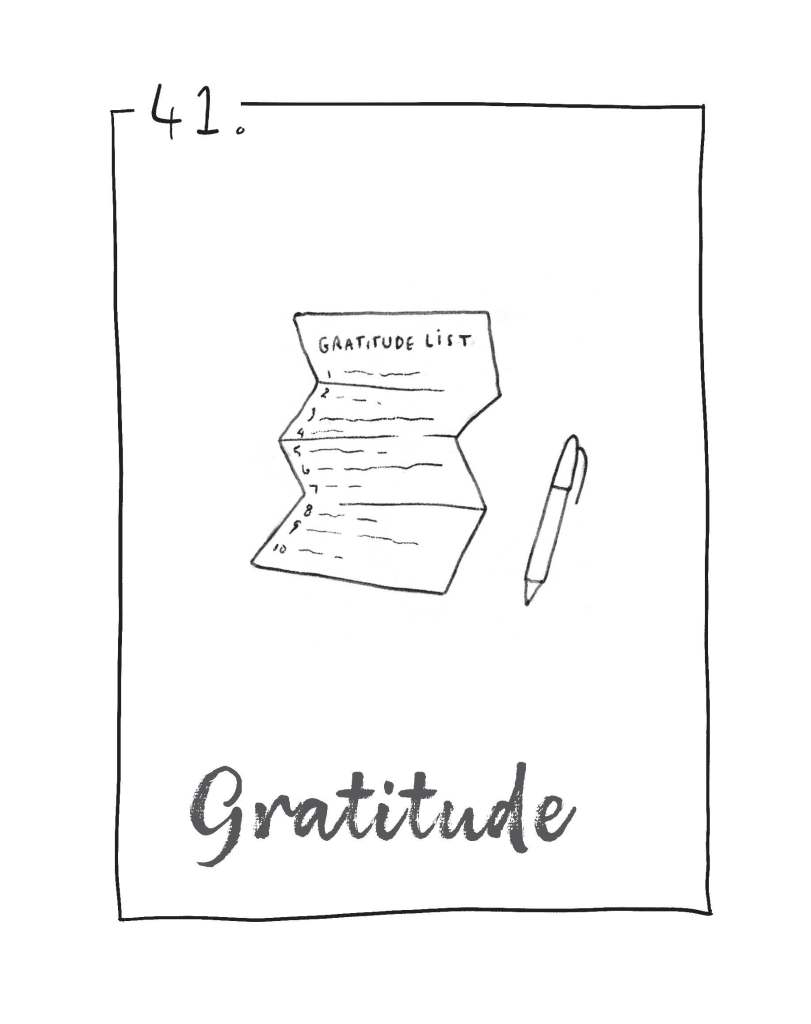
This Is Not A Sad Book has a sunshine yellow cover, robust revisions, delightful illustrations by Grace Fraraccio and the blessing of Kerry’s family. A chapter on her death has of course been included after much discussion about where in the book it belonged, along with new sections addressing issues such as the pandemic, being online, anxiety, isolation, gratitude and mindfulness. The content of the book has been freshened up and it now contains 54 ‘trick’s rather than the original 52.
I love that this new version feels inviting, friendly and inclusive. The pictures add a wonderful, extra layer of depth. It still contains the proven, best practice for dealing with grief and loss (strategies that actually work for all ages), and it’s still written in language that’s accessible to young people.
Editorial changes
I was SO surprised at the things that we’d initially included that would just not cut it in 2024.
Some words are now much more loaded than they used to be. ‘Stupid’ and ‘crazy’, for instance, have been replaced. The phrase ‘my bum looks big in this’ was originally an example of negative self-talk, but today a large derriere is often sought after!
We’ve also made editorial changes around being more aware of gender identity and sexuality, and more mindfulness around conversations to do with mental ill-health.
Using diet and exercise to manage grief, sadness or illness was not a mainstream thing back in the early 2000’s. There was less acceptance around meditation, playing a fun and energising mixed gender sport (which could lead to promiscuity) or eating wholesome foods for wellbeing. In 2024 it seems there is more general awareness and measured conversation around these issues.
The new version also has a smattering of added concepts around thoughts and their power in our lives – my favourite parts of the book, because they offer constant, tangible possibility! These ideas are not overt or ‘smack-you-over-the-head-obvious,’ but rather, are gently scattered through the text.
It feels that today, there’s more acceptance of the ideas around self-help and using lifestyle ideas to encourage our bodies and beings to not only be well, but to thrive.
Response over the years
And finally, the response to the book over the years has been incredibly heartwarming. The connections from young people, teachers, psychologists, chaplains, friends, strangers and students have been generous and uplifting. There has also been consistent feedback from adults about how they’ve used the book for themselves, too.
I so appreciate the opportunity to bring the book back in this new and uplifting version.
This Is Not a Sad Book (But It’s OK to Feel Sad) at Affirm Press

 paperbarkwords.blog