
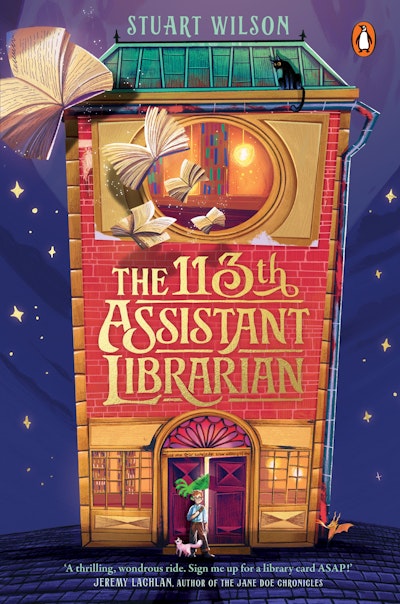
The 113th Assistant Librarian by Stuart Wilson
(published by Penguin Australia)
Author interview with Stuart Wilson
“‘My dear boy, books are powerful ….’ The librarian paused to cough with a horrible chesty rattle, wincing as he did. ‘They are more than simple bound pages. Books may record the past, predict the future, or hold the darkest of secrets. At their best, they are societal equalisers. At their worst … well! Words can teach the truth as easily as they can spin a lie. And that’s not even considering that which lurks between the lines. The knife of interpretation is paper-thin, yet it cuts through minds with the slightest of pressure. Underestimate books at your peril.’” (The 113th Assistant Librarian by Stuart Wilson)
You’ve created a fabulous book in The 113th Assistant Librarian. I was so engrossed while reading it that I didn’t hear someone speaking to me (that actually happens surprisingly rarely to me while reading) and had to be pulled (reluctantly, and with a visceral tug) back into the real world to answer their question.
The book has the satisfying hallmarks of a wondrous fantasy. Most of these are to be discovered by its readers. I will reveal that it is also exciting, affirming, has a maturing protagonist, a clever twist and is easy to read.
It’s an epic in a library.
Thank you for speaking with Joy in Books at PaperbarkWords, Stuart.
Why the number 113?
When first brainstorming the idea, I quickly realised that the title had to be ridiculously cumbersome in order to reflect the overwhelming – and overwhelmingly silly – aspects of Oliver’s Trade. This, coupled with the high mortality rate of staff at the Blackmoor-upon-Wyvern public library, meant that I settled on the title before I had even started writing the first chapter.

As in all the best fantasies, there are some obvious literary influences in The 113th Assistant Librarian. You seem to pay homage to Wundersmith, The Giver, Harry Potter, The Ranger’s Apprentice, Fly by Night, The Grandest Bookshop in the World and others. Which book or series are you happiest to have The 113th Assistant Librarian associated with? Why?
I pitched this book to my agent as The Name of the Rose meets Inkheart, which she found hilarious (in a good way…I think?) She then used the same comparison when pitching to my publisher, who also found it hilarious. (Still haven’t worked out if they were laughing with or at me.) But you are correct that the first couple of Ranger’s Apprentice chapters were on my mind when I wrote my own opening scenes (John Flanagan and I share the same publisher), and of course The Grandest Bookshop in the World was always going to be an apt comparison, with its wonderful blending of fantasy with real-world issues. Terry Pratchett’s Discworld was also an influence, in that I was writing a fantastical world that was as absurd as our own.
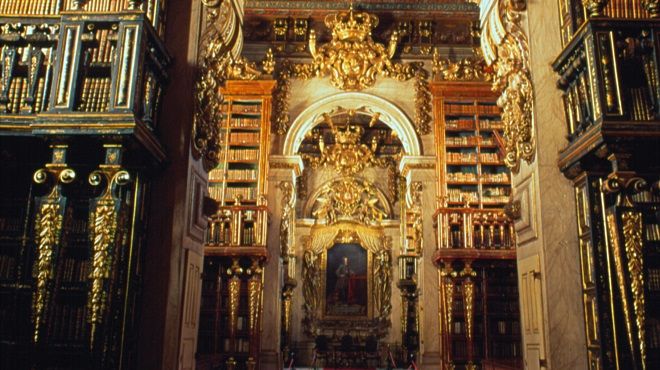
Your world-building is a highlight of the book. Your bookworms and bats are fantastic. They remind me of a library in Portugal, The Biblioteca Joanina in Coimbra. What was your inspiration here?
That very library is indeed the inspiration for the bats! Early on, I did a deep dive on the history of libraries, and unique examples from around the world. I quickly decided that the bats should feature. More generally though, I had been wanting to write a cosy fantasy for many, many years – before that sub-genre even had a name. Focussing on the average folk in a fantasy world helps the make-believe setting feel real.
Could you encapsulate something of the Guild, Calling and Trades for us?
This aspect of the book comes from my frustration with the emphasis adults place on asking children (and teenagers, and indeed other fully grown adults) what they want to do when they grow up. I didn’t even decide I wanted to be an author until I was 25! Indeed, there was a running joke at our high school whereby students would universally nominate ‘marine biologist’ simply because they were sick of being asked.
But the Trades system of course follows a tradition in kidlit and YA, whereby the main character is asked (or more often, told) what kind of person they are going to be. While poor Oliver doesn’t get a say, I also wanted this story to sing the praises of those who don’t work in illustrious careers. I detest job snobbery, which is why I filled my fantasy novel with characters who have so-called ‘ordinary’ careers.
Apart from being an assistant librarian, which trade would you like to be apprenticed to, and why?
The Lamplighters’ Guild would be my pick – they take good care of their workers!
Family is important to your young protagonist Oliver, even though not all its members are kind to him. How does he overcome this?
Oliver starts the book desperate for his father’s admiration, but slowly learns that it is a futile task. Understanding the limitations of what his family members can offer him might sound depressing, but I think it can be freeing. I resisted the urge to have someone like Oliver Senior have a complete change of heart, because what are the chances of someone his age, and so set in his ways, having an epiphany?
Oliver’s sisters are portrayed as being fulfilled in their trades. Why is his mother seemingly diminished?
This is one of the incorrect assumptions that Oliver makes (along with the idea that librarian is an unimpressive career choice, or that working in the library will be boring). Part of the reason for this is because his father has such a big personality (as well as everyday sexism). Meredith Wormwood is actually a force to be reckoned with!
I love how you’ve set most of the plot inside the library. What do you find so exciting about libraries? What delights you about the library you’ve created here?
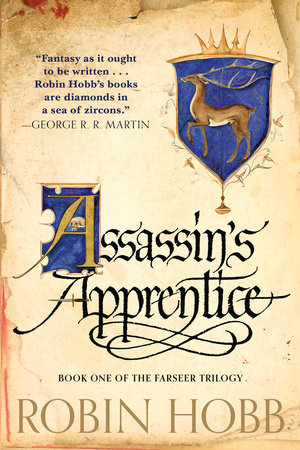
I love books with constrained settings. One of my favourite fantasy novels is Assassin’s Apprentice by Robin Hobb, which is primarily set within a castle. I love the writing challenge that comes with such constraints.
I wanted to set a story in a library because they are such unique places. Anyone, old or young, can walk straight in, spend hours reading or watching or listening – without spending any money. And there are staff on hand to help you, should you need them – magical places indeed!
You describe the library and books fantastically. What is one of your favourite descriptions of the library in the book?
‘From his station behind the front counter, it appeared as if the stacks simply comprised six rows of bookshelves equally spaced apart. But the moment you stepped between the stacks, everything seemed to change. Aisles ended in cul-de-sacs, others featured surprise doglegs, and the occasional bookshelf stood alone, such that you could walk a complete circle around it. Oliver even encountered an aisle that wound in a spiral, getting smaller and smaller, like a snail’s shell. (Fittingly, the Malacology section could be found at its centre.)’
This features not only my obsession with mazes and labyrinths, but also harks back to the secret library from The Name of the Rose, as well as my lifelong love of Terry Pratchett’s Unseen University Library.
You show libraries, books and words as being powerful and sometimes quite dangerous –
‘… magical. Or deadly. Or both.’
Words are important and can be highly nuanced.
In one scene Oliver and his sister Heloise discuss whether another character is ‘elusive’, ‘illusive’ or ‘allusive’. Which of those words best describes your book, and why?
Illusive, I think. Oliver’s assumptions about the library about misleading, as are his assumptions about the hierarchy of power (namely, that the Trades with the most respect are also the most important).
113th Assistant Librarian is a satisfying, fully resolved tale in itself but once you’ve read it you want more. When is Book 2 coming (hopefully very soon) and please give us a tiny teaser about it?
Thank you so much for your kind words! Book 2 will be due out in a year’s time. The body count is lower but the stakes are higher, and you will definitely see more of Meredith Wormwood, Oliver’s amazing mother.
113th Assistant Librarian at PRH
My interview with Amelia Mellor, author of The Grandest Bookshop in the World

 paperbarkwords.blog