
Leo and Ralph by
Peter Carnavas
(University of Queensland Press)
Author/illustrator Interview at PaperbarkWords
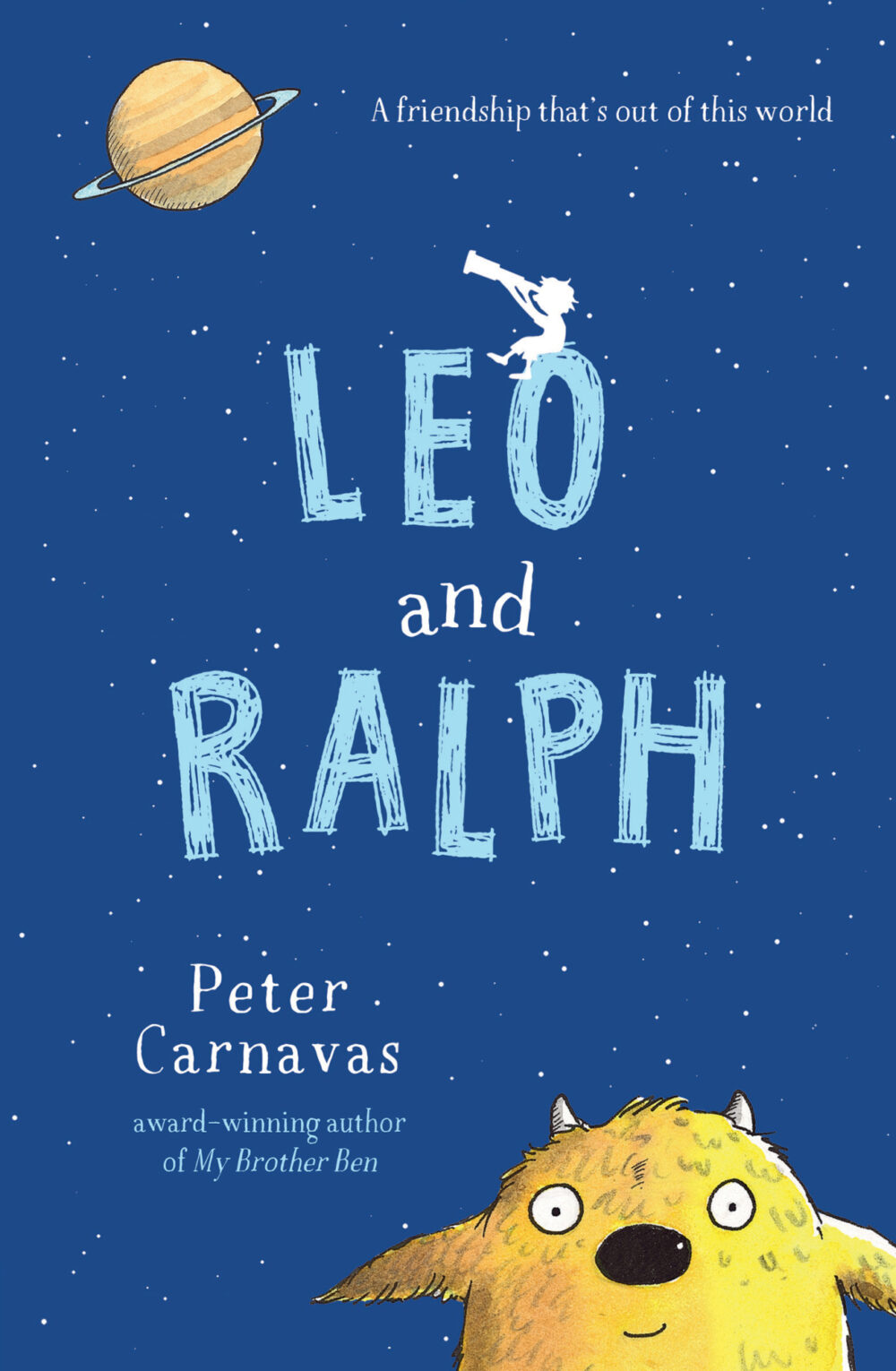
“Leo dropped the telescope and rolled over, laughing. Ralph always cracked him up like that. They had … dreamt of planets with funny names, imagined the creatures that lived there and the spaceships they might fly. If Mum didn’t call out to Leo each night … he’d stay out until morning, lost in those faraway worlds that no one else knew. No one – except Ralph.” (Leo and Ralph)
Leo and Ralph is full of heart. A reflective tale, told with kindness, grace and humour, it gifts the reader with small and big surprises. It should be hailed as a contemporary Australian children’s classic.
Thank you for speaking to PaperbarkWords, Peter.
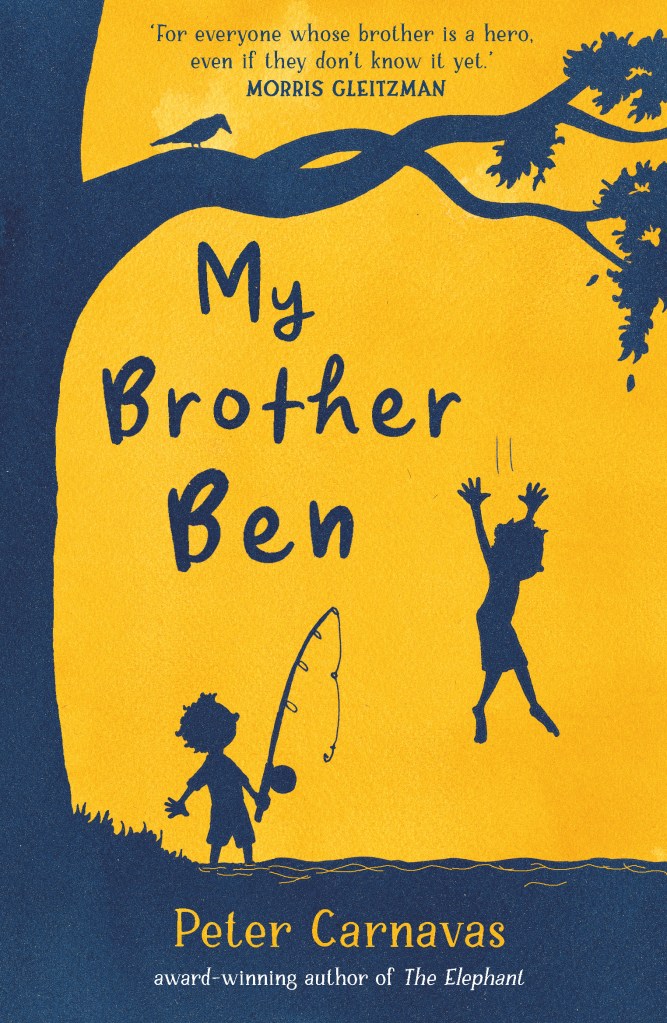
Leo and Ralph follows your poignant, awarded novel My Brother Ben. I know that most of your books don’t have names in their titles but is there a reason why your two most recent novels do?
When I name a novel, I want it to be simple, memorable and not too wordy. It’s often the first thing I name the draft and it sticks. The title, The Elephant, couldn’t be simpler, and no-one seems to forget it. These last two books with names in titles – it’s just what I called them from the start and nothing else seemed worthy of replacing those titles.
I love how you describe Leo as never seeming “to fit neatly into the jigsaw puzzle of other kids.” Could you tell us a little more about him?
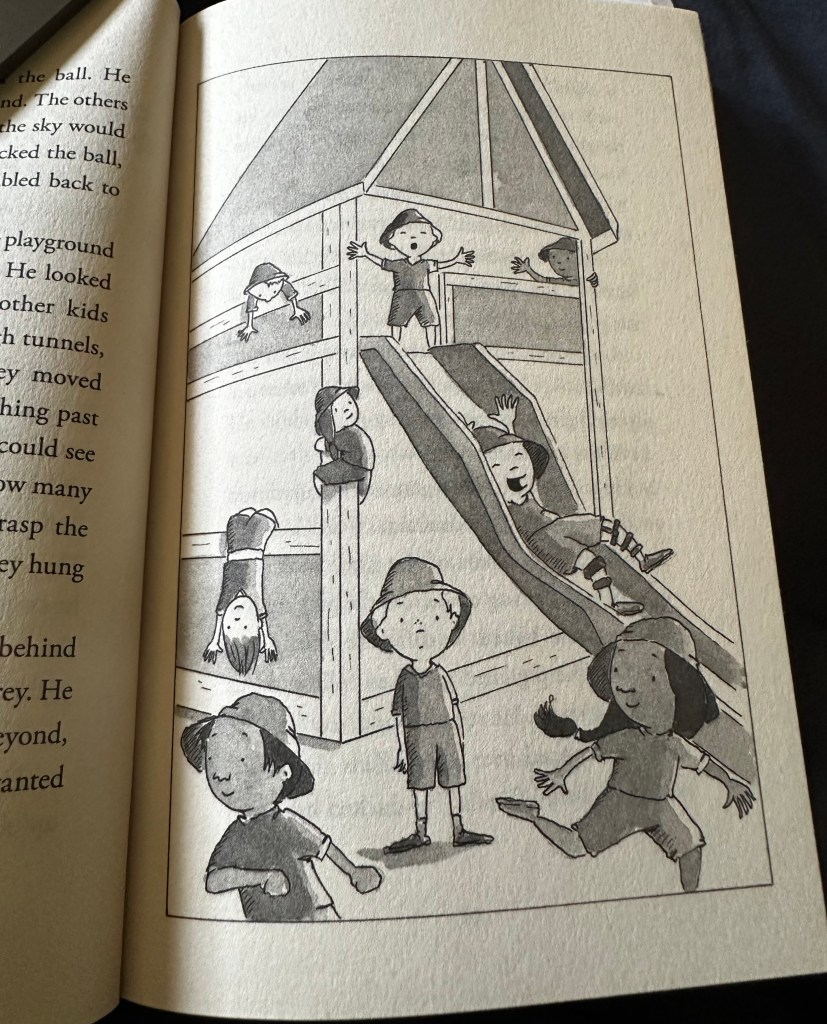
Leo is a quiet, bright boy who finds it hard to make friends. He stutters a bit and even though his mind is sharp and full of imagination, he feels a few paces behind the others, socially. It therefore makes sense to him to look elsewhere to find a friend, and that means dreaming up an imaginary friend that fits just right. Some readers have asked if Leo is neurodivergent. I didn’t write the story with this in mind but I can appreciate this might be the case – always happy for readers to interpret characters in their own way.
What do you most appreciate about his family?
I love that they are supportive, even though there are signs that they worry. In early drafts, Leo and his parents really clashed but it didn’t seem to fit. I avoid conflict in real life so I sometimes struggle to put it into stories – tough, because conflict is essential to a strong narrative. (You might notice I don’t have many outright villains in my writing.) So instead of straightforward conflict between Leo and his family, I tried to create rising tension instead, and keep them as supportive as possible.
It is rare to integrate ‘school refusal’ in a novel for younger readers. Why have you included it?
School refusal can be a complex issue. I included it here as a bit of a breaking point for Leo, a fight or flight thing – when the pressure gets too much, he decides the only way to make the murky feelings stop is to remove himself from the environment and not go to school anymore.
When Leo and new family move to hot, dry, inland Dundle, his new teacher Ms Pengari is a ray of light. When Leo first meets her at her classroom door, she is wearing a “flowery Hawaiian shirt, fluro yellow boardshorts and a pair of flippers …” to motivate her students to rescue Dundle pool. How can a gifted teacher like this welcome, set at ease or help turn a child around?
I guess it’s a balancing act between giving children space and gently prodding them to step out of their comfort zone. It was important for me (after a few dodgy drafts) to have positive people around Leo because, in the end, he needs to know the world isn’t against him, people are really quite nice, and he needs to open himself up to new friendships. Again, early drafts had mean teachers, mean kids – it just didn’t add up.
Your story invokes such strong emotions but gently suggests to children how to embrace or deal with them. Could you tell us more about one of the emotions you explore in the book?
I’m not sure if it’s an emotion but at the core of this story is the idea that we are often rewarded when we step outside our comfort zones. Ralph is a saftey mechanism for Leo and he doesn’t think he’ll ever need anyone else. So when he finds himself accidentally making a new friend, he has some big decisions to make. I’m actually the worst at this – there are a few things I’m good at and I’ve been doing them since I was a kid. Might be time to branch out.
Leo and Ralph circles around friendship. Apart from reading your book, what’s a word of advice you would give a child who is trying a make a friend?
It’s a cliche (and was the premise of my very first book, Jessica’s Box) but the most important thing is to be yourself. Otherwise the friendship feels false (and so do you).
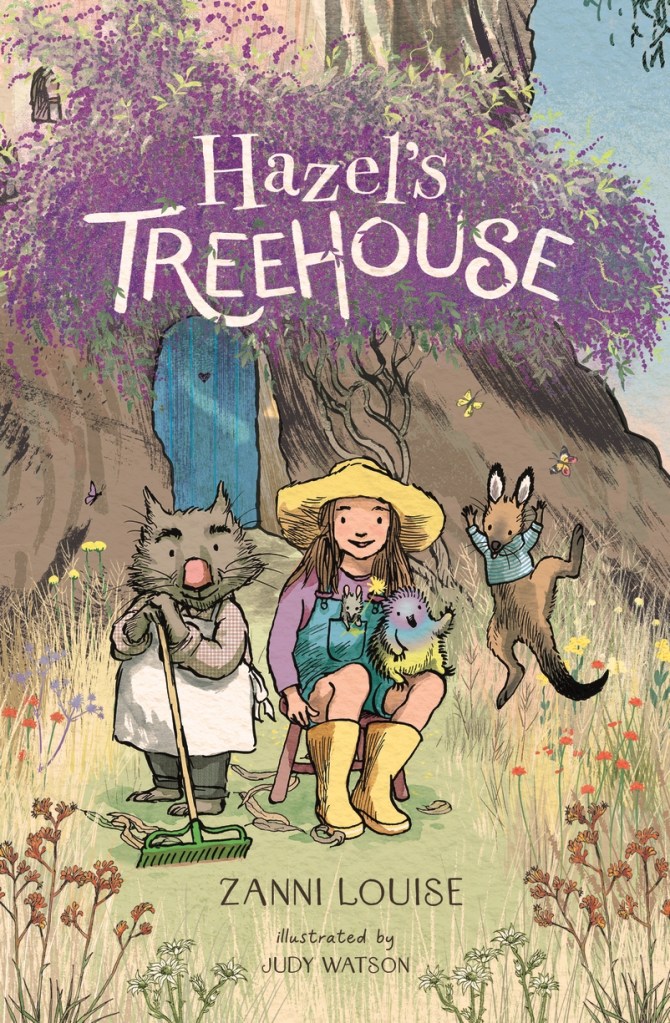
Leo’s friend Ralph’s fur changes colour. It’s interesting that a character also changes colour in Zanni Louise and Judy Watson’s lovely new book Hazel’s Treehouse. Why is colour change such an evocative way of showing emotion?
I have Hazel’s Treehouse next to my bed to read! You’re right – there are a few books and films that use this tool. It’s probably a clear way for children to understand emotions in a visual sense. I find children grasp this concept very early on – it seems to be part of our shared understanding of the world, attaching colours to feelings.
One of the highlights of your story is how you reveal who Ralph really is. I don’t believe it’s a spoiler because it occurs so early in the book, but – tricky question – could you describe how you enable his true identity to unfold?
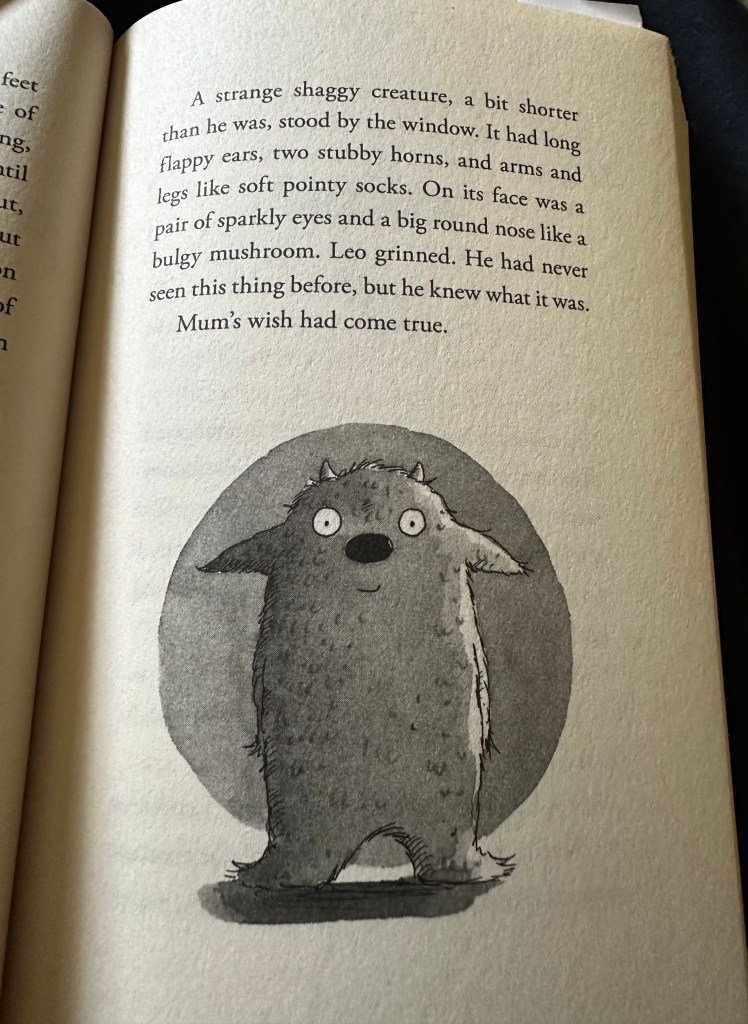
Writing an imaginary friend is a complex thing (not sure if I’ll ever try it again). I twisted myself in knots sometimes, trying to work out exactly what Ralph was to Leo – a symbol, a mirror, the side he never shows or a visitor with independent thoughts? For this reason, I wanted to make it clear to young readers exactly who and what he is – an imaginary friend that simply fits with Leo. I did enjoy giving the character some creative space, though, especially in the way they first meet each other. Instead of Ralph just appearing in a dream or coming to life from a drawing, he floats down on a white balloon and thumps into the house. There had to be a bit of independence to Ralph so he was more than Leo’s shadow (even though Leo is still imagining it all… see, it’s complicated!).
Leo and Ralph make up funny planets, such as “a milkshake planet, a tiny elephant planet, and another with aliens like kernels of corn that popped into popcorn if they got mad.”
And Ralph describes aspects of his planet Ralphora to Leo, the “trees are made of fairy floss and the rivers are full of pink lemonade.” These conversations reflect some of the imaginative quality of their friendship. You kindly agreed to sketch an original illustration for our interview about My Brother Ben, a picture I adore. Even though you already have wonderful illustrations throughout Leo and Ralph, would you agree to quickly sketch any of the above quotes (or another part of your story) for us?
I’m happy to give you a picture but I hope it’s okay if I cheat. Instead of drawing something new, I’ve given you a rough sketch I did that never appeared in the book. It’s a picture of Leo and Ralph lying on the blanket, looking up at the night sky.
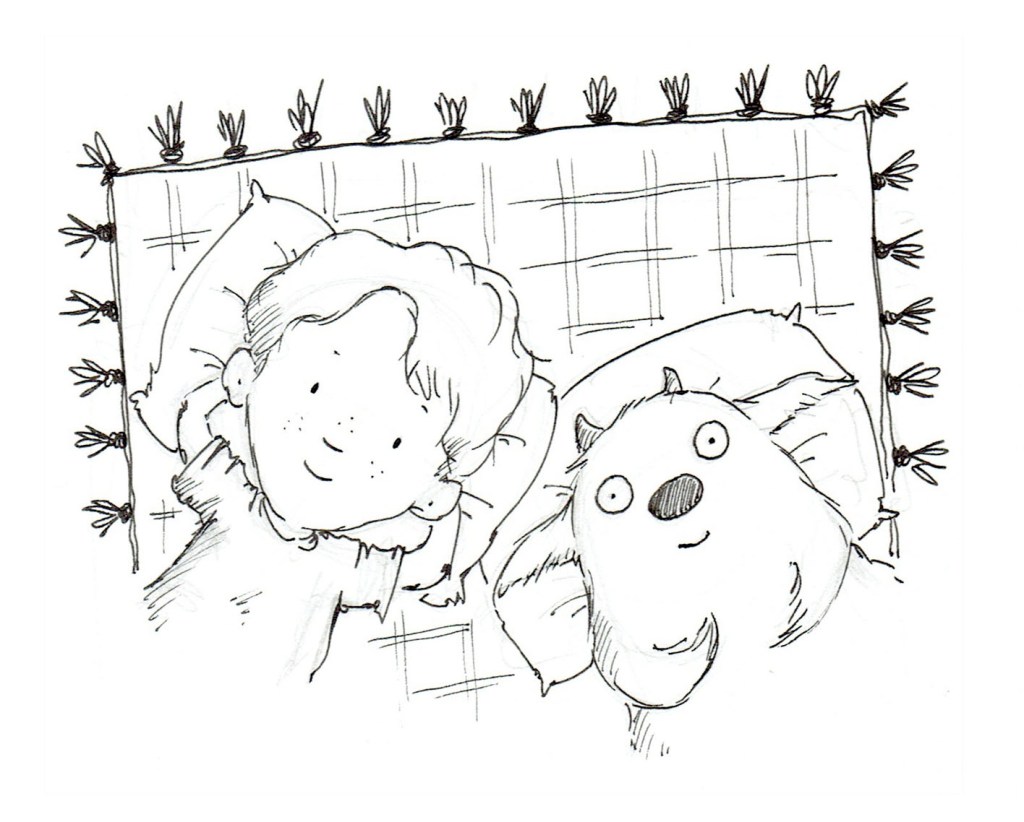
(What a treat for us. Thanks so much, Peter.)
Have you (or do you know of anyone) who has a friend like Ralph? If so, how have you blended anything of that experience into your story?
I have never had an imaginary friend but my daughter had a few when she was younger and she would dream up lots of imaginary worlds, too. She kept an eye on this story as I wrote and was a great consultant (I thank her for this in the acknowledgements).
Who have you written this book for?
I write for whoever wants to pick it up. I don’t always have set readers in mind but I hope it might be used as a read-aloud novel in classes. Sharing a novel in a class is one of the best experiences for children – it’s getting harder for teachers to do with so much else muscling in on their time.
What are you writing now or next?
I’m very excited about my next book. It’s a hero’s journey about a young miniature goat who embarks on a big adventure to find his family. It is called Kid, will be published by University of Queensland Press and will come out in 2026. I have a few chapters left to write in the first draft. I always love writing but I’ve never felt better about a book – I’m sure those feelings will fluctuate when it comes time to edit but for now, I’m having a great time.
What have you read recently that you would like to recommend?
I’ve read some adult fiction over the summer. Claire Keegan’s work is a standout for me. Perfect writing – efficient, powerful and short.
How would you prefer your readers contact you?
My contact details are on my website, petercarnavas.com, and I’m sort of on Facebook and Instagram.
Thank you for your responses, Peter and for the compassion, understanding and joy you create and share in Leo and Ralph and your other books.
You’re welcome. Thank you for your insightful questions and your championing of children’s literature. Always a pleasure.
Leo and Ralph at UQP (& book trailer)

 paperbarkwords.blog
One thought on “Leo and Ralph by Peter Carnavas”