

The Bee Squad: Boosting biodiversity in your neighbourhood
by Judy Friedlander
Published by NewSouth Publishing
“Children around Australia have started a revolution. From the coast of Western Australia to western Sydney, they’ve been discovering the nature in their schools and neighbourhoods, planting to attract bees, birds and butterflies, and building insect hotels. They’ve been learning about the amazing native species around them, and cleaning up beaches and rivers to make them healthy for birds, fish and other creatures.” (The Bee Squad)
Author Interview with Judy Friedlander
Congratulations on the publication of your timely and practical non-fiction resource book for young people, The Bee Squad, Judy, and thank you for speaking with Joy in Books at PaperbarkWords.
Thanks Joy. So pleased it resonates! I definitely feel like people – young and older – are looking for positive and practical things to do to help our environment, and in particular, the many species around us that are suffering.
Where are you based and what is your background?
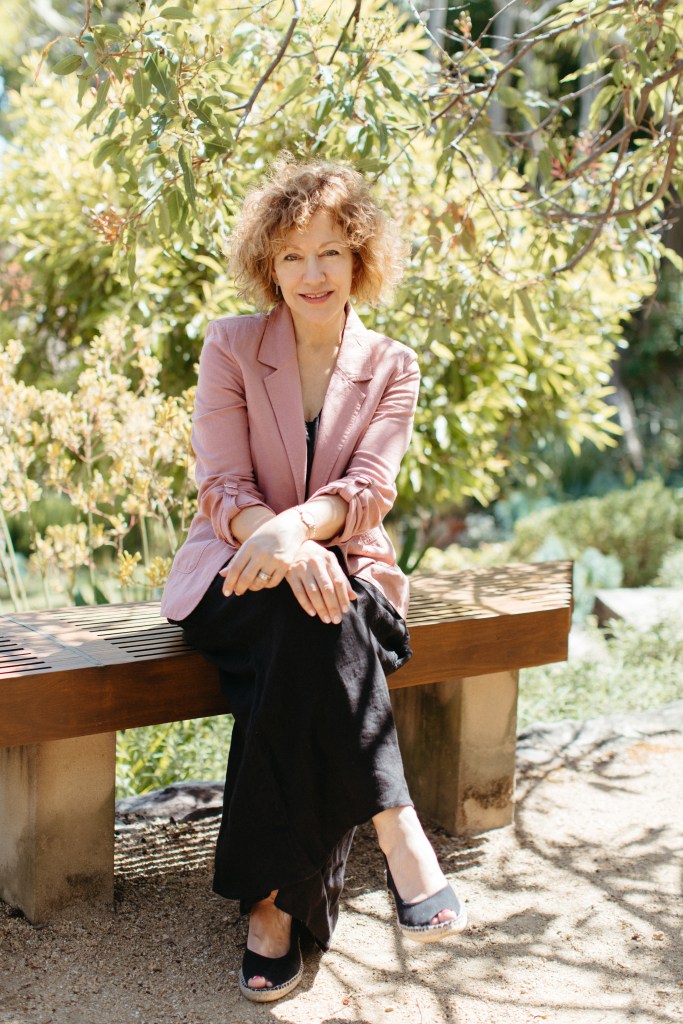
I am based in Sydney – I call myself a child of Sydney – as I was raised by the creeks and waterways of its shores, with the cicadas, birds, possums and more as childhood friends who accompanied me when I played. It was a magical childhood and my human friends and I would disappear into the bush behind our homes in Lane Cove and Longueville and play by the rock bridge under the ferns where we were convinced there were fairies. And I often spent time up in Pittwater where I was obsessed with the rock pools and ‘my’ rock. My neighbour Jane and I would sit on ‘our’ rocks for hours, looking out at the wind-whipped water, the little sail boats and dinghies and birds spearheading the water for fish.
You can see I get a little carried away reminiscing about my childhood. And it makes me realise that being one with nature as a child is so important as it keeps you grounded and inspired as you get older. I am so concerned that children may be missing out on this with ‘Smart’ devices and urban living creating a smokescreen to nature. We need to be reminded that nature is a great healer and a very simple way to be restored.
I have a few hats in terms of my professional background. I started as a journalist with newspapers – the usual cadetship route – and worked at The Sydney Morning Herald, The Australian and The Sun-Herald where I did stints as associate editor, section editor and feature writer. I then worked in television as a Channel Nine and Channel 10 researcher, producer and documentary maker. Later on, I returned to academia where I, for my sins, did a PhD and then started a not-for-profit called PlantingSeeds. As someone who has always been passionate about ‘the environment’, it has figured prominently in my professional career. The television documentary I was involved in was called Down to Earth and it was devoted to providing practical ways that the everyday person could help planet earth. Many of my journalistic articles have also had environmental themes. And the PhD I did at the Institute for Sustainable Futures at the University of Technology Sydney was devoted to finding ways to get the environment into media and how to make an ‘inconvenient’ message convenient. The not-for-profit emerged from all this. And its flagship program, the B&B Highway, is both educational and practical as I truly believe that you can’t just talk about solutions, you have to practise them and you need to show how things can help. I am so proud of its achievements, created with some stellar people. We are now in over 220 schools in three Australian States and have the support of the NSW Dept of Education for national use and the CSIRO’s Atlas of Living Australia.
One thing I have to also say is that I am incredibly thankful that my parents felt so passionately about the nature of Sydney too.
What’s your favourite environment or habitat? Why?
As you may guess from my earlier responses, it is where the bush meets the waterways of Sydney. The mangroves and the rock pools are the nurseries of Sydney and the life that grows there holds promises for richness and fertility. And disappearing into the gum trees, ferns and sandstone shelters and grottos of the bush is where you can find so much life as well. Cicadas, native birds, beetles, lizards and more.
Why have you written The Bee Squad and how did the process of publication of The Bee with NewSouth come about?
NewSouth approached me after seeing an article I had written for The Conversation. It was about why citizen science is a perfect quest and activity for children, due to its way of getting those smart devices and attached hands out into nature for the purpose of taking biodiversity observations which can then be added to the Atlas of Living Australia database, helping with research. I remember the conversation I had with Elspeth Menzies from NewSouth and I suggested there could be a broader book encompassing the many ways children could be engaged with nature. I had been acutely aware that ‘the environment’ was often categorised as ‘climate change’ and passionately believe that biodiversity and species loss is a huge often unarticulated issue that needs unpacking, articulation and strategies to resonate. People are really feeling it deep down but it is often not discussed. Sure enough, after doing some research it became apparent that there were very few books on the topic, particularly for children and particularly with an Australian orientation. The book recognises that people engage with nature in many ways – through science, for example, through citizen science; through advocacy, photography, illustrations and art, creating beautiful gardens and habitats, learning about fellow species – ‘What? There really are nearly 2,000 species of Australian bee and 11 of them are stingless and make honey?’ and more. There is a chapter on how greening is ‘cool’ because growing plants also helps cool down the neighbourhood and counter the urban heat island effect. So climate change as an issue makes an appearance too. Which is important as everything is connected after all.
Why have you called the book The Bee Squad? Could you briefly pitch the book to our readers?
Well, originally I wanted to call it The “B” Cause…. Cool, isn’t it? You know, ‘Be-cause’ biodiversity with a capital B is so important and the Best Cause. But I was eventually convinced that this was a little too obtuse and wouldn’t immediately resonate with the intended audience. And, as it was argued, everyone loves bees. So, it became ‘The Bee Squad’. And I well know from going into schools that everyone does love bees. There are so many amazing Australian bee species. I call them the mini charismatic species of our world. Once you start explaining for example, about how 70 per cent of Australian native bees live in the ground and how the Tetragonula carbonaria native bee lives in a hive, makes an incredible spiral structure and creates a delicious lemony honey, you have children – and adults – won over. Then you have them hooked and you can start talking about all the other amazing insects and animals and the plants that support them.
The book does focus on pollinators which is a key aspect of the B&B Highway – Bed and Breakfasts for Bees, Birds and Biodiversity – as over 80 per cent of our plants are pollinated, one in three bites of food are associated with pollination and ‘the birds and the bees’ are, let’s face it, one of the original stories! The book’s tag is ‘Boosting Biodiversity in your Neighbourhood’ as I wanted to convey that there is more inside than just bees.
The ‘Squad’ term hopefully relays that groups of individuals pack a punch. As the research shows, children and adults feel overwhelmed about environmental problems and species’ declines and honestly wonder how their personal acts can help. Once they realise how group actions magnify the impact, they become a lot more hopeful and empowered. The B&B Highway concept is very much about this. The bigger it is, the more powerful and the more empowering. There is a chapter about nature corridors and how children can start even in their own street, on their street verge.
For what readership or age group is The Bee Squad intended?
The book is intended for eight- to 12-year-olds but a number of adults have told me how much they have learnt as well. There is a lot of information in this book, many experts have been consulted and the research is robust. So I would like to think that The Bee Squad would appeal to a range of ages. It does feature fun facts, inspirational stories of young children around Australia doing amazing things and is written with the young reader in mind.
How have you included input or content from First Nations people?
The first chapter: ‘Find the nature in your neighbourhood’ sets up the book, explaining that nature is right in front of us and we need to re-focus on and value what is around us. As I explain, urban areas in Australia not only contain heaps of humans, they also provide homes for many Australian plants and animals. Most are amazed when they learn that one-quarter of Australia’s listed threatened plants and nearly half of all threatened animals can be found in urban centres. And the wisdoms from First Nations people teach us how to really appreciate this as these teachings are about being more at one with our surroundings. And we better do this quickly as the balance is rapidly shifting.
The beautiful teachings and insights from luminaries such as Kalkani Choolburra, First Nations Education and Engagement Leader at Botanic Gardens of Sydney, and Dharawal man Ray Ingrey help to calm us, focus our attention and open our eyes and other senses to the beauty around us. One thing Kalkani says is so beautiful: ‘Think of special species as part of you… feel it, hear it, move like it.’ She explains how if you imagine you are a plant or tree, for example, and stand and move like it, you can think about the way it interacts with the sun, wind, water and other plants. And the same applies to animals. It’s about connecting to Country. Ray Ingrey explains how the Dharawal people of the Sydney area refer to the idea of ‘Country talks to us’, meaning that Country provides information on weather, food and other connected parts of culture. It’s a much broader, more encompassing way of thinking, teaching us to be less insular and more connected to everything around us. The book also features inspirational stories of First Nations’ children and their activities in schools. For example, I interviewed some incredible children in a school in Kalgoorlie that teaches two-way learning. It’s a fabulous practice where children and their parents teach nearby cultures and vice versa.
What is one of the most important parts of the book?
It is important to acknowledge how children are feeling overwhelmed – they know what’s happening out there. They watch, read or listen to the news and they know there are floods, fires, heat waves and other disturbing climate events. They hear about how Australia is a world beater when it comes to losing species. The research around environmental advocacy shows you need to acknowledge the facts – and simultaneously present positive, practical and scalable activities built on solid evidence. The Bee Squad book does this and in the Welcome section and chapter 1: ‘Find the Nature in your Neighbourhood’, talks about human impacts and species loss and how it’s time to do our bit. As I write: ‘Lots of “bits” make a big difference. Acknowledging the issues and the challenges and knowing there are ways to make a difference propels you forward. You know there are issues but you also know there are ways you can help. As I say, you can be a life force. I also relay how I decided to stop just writing about the problems to do something about it through the B&B Highway. You have to lead by example.
The most disturbing?
Scattered throughout the book are facts about our environmental reality – how the climate is changing, and how, for example, April 2024 had the highest global temperature for the month since records began. How in Australia, the temperature gauge has recorded an increase of about 1.45 degrees Celsius, on average, since national records began in 1910 with most warming occurring since 1950. There is talk about how by 2050, it is estimated that plastic in the oceans will outweigh fish if we keep on throwing away plastic at our irresponsible rate. The book talks about the many threatened insects, birds and other animals in Australia and how our love affair with concrete and asphalt and the lack of shrubs spells disaster for small birds and other animals. And how pet cats kill more than 60 million birds every year in Australia. BUT, this is all buffered with ways to deal with these enormous issues. And the inspirational stories in every chapter of children doing their bits – to make a big difference – present a can-do, positive approach.
The most surprising?
This book was also influenced and motivated by my experience working with PlantingSeeds and its B&B Highway program – going into schools, it becomes apparent how children have very limited outdoor education and interactions with nature through their lessons. I understand teachers and schools have a lot on their plate and parents, of course, have this responsibility too but there is a really urgent need for children to lose their outdoor inhibitions. So very few Australians even know the name of one native bee species. And there are over 1700 of them.
One of the best innovations by children, local champions?
Seriously, so many inspirational stories in this book. I was blown away by the children I interviewed. Molly, in chapter 4: ‘Plant a garden for biodiversity’, talks about the huge difference she has made with a balcony garden, and motivated by this success, how she started a school group called Earthlings where they make worm ‘tea’ as a fertiliser for the school gardens. The citizen scientist children in chapter 6 are legends – Grace has been a citizen scientist for seven years – and she is only 11 years old! Luke found a rare beetle which had last been seen in the ACT in 1955. Harvey, in chapter 7: ‘Cool down your neighbourhood’ talks about a game he and his friends have created called ‘Scoop ball’. It allows them to pick up the ball with a plastic scoop when it is too hot. But, importantly, it has also motivated his friends to ask the school to plant more plants to cool down the playground. And 11-year-olds Esther and Lilly in Hahndorf, South Australia, are proud of the fact they are now called ‘mad scientists’ because they hassled their school to allow them to organise a group to clean up the local creek. And they’ve learnt all about water monitorings in the process.
One of the best changes or results you’ve come across?
Esther and Lilly have made a big difference to their local creek’s environmental health with fish, insects, frogs and possums returning to the local area since they embarked on their clean-up campaign. There are other examples of big changes in the book as well. Samantha, 14, in Bundaberg, has been working since she was 11 years of age with the Reef Guardian School program. This program encourages teachers and students to take actions that help the Great Barrier Reef and its connected ecosystems. Samantha has been involved in helping the local magnificent loggerhead sea turtles through encouraging the school community to clean up plastic on the beach and stop using it at the source. Also encouraging the local community to dim their lights in the evenings to help baby turtle hatchlings find their way to the sea. Samantha’s story is an example of how you can join an existing organisation to help make its actions even more impactful.
You have many helpful tips to improve biodiversity. Could you share one here?
A really important one is to always think about layering in your home or balcony garden. Think about ground covers or native grasses as a base; small native shrubs for the middle and taller native plants or trees if you can for the top layer. We are losing our little birds for a number of reasons but a big reason is that too many people are obsessed with exotics, human-made ground covers such as bricks and just decorative small trees or border plants. The little shrubs that provide hearth, home and safety are so important for the little creatures in our urban environment. The chapter where you put yourself in a bird, beetle, bee or other pollinator’s place makes you think about your neighbourhood from their perspective. You have a home and bed for safety and comfort and a ready supply of food. Think about beds and breakfasts for our pollinator friends.
Please select one of the photos, diagram or illustrations and explain why you have included it in the book.
P 41 ‘Leaflet Drop’ is a good one.. it is a template for a leaflet drop for children to ask their neighbours if they can help create a nature corridor in their street.
Could you please share one of your favourite ‘Arty Activities’?
The book suggests a number of creative art activities inspired by local nature and advocacy. A good place to start is with plain brown paper and markers and pens. Children can go outside to find inspiration for their illustrations and use the paper with pictures as wrapping paper for presents. And the children can think big by having their school run a nature art exhibition – with the money raised from the children’s art pieces and photographs going towards a beautiful school garden full of native plants.
What are you working on or writing now or next?
PlantingSeeds’ B&B Highway recently won one of three inaugural Australian Geographic Awards for Nature. The team and I are busy with plans to create more B&B Highway school gardens and implement the educational program which sits alongside this. I am also working on more high-level programs encouraging corporates to sponsor school regeneration education and practices through the B&B Highway initiative. It’s a fabulous CSR initiative and allows staff and employees to help their children’s school. I still enjoy writing for newspapers and am always thinking of stories to get people engaged and excited in environmental initiatives.
What else have you been reading recently that you would like to recommend?
Quite an eclectic range of books really – from ‘The Illustrated Book of Japanese Haiku’ compiled and translated by William Scott Wilson with illustrations by Manda. ‘The Politics of the Earth’ by John Dryzek is an oldie that I recommend for anyone who wants to think about the discourses around politics and the environment. And ‘Cloud Atlas: Everything you Want to Know about Clouds’ by Sarah Zambello takes me back to my childhood where I loved cloud watching, finding the animals within them, and contemplating air, water and magic.
How would you like readers to contact you?
They can contact me through my emails: either Judy@ps.org.au or BeeSquad@ps.org.au.

 paperbarkwords.blog
One thought on “The Bee Squad by Judy Friedlander”