
The Buried Life
by Andrea Goldsmith
(Transit Lounge)
‘His interest in death had come about, somewhat to his surprise, when he was exposed to religious belief for the first time. Both his grandparents were avowed atheists, and he didn’t attend religious instruction at school. But at university he met people of faith, and he was fascinated by how and why they could believe what they did – the miracles, the angels, the guidance from an omnipotent, invisible being, the heaven and hell eternities. He enrolled in a philosophy of religion unit in order to learn more, and that led him to Epicurus and his famous words: Where life is, death is not. And where death is, life is not.’
(The Buried Life)
Author Interview: Andrea Goldsmith
Thank you for speaking to Joy in Books at PaperbarkWords blog, Andrea.
I really enjoyed answering these questions. Thank you for asking me.
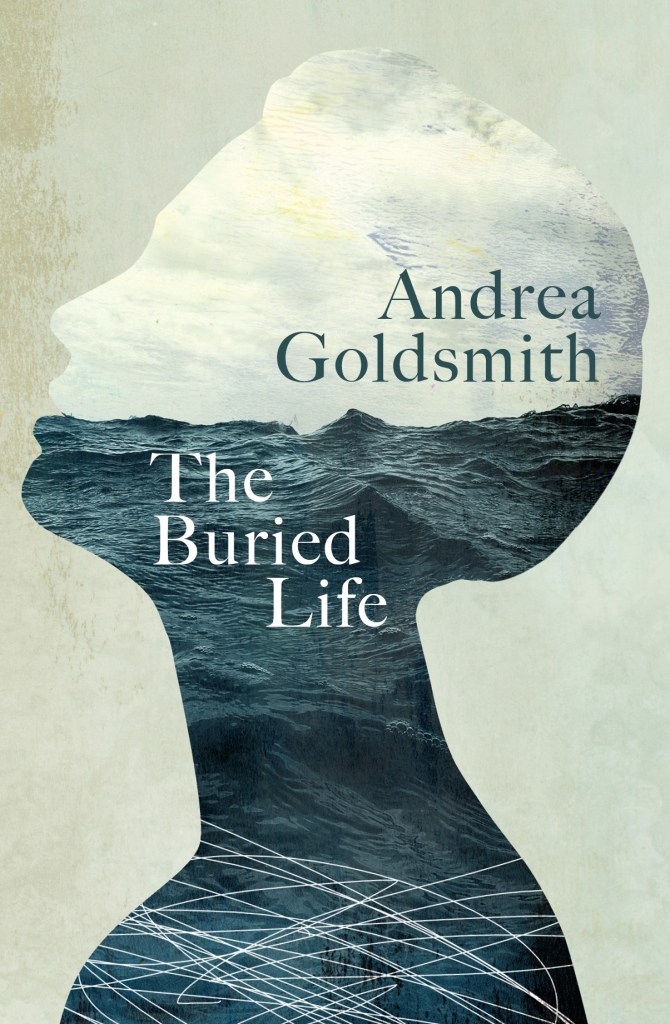
The Buried Life is an intriguing, inscrutable title. What is the significance of both the title and cover image?
The title – drawn from a poem by Matthew Arnold – is deliberately open to different interpretations. For me there are two main ones. Firstly, while we might believe we know and understand the influences that have formed our identity and our choices, I think this is not the case. So often we find ourselves behaving in ways we simply can’t explain, as if some buried life has risen from the dark well of forgetting.
Adrian, one of the characters in The Buried Life, was orphaned when he was a young boy. He insists that the early deaths of his parents have no bearing on the man he has become. I should add that 43-year-old Adrian is a well-regarded academic and his speciality is the social and cultural aspects of death. Through the course of the novel, with a little help from Mahler, he comes to understand himself differently. Another character, Kezi (Keziah), a 28-year-old artisan of fine hand-made paper, wishes she could bury her old life of being raised in a fundamentalist community, but it keeps bubbling to the surface in yearnings that conflict with the life she has chosen. And my third main character, Laura, a 58-year-old town planner, has been blindly in thrall to her husband ever since she met him as a university student. She has stifled so much – unconsciously, I think, but by the end of the novel, she faces what she has long denied.
The second meaning of the title highlights a conscious hiding of aspects of oneself. In the current era, there is a tension between our public selves and our private selves, and in these tell-all times, it can be hard to find a balance. There are several instances in this novel when the reader will know something about a character that the other characters do not because the reader has access to the character’s private self. And there are secrets in the novel, information that Laura deliberately buries in order to maintain domestic peace.
The cover: I think it is brilliant – thank you Transit Lounge. (I had almost nothing to do with the image and the design). I love the head/brain/intellect in the clouds and the rest of the person filled with that fabulous roiling sea. So much is hidden, so much is buried.
Where is the novel set and how is this of importance to (or enhance) its story and concerns.
While there are side-trips to Patagonia, Shetland and Antarctica, the present day events occur in Melbourne. Indeed, Melbourne is very much a player in this novel. Where the characters live – inner-city or outer – feeds the narrative. And how the characters ‘use’ the city actually adds to the emotion of certain events. For example, one wintry day, Laura having just discovered something shocking about her husband that throws her life into a turmoil, drives down to the bay. The grey tumultuous sea and the blustery wind are entirely in tune with her mood. And another example: it is when immersed in the solitude of the Melbourne cemetery that Adrian’s buried life surfaces. (It certainly could not have happened in a crowded city street.)
What genre is The Buried Life? What makes it a literary work?
The Buried Life is contemporary literature – I was going to write ‘contemporary Australian literature’, but the experiences Kezi, Laura and Adrian have, their feelings and relationships, their pleasures and disappointments are common to most of us who live in societies like Australia. They are realist characters.
What makes it a literary work is that the pace is driven by the characters, the story attaches to the characters, we want to know what happens to them, not solve a plot. And there are ideas canvassed in this novel, ideas of love and friendship, death and denial, the power of art, the power of belief, the delusions and deceits that can occur in relationships. So it would be classed as literary fiction. I would stress, however, that it’s an easy read, the characters carry you along (or, at least, I hope they do), and there are no stylistic quirks.
Your three major characters Adrian, Kezi and Laura are complex and multidimensional, but could you please introduce them in either a few words or sentences each?
(I’ve covered this in my answer to your first question, but would add the following.)
Kezi and Adrian are close friends, despite their difference in age and background (although, as Adrian notes, they both share an interest in women). Once Laura enters the narrative (she and Adrian meet in a cheese shop) a three-way connection develops between these seemingly different people, with Kezi at the fulcrum. All are changed both by these friendships, but also outside influences.
What is the place of music in the lives of your characters?
The least musical of the characters is Adrian, and yet it is he who is changed, opened up to new possibilities by the accidental exposure to a piece of music. It’s as if music shows him how to let off the brakes, and the temperate man who starts the novel becomes a man of passions by the end.
It is Kezi who tries to explain to Adrian how powerful music can be, after all, she was raised in a church in which music was absolutely central. But in the end, Adrian decides that the mysterious power of music is to be found in the music itself. I don’t think he would be awakened to his buried life without music.
‘At their most recent lunch – cheese, coffee and conversation that had spilled into a second hour – Adrian had said that sitting with her on the park bench in the Treasury Gardens was his idea of paradise.’ (The Buried Life)
Why have you used cheese as a bond between characters?
A confession: I love cheese. I think I have inserted it in all my novels. I took great delight in using the cheese shop as the location for the crucial meeting between Laura and Adrian. They bond over cheese – this author’s favourite food.
What symbol or symbols have you used in the novel? Why?
This is not easy for me to answer in a novel that includes several quotes from poetry and a number of scenes that show the power of music. A novel that also hovers around various notions of a spiritual life. Maybe best left to the next question…
What are some of the issues or ideas that you explore through the story?
There are two certainties about life: firstly, that we will all die, and secondly, that as much as we might like to control the future, we can’t. Death and uncertainty, common to us all, and both inspire terror/discomfort/denial. When it comes to uncertainty, we anchor ourselves family and other intimates. But many people grasp onto fabricated certainties, the sort of fundamentalism seen in ideas, in religion, and in relationships, too. Through my characters, I explore these ideas.
I also wanted to show that art, in this case music, can change a life by removing a person from habitual ways of thinking and being. This happens to Adrian – not that he is fully aware of this. And lastly, I wanted to explore spiritual experiences outside religion (both music and poetry help with that).
What is the dichotomy between wild places and cities that you touch on?
I see this dichotomy both metaphorically and literally. In the wild we are out of our usual environments and also our habitual selves. There are aspects of the self that emerge that can be both wonderful and frightening – but nearly always surprising. There’s a scene when Laura has a few days alone in the wilds of Shetland, the freedom she feels is unlike anything she has at home. The wild, through its difference, can illuminate home and habits. The wild can lead to change. Of course, you have to be receptive to this possibility: Laura’s husband is not. For Tony, the wild is to be conquered, defeated, not embraced.
As for the metaphorical aspect: for me wilderness is akin to the unfettered imagination. Antarctica, an example in the novel, is a landscape of the imagination. When the imagination is permitted to run free, it is a journeying into the unknown – including spaces one might think of as spiritual.
And as Adrian discovers, big nature – oceans and volcanoes and the like – reminds you of your place in the world. Big nature puts you in your place.
Laura longs for a sanctuary. Where do you find sanctuary?
In poetry and fiction and music (in each of these there’s something for every distress).
And I walk. I walk out of myself into nature. That’s sanctuary.
Where do you see or find beauty?
A snow-filled wilderness in winter. The hush, the solitude and that extraordinary half light.
Rothko’s paintings.
The face of my dog.
Magpies.
(I could go on, but I have to stop somewhere.)
What is the place of forgiveness in the story?
There is no true forgiveness in this story. In my other novels I have had partners who do something unforgiveable but the relationship nonetheless holds, primarily because of the good the couple have known – and can know again. Early in The Buried Life Kezi would forgive her parents, from whom she is estranged, but not by the end. As for Laura, for decades she has forgiven, but hers has been a forgiveness fuelled by fear and misperceptions. It has done her no good.
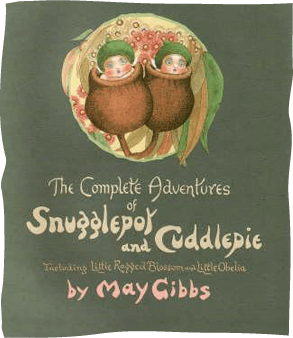
Why have you brought the Wizard of Oz and Snugglepot and Cuddlepie into your story? and then The Little White Horse and The Secret Garden?
Childhood books have played a role in the lives of each character in The Buried Life, as I think they do for all early readers. These books take on enhanced importance, so it seems to me, and you take these books through life, almost as totems.
What threads recur over your body of work?
Friendship. The faultlines of marriage. Music. And most especially: the extent to which people will behave badly, even brutally when they believe they have the right to do so.
What have you enjoyed reading recently? Why?
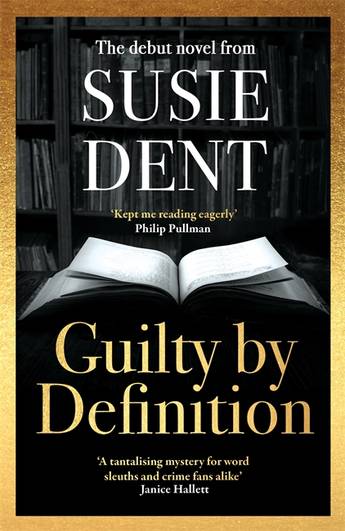
Susie Dent. Guilty by Definition. Zaffire, 2024. This is a whodunit set around a group of lexographers in Oxford who work on an English dictionary (very like the OED). They solve a mystery through words and their origins, as well as cryptic clues. I loved the word play, I loved the respite it afforded me from the heat of an Australian summer.
[Joy – Oh yes! I’ve read and enjoyed Guilty by Definition as well and kept thinking of The Dictionary of Lost Words while reading it.]
Sonia Orchard. Virtuoso. 4th Estate, 2009. I don’t know how I missed this book when it first appeared, particularly as my own Reunion was published in the same year by 4th Estate. It’s a fictional account of the Australian pianist Noël Mewton-Wood, written from the point of view of a younger man who adores him. This is a first person novel without a single clunk. The writing is deft and effective and beautifully paced, the narrative is under-stated yet vivid.
Zbigniew Herbert. The Collected Poems 1956-1998. Ecco. 2007.
I love the 20thC Polish poets. They are so wise, so lucid, and by and large have been served very well by translators. I learn about life from them. (Both Herbert and Zagajewski are quoted in The Buried Life.)
Timothy Garton Ash. Homelands. A Personal History of Europe. Vintage 2024.
These are difficult and dangerous times. This was a book that helped me undersand how we got to where we are today.
How do you like to spend your time when not writing?
I like to cook and often have friends to my place for dinner – either one or two seated at my kitchen bench, or 6-8 around my table. We eat well and we talk well; it’s really enjoyable. I learned from my mother how to cook for guests without spending the whole night in the kitchen (preparation and choosing the right dishes are the keys).
And I travel to cold places, like the Arctic in winter – northern Norway, Lapland, Iceland.
Thank you for your wonderful responses, Andrea. It’s such a pleasure to delve further into The Buried Life.
The Buried Life at Transit Lounge

 paperbarkwords.blog