
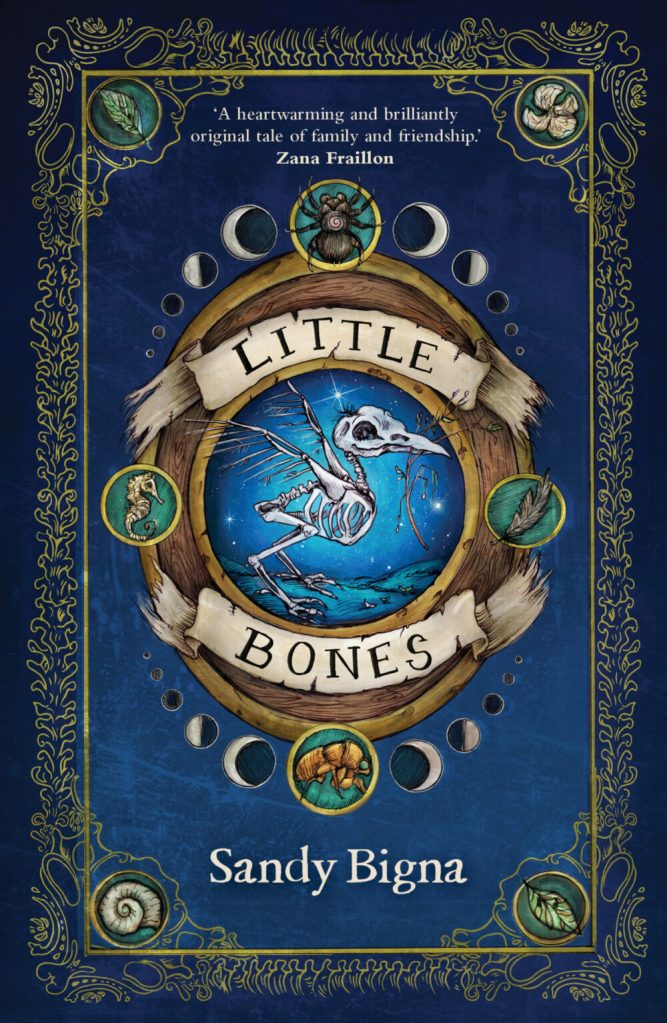
Little Bones by Sandy Bigna
UQP
Author Interview with Sandy Bigna about Little Bones
“Keep going, Nico whispers
as I get higher and higher.
My legs are shaking so hard
I don’t know how they’re even
Supporting me.
‘Keep going,’ Bird echos Nico
from inside my bag.
My chest wants to explode
from the thrashing wings inside
but I keep going.”
(Little Bones)
Congratulations on the publication of your debut children’s book, Sandy. Little Bones is a polished, evocative verse novel that is already garnering acclaim. I even shed a tear or two while reading it, particularly when, towards the end, you draw the strands of the story together so perfectly.
******
Little Bones by Sandy Bigna
Thank you for speaking with Joy in Books at PaperbarkWords, Sandy.
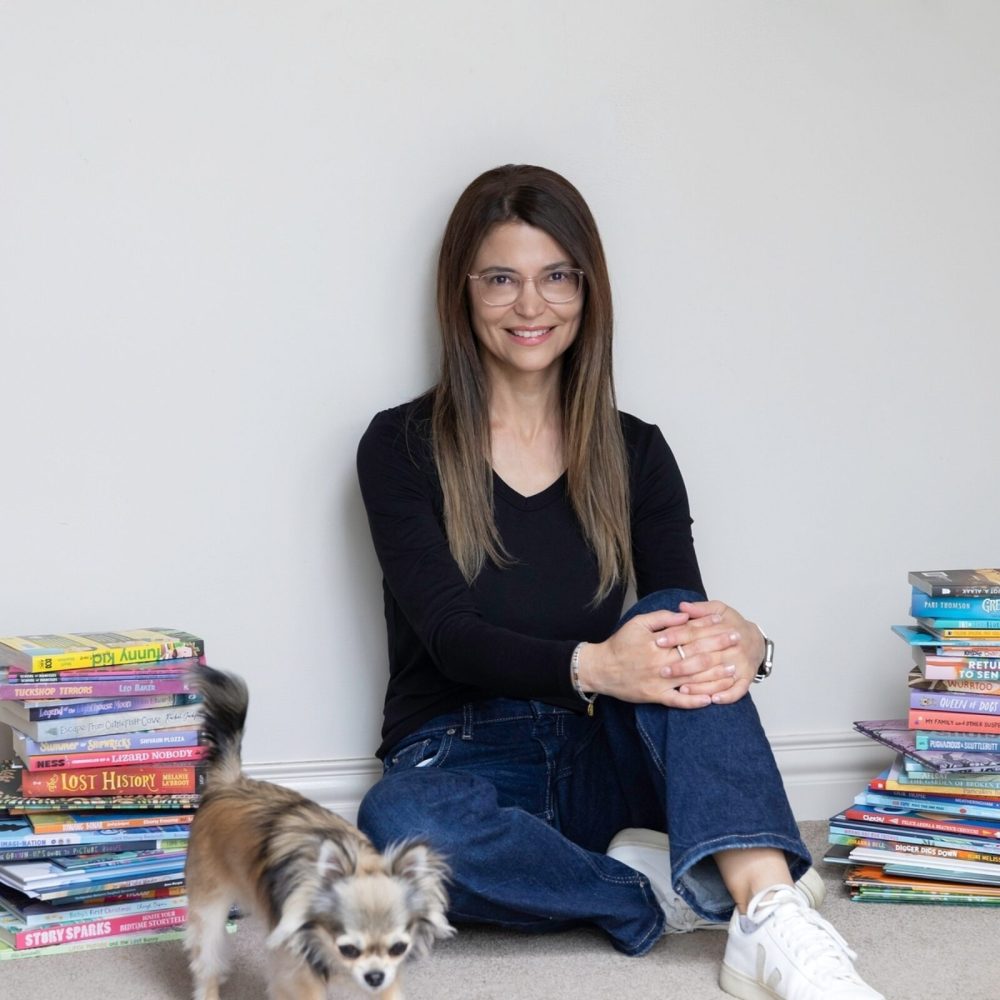
Where are you based and what is your background in children’s literature?
Thanks so much for having me on your wonderful blog! I’m based in Canberra, which provides lots of inspiration for the setting of my work. My passion for writing stories carried through from childhood to university – where I studied creative writing units as an undergrad (and then later went back to undertake my PhD in creative writing). I also worked for several years as a children’s librarian which further enhanced my love of children’s literature.
Could you tell us something about your involvement with the National Centre for Australian Children’s Literature (NCACL)?
I was so thrilled when Dr Belle Alderman (who supervised both my Honours and PhD theses) invited me to annotate children’s books for the NCACL’s Aboriginal and or Torres Strait Islander database, which I loved doing (and which then inspired me to start reviewing children’s books more generally). More recently I have been editing the NCACL’s guest blog posts. It’s such a joy to have this connection to an important centre which advocates so passionately for Australian children’s books.
Why have you selected the title, Little Bones?
Bones are a recurring symbol of strength, memory, and healing throughout the book, so it was important to have the word ‘bones’ in the title. My agent Danielle Binks noted my frequent references to ‘little bones’ throughout the text – and so the title became ‘little bones’ rather than just ‘bones’ – which I feel highlights both the fragility and strength of the bird skeleton that Bones discovers. The title is a nod not only to the tiny bones of Bird, but also to that of the minutiae of the insect and plant life that Bones is fascinated by – highlighting the significance of these tiny worlds taking place ‘right beneath our feet.’
What do you love about the cover and how does it represent your tale?
The cover, designed by talented illustrator Tamlyn Teow and UQP’s Madeline Wilson-Byrne, is so exquisite it took my breath away when I first saw the finished version. It so beautifully represents both the fragility and the beauty of the discarded treasures that Bones collects. The colour and design of the cover (with Bird depicted against the sparkling night sky) illuminates the magic and hope of the story.
Why have you used the verse novel format to tell this story? What freedoms and limitations did the form give you?
Verse novels, with their spareness and lyrical format, can so effectively convey powerful themes and emotions, through the use of figurative language, symbolism, and an intimate and compelling way of telling story. I feel like this format was perfect for telling Bones’ story of loss, friendship and healing. The verse novel form allowed me the creative freedom to play with language and break some of the rules of more conventional prose narrative, which was a lot of fun!
Could you please introduce your major characters and tell us a little about any problems they are facing?
Bones is the 11-year-old narrator of this story, and as the story opens, she is navigating feelings of grief and loss – both the loss of her brother, and the fracturing of a close friendship. She’s closed herself off from new friendships as a protective mechanism, surrounding herself with her ‘bony armour,’ like an exoskeleton.
Bird is the bird skeleton that Bones accidentally reanimates – and while he enjoys being Bones’ new friend, he also feels trapped in this ‘half-life’ where he can’t fly or forage or nest like he used to. He longs for Bones to reverse the accidental curse she’s put on him. Both characters feel like they are in limbo, and ultimately need to work towards letting go and release.
What is lost and what is found?
Bones has lost what is most precious to her (her brother), but what is found is new friendship, strength in community, and renewed hope and confidence.
Do you have a brief backstory that isn’t included in the published book to explain why Edie is so awful to Bones?
In initial manuscripts, there was some additional detail illuminating Edie’s backstory and why she reacts the way she does to Bones – but to keep the plot tighter we eventually deleted these scenes. I think it was still important to write them so that I as the author had an understanding of why Edie behaves the way she does towards Bones, (so that she doesn’t risk coming across as one-dimensional).
There are a few intertwined reasons for Edie’s bullying of Bones, one being that Edie is envious of the friendship between Bones and Aiko and wants Aiko for herself. Edie’s backstory is that she has an unhappy homelife, where she is given every material thing she desires, but what she really craves is attention. There is a deleted scene in which Bones relays a memory in which she won a drawing competition at school (she and Edie were the two finalists and the class had to vote for the best drawing). Edie had wanted to win so that her parents might pay attention to her for once. Her jealousy towards Bones further manifests after this event.
Part of Edie’s disdain towards Bones I think is also just fear and lack of understanding in regard to what is considered a bit different or unusual. Hopefully this strand of the story will foster empathy towards Bones, and encourage young readers to reflect on inclusivity and embracing others for who they are.
Where is the story set and what is the importance of nature?
The story is set in a housing commission complex of apartments housing a vibrant mix of individuals and families. Contrasting with this urban environment is the nearby wetlands where Bones searches for animal bones and other discarded treasures. It is here, surrounded by trees and water and dirt and insects, that Bones feels truly herself, and where she feels closest to Nico. The beauty of the natural world provides a breather both for Bones and the reader and also symbolises a place of healing and hope.
Could you select a poem that stands alone to reprint here to give a taste of your content and writing style?
bat bone
The building
creaks and cracks
as shadows fall long across the ceiling
like bat bone fingers.
I remember how Nico and I used to
pull the blankets over our heads,
breathless and giggling,
imagining the creeping shadows
to be monster claws.
Bird huddles next to me
as the moon-bleached night settles in.
(pp.194-195).
You have a poem called ‘Colour’. What colour describes the tone or atmosphere of your story or one of your characters?
The poem ‘Colour’ encapsulates the vibrant colour of Tenny – all their sunshiny brightness and sparkle. Contrasting with Tenny’s bright colour is the darker colour of Bones and her bedroom – which is more cave-like, a place where she can hide. Bones prefers to dwell in the bleached and earthy colours of her collection of discarded things from the natural world. But slowly, Bones begins to let Tenny’s bright colour seep in.
You include some lovely lyrical and metaphorical language. Could you please share a favourite example with us?
My toes squelch in slippery mud
and slender gums gleam like exposed bone
in the last gold threads of sunlight (p.34).
How does your story show diversity, contemporary concerns or preoccupations and/or universal themes or experiences?
Themes of diversity and acceptance are highlighted via the eclectic mix of characters that inhabit the apartment complex where Bones lives with Nonna Frankie. The community here is inclusive, non-judgemental and vibrant. Themes of loss and grief are also threaded through the narrative, and I think it’s important to gently illuminate these universal themes and experiences in books for children to help foster empathy, understanding and comfort. I also hope that young readers might reflect on the value of recycling and living sustainably, highlighted in the story via Tenny’s dumpster diving, and Flick’s art – which is made from repurposed items retrieved from dumpsters.
If you have a favourite illustration, could you tell us which and why?
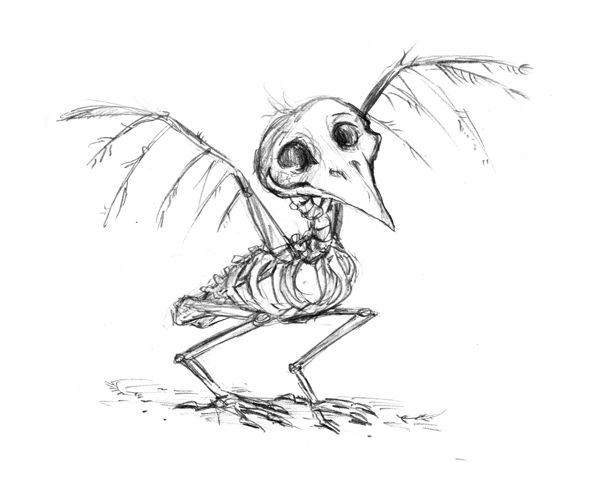
I love all the illustrations so choosing one is like choosing a favourite child! But one that stands out to me is the illustration on p.44 in which we first get a glimpse of Bird after he is resurrected. Tam has so cleverly captured his endearing fragility, the way he is a combination of both light and dark, the lightness of the bleached bones contrasting with the shadows pooling in his eye sockets. That juxtaposition of light and shadows beautifully reflects the interplay of light and dark throughout the text.
To what other works might Little Bones pay homage?
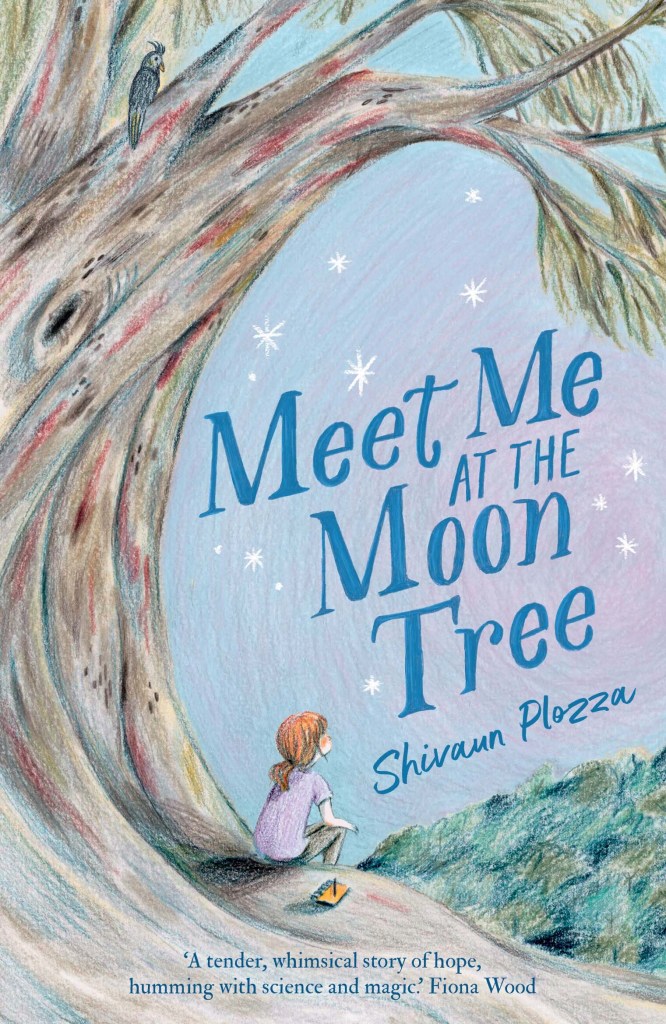
Sometimes you are too close to the work yourself as an author to step back and see the links to other works – but early reviewers have spoken about Little Bones in relation to classics such as Bridge to Terabithia and Charlotte’s Web – and closer to home – some Australian children’s novels that navigate grief, such as My Brother Finch by Kate Gordon, Meet Me At the Moon Tree by Shivaun Plozza, and Picasso and the Greatest Show on Earth by Anna Fienberg.
How do you engage your readers emotionally?
I aim to engage my readers emotionally by creating characters that they grow to care about – and become so invested in that want to keep reading to make sure that the characters will be okay. If a reader is invested in the character or characters they are reading about, they will feel all the emotions that the character is feeling. I also use evocative language and imagery to keep readers emotionally engaged.
What response are you receiving from young readers so far?
Responses from young readers so far have been so beautifully heartwarming. One 11-year-old reader said “Little Bones is beautiful. I could see each scene vividly playing through my mind like a movie and I’ve never cried so much while reading.” This just tugs at my heartstrings! Another response from an 11-year-old was: “I loved Little Bones. It made me feel like I was in Bones’ shoes and I could really feel the emotion. I laughed a lot at Tenny’s jokes. I’d love a bird friend of my own.”
Young readers are responding to the heartfelt themes, the friendships, the slightly spooky vibes, and the fact that Little Bones is a bit of a tearjerker! We all enjoy a bit of a cry over a book now and then – it shows that we are emotionally invested.
Your book is ‘for all who collect things’. What do you collect?
As a child, I collected glass and china animals. Now as an adult, it’s a bit of a case of life imitating art – I have a little collection that Bones would approve of – including a beautiful spotted bird’s feather, some shells and stones, and a tiny bird skull. Like most book lovers, I also have a collection of bookmarks and bookish mugs!
What’s next for you?
I have a two-book deal with UQP so am currently in the dreaming stage of the next project – jotting down little snippers of ideas and daydreaming about plots and characters. I can’t wait to share more stories of friendship, magic and adventure with you all!
What have you enjoyed reading recently?
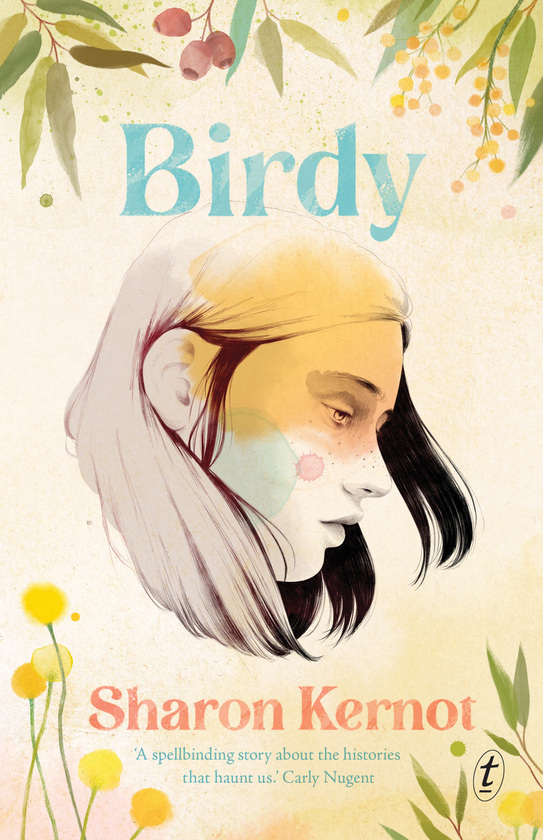
I’m loving Australian picture books, middle grade and YA. Recent reads I’ve loved include My Family and Other Suspects by Kate Emery, Birdy by Sharon Kernot (in which I was thrilled to note that the narrator’s little brother collects animal bones!), Thunderhead by Sophie Beer, All the Colours of the Rainbow by Rae White & Sha’an D’anthes, and My Mum is a Bird by Angie Cui and Evie Barrow.
How should people contact you?
The best way to contact me at the moment is via my socials – I’m most usually hanging out on Instagram @aussie_kids_books. I’m hoping to have my author website up and running soon so watch this space!

 paperbarkwords.blog
One thought on “Little Bones by Sandy Bigna”