
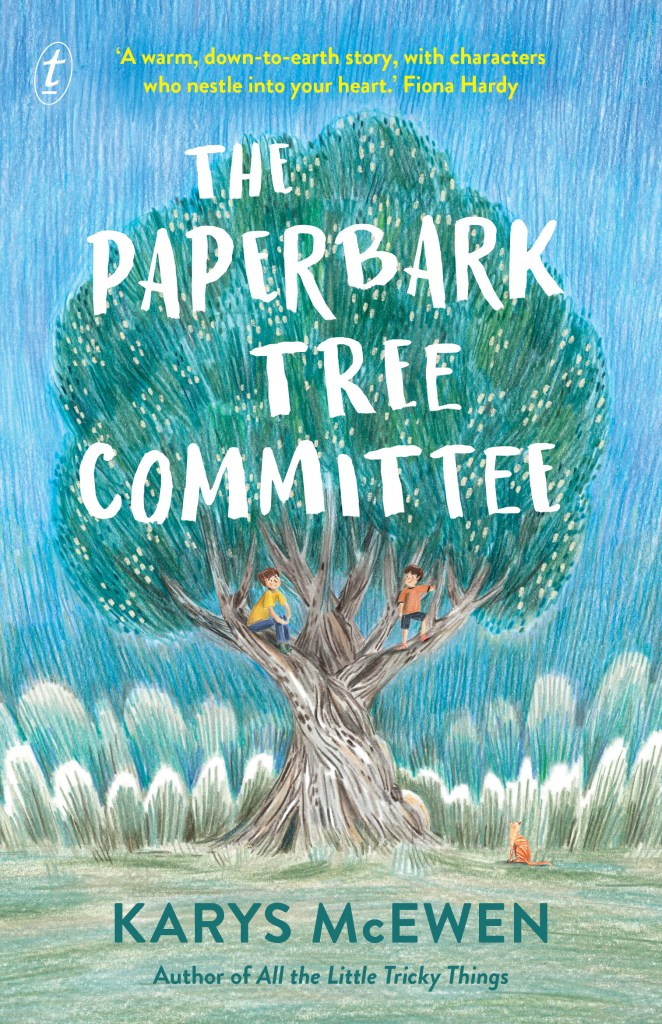
We welcome Karys McEwen and The Paperbark Tree Committee, her new middle-fiction novel to Paperbark Words. You can see that there’s a perfect synergy between the book’s title and setting and the blog. Karys’s protagonist is even called ‘Art’!
Karys also shares her valuable expertise about the right book for the right reader.
The right book for the right reader
By Karys McEwen (author of The Paperbark Tree Committee
(Text Publishing)
I have been a high-school librarian for over a decade. My favourite part of the job is, and has always been, matching readers with the right book. It can be a tricky process, with young people more discerning than ever about what they’re interested in or what can sustain their attention, as well as an increasingly steady stream of claims such as ‘I hate reading’ or ‘I’ve never finished a book’. Recent reports in Australia and beyond show that the struggle to find something to read is a huge barrier.
Often, I’ve found the problem is not that the right books don’t exist. When it comes to middle grade and young adult fiction (as well as chapter and picture books), there are myriad options for kids to choose from. Children’s literature these days is rich, diverse, and accessible. There are graphic novels and audiobooks, novels in endless genres, and well-designed non-fiction to appeal to even the most obscure interests. There are also so many local options. Australian kid lit is booming. And while I’ve never thought that every book is for every reader, I can wholeheartedly say that I believe there is something out there for everyone.
In saying that, funnily enough, the initial spark for my new middle grade novel, The Paperbark Tree Committee, came from a moment when that didn’t quite feel like the case. One day while at work in my inner-city Melbourne public school, a young male student approached me in the library to ask for help finding a new book to read. He wasn’t a regular or strong reader, but his mum had encouraged him to speak to me and see if he could find something to hold his attention. Like most young people, he already had an idea of what he wanted. He was looking for something about an ordinary high-school boy with ordinary high-school problems. He suggested something with themes about fitting in, or not fitting in, with no romance, no magic or ghosts, and preferably something Aussie. I was thrilled with this very discerning request, and set about to find something. After a while in the shelves I tracked down quite a few options, but most of them were about female teenagers. It wasn’t that this student was opposed to reading outside his own identity (I find, contrary to what a lot of adults seem to assume, that most kids don’t think about the gender of their protagonists and will pick up a book without even considering this) but in this particular instance, he wanted something specifically about a teenage boy. In my hunt, which continued beyond him leaving the library, I honestly came up pretty short. There were things a little too young, and then a little old for him, but not a lot that suited exactly what he was looking for, which I felt was a fairly reasonable request. Certainly compared to some of the more obscure and unusual demands by selective teenagers that I’ve had over the years!
At the same time as this readers’ advisory kerfuffle, I was starting to think about writing my second novel. I wanted it to be centred on sibling dynamics, chosen family, and making mistakes and figuring out how to make amends for them. Although I have never been a teenage boy, and don’t have a brother, I decided to set myself the challenge of researching and writing a story about a young boy, and the way his relationship with his younger brother might change as they grew up, and specifically as he started to feel the pressures of becoming a teenager. I had started speaking with young men and grown-up men about their experiences and wondered if I could write something that felt universal. That night, after getting home from work and still ruminating over my inability to find the right book for the student looking to read about an ordinary boy with ordinary problems, the first few paragraphs of The Paperbark Tree Committee made their debut on the page. Of course, it took many drafts, edits, more research and a healthy dose of second-guessing to become the book that was eventually published. My editor and first readers played a huge part in the process, as did the sage advice of my students when I wasn’t sure what the right Gen Alpha lingo was, or ‘what a teenager would do if…’.
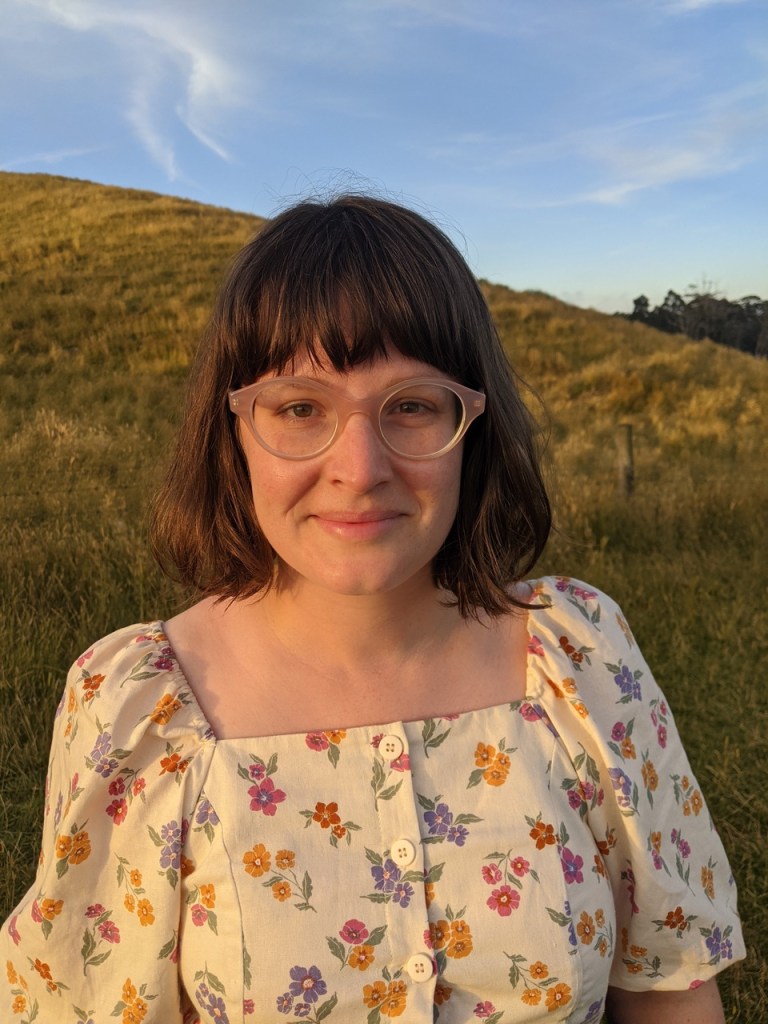
It’s hard not to get worried about the state of young people’s reading habits today, when the research tends to be so disheartening. But luckily, most of the time, I don’t need to go away and write a book every time a student has a specific request. Nearly every time, I can find a huge pile of great options for them to choose from. I can firmly say that the quantity and quality of books is not the issue here. Instead, it’s having qualified, passionate people in roles that can support young people getting access to the right books. I know that is a blatant shout-out for my own profession, but I stand by it. We need library staff in all schools, we need to encourage our young people to become familiar with their local libraries and bookshops, and we need to foster their love of reading by engaging with their interests, reading alongside them, and not giving up hope that their reading journey will continue, even if it needs a little encouraging shove every now and then.
The Paperbark Tree Committee is a very small snippet of one young boy’s life. It plays out over just a few weeks. Mistakes are made, and forgiven, and friendships are formed that may or may not last. It says a lot about not having to fit into any one box, and it celebrates the grown-ups in our lives who aren’t our biological family, but who love and support us all the same. It is a story about an ordinary high-school boy with ordinary high-school problems. It is a book born out of a small gap I saw on the shelves of my library, and I hope that it goes some way to filling it.
What I’d like, more than anything, is for The Paperbark Tree Committee to be picked up by a kid who is looking for exactly this kind of book. That it is recommended by librarians or parents who think it will speak to the young people in their lives, and that it encourages a kid to keep reading, even if they thought reading wasn’t their thing, because they finally found the right book.
The Paperbark Tree Committee at Text Publishing
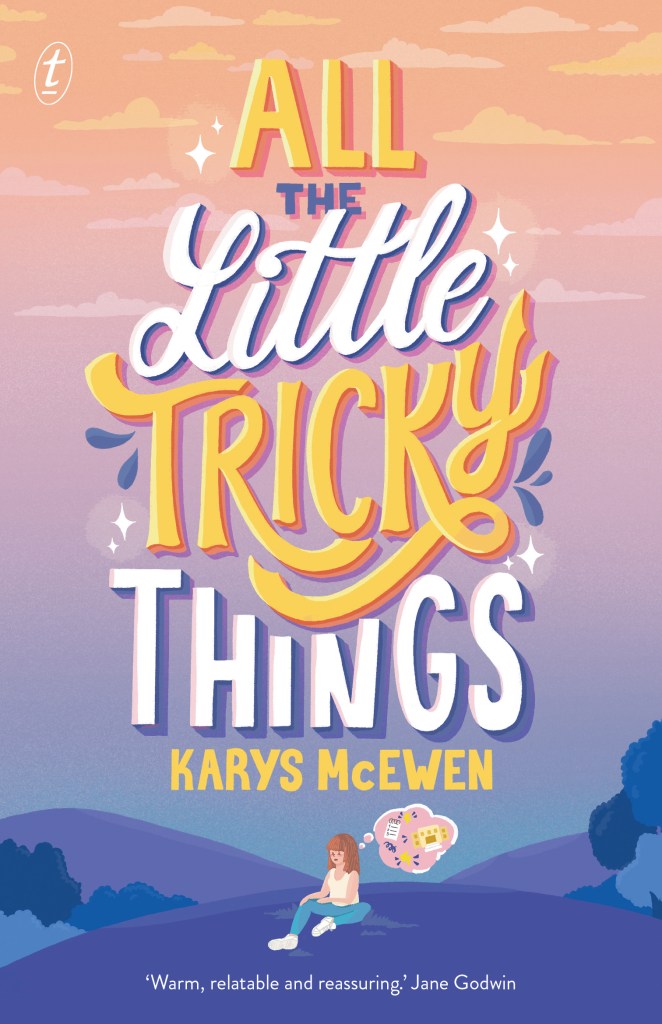
interview with Karys McEwen about All the Little Tricky Things at PaperbarkWords blog

 paperbarkwords.blog
One thought on “The Right Book for the Right Reader by Karys McEwen”