
Interview with Dr Lilly Brown
CEO Magabala Books
Congratulations to Gumbaynggirr woman Dr Lilly Brown who is the new CEO of the seminal Magabala Books. Magabala’s role in publishing and promoting books by First Nations’ creators cannot be overstated.
Over the years I have consistently recommended books published by Magabala and some of my personal favourites are Once There Was a Boy by Dub Leffler, Baby Business and Open Your Heart to Country by Jasmine Seymour, Cooee Mittigar by Jasmine Seymour, illustrated by Leanne Mulgo Watson, Little Bird’s Day and The River by Sally Morgan, illustrated by Johnny Warrkatja Malibirr, Sky Country by Aunty Patsy Cameron, illustrated by Lisa Kennedy, Black Cockatoo and Dirrarn by Carl Merrison and Hakea Hustler, Bindi by Kirli Saunders and Dub Leffler, Fog a Dox by Bruce Pascoe, Grace Beside Me by Sue McPherson, Becoming Kirrali Lewis by Jane Harrison and Benevolence by Julie Janson.
Magabala’s top five titles in 2024 were all children’s books by Indigenous authors and all sold over 10,000 copies. That’s a phenomenal result.
- Black Cockatoo by Carl Merrison and Hakea Hustler
- Bindi by Kirli Saunders
- Us Mob Walawurru by David Spillman and Lisa Wilyuka
- Uncle Xbox by Jared Thomas (the prequel to Getting Dusty)
- Dirrarn by Carl Merrison and Hakea Hustler (sequel to Black Cockatoo)
In my article, ‘40 years of Magpies, how children’s literature has changed’ in the March 2025 issue of Magpies magazine I wrote, ‘… our First Nations people have rightly been given many more publishing opportunities by Magabala Books … Their voices are reaching wider audiences and achieving awards recognition.’
Dr Lilly Brown at PaperbarkWords
Joy Lawn
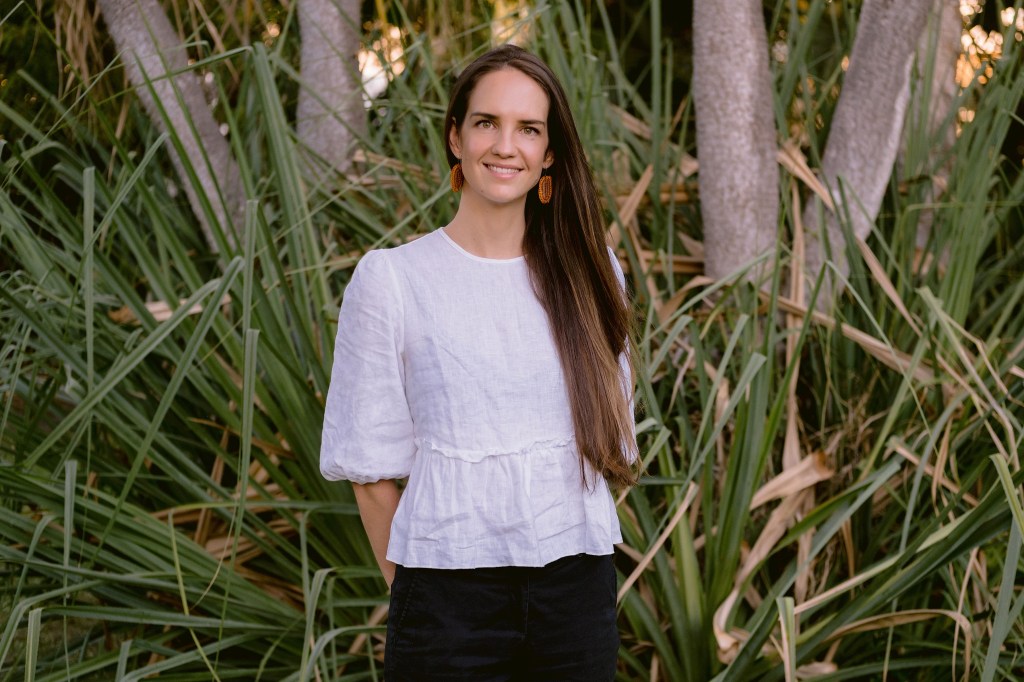
Dr Lilly Brown, CEO of Magabala Books, welcome to PaperbarkWords blog.
Your background is highly impressive. You have achieved the distinction of graduating from Cambridge University (and also as the first Indigenous Australian to graduate from Cambridge) and are now CEO of Magabala Books.
What else can you tell us about your background? I’m also interested to know why you’ve become CEO of Magabala Books.
Lilly Brown
I feel like I have a lot of qualifications and sometimes I can’t believe that I spent so long studying. I went to Cambridge University on a Charles Perkins Scholarship. Charlie Perkins was an Arrernte and Kalkadoon man who led the Freedom Rides back in the 60s and 70s, and so it was really nice to go to that institution in his name. Then I completed my PhD at the University of Melbourne, five years ago now.
I have had three kids and I think that having little people in your life is more of a learning journey than some of my formal qualifications. A lot of the work that I’ve done over the last 15 years has been working with young people from early years to high school through to universities and Elders as well.
So I’m really working to support First Nations kids connect with Elders by keeping them engaged through books and education.
My PhD and Masters were both in education and my PhD was also in youth studies.
So that’s been so much of my focus. I also did a little stint in mental health and I was an executive at Headspace National Youth Health Mental Health Foundation for a few years. I draw on that experience working with Elders and young people in the mental health context. Then a few years later I ended up at this incredible organisation, Magabala Books.
The former CEO, Anna Moulton, was here for about 10 years. She left an incredible legacy here and in the community. She actually lived across the road from me when I was pregnant and, a few weeks before I gave birth to my son, she let me know that she was going to resign from Magabala because she had to go back to Lutruwita (Tasmania) to look after her mum. Still on parental leave and five minutes before the applications closed for the Magabala role, I submitted an application.
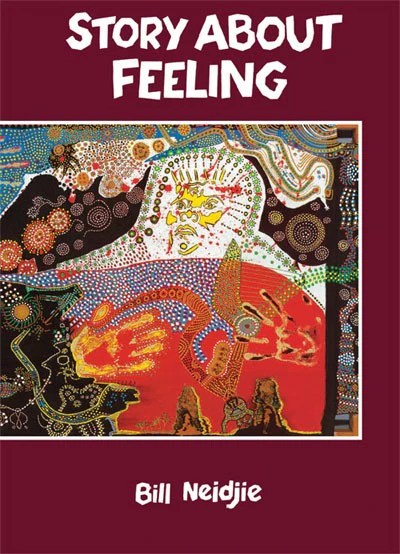
I grew up in Perth, but when I moved to Melbourne, one of the first books that I bought from Readings bookshop was a book called Story About Feeling by Bill Neidjie. And this book is tiny. It’s the size of my hand.
Joy Lawn
Oh yes, I haven’t seen it.
Lilly Brown
It’s so beautiful. Joy. I would say it’s a philosophy book and the late Bill Neidjie.
was a Gagudju law man from around Kakadu. He wrote this as a gift to non-Indigenous folk, really to try and say to people that we’re all connected and we’re all actually family and not just, you know, like humans to humans, but also human to Country, like Country is family.
And if we understand that one another is kin, then we prioritise our relationship to care for one another.
And so it was the first book I ever bought in the big city and it really just reminded me that underneath all the concrete and the skyscrapers, Country is always present.
And I remember wondering who published this book and discovering that it was Magabala. Fast forward 15 years and when the job came up. I was like, I definitely want that job. So, that’s how I ended up here.
I do have a background in education. I love working with children and I think that so many of the incredible texts and books that Magabala publishes really resonate with young readers.
It’s nice to bring my diverse experience into the context of this role.
Joy Lawn
So what do you see as your role as CEO?
You’re not involved in the actual publishing?
Lilly Brown
Not at all.
Joy Lawn
So you’re really steering the company.
Lilly Brown
Yes.
Joy Lawn
Is there any particular direction, apart from anything that you’ve already mentioned, that is on your heart?
Lilly Brown
I have a really generalist skill set and so I think these old fullas like these two here [Lilly refers to a photograph of the late Violet and George Jormary], these old people kind of imagined Magabala into being. They started Magabala because they wanted to keep the stories of First Nations people safe and also ensure their accessibility for generations to come.
And so when I think in terms of my role for this organisation, I want to make sure that Magabala as an organisation is around for generations to come and so, so much of it is ensuring that the publishing team can continue to do what they do: investing in the process as much as the outcome, ensuring that the process of publication is culturally safe, that we’re not making decisions about the commerciality of the title, but that our decision making is informed by the values of titles and stories beyond how much money they can make.
I want to be able to support the publishing team to invest in stories for their cultural value, for the fact that they change the national narrative around what it means to be a First Nations person, that they can reflect the diversity of Blakness in this country and also to make sure that the process of storytelling is truthful, especially when we’ve got Elders who are sharing their stories or have really important cultural knowledge in a book.
So we’re making sure that these stories are told in the right way.
And I don’t want Magabala to ever feel compromised, so we try to ensure that we have a sustainable business model with some titles that can make some money. These titles also then offset our ability to tell the stories that might need to exist in the world outside of them being commercially viable titles.
And I think education is key as well. So many commercial publishers seem to focus on what titles they’re selling in a given moment in time and their commercial viability to the book trade.
I’m really keen to understand how we can make our Magabala titles more accessible to educational audiences. We want to reach teachers and educators, not necessarily people walking into a bookshop and buying a book for recreational purposes. We want educators to understand the importance of Magabala titles in supporting children and young people who connect to the place that they exist in, and to challenge some of the stereotypes that have informed the way that non-Indigenous folk understand and engage with Aboriginal and Torres Strait Islander people for many generations.
Joy Lawn
There are two points that you have raised that I want to explore a bit further, Lilly.
First of all, how are you going to get the books into the hands of educators and the second one is about stereotypes and how you’re overcoming these?
Lilly Brown
What we’re trying to do is really engage with educators on our social media.
We have very accessible teachers notes on almost every junior fiction or young adult book. Each has a set of teacher notes that are freely accessible so that educators can teach those books in their classrooms – and feel really confident and supported to do that.
Joy Lawn
I think that many of your teacher notes have been written by teacher-librarian Christina Wheeler. Do you have other writers of teacher notes as well, apart from Christina?
Lilly Brown
Yes, we’ve engaged with a few different First Nations people. I’m finding the right people to be able to understand the book – both the book and also what teachers need from that book to be able to teach it. Last year we published 18 titles and hopefully we’ll publish a few more this year. Teacher notes written by a variety of people is the goal.
There are other organisations that write teachers’ notes for books: Reconciliation Australia is really supportive. And we’ll focus on educational buyers, booksellers and libraries to make sure that our books are available in different kinds of markets.
Joy Lawn
It’s a really strategic direction.
Also, what particular stereotypes are you trying to overcome through certain books and how are you doing it?
Lilly Brown
In terms of stereotypes, colonisation could happen in Australia because First Nations people were dehumanised to the point that we didn’t exist. So when Australia was deemed terra nullius, a land belonging to no one, that dehumanisation has meant that then, and in the present moment, First Nations people are often denied a complex humanity.
Consequently, people respond to and react to First Nations people based on portrayals in the media. Right now, one of those portrayals is that First Nations young people are criminals, and you see that in the way that young folk in Alice Springs are framed even up here in Rubibi, in Broome.
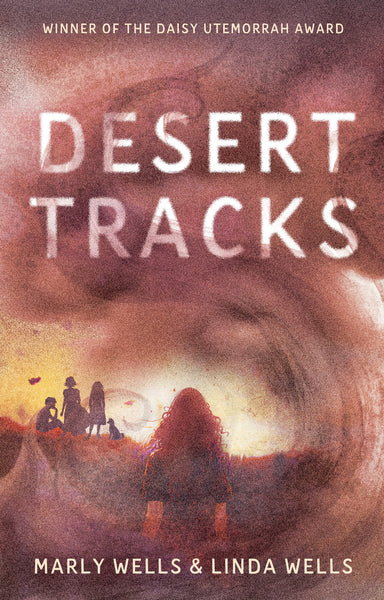
And so we’ve focused on the Daisy Utemorrah Award, which is an award available to First Nations creators who write junior fiction or young adult fiction. (The 2024 winner is Desert Tracks by Marly Wells & Linda Wells.)
We’re trying to create books that open up a whole wide range of possibilities and life ways that reflect the complex humanity of a First Nations people.
The aim is to have young First Nations people accessing those complex representations – and in those books it might not just be their Blakness represented, it might also be that their queerness or what it means to live in a city or what it means to live in a country town. But those things are also then made accessible to non-Indigenous young people in the same way. And these stories talk to human connection, but they also complicate what many non-Indigenous folk understand as what it means to be a First Nations person in 2025.
There’s so many intersecting aspects of someone’s identity, you know. I’m a mother, I’m a CEO, I’m an educator and I’m also an Aboriginal person, and opening it up so that everyone, but particularly First Nations people, can have complex life worlds reflected back to them is essential.
There’s a whole wide range of possible ways of being in the world, which is really important because up until very recently, the last 10-15 years, those representations were just not accessible. Sally Morgan’s book, My Place was one of only a few books available in a bookshop or a school library and taught to students. So the more books out there that reflect wide diversity the better because they reaffirm different ways of being in the world.
Joy Lawn
You’ve articulated it so beautifully and so profoundly, Lilly.
Lilly Brown
Thank you, Joy.
I’ve thought about it a lot and it affects me personally as the mother of Aboriginal kids. Rachel Bin Sallah, our publisher, often says that Magabala books are more than a book, they’re a bridge.
So for me, as an Aboriginal mother with Aboriginal kids, for me to be able to pick up a book by an Aboriginal creator and read that to my child, our way of being in the world is completely reaffirmed. In our little family unit, that moment of connection through a book is the biggest protective factor. So when my kids leave my home, they’re home. When they go out and encounter those negative ideas, they know what it means to be a First Nations person. They’re so strong in the way that they’re grounded and how they stand.
Joy Lawn
Yes!
I had goosebumps when you were using that description of the bridge and it reminded me of last week.
Lilly Brown
Yeah?
Joy Lawn
I saw a debut play by Dalara Williams, Big Girls Don’t Cry in Redfern at Belvoir St Theatre. It was very powerful. You reminded me of it when you were speaking about there not being only one book or not being only one story. The play was a very different story that many people haven’t heard, mainly about young women’s experiences in Redfern in the 60s and wanting to have fun, while also facing issues of injustice and racism.
Lilly Brown
Actually, and I know we’re riffing now, but when I was in my late teens, maybe early 20s, I encountered a book by the late Michael Riley.
He was an Aboriginal photo journalist and some of his photos were from Redfern. Aboriginal women were all dressed up in beautiful outfits and chunky beads and some of them had afros. And I was sitting in the university in Perth and I saw these photos and it was like I’d never seen Blakness represented in that way.
This was 20 years ago now. It had the most profound impact on me that these young, beautiful women looking cooler than I or anyone else at the time, were in Redfern in the middle of the city.
So I know what you’re talking about. I would love to see that play.
Unfortunately, I’m 4000 kilometres away from it.
Joy Lawn
Yes, well, hopefully it will tour. The climax was the inaugural Aboriginal debutante ball set in Paddington Town Hall with the women dressed in all their finery. I’m getting goosebumps again thinking about how the concept and ‘heart’ of the play was brought to life.
Joy Lawn
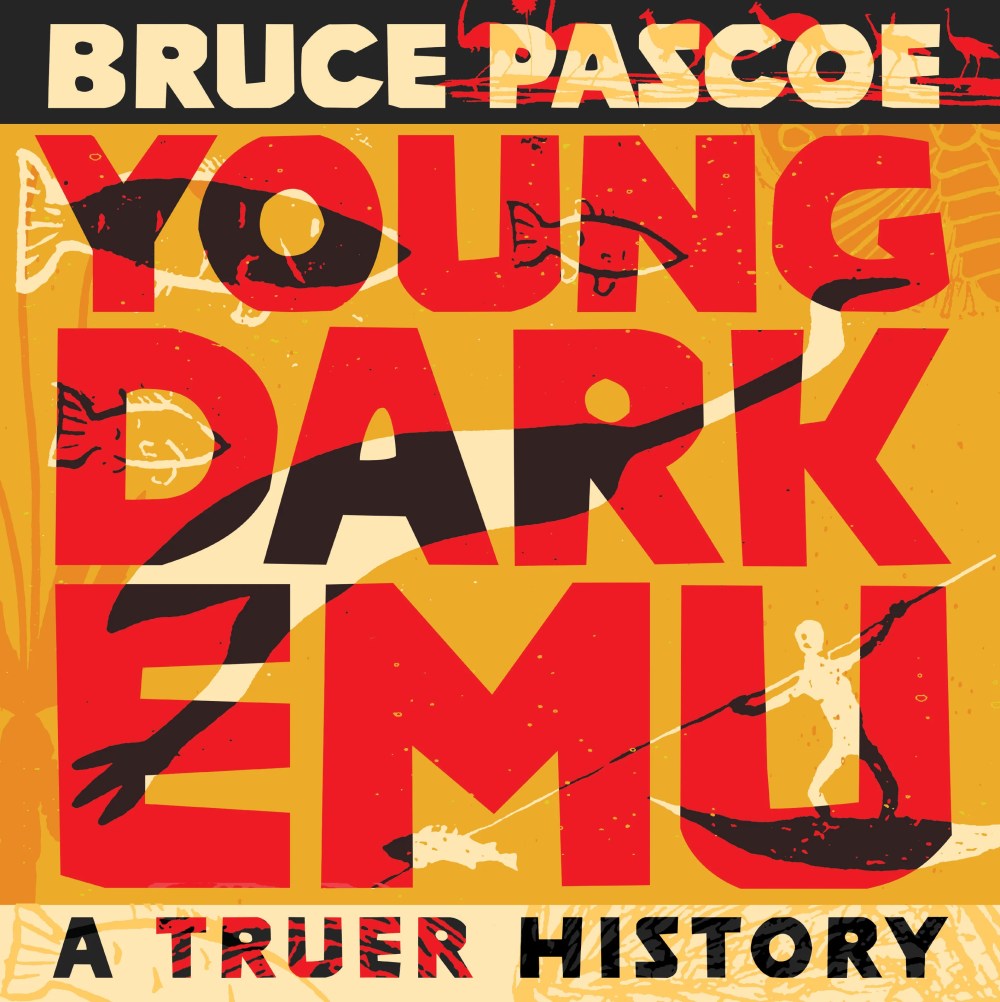
The phenomenally successful and influential Young Dark Emu: A Truer History by Bruce Pascoe has just been re-issued. I was chair of the judging panel of the NSW Premier’s Literary Awards that shortlisted the original book in 2020.
Our report in summary said:
An illuminating and important non-fiction work for children –
meticulously researched, and well designed.
Highlights and challenges the whitewashing of Australian history
Utilises primary sources and historical analysis
Simplifies and unpacks complex elements of Australia’s colonial and pre-colonial history for a younger audience.
The rich, earthy red-clay colouring of the multimedia illustrations entice the eye.
It will be used for decades as an educative tool in Australian homes and classrooms.
What can you tell us about Young Dark Emu?
Lilly Brown
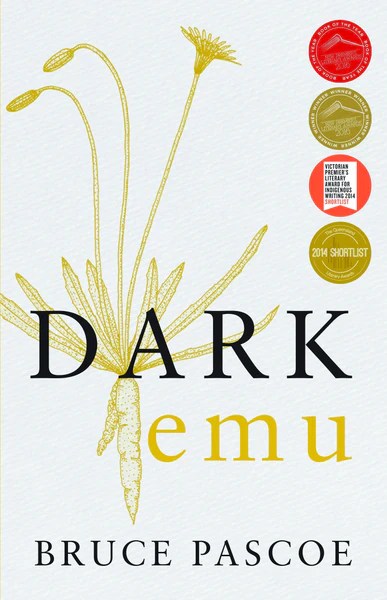
Young Dark Emu really relates to the stereotypes we discussed earlier. I read Dark Emu (the adult version) when it first came out and it blew my mind – that Bruce Pascoe could craft such a strong argument to undermine negatives stereotypes about the way that First Nations people had been represented for so long.
And then recently picking up the new addition of Young Dark Emu, it’s so beautiful, it’s so edgy and accessible and I’m so excited for educators and parents to pick up this new addition and to experience it with their kids because I think its power is not only in young people being able to access this knowledge, but adults as well.
You know, people my age and older were not taught this stuff in school.
It fundamentally challenges the preconceived idea of settlement as a peaceful process or of settlement where First Nations people are beneficiaries of Western civilisation.
And so I think reading it the second time with my own kids now, I can see that it’s a really good example of a book that not only informs but is profoundly moving. I think kids these days are probably more on top of it than older generations; they’re actively accessing this information.
This book is such a profound disruption. I’m really proud of it.
Joy Lawn
I was also on the NSW Premier’s Literary Awards judging panel in 2016 when the original, adult version of Dark Emu won overall book of the year. As judges, we felt that it was such an important book, it had to become the winner. And yes, I think that award steam-rolled the book into public awareness.
Lilly Brown
Joy, when Dark Emu was first out it wasn’t received as a big deal. But after the award there was a deluge. That was the first major book that booksellers and others recognised as an Aboriginal text that they liked. That was the turning point where, all of a sudden, it became mainstream and accessible.
So we often talk about how grateful at Magabala we are for the way that it was showcased by that award.
Joy Lawn
Yes, yes, yes.
I also want to ask about more of your favourite Magabala books. You’ve already shared Story About Feeling by Bill Neidjie.
Is there another one that you would like to mention?
Lilly Brown
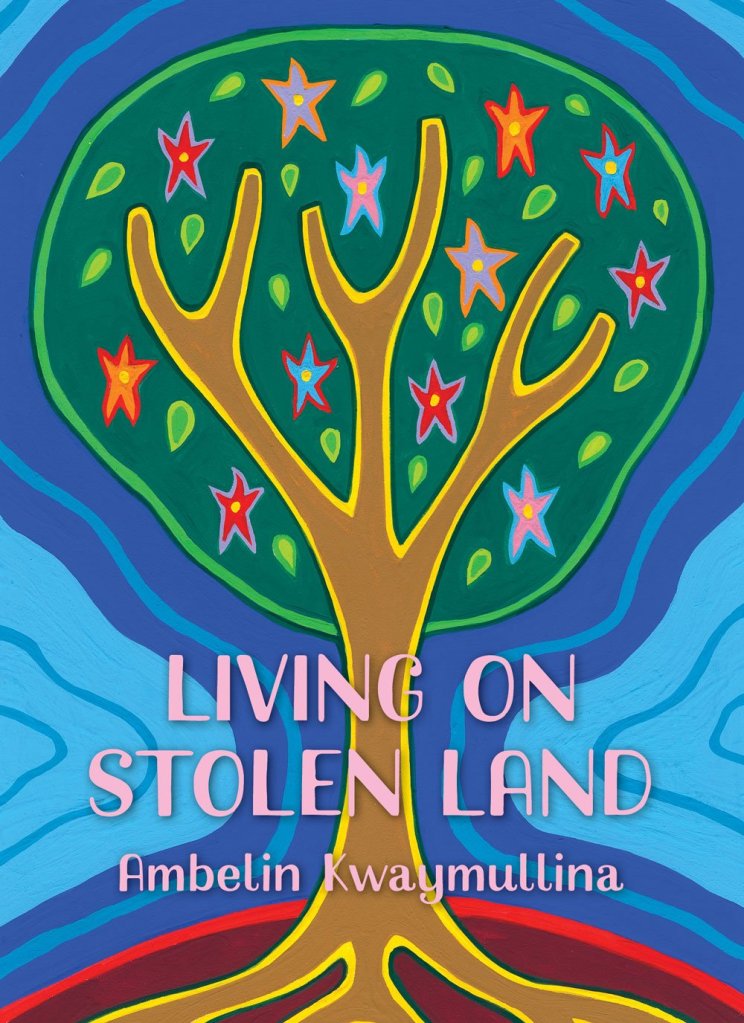
One of the most important books, one that I would also define as a philosophy text, is Living on Stolen Land by Ambelin Kwaymullina. This book should be read by everyone and anyone who has any power to influence the lives of First Nations people, directly or indirectly.
Ambelin talks about humility and sovereignty and Country, and if you can as a non-Aboriginal person, pick up this book and sit with it, it will profoundly change the way that you connect to Country and how you connect to Aboriginal people. I think every public servant, every politician should read it to understand what some of the concepts that Ambelin shares in the book really mean in practice.
I think that it’s such a powerful little verse book.
If you read this and Bill Neidjie’s book and you practise what these two are sharing with you, if everyone did that, the world would just not be in the state that it’s in.
The other thing I would say, because I know Magabala has a bit of a profile, is that we are a First Nations community controlled not-for-profit publishing house.
Because we’re not a commercial publishing house, every time someone buys a book, they’re reinvesting back into that bigger vision, which is ensuring that First Nations people and communities, First Nations people and stories continue for generations to come.
Joy Lawn
It’s been my absolute privilege to speak with you Lilly. We’ve gone to some unexpected places.
Lilly Brown
Thank you again for actually taking the time out to talk to me. I really appreciate it because I have been thinking a lot about relationships and engaging with our stakeholders to genuinely start relationships with one another that are ongoing.
So thank you for your time.
Magabala Books website
Young Dark Emu at Magabala Books
Interview with Ambelin Kwaymullina about Living on Stolen Land at PaperbarkWords
Some of my interviews and reviews of Magabala Books at Paperbark Words blog

 paperbarkwords.blog
One thought on “Dr Lilly Brown CEO Magabala Books”