
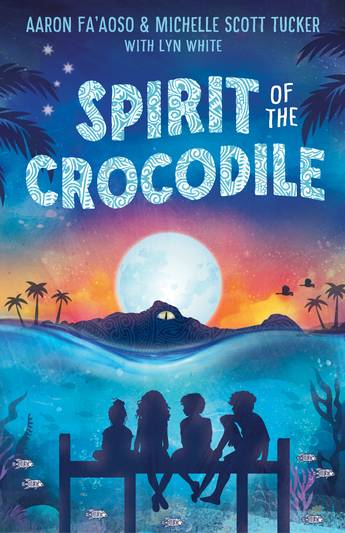
Spirit of the Crocodile by Aaron Fa’Aoso and Michelle Scott Tucker with Lyn White
Allen & Unwin
‘What do you think it wants?’ Ezra was talking about the crocodile. It was the only thing they’d been talking about for the past little while.
Because it had come back.
Not lying around on the boat ramp this time but walking along Main Road. Walking slowly down the middle of the road in its splayed-leg, malevolent way, bold as anything.
That day at school, no one had talked about anything else. Even the teachers were amazed.
‘Mr Robinson reckons it’s hungry,’ said Mason. ‘Because there’s not enough fish in the usual places anymore.’
(Spirit of the Crocodile)
Interview with Spirit of the Crocodile creators, Aaron Fa’Aoso and Michelle Scott Tucker with Lyn White
Thank you for speaking with PaperbarkWords, Aaron, Michelle and Lyn.
I loved reading your novel set on Saibai in the Torres Strait, meeting your well-rounded, authentic characters and having an adventure with them.
Where are you all based and how do you know each other (if you do know each other)?
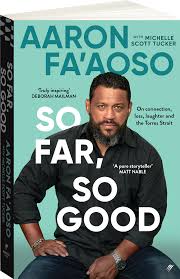
Aaron and Michelle: Aaron is a proud Torres Strait Islander with ancestral and family connections to Saibai Island. He currently lives in Cairns. Michelle lives in the Macedon Ranges, about an hour from Melbourne.
We are both lucky enough to be represented by Danielle Binks and Jacinta di Mase at Jacinta di Mase Management: the best literary agency in Australia. They were also responsible for introducing us back in 2019, to work on Aaron’s memoir So Far, So Good.
Thanks once again to Jacinta and Danielle’s behind-the scenes nudging and prompting, we were approached by a freelance series editor, Lyn White. Lyn is responsible for a suite of middle grade books called ‘Through my Eyes’, focussing on the experience of children living through difficult circumstances (mainly conflict zones and natural disasters).
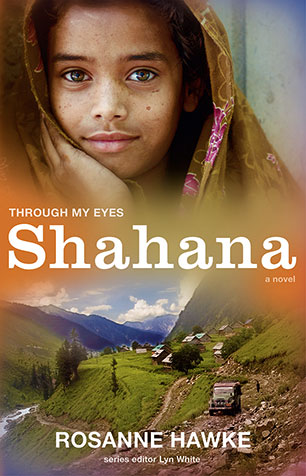
Lyn: I live in Melbourne Victoria and am also represented by the wonderful Jacinta Di Mase. I have been on Jacinta’s list since 2013 when my publisher Allen & Unwin published Shahana, the first of the 17 books of which I am the series creator and editor. I have been responsible for the initial story ideas, the editorial tasks and working with the marketing team for all the books in the three series of Through My Eyes – conflict zones, international disaster zones and Australian Disaster Zones. Stories based on real events told through the eyes of a child close to the age of the readership.
Before my publishing career I was a primary school teacher, teacher-librarian and English as an Additional Language teacher, working with refugees and newly arrived students.
In 2023, having just completed the final book in the Australian Disaster Series, I turned my attention to the Pacific region where the islands are at the forefront of the climate emergency. I wanted to create more middle-grade realistic fiction novels that dealt with important themes such as the climate emergency, resilience, courage, community, family and activism.
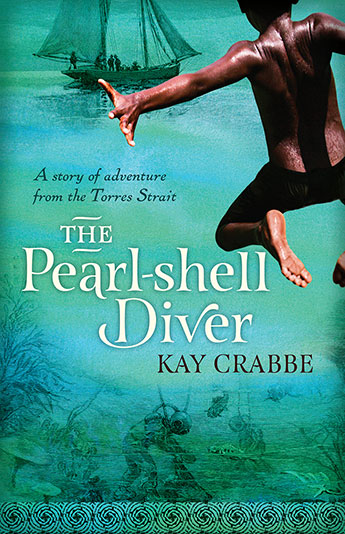
Having visited Thursday Island in the Torres Strait some years ago researching another book I commissioned – The Pearl-shell Diver by Kay Crabbe – I was keen to set another story in this beautiful but little-known part of Australia.
After reading Aaron’s memoir I knew he was the one I wanted to write this Torres Strait story, along with his partner in crime, Michelle Scott Tucker. I approached Michelle and Aaron and then put together a pitch to my publisher for this new work to be considered. It was another YES, so I began to work with Michelle and Aaron for about 12 months, bringing this idea to life.
How did your collaboration on Spirit of the Crocodile work? Did Aaron and Michelle write the words (if so, generally who wrote what?) and Lyn give advice later or did you work alongside each other?
Aaron and Michelle: Lyn asked us to write a stand-alone novel for her, set in the Torres Strait and featuring children dealing with the real-life impacts of climate change. Well, how could we refuse? Aaron said yes because he’s always keen to showcase his beloved Torres Strait. And Michelle said yes because she wanted to see if she could write fiction. Finally, we both looked forward to the prospect of working together again, because our first collaboration, co-writing Aaron’s memoir, had gone so well.
We mapped out a basic narrative arc for ‘Spirit of the Crocodile’, articulated some themes and then Lyn approached highly regarded Australian publisher Allen and Unwin, with whom she’s worked for many years. They said yes, we’d like 40,000 words please and we all signed a contract in late 2023. It was a pretty bold move on A&U’s part, to sign us up before the story had been written, although a few months later we submitted some sample chapters, so they could be sure that we were heading in the right direction.
Aaron and Michelle’s process involved lots of conversations, followed by lots of writing, followed by more conversations, followed by rewriting. Some of the events in the book – like when the boys are a bit naughty during a church service – are based on Aaron’s real-life experiences. And the cultural material is based on Aaron’s knowledge, as a culturally initiated Saibai Islander man.
Lyn subsequently reviewed and edited our draft manuscript, providing helpful guidance and suggestions.
Lyn: As per Aaron and Michelle’s answer. We worked closely, I did a complete structural edit of the first manuscript, then continue to communicate and make changes until we arrived at the final copy that went to print in Jan 2025. It was such a thrill to finally meet Michelle and Aaron at the launch.
I am so privileged to work with the team at A & U, the in-house editor, the design team as we work out cover designs, and the marketing team where my education background and experience with the Through My Eyes books has proved invaluable in promoting a new title, particularly to the schools’ market.
Joanna Hunt’s cover illustration is a brilliant hook into the book. How do you think it encapsulates your story?
Aaron and Michelle: We love the cover too! Our publisher originally sent through about half a dozen different cover versions, all beautiful but all lacking a distinct Torres Strait Islander look and feel. A&U were brilliant about taking our feedback on board and then working with Torres Strait Islander artist Paul Seden to incorporate typical Torres Strait artwork into the title, the croc and the little lino-cut fish. Those fish are also used throughout the text. It took a few goes to get it right, but we are very happy with the final result.
Please introduce your main characters and briefly explain any difficulties or changes they are facing.
Aaron and Michelle: Ezra and Mason love basketball, computer games and the sea. Ezra finds his little brothers deeply annoying and will do almost anything for a dare – especially if there’s cake involved! The boys get told off for farting; they worry about getting teased; and they wonder what they might become when they grow up.
They really are just ordinary Australian kids who happen to live in an extraordinary location.
Ezra’s biggest problem (he thinks) is that he doesn’t want to go to high school next year, because it means leaving Saibai to live on a different island, many hours away from home. But really, his biggest challenge is accepting his responsibilities as a son, a brother, a community member and – one day in the not-too-distant future – a Saibai Islander man.
Lyn: Just to one point I always make in my author briefs is that there be a gender mix among the characters.
What is real or fictitious about the novel’s setting on Saibai?
Aaron and Michelle: Ezra and Mason and all the people in this book are fictional characters. But their love for family, community and culture are very much real, and drawn from the real life community and culture of Saibai and the Torres Strait.
Tagai State College, with its seventeen campuses throughout the Torres Strait is real, however, the Year 7 orientation day described in the book, and all the action and activities associated with it, is entirely our invention.
Saibai Island is a real place, population almost 300, with a school and an airport and health care centre and a co-op store that sells the good icy poles. The croc-infested waters, the jetty and the sea wall are real too, as are the risks to the island and its people posed by climate change and rising sea levels.
Lyn: As with all my publishing projects, the novels are authentic realistic fiction where the country/place is real or very similar to a real location, the events are drawn from real life, but the characters are fictitious. This story is set on contemporary Saibai.
What is Saibai’s relationship with Thursday Island?
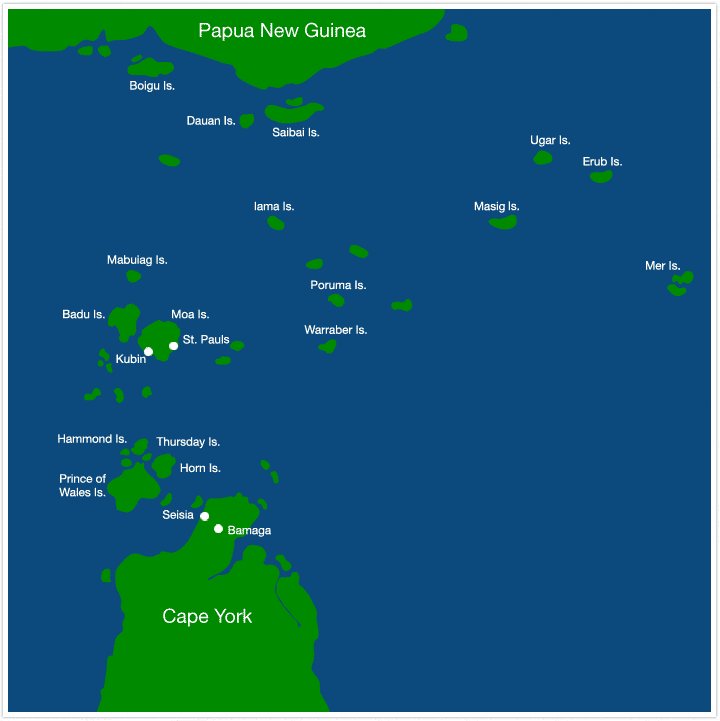
Aaron and Michelle: Saibai Island, very much part of Australia, is a small, very low-lying island located only 4kms away from the coast of Papua New Guinea. It is one of about 274 islands in the Torres Strait – the stretch of sea that lies between the pointy tip of Australia’s Cape York Peninsula and the island of New Guinea.
Only 17 of the Torres Strait Islands are inhabited and Waiben, or Thursday Island, (which lies about 170kms south of Saibai) is the region’s administrative centre and the most heavily populated.
The primary school on Saibai Island is one of the 17 campuses of Tagai State College, which is has its headquarters, and secondary school, on Waiben (Thursday Island).
How do you show local culture and community, including family life and church?
Aaron and Michelle: Our main aim was to tell an engaging story. Along the way, we’ve included some information about culture and community, but only as it relates and adds to the reader’s understanding of the characters. Given that our main characters are immersed in that culture and community, we’ve tried our best to layer the relevant information into the narrative in ways that never interrupt what should always be simply a cracking good yarn.
What is the significance of the crocodile?
Aaron and Michelle: Like our main character Ezra, Aaron is himself a member of the Koedal (Crocodile) clan. The crocodile is therefore -symbolically, spiritually, and culturally – representative of Ezra’s connection and kinship relationship to actual crocodiles, as well as to the land, the sea and the sky.
How do you explore some of the issues related to climate change?
Aaron and Michelle: The impacts of climate change impact every part of Saibai life. So again, we’ve layered those impacts into the narrative in a way that adds to the story, rather than taking the reader out to ‘learn a lesson’.
Much of Saibai has disappeared under water in the last fifty years or so and the remaining landmass is increasingly affected by rising salinity levels in the soil. Fish stocks are reduced, seasonal harvests are affected, and the migratory patterns of birds have changed. All of this is mentioned in passing. The unseasonal and dangerous storm which features at the heart of the story is yet another impact of climate change – one with difficult results that we hope will resonate with our readers.
Having had my own home badly flooded in the 2011 Queensland floods, I found the description of the flood on Saibai difficult to read. However, it is important to include scenes like these in novels for young people to increase their awareness of our world, and disasters and other difficulties that people are facing. How did you balance writing the dangerous aspects with community care?
Aaron and Michelle: Please accept our sympathies for your own flooding situation – it’s just awful, and we’re so sorry it happened to you.
Flooding and seawater inundation have unfortunately become a regular occurrence on Saibai. It’s long past the point where Australian society can keep referring to these events as unprecedented or surprising. They are now the entirely predictable result of climate change yet we see few substantial alterations to policy. We hope our book might further raise awareness of the problems as well as being a call to action.
Lyn: Michelle and Aaron have described our approach beautifully. I always encourage my authors to show not tell, we are not didactic about the climate emergency. The readers experience the effects of climate change through the eyes of the main characters especially Ezra but also his parents. Everyone on Saibai is living with the threat of rising sea levels and increasing frequency and severity of storms. Including a storm in this story brings this knowledge close to home and builds the level of shared empathy I strive for in all these books. Shared empathy and intercultural understanding are important for our young people to develop if they are to become the kind of global citizens this world desperately needs. We are all in this together and everyone can play their part, no matter how small that may be.
I write a brief for my authors that stresses the need to balance fear and tragedy with hope and resilience. We do not shy away from the perils of climate change, the floods, the fires, the storms etc but with sensitive, well-crafted writing we build hope. Our characters rise above difficult situations and find within themselves, their family and their community the strength and wisdom to create a better future for all.
I love the game Over and Under that Ezra and Mason play. It is a source of much suspense and humour in the book. Could you please tell us a little about it?
Aaron and Michelle: The Over and Under game was invented by us to help maintain narrative drive and tension. It also indicates something about Ezra and Mason’s characters – their willingness to take on a dare; their desire to have a laugh at each other and at themselves; their friendly yet competitive natures. We also felt that Over and Under reflected the sort of pointless, rule bound and really fun games that we played ourselves, as children, for endless happy hours.
What do you hope young readers experience and take from Spirit of the Crocodile?
Aaron and Michelle: As noted above, our main aim was to provide readers with a fun, engaging story. If they learn something along the way about the people and cultures of the Torres Strait, and about the impacts of climate change, then so much the better.
Most of all, we hope our Torres Strait readers will enjoy (finally!) seeing their own experiences on the page and that our mainland readers realise that Torres Strait kids really are – in all the ways that are important – just like them.
Could you each please tell us about some of your other books or work?
Aaron and Michelle: See author bios below.
Lyn: Through My Eyes: conflict series
Shahana by Rosanne Hawke
Amina by Jessica Powers
Naveed by John Heffernan
Emilio by Sophie Masson
Malini by Robert Hillman
Zafir by Prue Mason
Hasina by Michelle Aung Thin
Through My Eyes: International Disaster Zones
Hotaka by John Heffernan
Shaozhen by Wai Chim
Angel by Zoe Daniel
Lyla by Fleur Beale
Through My Eyes: Australian Disaster Zones
Tyenna by Julie Hunt and Terry Whitehead
Alex by Rosanne Hawke
Mia by Dianne Wolfer
Max by Prue Mason
The Pearl-shell Diver by Kay Crabbe
Spirit of the Crocodile by Aaron Fa’Aoso and Michelle Scott Tucker
Thanks so much Joy for this opportunity. I always enjoy reading your book reviews in Magpies.
Spirit of the Crocodile at Allen & Unwin
Author bios:
Aaron Fa’Aoso is a Torres Strait Islander film producer, director, screenwriter and actor. In 2022 he published his memoir, called So Far So Good. Aaron is on the board of SBS and of Screen Queensland, and was the proud co-chair of the Queensland Government’s Interim Truth and Treaty Body. He holds a Masters Degree of Screen Business and Leadership, from the Australian Film Television and Radio School. He is known for his roles in RAN: Remote Area Nurse, East West 101, The Straits and Black Comedy, and as the presenter of Strait to the Plate and Going Places with Ernie Dingo. Aaron is the founder and Managing Director of film and television production company, Lone Star, whose many outputs include the documentary series Blue Water Empire, about the history of the Torres Strait Islands.
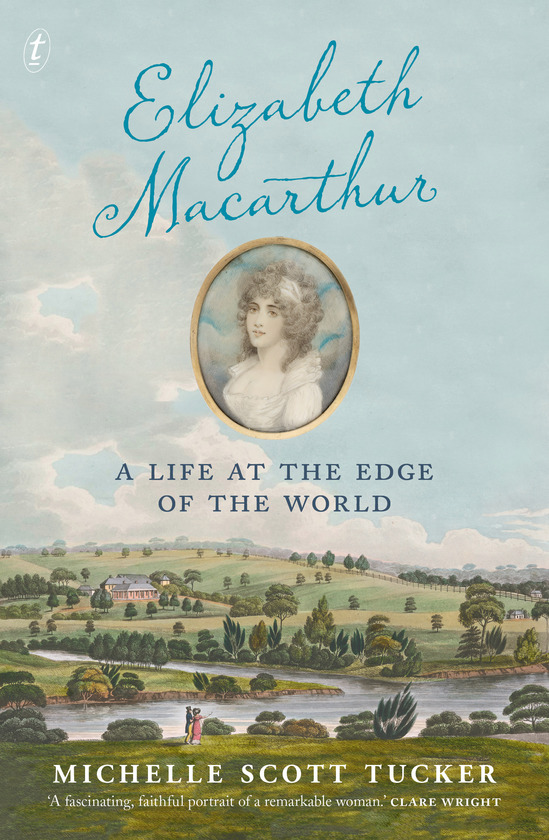
Michelle Scott Tucker is the author of Elizabeth Macarthur: A Life at the Edge of the World – a biography of the woman who established the Australian wool industry (although her husband received all the credit). Elizabeth Macarthur was shortlisted for the 2019 NSW State Library Ashurst Business Literature Prize and the 2019 CHASS Australia Book Prize. Michelle is the co-writer of Aaron Fa’Aoso’s memoir So Far, So Good. She is currently working on a biography of Louisa Lawson, to be released in 2027.
Consultant editor Lyn White has extensive experience as a primary school teacher-librarian and EAL teacher, and in 2010 completed postgraduate studies in Editing and Communications at the University of Melbourne. Lyn is passionate about children’s literature and has great expertise in engaging students and teachers with quality texts. Her work with refugee children motivated her to create the acclaimed Through My Eyes series of books set in contemporary war zones. Lyn went on to create and edit the Through My Eyes – Natural Disaster Zones series set around international and Australian disasters. The novels pay tribute to the courage and resilience of children who are often the most vulnerable in post-disaster situations. Lyn is a conference presenter, runs workshops based on the Through My Eyes texts and has written several articles for teacher-association journals and children’s literature magazines.

 paperbarkwords.blog
One thought on “Spirit of the Crocodile by Aaron Fa’Aoso and Michelle Scott Tucker with Lyn White”