

How to Survive 1985 by
Tegan Bennett Daylight
(Simon & Schuster)
“ ‘There’s a lot more buildings in 2025,’ I said to Julia as we walked along the Quay to the bottom of George Street. It was such a weird feeling, like the twenty-first century was a kind of hologram hanging over the 1980s.”
(How to Survive 1985)
Author Interview: Tegan Bennett Daylight
Thank you for speaking to Joy in Books at PaperbarkWords blog, Tegan.
A pleasure.
Your first YA novel, Royals, was published to great acclaim in 2023 and was shortlisted in the NSW Premier’s Literary Awards.The premise of the group of teens (and a baby) living inside a shopping centre was strangely lateral and highly memorable. The novel also had important messages threaded into the story, as does its sequel, How to Survive 1985. How easy or difficult was it to find another compelling setting and era for the second book?
Thanks Joy, and I love this question! It wasn’t difficult at all, because I hadn’t actually intended to write a sequel. If I’m being honest I don’t plan any of my books, the novels or short stories or non-fiction. A book turns up in my brain and I give it a shot, and if it works (and goes on working) I keep going. So, fully intending not to write a sequel I found myself thinking about the past, and when I was a teenager, and it all came from there. I think it’s also because I love and know these characters so well. They’re very much drawn from life – I’ve been surrounded by teenagers most of my life, as a teacher and then as a parent – so it’s easy to tap back into that energy.
In that vein, there is a third Royals book forming as we speak …

Why have you brought some, but not all, of the group back together?
Again, there isn’t usually a why. I’ve been writing for so many years that I’ve learned to just follow the words, which also means following the story. It became clear to me as I started writing that Jordan and Tiannah would be off on their own adventure; they’re a couple, and a very connected and devoted one, and I knew they’d have some secret aim they were pursuing. I think I had the Narnia characters in mind – remember how Peter and Susan are off doing allegedly grown-up things while Lucy and Eustace and Edmund continue their adventures in another world? It was something like that, only Jordan and Tiannah actually were in 1985, just – busy. They’ll be back, I promise!
How do you embody different types of diversity through these characters?
Excellent question. First, see above; my characters are drawn from life. I just look around me. I’m Anglo and so are my kids, and none of us in our family have a disability apart from some struggles with mental health, but Western Sydney is a big place. It’s the best place, as far as I’m concerned! Making my characters come from different backgrounds wasn’t an effort, it was just telling the truth about where I live and work. I’m a skip though, and once I’d finished writing it was absolutely essential to me that I have cultural readers for my characters. Grace and Tiannah are First Nations, Akira is queer, and Jordan has a disability. These characters aren’t points of diversity or difference, these are people, and there were things my own experience couldn’t tell me about them. I had amazing cultural readers for Royals, and I learned so much from them – they made my writing better.
Could you please briefly pitch the plot and setting of How to Survive 1985?
Indeed! I’m going to use some words from my amazing editor Lizzie Levot. She writes a great plot description. Sometimes it’s hard for the writer to do this – because they just wrote 50,000+ words of plot description!
When six friends find themselves thrown back in time to 1985, how will they handle being teens in their parents’ era? And will they ever get back to the future?
It takes Shannon a while to work out what’s happened. She went into the cinema in 2025 and came back out … in 1985? Somehow she’s travelled forty years back in time.
But this isn’t the first time something strange has happened to Shannon and her group of friends. Is there a chance that whatever mysterious forces brought them all together a year ago have sent them back to the 80s with her? To find her friends, she’ll have to navigate a world with no smartphones, no internet, and – worst of all – no access to bubble tea. Plus, what’s with the hairstyles?
Once they’re reunited, things only get more complicated. As the group tries to find a way back to the future, some friendships are strained while others blossom into something more. Can they stay together – and stay friends – long enough to survive 1985?
In How to Survive 1985, Shannon and the other Royals embark on a fresh adventure, to discover something about their origins and how far their generation has come.
Why have you mentioned Narnia and The Faraway Tree tales?

Well, Shannon is a reader, like me, and she’s around the same age as my children. I read these books to them because they were read to me, and their worlds have embedded themselves in my writing DNA. Especially the Narnia books, because they operate with intent. C.S. Lewis was trying to write something about what Christian faith meant to him, and he used his own questions and longings about this as a foundation for his intensely vivid imagined world. The Narnia books are seriously outdated in their social attitudes, and I don’t believe in a god or gods, but the places and characters in Narnia are just so richly alive to me. I don’t think about the characters so much in The Faraway Tree (I get sick of the girls always having to make the damn sandwiches) but the worlds at the top of the tree, and, come on, Pop Biscuits!
A feature of the novel is the Gen Z worldview and pop culture and expressions. How did you make this so authentic?
Two things (and I’m so glad they feel authentic to you). First, I walk out of my study and there are usually three or four 19-year-olds in the house. They’re not talking to me so much as talking to each other, and their language is just a treasure chest, it’s so sparkling and precious. I listen hard. I talk to my oldest child on the phone or visit them at their house and they are surrounded by their friends, all young people. I walk into a classroom, as I’ve been doing since 1996, and there are young people all around me. I love their energy, their kindness, I love listening to them talk and love watching them change the world for the better.
In addition – I’ve been a teenager too. As Shannon keeps saying in the new book – some things are timeless.
What are some of the issues or ideas that you explore through the story?
Something that’s been preoccupying me and my partner Russell for years is how down on Gen Z (and millennials) people from older generations can be. I’ve certainly been guilty of starting a sentence with when I was young, and of course it’s ok to notice differences in our lives – we didn’t have phones or the internet, and I wrote my first book on a typewriter, so there is an experience I have that can be hard to communicate sometimes. But that doesn’t make it a better experience. What I’ve noticed over thirty years of teaching is that young people are kinder, more tolerant and open and inclusive. They’re anxious, sure, but they have reason to be. But they’re also adaptable and strong in the face of some pretty terrifying unknowns, and that’s what I wanted to write about.
The book has a secret subtitle, which is A Better World. I’ve said this to my kids a million times. We’re alive in a world that is scary but also a world that is bending our fixed ideas about gender, sexuality, about the effects of colonial occupation, about the Earth itself and what it needs from us. This feels to me like a better world. This feels to me like progress.
So … 80s Australia had more freedoms in some ways (like Fireworks Night … the joy of running around with a Roman Candle sputtering in your hand), but it also had wall-to-wall white males in power, institutionalised racism, sexism, ableism, transphobia and homophobia. These are things that still exist, but these are also things that are changing – for the better.
How to Survive 1985 is a powerful and timely social and cultural history. What would you particularly notice and how would you react personally if you slipped back into 1985?
On the positive side, I would notice the space – so much space. Trees and rivers and beaches and streets with more room, fewer people, fewer cars. I would notice that there were no phones and no internet, so no extra dimension for me to have to monitor. I would notice that I was more in my body; less in the weird artificial mind that is the internet. Also no damn bottled water. What a scourge this has been for our planet.
On the negative side: leaded petrol, pollution, sexism, racism, ableism, as well as trans and homophobia.
What is your hope for Gen Z?
That they continue to be who they are. By being kind to the people next to us, by being kinder to the Earth, we effect real change. I want them to know that’s all they need to do to change the world.
******
What threads recur over your body of work?
I think teenagers. I seem to have extremely vivid recall of my teenage life, although that could be true of everyone (whether we all want to recall that time is another thing altogether). I’m interested in the way we have such powerful longings and feelings when we’re teenagers, and how hard it is to express them or even understand them. I’m interested in the difference between what we want and what we do, and what it’s like to be honest about how we feel.
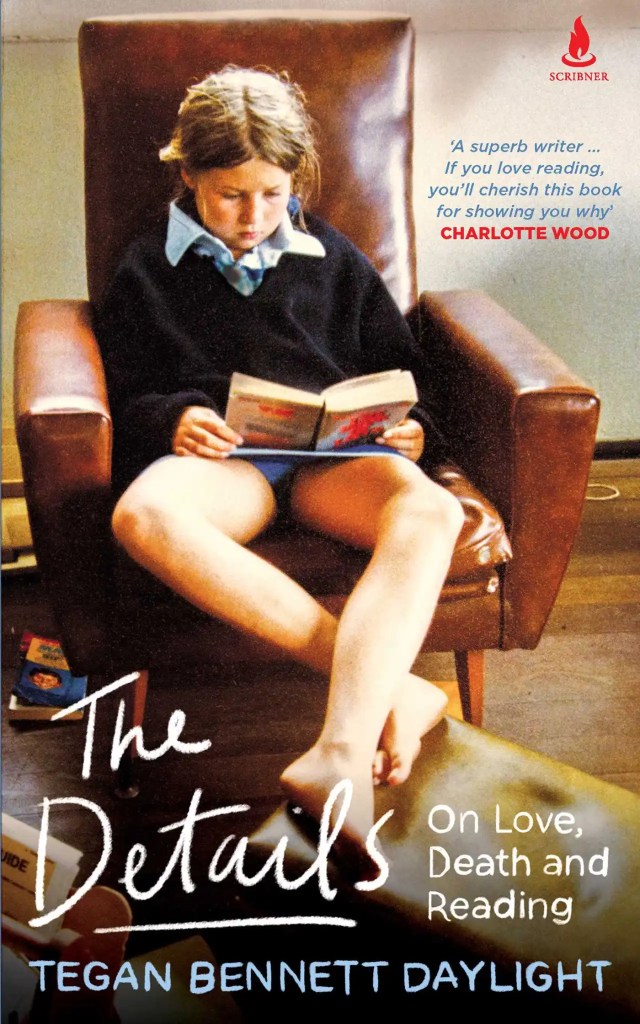
Also: books. I just have read so many books, they’ve been so important to me. This is where my essay collection The Details comes from. Everything I do, think and feel is silently informed by what I’ve read.
What have you enjoyed reading recently? Why?

Well, a lot of great YA by amazing Australian writers like Wai Chim, Alice Pung, Helena Fox, Gary Lonesborough, Will Kostakis. New writing from my writer friends, things that aren’t in print yet: by Felicity Castagna (who also writes such vivid, relatable YA), Gretchen Shirm, George Haddad, Kate Mildenhall, Jayne Tuttle, Alice Robinson, and a couple of new writers I think are really exciting: Sharleigh Crittenden, Gemma Parker, Suri Matondkar. My students’ writing. And Jayne’s put me on to the Japanese writer Yuko Tsushima – I think Territory of Light is the most startlingly brilliant book I’ve read in years.
How do you like to spend your time when not writing?
Reading, hanging out with my Russell – we are in a lifelong conversation that I just get so much pleasure from – talking to my kids, teaching, heading out into the national park, seeing old friends and new ones, and swimming. I love swimming so much.
How to Survive 1985 at Simon & Schuster

 paperbarkwords.blog
One thought on “How to Survive 1985 by Tegan Bennett Daylight”