
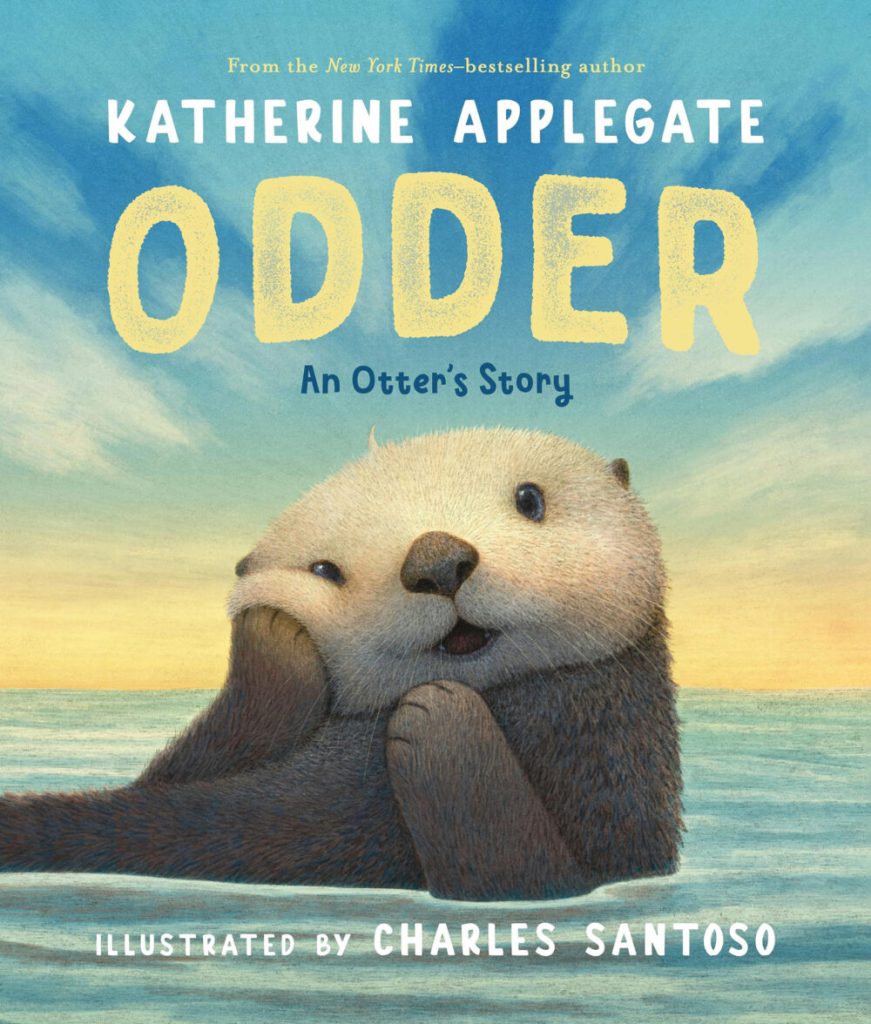
Odder: An Otter’s Story by Katherine Applegate & Charles Santoso
Long months pass,
and it is finally time,
Odder knows,
for the pup to move on.
From her rooftop perch,
she watches the cage open,
hears the leap into sweet waves,
feels the joy of a loved one
set free.’
(Odder, words by Katherine Applegate, illustrations by Charles Santoso)
UQP
Odder: An Otter’s Story is #1 New York Times best-selling author and Newbery Medal winner Katherine Applegate’s highly memorable tale about Odder, a curious sea otter. Originally published in 2022 as a verse novel, it is now available as an evocatively illustrated picture book with pictures by Charles Santoso.
It will be interesting for readers and educators to compare the two forms but, for now, enjoy this interview with both creators of the picture book.
Interview with Odder creators
Katherine Applegate & Charles Santoso
Thank you for speaking with PaperbarkWords, Katherine and Charles.
Where are you based and how would you describe your book-related day or week?
Katherine: I live in Nevada, but I’ve lived in many parts of the U.S. over the years. My days begin and end with books: writing in the morning, reading in the evening. For the most part, I use a laptop (although in a perfect world, it’d be pencil and paper), and I’ve discovered that I can work just about anywhere, as long as there’s a cup of coffee nearby and a snoring dog at my feet.
Charles: Hello, Joy. Thank you for having me. I live in Singapore at the moment. I started my day by sipping my coffee while looking at my to-do list. My whole day after that normally involves illustrating a project or two until late evening (I draw and paint a lot each day). I make sure I refill my coffee in the afternoon and also stretch every 40 minutes or so. I usually put books around my working space, so I flick through them in between my breaks too.
Odder is the ‘Queen of Play’. How have you shown the importance of ‘play’ in Odder? How do you reconcile the joy and fun of play with its potential danger?
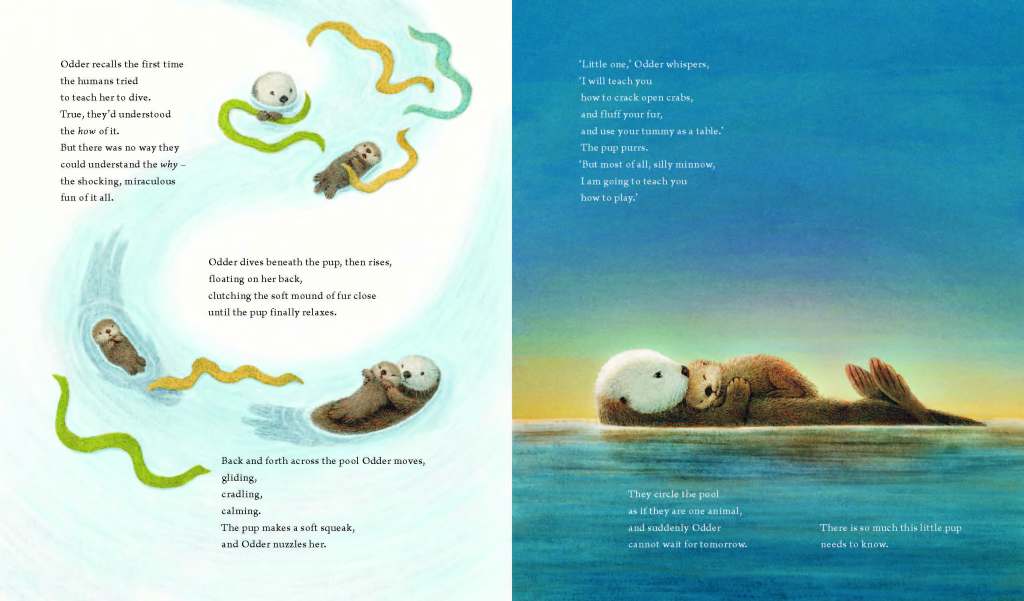
Katherine: Watch sea otters in the water, and you’ll know that play defines their days. The way they move is lovely and lyrical and full of delight, and nobody captures that essential joy better than Charles. His illustrations are not just beautiful. They positively leap off the page!
Of course, for Odder and her friends, play comes with real risks — risks she is willing to take.
Charles: I researched how sea otter moves and then put myself into Odder character when I illustrated the book. I didn’t want to make the characters too cartoony and stayed as much as close as possible to their natural movement/expressions. I do hope the readers can feel all the emotions through the illustration, together with Katherine’s wonderful words.
What is the greatest threat to sea otters and how is your book helping endangered otters?
Katherine: Sadly, as is so often the case, we humans represent the biggest threat to otters. That starts with climate change, which is causing waters to warm. Things like oil spills, fertiliser and household chemicals, and even pet waste are altering habitat quality for otters, a “keystone species” that’s vital to keeping the kelp forests healthy.
I truly hope our book reminds people about the importance of conservation efforts for these fascinating creatures.
Charles: I hope our book could raise awareness about sea otters and also spark interest for readers to wanting to know more about animal conservations.
Katherine, you originally wrote Odder as a verse novel. How have you adapted the words from the verse novel to become a picture book text?
That’s the wonderful thing about collaborating with a gifted artist like Charles! As spare as the verse novel was, even more could be eliminated for the picture book because his illustrations did so much of the heavy lifting in terms of conveying emotion and action.
Is it true that sea otter mothers leash their babies with kelp for safety, and move on rather than staying to rear their young? What other interesting fact have you included (or had to leave out because of space or another reason) in the book?
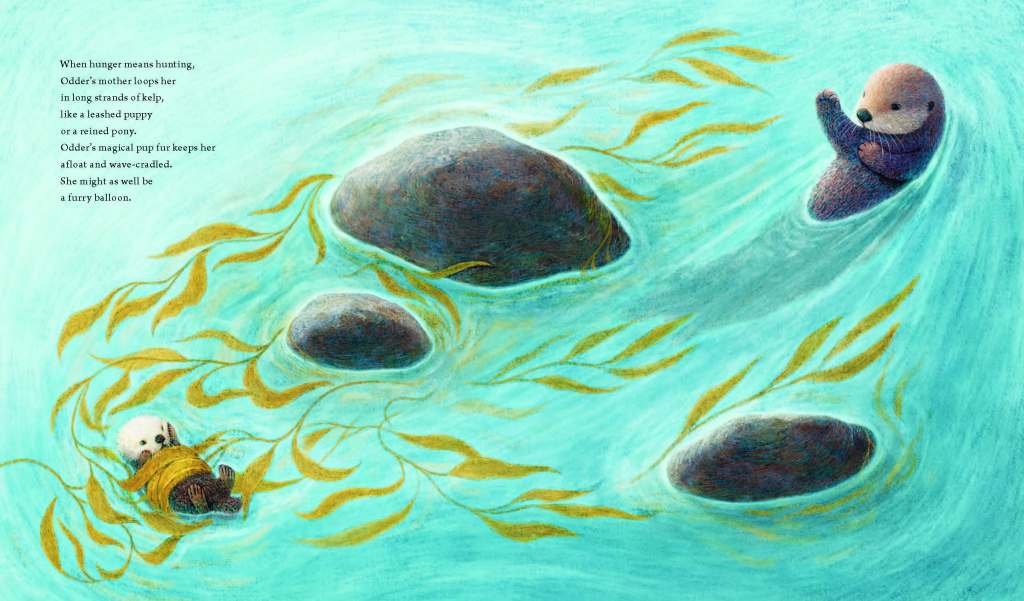
Katherine: I love the fact that sea otters leash their babies with strands of kelp to keep them anchored while the moms hunt for food. The ultimate car seat! As for caring for their young, mothers stay very engaged for about 8 months, at which point the pups are weaned and ready to head off on their own.
My favourite thing I discovered while researching is the fact that grooming baby otters is part of the daily work of aquarium scientists. Can you think of anything better than brushing the fur of tiny baby otters all day?
Katherine, what has most affected you about the bond or relationship between sea-otters and their ‘almost-otter teachers’?
It’s so poignant, the intense connection these humans and baby otters. Of course it’s hard not to get too attached, but the goal is to teach the temporarily captive pups to become completely independent wild animals.
Katherine, I hosted/moderated sessions over three days at Sydney Writers’ Festival with your husband, Michael Grant, and three other authors in 2016. How do your books differ from his?
We worked together on ANIMORPHS, so we are clearly able to blend styles. I tend to write for younger audiences and I love to focus on wordplay and style. Michael writes for older kids and loves a propulsive plot—and scaring his readers!
Charles, your art was created with digital brushes in Photoshop and Procreate combined with handmade textures. Could you give one (or more) example of your handmade textures?
Yes, most of the illustrations were done in Procreate. All techniques were similar to how I normally work with a real pencil and paints. All furs were drawn carefully to make sure they went to the right directions, etc. Handmade textures and drawings were blended in the end to enhance the tactile feelings of the illustrations. I made them with a pencil on watercolor paper (then scanned them in).
Charles, how do you express emotions and relationships in your illustrations for the book? How do you show movement in these illustrations?
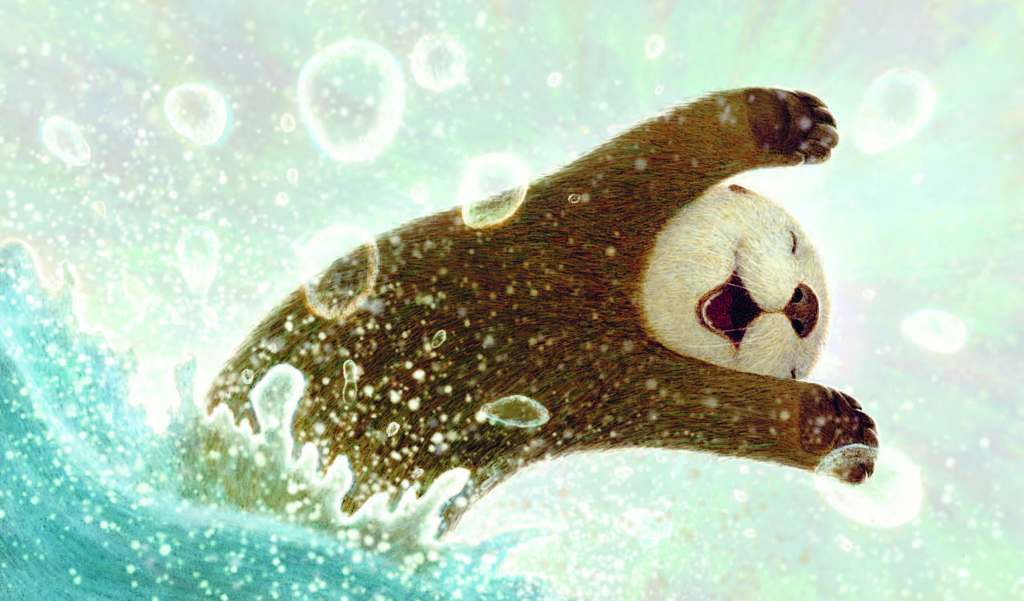
I try to put a lot of my own feelings into characters that I illustrate. I tried to imagine and empathise with the situation that the characters were in. The ideas for moments, movements and expressions grew naturally from there.
What is something that people may not know about you that relates to books or the arts?
Katherine: I started out as a ghostwriter for series like SWEET VALLEY TWINS, and wrote under pseudonyms for folks like Disney.
Charles: I like finding random things that people might not notice when I travel. For example, I love seeing different plants that sprout from street corners. Some people call it weeds, some others call it flowers. I find some of them interesting and beautiful.
What are you reading and enjoying?
Charles:I just finished Haruki Murakami’s Novelist as a Vocation. Making Mischief, A Maurice Sendak Appreciation on next on my table.
What are you writing or illustrating now or next?
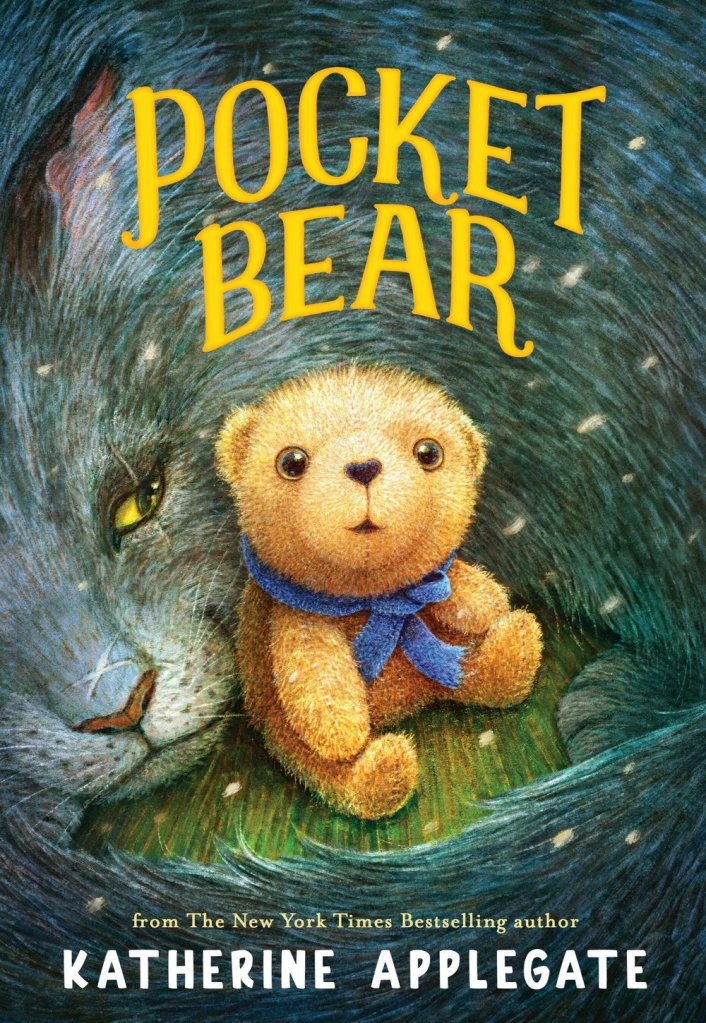
Katherine: I’m thrilled about my next middle grade novel, POCKET BEAR, which publishes in September, 2025 with Feiwel & Friends/Macmillan. It features a wily, theft-prone street cat named Zephyrina, and her dear friend, Pocket, a tiny stuffed bear who was originally created to provide comfort to a soldier during World War One.
Best of all, guess who did the cover and illustrations? The one and only Charles Santoso!
Charles: I illustrated another Katherine’s wonderful chapter book called Pocket Bear and was really enjoying it (Thanks, Katherine!)

 paperbarkwords.blog