
Saturation by William Lane
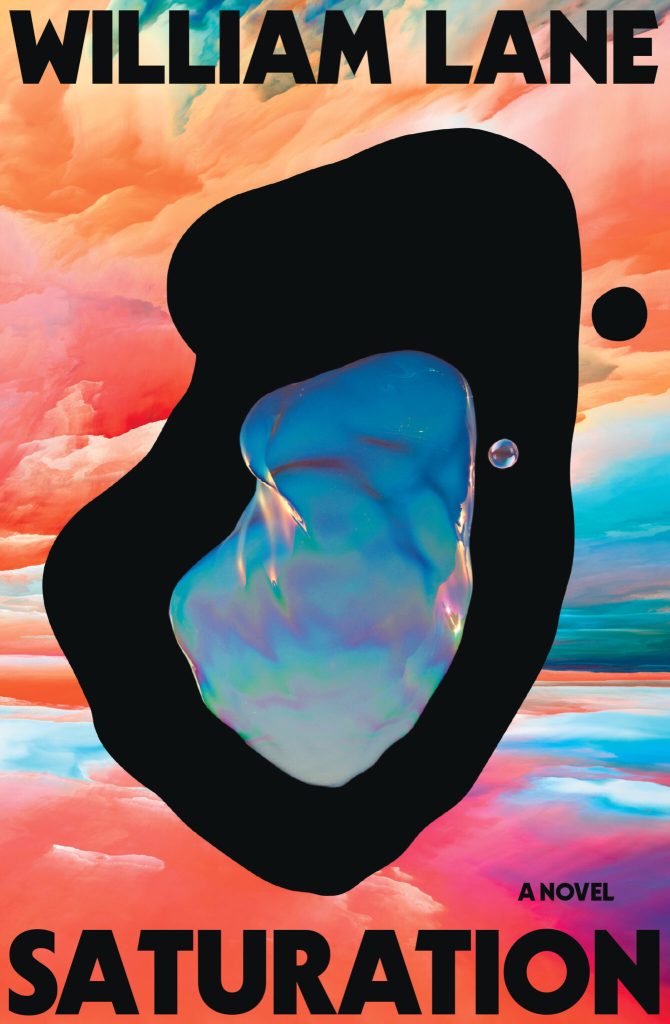
Saturation by William Lane (Transit Lounge) is a gripping, easy-to-read dystopia for adults that explores issues of climate and other anxieties.
On writing Saturation by William Lane
It seems every second person wrote a novel during the Covid lockdowns. Saturation is one of these novels. The Covid crisis, along with the escalating climate crisis, appear to indicate humanity’s past is rapidly catching up with us. A kind of reckoning is underway, as environmental degradation is increasingly difficult to deny or ignore. Reflections on how societies and individuals are being changed by these events, and how underlying political and psychic structures are being exposed, inspired the novel. And I wondered: what might the world look like, following our inevitable reckoning?
Saturation is a post-reckoning story, set about 70 years in the future. In the novel, the climate crisis has been managed, although it has caused a dramatic reduction in the human population. A small-scale society is portrayed, where some current technologies no longer are available. A few unreliable satellites remain; vehicles and planes are rare and antiquated. Because of the much-reduced population, disease is an existential threat to society.
The story is told from the points of view of an unremarkable suburban couple, Ambrose and Ursula, who go through the familiar trials of trying to make their relationship work, paying the bills and looking after their child, Van. But their story becomes increasingly punctuated by seemingly random episodes of violence inflicted upon their world. These include episodes of public corporal punishment and sexual violence. These are returning historical traumas – traumas humanity has inflicted upon itself through varieties of injustice. These injustices remain unresolved in the future world of the novel, and inevitably return. They will be recognised by the reader as the all-too-familiar past intruding into a slightly unfamiliar future world.
The past emerges in the present in other ways in the novel. Archetypical characters reappear, as in the portraits of the fascist leader Botherall, and his nemesis, Leo. Leo, recalling Leonardo da Vinci before him, is an archetypal creator. As an alternative leader pitted against Botherall, Leo provides a second centre of gravity for the underlying ideas that structure the novel. The tension between these two centres drives the story to its climax, where Leo and Botherall, and what they represent, are tested. Ambrose and Ursula attempt to remain outside this conflict, but inevitably are drawn into it.
The novel incorporates some familiar motifs of fiction set in the future; anxiety about the survival of the species, anxiety about the transmission of knowledge and anxiety about technologies easily manipulated by the powerful, such as tools of surveillance. Our human inheritance contains unresolved conflicts about who has power and how should we live. Ambrose and Ursula are shown to be shaped by these unresolved conflicts.
William Lane https://www.facebook.com/williamlaneauthor

 paperbarkwords.blog
One thought on “Saturation by William Lane”