
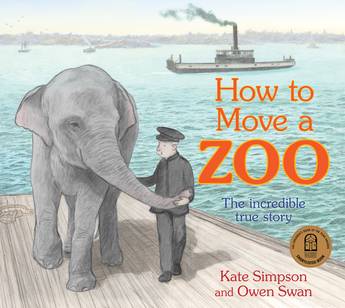
How to Move a Zoo
Written by Kate Simpson
illustrated by Owen Swan
Allen & Unwin
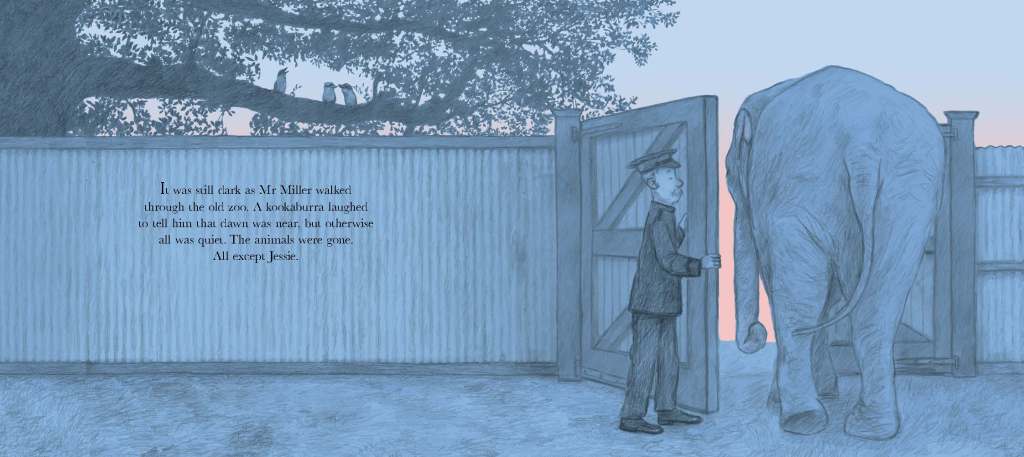
“If the neighbours had known there was an elephant on their street, they’d have been hanging out of every window.
But Jessie was silent on her soft feet. She didn’t wake them.” (How to Move a Zoo)
How to Move a Zoo by Kate Simpson, illustrated by Owen Swan is a 2025 CBCA Shortlisted Early Childhood Picture Book.
How to Move a Zoo tells the true story of Jessie the elephant who, in 1916, walked through the night from Moore Park to her new home at Sydney’s Taronga Zoo.
Kate Simpson has uncovered a little-known tale that will attract children’s interest. She tells Jessie the elephant’s story in clear prose with historical accuracy.
Owen Swan’s illustrations are generous and reminiscent and his portrayal of Jessie movingly captures her personality and journey.
Congratulations on your evocative book and its CBCA shortlisting, Kate and Owen, and thank you for speaking to Joy in Books at Paperbark Words blog.
Author & Illustrator Guest Post :
Kate Simpson & Owen Swan
Kate Simpson
When my publisher Anna first told me about an exhibition called ‘How to Move a Zoo’ at the Museum of Sydney, I was instantly intrigued. As someone who had grown up in Sydney and visited the zoo countless times, I was amazed I’d never heard about Jessie the elephant’s remarkable journey across the harbour. The story had all the elements of a perfect picture book, and I knew I had to write it.
The fact that picture books are a very short form of writing suits me perfectly. My fascination with history has always been focused on the micro scale – those individual threads that make up the tapestry of life, rather than the grand sweeping events. The image of an elephant tiptoeing through the sleeping streets of Sydney in 1916 captured my imagination immediately.
Researching the story was a joy. Owen and I had the privilege of touring Taronga Zoo’s historical collection, where I saw the original elephant house that still stands today, along with fascinating artifacts like bicycles once ridden by the zoo’s monkeys and vintage photographs of Jessie and the zoo. Learning about how beloved Jessie was to Sydneysiders in the early 20th century – giving rides to over a million people during her lifetime – made the story even more special.
What I love most about sharing this slice of history with young readers is how it offers them a peek behind the curtain of time. I hope this story sparks their curiosity about the past, because I truly believe that curious kids will grow up to change the world.
Owen Swan
I was hugely excited when first asked about illustrating How to Move a Zoo.
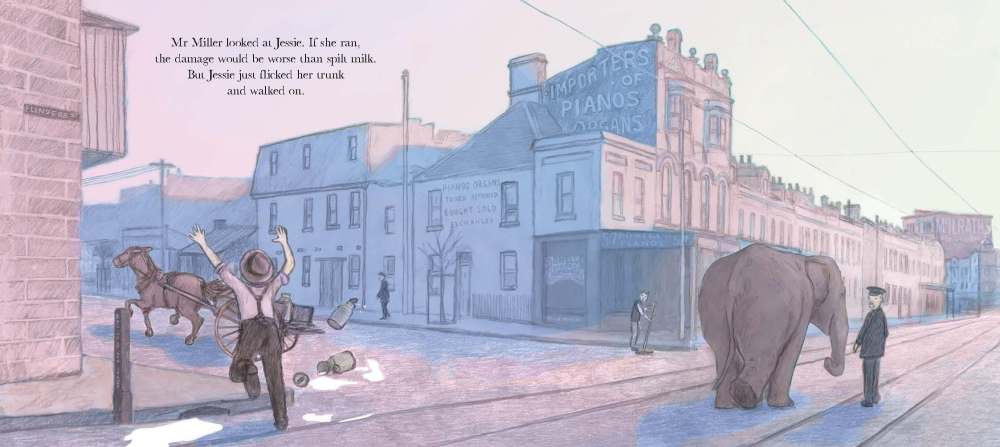
I think initially the idea for it was to follow the whole migration of animals across the city, then a month or two later I was sent Kate’s beautifully evocative text and was delighted by how she’d made it into a story of Jessie and Mr Miller’s friendship and the quiet trust they have in each other. Her words really brought them both vividly to life for me, and the gentle bond they share – and in the foreground and in support of that, of course, is this wonderful true story that carries you along with them, with a few dramatic moments thrown in!
Being a true story made it easier to illustrate in some ways, quite challenging in others. Limitations are essential, although it’s important to try not to feel constrained by them either. My aim was to depict what Sydney might have looked like on a brisk spring morning in 1916. Along with the historical accuracy in the visual details of that, I hoped to convey a feeling of it being immediate and alive again, to somehow try and bottle the air of an earlier time. When you look at the beautiful old photographs of Sydney from that era you can still find a sense of that young vibrancy, frozen there behind the black and white and sepia. There’s an exuberance in the faces, in all the old signage, the fantastic advertising everywhere, the wild variety of typography – and it helps to remember although it’s the past, the world was so much newer then than now.
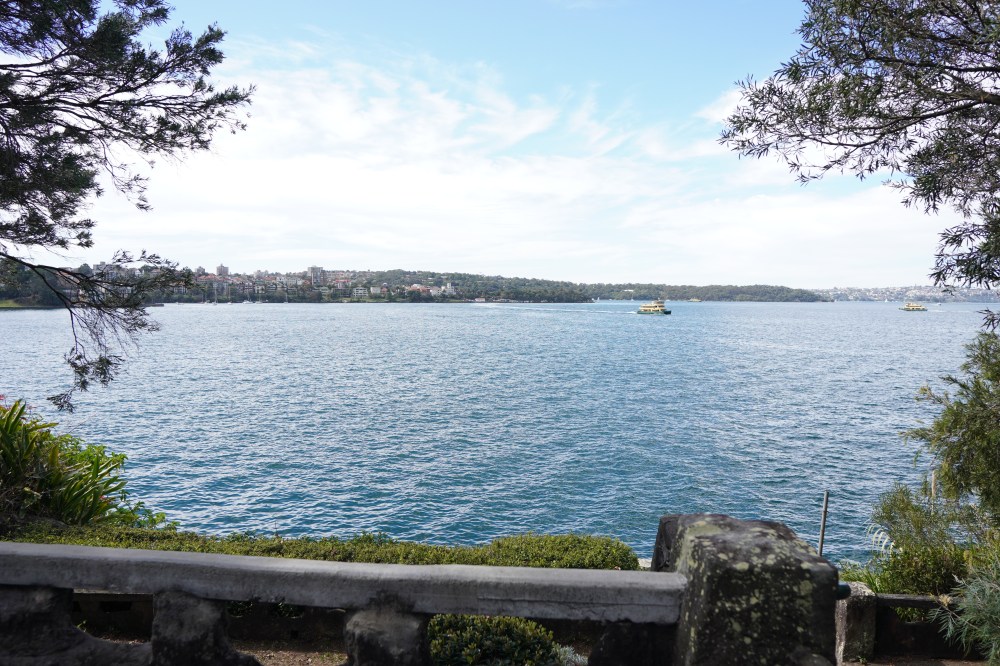
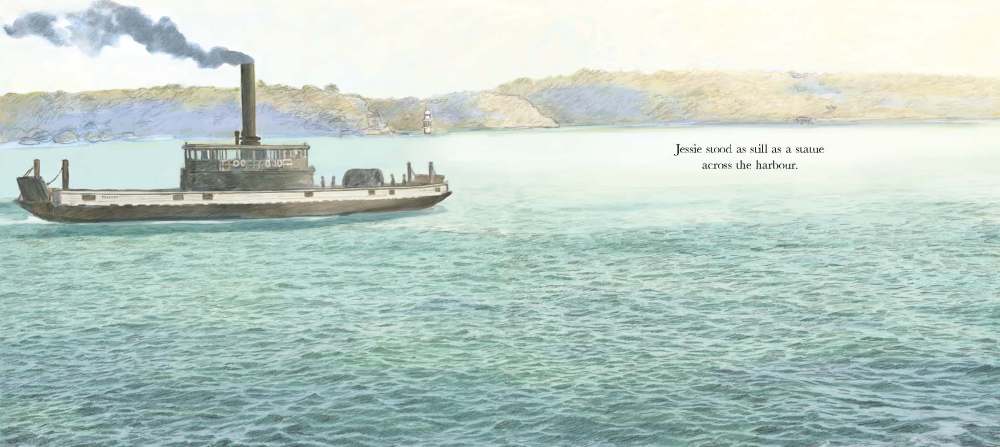
While working on the book I was living by the harbour. At the time, all the hoarding around construction sites in the city was decorated with all these enormous, beautifully detailed blown-up photographs of Sydney from the City of Sydney Archives. Often while walking around the city, I would be surrounded by what seemed like life-size images of Sydney from 100 years ago – it was a magic synchronicity and made the world of How to Move a Zoo so much easier to imagine. Most mornings I would go for a stroll and look out across the water to Taronga Park Zoo and see the domed roof of Elephant House “gleaming in the sun” just like in the story.
Sometimes I’d wander over to the Art Gallery of New South Wales in the Domain (that’s the park Jessie and Mr Miller wander across in the middle of the book) and look at marvellous paintings of the harbour by artists like Arthur Streeton and Tom Roberts.
Luckily, I was introduced to Jean Rice, who in turn introduced me to Neil Boyd – both brilliant historians whose generosity and expertise on all things Jessie and Taronga Zoo/Moore Park Zoo-related played an invaluable part in my research. An early phone call with Neil had him listing all the different birds and beasties who’d made the trip across town to the new zoo, while I frantically scribbled down their exotic sounding names as fast as I could… It gave such a fun boost to the project, and it was exciting looking up images of them all, many of whom appear in the illustration of cars and trucks and trailers on the move.

Neil pointed out that a few of them, however, may have come from places other than the old zoo, such as the circus – and others may well be part of an entourage of my own invention, but it was a fun one to put together, and includes one or two hidden details. That spread also served the title of the book and was the reason I riffed on it for the endpapers – I really love the decorative potential of endpapers, and felt that silhouettes had a timeless, nursery book quality. Silhouette illustrations were popular during the First World War too, as an economical way of printing, so there’s that connection there as well.


 paperbarkwords.blog
One thought on “How to Move a Zoo by Kate Simpson, illustrated by Owen Swan”