
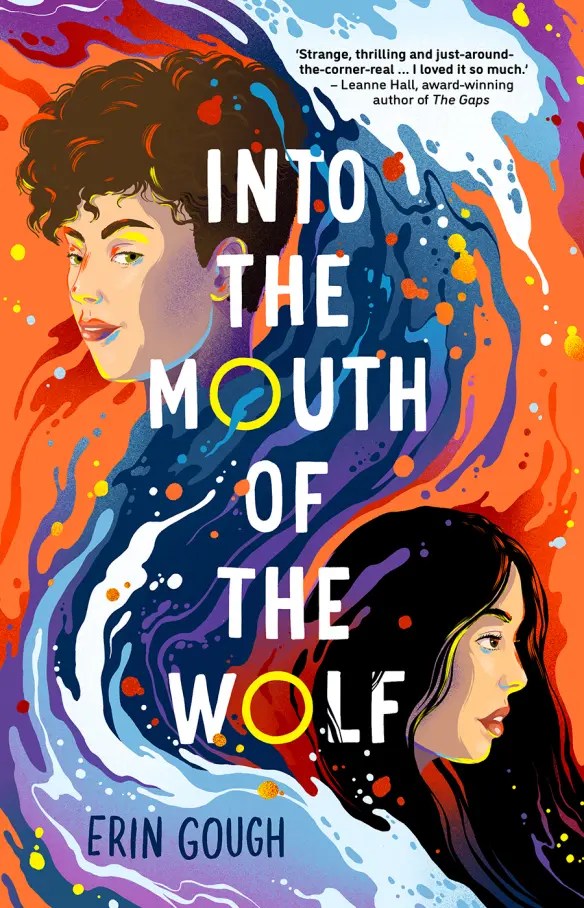
Into the Mouth of the Wolf by Erin Gough
(Hardie Grant Children’s Publishing)
Into the Mouth of the Wolf written by Erin Gough is shortlisted for the 2025 CBCA Book of the Year: Older Readers.
Congratulations on Into the Mouth of the Wolf being shortlisted by the CBCA, Erin, and thank you for speaking to Joy in Books at Paperbark Words blog.
Author Interview: Erin Gough
What is the significance of the title, Into the Mouth of the Wolf, for you?
I learned the Italian phrase, ‘In bocca al lupo’ from my mother-in-law, whose father was Italian, at a time in my life when I was facing a big challenge, and the poeticism of it always stuck with me. I decided then and there that I’d use it in a novel one day. Once I’d made that decision to use it in this novel, it became central to much of its imagery – the idea of the mouth as an opening, a gap, something that engulfs, and the idea of the wolf as predator, as well as a symbol of the natural world that’s being destroyed.
What genre/s is the novel?
I’d say the book is a mix of thriller, crime, romance and climate fiction. There is a lot of suspense, which is consistent with the thriller genre, and a lot of erotic tension, which is consistent with the romance genre – I keep Iris and Lena apart for as long as possible so that there’s a real payoff when they finally come together, which is a technique you see across the romance genre.
With regard to the cli-fi elements, I wanted to be realistic about what’s possible at this point in the world’s environmental journey. It couldn’t be some superhero story where everything is all right at the end. That would have felt like lying to the reader. The end is not all roses. But still, I wanted the characters to find a way through, to not entirely lose hope, and to recognise that the way through is together – to build a collective movement for a better outcome.
Which character is most special to you and why?
Lena is a very important character for me. At the start she is hiding in many ways – from herself and from facing up to the realities of the world she’s a part of. But her contact with Iris changes all of that, and she’s thrust into a situation very much outside her comfort zone. She must learn to open her eyes to certain realities, and question the motivations of the people she has always trusted the most – her father especially. I think we all go through a similar journey as a young person coming of age – realising that we might not share the values of the people we’ve been raised by. Having to ultimately work out what we think and believe, and what that means in terms of how to live our lives.
What is the importance of having queer protagonists in your work?
It is always important for me to have a queer relationship at the centre of my stories and it will continue to be important until there is no longer an underrepresentation of queer stories in literature. It is also important because queerness is a lens I bring to the world. It’s a gift because it taught me at an early stage to question society’s structures that are presented as the norm, and not to blindly trust that the people with power – governments, for example – know what they’re doing or are doing what’s best. Particularly for the young people who read my books, it can feel like we don’t have the power to change anything – that problems like climate change are too big, but that’s not right. We can do a lot. We can write to ministers, we can donate to aid orgs, we can march in the streets, we can choose to live our lives dedicated to positive change rather than negative change.
Was the speculative element always there? What challenges did it cause in the writing?
The speculative element was the starting point for this novel, but given I’ve always written contemporary fiction it was a challenge for me. I had to do a lot of thinking that you don’t see on the page, about what was realistic within the constraints of the world I’d built. I wanted it grounded it in the physical reality of the Australian landscape and contemporary culture to give it that real world feeling because actually we are living in a dystopia in many ways. And I guess that’s what I wanted readers to think about. You have Iris’s experiences, which are more explicitly dystopian, but it’s there in Lena’s world too, and when the two characters come together it’s an opportunity for readers to make this connection.
The setting and place of your story is a strong lasting memory for me . How did you craft Glassy Bay and Vardo to make them so indelible?
I took inspiration from the small towns of the South Coast of New South Wales, where I spent time every summer while writing the novel. I’ve given Glassy the same small-town dynamics, the same wildlife and vegetation, and the same clear beaches and beautiful bushlands.
How would you use the novel in schools?
I think the book is useful in discussing ideas such as:
– Social responsibility, climate justice
– Collective action, activism
– The importance of critical thinking
– Personal themes: complexity of loyalty and trust.
It could be studied, for example, alongside a history of grassroots political movements – Rebecca Solnit’s Hope in the Dark is a book I thought about a lot when writing ITMOTW, which looks at how political movements grow in the shadows at times when things seem impossible, but go on to revolutionise the world. Solnit’s is a short, accessible book that gave me a lot of hope for the future.
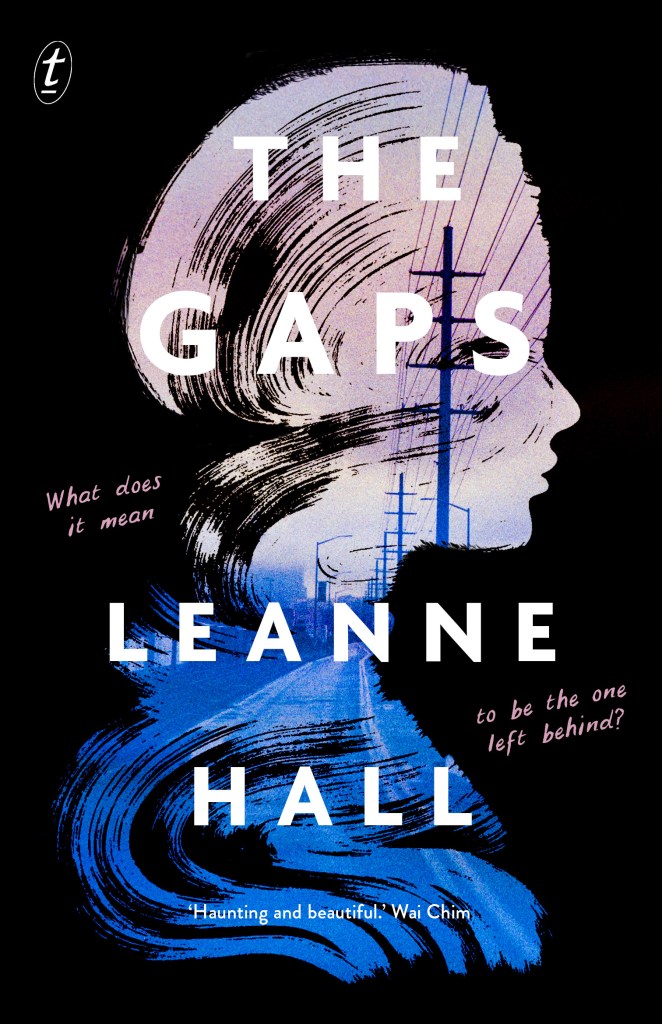
[Joy] I would also suggest reading Leanne Hall’s The Gaps alongside Into the Mouth of the Wolf to show another multiverse and way of crossing time and place.
Thanks very much, Erin and all the best with your book.

 paperbarkwords.blog
One thought on “Into the Mouth of the Wolf by Erin Gough”