
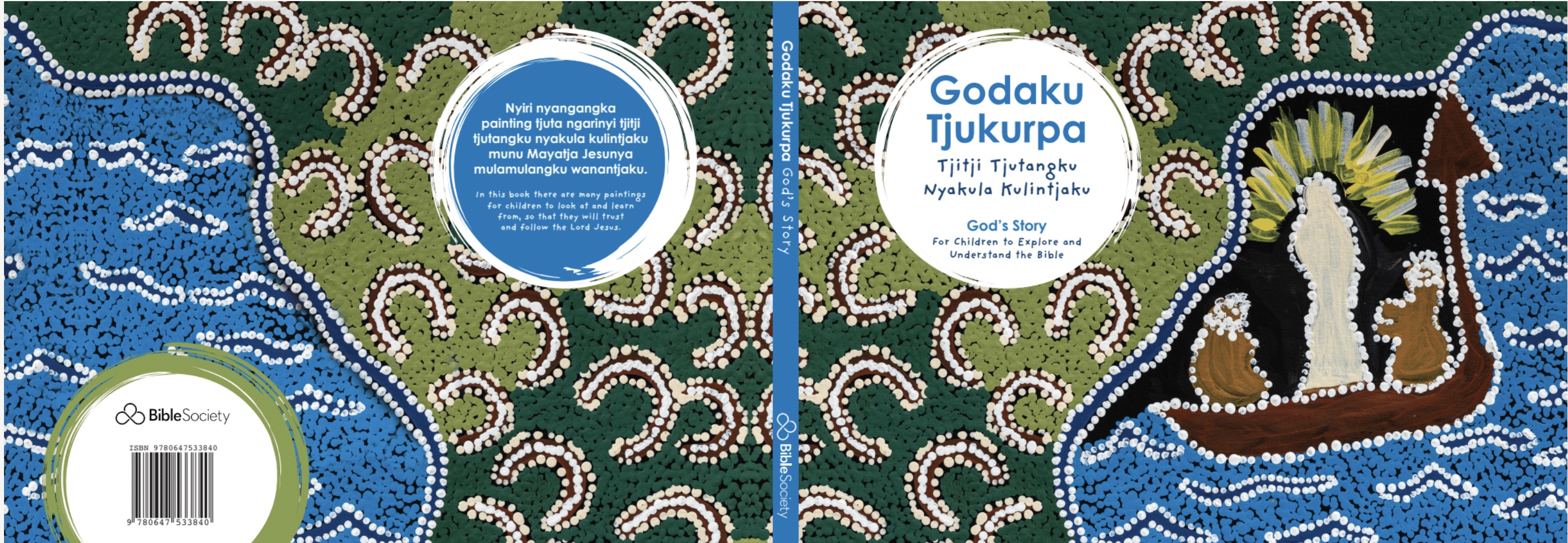
Godaku Tjukurpa
Tjitji Tjutangku Nyakula Kulintjaku
Various contributors
Interview about Godaku Tjukurpa with Louise Sherman, head of the Australian Languages Team (ALT), Bible Society Australia
Thanks to speaking to ‘Joy in Books’ at Paperbark Words blog about Godaku Tjukurpa, Louise.
Congratulations on the publication of this beautiful and important children’s book and for its shortlisting in the 2025 SparkLit awards, where it is the only children’s book represented. It is a stunning art and gift book as well.
How would you describe Godaku Tjukurpa as a companion book to the award-winning Our Mob, God’s Story, which won the SparkLit award in 2017 and was compiled by yourself and Christobel Mattingley?

Both Our Mob, God’s Story and Godaku Tjukurpa are significant and beautiful books portraying Bible stories using Indigenous art. Our Mob, God’s Story consists of artwork from across Australia, showcasing the complexity and diversity of Aboriginal art and culture and the artwork was sourced from across Australia from different language groups and denominations. Whereas the artwork contained within Godaku Tjukurpa was designed and developed specifically to communicate the Bible story to Pitjantjatjara children. It was the vision of Pitjantjatjara translator and artist Nami Kulyuru. Nami loved children and was looking at various children’s Bible story books all of which were in English and the accompanying illustrations reflected this. Nami said ‘we need a children’s Bible for our children and grandchildren that is done Anangu way’, which meant using Pitjantjatjara art, which told stories using traditional symbolism and imagery. So Nami worked on creating paintings for this children’s art Bible and inspired her friends, family and other Pitjantjatjara artist to do the same. Nami approached Bible Society with her idea and we agreed to help publish her vision for Pitjantjatjara children and their families. We also realised through the success of Our Mob, God’s Story that this Pitjantjatjara Children’s Art Bible could also speak to a non-Pitjantjatjara speaking audience. That people everywhere would be interested in learning more not only about Pitjantjatjara art & culture but also about the Bible stories told in this unique way. Art is a powerful communicator it is a universal language and that this publication would have a much wider audience than originally intended. When we spoke with Nami and the other artists they were happy to share their book with the wider Australian audience, which is why the book is written in both Pitjantjatjara and English – so many can enjoy it.
What was your role in publishing and/or producing Godaku Tjukurpa?
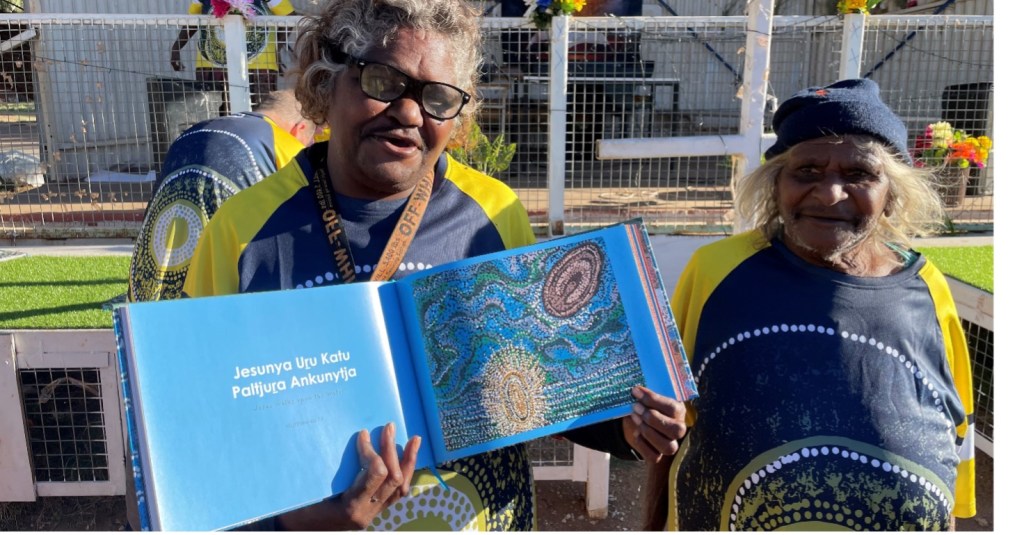
My role with Godaku Tjukurpa was to help coordinate the publishing, which included collating the artwork, organising the photography of the artwork, working on the design of the book with a very talented Aboriginal designer, working closely with Bible Society’s publishing team for printing and distribution of the book as well as Bible Society’s marketing team for the launch for the book. This book has been many years in the making and has involved many different contributions including financial support for Bible Society donors as well as Emmaus Christian College, art support from Iwiri art studio in Adelaide, technical language support from Bible Society’s Dave Barnett working closely with the Pitjantjatjara translation team.
What is the aim or purpose of the book?
Nami’s vision was for a book aimed at Pitjantjatjara children that would help them understand and explore the Bible. The introduction of the book tells this story:
‘In this book are paintings for children to look at and to learn about Jesus so they can believe in him, that he truly is the Saviour.
A while ago Nami Kulyuru was thinking about the making this book for children. You see, she saw and realised, ‘Oh, there are currently no books like this for our children. We should paint God’s stories and make a book so that our children and grandchildren that come after us can learn the stories about Jesus.’ Because for a long time she had been translating and writing down God’s stories, and she really wanted her grandchildren to hear the stories of Jesus so they would live his way.’
Now, with God’s help, her plan has been accomplished, and all the children can look at these paintings, learn about Jesus, and trust in him.’
What is the significance of its title and subtitle?
Godaku Tjukurpa – is Pitjantjatjara for ‘God’s Story’ in fact the Pitjantjatjara Bible is called Tjukurpa Palya which means Good Story or Good News so this title also links to the Pitjantjatjara Bible.
How was it commissioned, who are the contributors and how did the publishing process work?
All the artists featured in the book are Pitjantjatjara artists and most are also translators who have worked with Bible Society for many years on translating the Bible into Pitjantjatjara. Iwiri Choir in Adelaide provided some art coordination and supported the artists through their art studio and once the paintings were completed Bible Society helped design and publish the book. Throughout the whole process there was consultation with the artists to ensure the book reflected Nami’s original vision. As Bible Society’s publishing team were working on the design layout it became obvious that this was a significant book and would have a wider appeal and audience than just the Pitjantjatjara speaking community. So Bible Society began discussions with the Pitjantjatjara artists to seek permission to print another edition with English text for this wider audience. It shows the graciousness of the artist through their willingness to make the original book a diglot edition – meaning it has both Pitjantjatjara and English text on each page. Our hope is that many children all across Australia will have an opportunity to explore and understand the Bible through this book and the beautiful images contained within.
What is the place or role of Language in the book?
As previously mentioned the book contains both Pitjantjatjara and English text, although the text itself is not the feature of this book. The artwork tells the story, through imagery and symbolism and the text just gives the story title and the Bible reference.
How would you describe the style and impact of the impressive artwork and design?
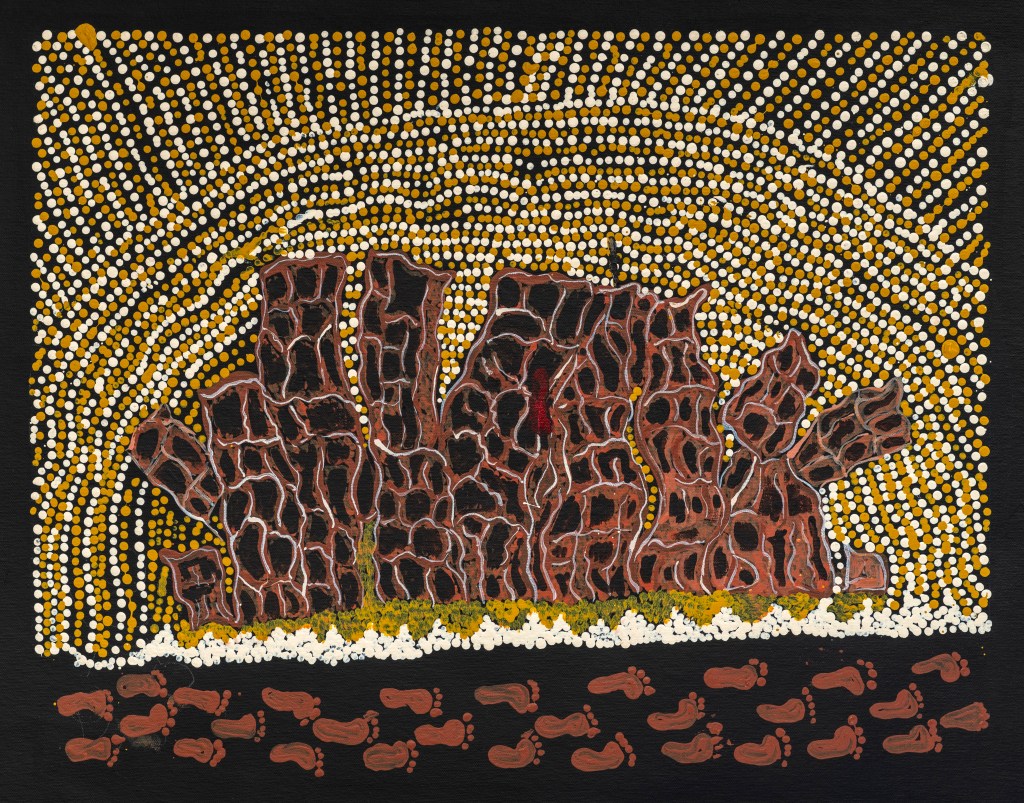
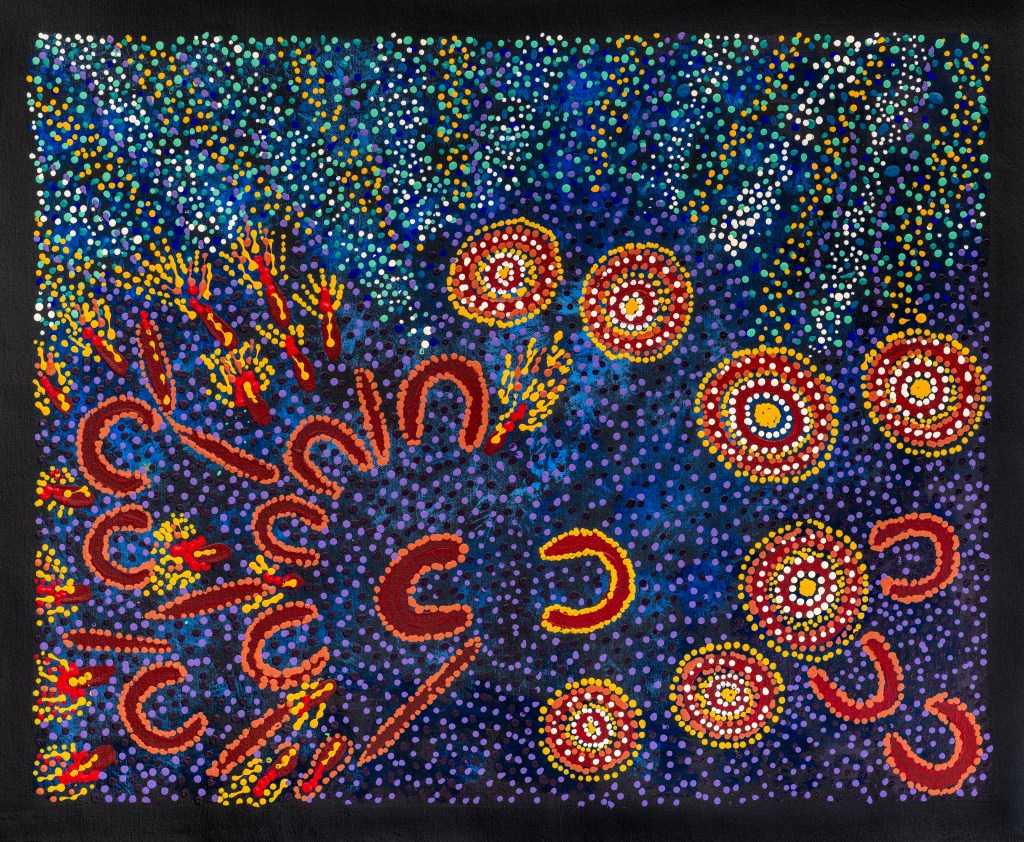
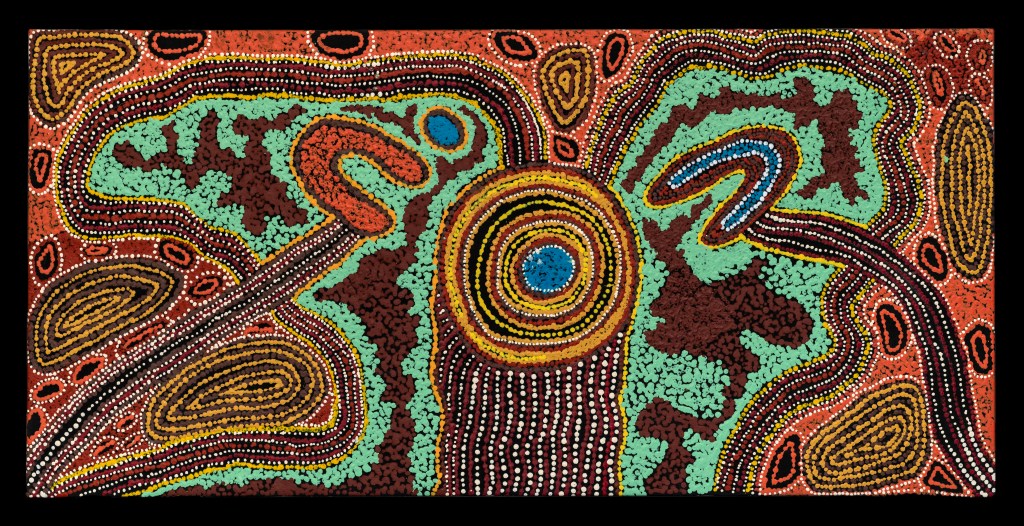
Pitjantjatjara art is all about telling a story – whether it is a story about Country, about hunting, fishing about family. Particular symbols are used to show if it is a man or a woman, animals tracks represent animals. The paintings are not just a single image or a particular moment in time but show movement – a journey from one place to another, people walking together and meeting together. Colours play a significant role – red for Jesus’ blood; white for the Holy Spirit; blue for water representing cleansing or baptism; green for new life; yellow for joy. I am constantly amazed by the way in which these artist can convey deep theological meaning through images.
What is a personal favourite double-page spread? Why?
One of my favourite images from the book is also one of my favourite stories from the Bible and I was fortunate enough to be present when the artist Tjulyata painted it. The painting is called ‘Jesus asks the Samaritan woman for water’. The painting is stunning but also the imagery tells the story perfectly. At the centre of the image is the well, which is deep with blue water necessary for life for the Samaritan woman. Two figures (depicted by ‘U’ shapes) enter the scene from different directions and different worlds – but it is here their worlds collide. The woman on the left with her bucket and to the right Jesus complete with hidden ‘living’ water. The painting includes what looks like seeds – is Jesus planting seeds of faith and imparting life to this woman. The green in the painting reflects the new life which springs forth through Jesus, and the small white dots throughout the painting show the Holy Spirit at work in this encounter. Now there is probably even more that I am missing but you can see how beautifully this painting tells this wonderful story from John 4.
What are some meaningful responses that have you had from readers?
While distributing Godaku Tjukurpa across the APY Lands of central Australia – where most Pitjantjatjara people live – a young Japanese family who were visiting the area showed an interest in the book & bought a copy to read with their children. This shows how universal a book like this can be. Another example was one of the people on the publishing team had the book out on their dining table and their teenage daughter, who is not a Christian but is very interested in art, was engrossed looking at the artwork and hearing about the stories.
What impact have the SparkLit awards made on the book?
The Sparklit Awards has helped further promote this unique book to the wider Australian public. While Bible Society has many wonderful supporters and donors there are many Christians across Australia who may not be aware of Bible Society or of the Pitjantjatjara Bible Translation project so Sparklit has helped to draw more attention to this book which reflects both Bible Translation and Pitjantjatjara culture and Christianity.
What makes you feel proud about this book?
I feel so thankful to have played a small part in the creation of this book. To be able to help bring Nami’s vision to life and see children engaging with it is wonderful. Unfortunately Nami is not here to see the fulfilment for her vision, having passed away from cancer 2 years ago but this project for her was about creating a legacy of faith that could be passed down to the younger generations of Pitjantjatjara children. Nami loved all children and so to see it impacting both Pitjantjatjara children and children all over Australia is what I am most proud of. My hope, as was Nami’s, is that children and families together can better understand the Bible and come to know the love of Jesus through these stories.
Godaku Tjukurpa at the Bible Society
*******

Additional Resource:
Our Mob, God’s Story
(2017)
Book review by Joy Lawn
Aboriginal literature and other art forms are transforming Australian culture.
The sumptuous coffee table book Our Mob, God’s Story also showcases Indigenous Australians through portrayal of many of their religious beliefs using the traditional form of story-telling through pictures. It is edited by award-winning Christobel Mattingley, known for championing and sharing Aboriginal stories in Maralinga, the Anangu Story and Maralinga’s Long Shadow: Yvonne’s Story and other books and by Louise Sherman. It is endorsed by Noel Pearson and Boori Monty Pryor, who was the inaugural Children’s Laureate and winner of the Prime Minister’s Literary award (children’s fiction) for Shake a Leg.
The editors spent over four years collecting the artwork, striving to include works from as many language groups as possible. 115 paintings were eventually selected, including two by Yvonne Edwards whose story is told in Maralinga’s Long Shadow.
A glowing range of colours and styles create dynamism throughout the book. The genesis of each artwork is explained and often a brief description of the form and media is included. Some of the Biblical text is also written in language and there is a glossary of symbols.
Creation stories proliferate. They range from Glendora Naden’s earthy, symbolic Creation to Bronwyn Coleman-Sleep’s vibrant Sunflowers (Garden of Eden). Traditional stories from the Old Testament include Kristy Naden’s patterned Noah’s Flood, Rupert Jack’s stunning dot-painting, Abraham, and Gail Naden’s sand and ochre Weilwan Waters II. Julie Dowling magnificently uses both Aboriginal iconography and European Renaissance-style portraiture in Born for You and Grace Kumbi employs flowing lines and dot work in Three Hunters. The aerial perspective of Central Australian artwork is demonstrated in Imiyari Adamson’s Tjulpun Tjulpunpa (Desert Wildflowers) and sinuous symbols show The Greatest Love of All (Bronwyn Coleman-Sleep). A group of Amata women created the rich, well composed Tree of Life.
As the introduction to the book outlines: “Some narrow-minded missionaries did not seek to understand the culture… Others with a wider vision, sought to learn the heart languages of the people among whom they lived… In this book 66 artists from over 40 First Nations of Australia share their vision of Christ, human and divine.”
Our Mob, God’s Story is a beautiful and significant book. It is an affirmation and celebration of Australia’s first peoples and those who hold Christian beliefs. Hopefully it will also help to achieve its aim of reconciliation between Aboriginal and non-Aboriginal Australians.

 paperbarkwords.blog