

The Year We Escaped by Suzanne Leal, ARA Historical Prize Winner
The Year We Escaped by Suzanne Leal (HarperCollins Australia) has just won the 2025 ARA Historical Prize – children’s/young adult book.
This comparatively new award showcases historical novels where “most of the narrative takes place at least 50 years ago.”
Mark Macleod, Chair of the CYA category judging panel, says,
‘The Year We Escaped’ by Suzanne Leal is a novel for older readers seen through the eyes of two Jewish girls in a World War 2 internment camp, and two French brothers who help them escape. Its publication comes at a moment of despair for many adults. It seems that even the billions of words already written about human suffering cannot prevent us repeating history. But for the young protagonists of this novel, lamenting the future or abandoning hope is simply not an option. Something can always be done.
‘The Year We Escaped’ is one of several books on this year’s longlist that return to the period of alarming social change between the World Wars, but it feels fresh and is never didactic. Suzanne Leal allows today’s young people to read between the lines and make their own historical connections. Here they experience how it feels to be the object of prejudice; how it feels to be without friends and without adult protection; how it feels to be without food or clean water. The fast-paced storytelling doesn’t waste a word, as it gives an impeccably researched and compelling account of resistance, in which the ingenuity and courage of young people and the importance of working together are the keys to survival. The judges are delighted to announce that this outstanding novel, ‘The Year We Escaped’ by Suzanne Leal, is this year’s winner in the Children’s and Young Adults’ category.
Author Interview: Suzanne Leal
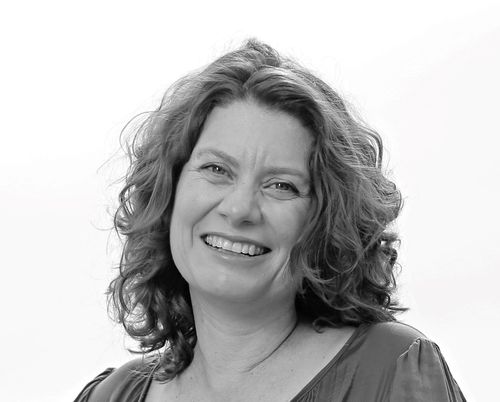
Thank you for speaking to Joy in Books at Paperbark Words blog, Suzanne.
It’s so lovely to be featured by you, Joy – thank you.
How is The Year We Escaped a companion book or successor to your previous novel for young readers, Running with Ivan?
Interesting question. I think perhaps it is a successor to Running with Ivan. In Running with Ivan, time travel was a strong element in the narrative, as was the exploration of the disrupted family time of the (more or less) contemporary character, Leo. The Year We Escaped is straight historical fiction with four main characters, Parisian brothers, Lucien and Paul, and German friends, Klara and Rachel. In many ways, this made it less complex to write than Running with Ivan. Like Running with Ivan, The Year We Escaped is an adventure story featuring young teenagers who have to fend for themselves when they find themselves surrounded by war. Like Running with Ivan, The Year We Escaped is about friendship and resilience and courage. Whilst Running with Ivan is a standalone novel, I’m hoping to return to Lucien and Paul, Klara and Rachel, in my next novel.

How has writing for younger readers become a ‘sweet spot’ in your career?
Writing for younger writers has taught me a lot, including that just because the word count is smaller, the writing itself isn’t any easier! I enjoy writing for younger readers because I like to focus on adventure and excitement and keeping the narrative moving. I also love getting feedback from my younger readers.
Congratulations on your novel, The Year We Escaped, winning the children’s/YA category of the 2025 ARA Historical Prize.
Thank you – I’ve been on a high ever since the announcement.
What is some of the unknown history behind your novel?
Gurs Internment Camp
On 22 October 1940, over six thousand five hundred Jewish people from the German regions of Baden and Saarpfalz were forced onto trains and transported to the Gurs Internment Camp in the Free Zone of France.
Gurs Internment Camp was first used as accommodation for political refugees from the Spanish Civil War, which began in 1936 and ended in 1939. Later, the camp was used to detain political prisoners and ‘enemy aliens’, including German-Jewish people fleeing, or being transported, from Nazi Germany. There were other internment camps in the French Free Zone, but Gurs was the largest of them.
Gurs Internment Camp was a treeless, muddy place, surrounded by barbed-wire fences and divided into thirteen blocks, each containing barracks that were dark and cold and overcrowded, with up to sixty people crammed inside, all sleeping on straw mattresses on the floor. The hygiene was poor in the camp and the toilet facilities were appalling. Showers were limited to one a month, and inadequate food and water led to sickness and disease.
Detainees tried to make life more bearable by organising cultural activities, including concerts, plays and art exhibitions.
Once they’d been given permission to enter the camp to assist the detainees, international aid organisations, including the Oeuvre de Secours aux Enfants (OSE, translated as Children’s Aid Society), the Red Cross and the Quakers used empty barracks to offer breakfast and morning tea for child detainees and as a space for cultural activities. From 1942, these organisations lobbied the French authorities to allow children interned in Gurs Internment Camp to be released into the community.
How were you able to unearth some of these facts?
I visited the museum in La Chambon-sur-Lignon and accessed archives held there as well as archives held in the archives of the Haute Loire. Most of the records are in French which I can speak and read.
I also accessed first-hand accounts of life in Gurs Internment Camp.
Please introduce your major characters and tell us what makes them unique?
Lucien and Paul are French brothers living in Paris when they are forced to navigate the unexpected German occupation of the city. They are funny, curious boys who, like most siblings, have the odd spat or two. As the war rages, they have to find courage and resilience in the face of danger and uncertainty.
After witnessing the frightening events of Kristallnacht in her own village, German-born Klara is excluded from her school because she is Jewish. Later, she is expelled from Germany and sent to France where she finds herself in the muddy, desolate internment camp of Gurs. Klara is plucky and optimistic and tries to make the best of things in this awful environment. Her friend, Rachel, is fun and quirky and as the war keeps going, the two girls have to rely on each other more and more.
How have you kept such a terrible time in history bearable or palatable for young readers?
By setting The Year We Escaped in Gurs Internment Camp – which was unpleasant but not a death camp like Auschwitz or Bergen-Belsen – I wanted to introduce my readers to WWII in a way that was more bearable. I was also very focused on adventure and friendship and courage which I thought would make the novel exciting and heartwarming more than shocking, in spite of the wartime setting.
What agency might young people have in times of unfairness or devastation?
I think friendship gives people – including young people – agency in times of unfairness or devastation. A shared experience can be very empowering and to go through it with someone you trust and with whom you can talk it over, can make the unbearable more manageable.
Many young people are small enough to escape attention when they need to, and are often agile and willing to take a risk. In The Year We Escaped, Klara and Lucien gain agency when they work out how to sidestep some of the constraints of Gurs Internment Camp. In my experience, there is an optimism to many young people who find a way to play and and interact and follow their curiosity even in difficult settings.
What relevance does your characters’ time in history have for young people now?
My characters are living in a time where democracy is in freefall and Europe risks being controlled by the dictator, Adolf Hitler. Before war is declared, many Europeans refuse to believe the threat posed by Adolf Hitler and refuse to take the threat of a German invasion seriously.
I feel that democracy is in similar decline today and that around the world, popularist leaders are taking over. This increases the risk of democracy giving way to dictatorship. For these reasons, I think the setting and time period for The Year We Escaped is of particular relevant for young people
What toll has researching and writing this story had on you?
The research took longer than I imagined and required trawling through days and days of archives, mostly in French or German. I loved writing my characters and would like to revisit them in a new novel about their lives in Le Chambon-sur-Lignon after they are out of Gurs Internment Camp
How important is historical accuracy in historical novels?
For me, it’s important that the story unfolds in a time frame that is historically accurate, especially when writing about something as confronting as WWII. I also think it is important for a setting to be historically accurate. In The Year We Escaped, for example, it was important for me to set the story in a real internment camp rather than in one that was either a composite of other camps or completely invented. My characters are mine and do not have to have been real people, but their lives, their appearance, their language and their views need to be in keeping with the time period I’m exploring.
What is the importance of awards such as the ARA Historical Novel Prize, for Australian authors? How do shortlists and awards assist readers? Do we underestimate the ability of children and young people to comprehend, understand and interpret history? And what role does the historical novel play in that?
The ARA Historical Novel Prize is so very important to Australian authors. It makes us feel valued as writers and demonstrates the importance of writing and literature generally. I am so encouraged by the generosity of philanthropists like Ed Federman who value literature and the arts and make us, as artists, feel seen. The prize money for the ARA Historical Novel Prize– received by both the winners and the shortlisted writers – buys writers more time to write, bringing us closer to our next book and the ones after that.
Shortlists and awards assist readers to become familiar with those works that are recommended by well-regarded people in the publishing world who judge the various awards. They help to bring authors to the attention of more readers and, generally, demonstrate that writing is a skill and that the arts are important for society in general.
Storytelling is a wonderful way to learn history. As a child, I learnt most of my history through novels that immersed me into a particular time period and have stayed with me ever since. I don’t think we necessarily underestimate the ability of children and young people to comprehend, understand and interpret history, but I do think that it is difficult to keep anyone’s attention in a world of screens and activities that rarely require concentration and deep focus.
What is your hope for Australia and the world?
My hope is that we move into a time of peace and that we all show greater concern for the environment and for our responsibility to future generations. More specifically, I’d like to see leaders elected who are more focused on social welfare, co-operation and dialogue.
Joy Lawn, in association with Dmcprmedia
The Year We Escaped at HarperCollins
My interview with Suzanne Leal about Running with Ivan at Paperbark Words blog

 paperbarkwords.blog
One thought on “The Year We Escaped by Suzanne Leal, ARA Historical Prize Winner”