

The Gifts of Reading for the Next Generation
curated by Jennie Orchard
The Gifts of Reading for the Next Generation: essays on nurturing a passion for reading. Inspired by Robert Macfarlane, curated by Jennie Orchard, contributors include Matt Ottley, Alice Pung, Nardi Simpson, Shankari Chandran, Michael Morpurgo, Tristan Bancks, William Boyd and others.
Published by Scribe
‘There is a secret trail of books meant to inspire and enlighten you. Find that trail.’ (Ben Okri in The Gifts of Reading for the Next Generation)
Interview with Jennie Orchard
Thanks for speaking with Paperbark Words, Jennie.
Where are you based and what is your background in books and publishing?
Many thanks for giving me this opportunity, Joy.
I am now back in Sydney, having been based for many years in Hong Kong, and also having lived in Japan.
My publishing career began long ago in London when I worked for Michael Joseph for eight years, beginning as a graduate trainee but rapidly rising up the ranks and starting to commission books (mostly non-fiction) for their extremely eclectic list. We moved to Sydney in 1990 and once my children were at school, I worked for a couple of publishing companies here in Australia, also as a speakers’ agent (Lateral Learning). My dream was to develop a literary agency but once we moved to Asia, I became more involved in the non-profit world, with a particular focus on the work of John Wood, initially at Room to Read, more recently at U-GO. These two organisations receive the royalties from my two books, The Gifts of Reading and The Gifts of Reading for the Next Generation.
How do you know so many people in the literary and wider world? How did you decide which writers would contribute to your anthologies?
I have been involved with the publishing world in various ways for more than four decades, and I have lived and made connections in four cities: London, Sydney, Tokyo and Hong Kong. I love to build and maintain relationships with people who matter to me and these include many authors and a few artists.
I wanted my anthologies to include essays from a wide range of individuals – men and women of different ages and backgrounds, including some with connections to the countries where Room to Read and U-GO are working, such as India, Vietnam, Cambodia, South Africa.
You have a gift for creating community and bringing people on board. Is this your superpower or is your superpower something else? If so, please share …
I am touched that you think of this as a ‘superpower’. For me, the relationships in my life are the lifeblood. I feel so privileged to have worked in this creative environment that seems to be inhabited by so many extraordinarily generous individuals. Recently I have heard a number of people say that when I ask someone to do something, they never say no – but I hope that my requests aren’t unreasonable ones! I am conscious that writers have many demands upon their time but I like to think that if, for example, they agree to write an essay for one of my anthologies, they will benefit from the community that we build. By agreeing to donate their portion of royalties to the organisations founded by John Wood, they know that they are contributing to the extremely worthwhile causes of promoting literacy and girls’ education in low-income countries, mostly in Asia and Africa.
For me, the relationships in my life are the lifeblood. (Jennie Orchard)

Tristan Bancks is an example of a supremely generous individual, having led a very successful fundraising campaign – the World Change Challenge – for Room to Read, for more than a decade. These words ‘inspiring the recipient to give, too’ call to mind the focus on generosity in the essay by Robert Macfarlane that inspired my two anthologies: ‘the act of giving encourages the onwards circulation of generosity’.
‘…write “books that move” … So, perhaps kids’ books should move in three ways – driving young readers through the plot, making them feel something, but also being given as a gift and inspiring the recipient to give, too.’ (Tristan Bancks in The Gifts of Reading for the Next Generation)
The Gifts of Reading, your first anthology of essays (2020) is now followed by The Gifts of Reading for the Next Generation. What is similar or different in the second book?
It was as I was developing the first anthology that I had the idea of doing a second, initially conceived as ‘The Gifts of Reading for Children’. As I continued to work on this, however, I thought that it would be more interesting to extend the scope and to make it relevant to ‘the next generation’ in its broadest sense, i.e. not just babies and children but young adults, even my own ‘kids’ (now almost middle-aged!). As it turned out, The Gifts of Reading for the Next Generation is, like its predecessor, a book for ALL readers, as described in a recent review: ‘this beautiful hardback is the perfect gift that will spark conversation and discovery across generations’.
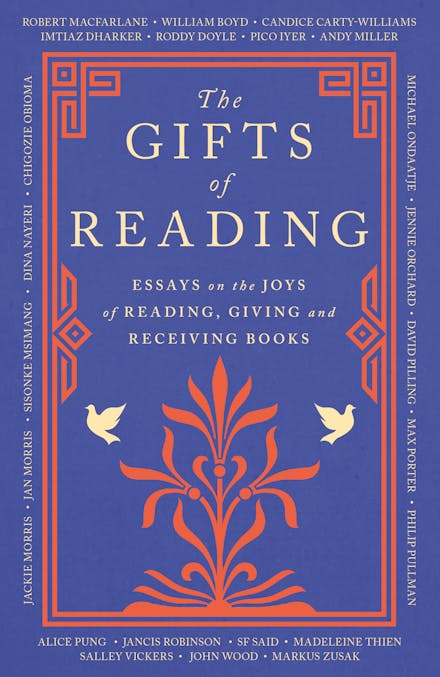
The covers of both these books are elegant and sumptuous. What was your vision for them?
I can’t claim any credit for the covers, the first of which was designed by Helen Ewing at Weidenfeld + Nicolson in London, the second by Guy Ivison at Scribe in Melbourne. I was thrilled that Guy’s design related to the first while having its own, very clear identity. I love the pale blue that he suggested. Each of the two books looks and feels beautiful.
How are your books inspired by the brilliant nature writer Robert Macfarlane?
It was back in 2017 that I read an essay that Robert had written, ‘The Gifts of Reading’, published in its own edition with all royalties donated to the Migrant Offshore Aid Station. Robert wrote in this essay about a friendship forged through books, and about the five books he loves to give (and much else besides). I loved the idea of approaching a range of authors and asking them about the books they like to gift – and immediately it occurred to me that this collection could perhaps be released in 2020 to coincide with the 20th anniversary of Room to Read. Robert and his agent (Jessica Woollard) gave their blessing to this idea and allowed us to reproduce his essay at the beginning of the first anthology. It is also still in print in the original edition.
You no doubt have a soft spot in your heart for many of the contributors. Could you please identify one, and explain why?

This is a hard one because I have a soft spot for so many. I have dealt with them all but one (Philip Pullman) directly and all have been generous and responsive in their communications, and with their essays. Several have been generous enough to contribute essays to both anthologies – William Boyd, Pico Iyer, Dina Nayeri, Alice Pung, Madeleine Thien, John Wood. Many have participated in events online and in person. If I highlight one in particular, it should perhaps be Shankari Chandran who agreed to write an essay for the second anthology even before I had explained what I was wanting her to do! I knew that she had supported Room to Read for as long as I had and I loved her work (this was before she had won the Miles Franklin). It has been wonderful to witness the development of her career in recent years – and she remains the same remarkable individual, the epitome of warmth and generosity in all that she does.
Which essay in the book –
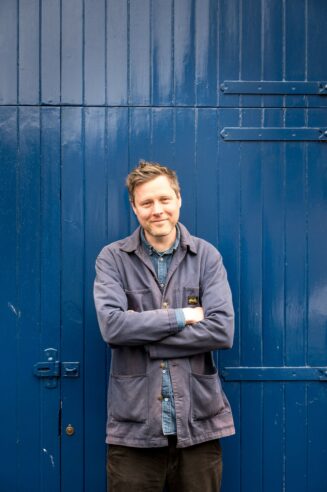
… most surprised you?
Max Porter’s essay in the first anthology. Max had been introduced to me by my publisher and he delivered the first essay in record time – but as I started reading, I realised that he had written about one book, not five, and his essay was much shorter than I was expecting it to be. Within minutes, though, I was admiring the brilliance of his contribution – and as the book developed, I was thrilled by the diversity of the responses to a single brief.
… warmed your heart?
I was lucky enough to be introduced to the legendary Welsh historian and travel writer, Jan Morris, only a short while before she died. She said that she didn’t have time to write a new essay but offered ‘a gift of writing’, the text of a speech she had given about her report for The Times on the first ascent of Everest by Edmund Hillary in 1953. She sent the only existing copy by snail mail, with a handwritten postcard bearing this message: ‘Jennie! I DREAD YOUR RESPONSE -Forgive my senility – I shall perfectly understand if you reject the piece xJ’
… opened your imagination?
I’d like to mention a couple of very different essays here.
First, I was absolutely inspired by Nardi Simpson’s essay ‘Yilaalu’, about reading the landscape, reading country . . . . which she describes as ‘a skill, a speciality that can take us to innumerable, exciting, unexpected places’. I first listened to this in the form of the keynote she offered at the national reading symposium organised by Australia Reads in 2023 and suggest that anyone wanting to experience Nardi’s essay listens as well as reads.
On a very different note, Madeleine Thien wrote about Spinoza in her first essay, and Walter Benjamin in the second, two individuals about whom I knew very little. I am not sure that these opened my imagination as much as they offered me new paths to explore (in Maddie’s always erudite company).
… inspired you?
I was inspired and remain inspired by the story of Dina Nayeri, whose memoir The Ungrateful Refugee was endorsed by Robert Macfarlane. As a child she fled Iran as a refugee and landed in Italy before going on to the US as an asylum seeker. She now teaches writing at St Andrews, one of the most prestigious universities in the UK. Her drive and resilience have been astonishing.
Why do you think so many of your contributing authors refer to C.S. Lewis’ Narnia series and the work of Ursula Le Guin?

Many successful writers were readers whose lives were marked by some form of adversity, leading them to seek refuge in books. These include Alice Pung who has written extensively and poignantly about her parents’ escape from the Khmer Rouge, and Nguyễn Phan Quế Mai whose parents’ lives were ruined when they were robbed of all their possessions other than their books.
I would also like to mention Maisie Fieschi, daughter of former Australian Children’s Laureate Ursula Dubosarsky, whose (young) life has been marked by a series of arduous challenges. Maisie has written a beautiful essay about finding sanctuary in the work of C.S. Lewis, quoting a passage that ‘became [her] private talisman, a secret source of strength, known only to me. I carried [those words I had discovered] with me, and I have needed them.’
Pico Iyer is one of the many contributors who mentions Ursula Le Guin, saying that no other writer ‘was more fearless in imagining other worlds’. It is these ‘other worlds’ that provide solace as well as expanding imaginations.
How did you sequence the essays in the book?
The essays are organised alphabetically, although in the first anthology I placed the source of my inspiration, Robert Macfarlane’s essay, at the front of the book. It would have been too hard to organise the essays in any other way!
There are many worthy social enterprises and charities, including reading and literacy groups. Why have you chosen to support Room to Read?
I first encountered Room to Read 20 years ago and was immediately inspired for a number of reasons, including the fact that they had established local language publishing programs in many countries, publishing children’s books created by local authors and illustrators in languages such as Tamil, Khmer and Swahili.
I also felt connected because the organisation was working in many countries that were important to me including Laos (where my husband had worked and where we had celebrated our marriage) and Nepal (we had visited with our three sons a few years previously).
Soon after learning about Room to Read’s work, I met the dynamic and inspirational founder, John Wood, who was about to publish his memoir, Leaving Microsoft to Change the World. John is currently celebrating 25 years as a social entrepreneur and has an extraordinary number of achievements to his name. Room to Read has now impacted the lives of 50 million children – and John has recently established a new organisation, U-GO, raising funds for scholarships for tertiary education for young women, perfectly complementing Room to Read’s girls’ education program.
Tell us about something your launches.
Having once worked in London and lived in Hong Kong, I have been able to organise launches in those cities as well as in Sydney and Melbourne. In London we had a wonderful evening at Daunt Books, attended by seven of the contributors to The Gifts of Reading for the Next Generation as well as the very eminent wine writer, Jancis Robinson, who contributed an essay to the first anthology. In Hong Kong John Wood was in town for an event at the beautiful Asia Society, also featuring writer and Financial Times journalist Nilanjana S. Roy, joining us online from Delhi.
In Sydney I am grateful to Gleebooks for hosting two events, and to Roaring Stories for our evening at the Royal Oak. In Melbourne we celebrated at Readings.
What is happening with the book overseas?
While I have worked most closely with Scribe in Melbourne, The Gifts of Reading for the Next Generation has also been released in the UK and the US. It is available via good bookstores in all of these places – and online, of course. However, I always encourage people to visit bricks and mortar bookstores, especially the indies.
What’s next for you, your book or work?
My book is ‘work’ in that it was designed not only to share ‘the gifts of reading’ but also to raise awareness of John Wood’s work. Having a background in the publishing industry and being aware of the short lives of so many books, I will be working to keep this one in the public eye and to try and ensure its longevity. I am so grateful to you, Joy, for giving me this space to write about both anthologies and to spread the word about Room to Read and U-GO.
I have worked on a very flexible, pro bono basis for more than two decades and there are other ‘projects’ that consume me, including my work as part-time literary agent for the incredible Matt Ottley, artist, composer and writer. Matt has written a lovely essay for my second anthology, which references his ‘Sound of Picture Books’ initiative. We hope to promote this extensively in 2026. Watch this space!
I know it’s an impossible task to narrow it down, and I know there is a tempting reading list at the end of the book – but never miss the opportunity to recommend books – could you mention a couple of your favourite books that you haven’t included or some you’ve recently enjoyed?
The book I have most recommended and gifted recently is Heart Lamp, the 2025 International Booker Prize winner by Indian writer Banu Mushtaq. This is a memorable collection of stories about women and girls in Muslim communities in southern India and aligns perfectly with John Wood’s work, given that Mushtaq so powerfully promotes the importance of girls’ education. The stories were written over a period of more than 20 years and translated from Kannada.
Given that my next book is to be focused on friendship, I am thrilled to have a copy of The Virago Book of Friendship, edited by Rachel Cooke (who, tragically, died very recently).
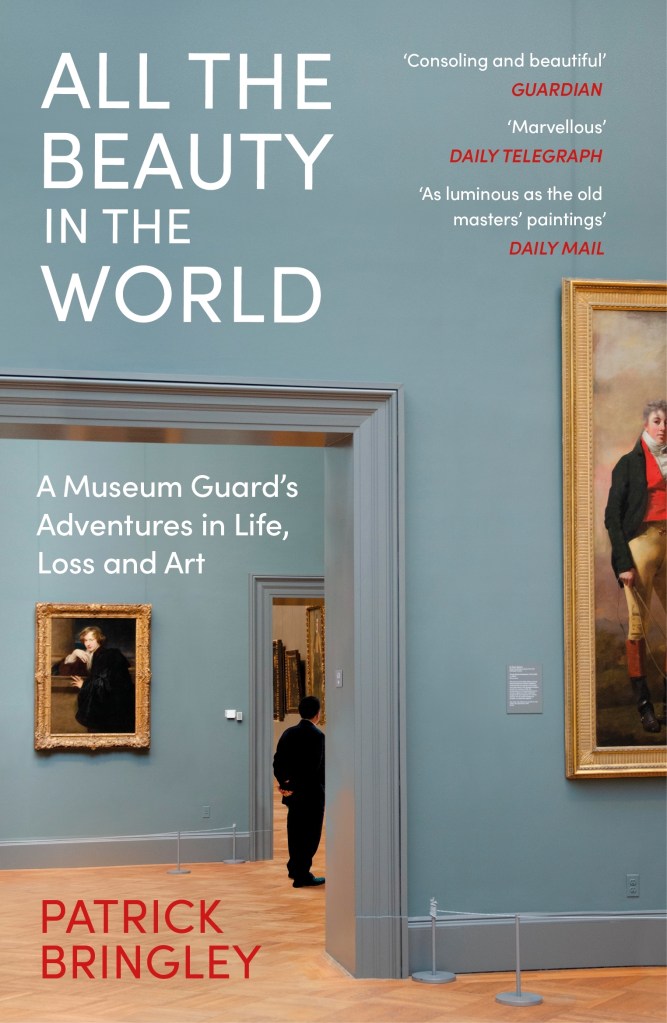
One other, the book I most recently received as a gift is All the Beauty in the World by Patrick Bringley, a museum guard’s adventures in life, loss and art. Right now, at the end of a very busy year, I am feeling the need to slow down – and this book is the perfect companion.
Why is The Gifts of Reading for the Next Generation an ideal Christmas gift?
What a question! This is a book that I am confident will be adored by all readers, who will love the variety of these 24 essays about the books that inspired the contributors. As you mentioned, there’s a wonderful reading list at the back of the book and an inspirational epigraph by Ben Okri. I am so grateful to the team at Scribe for producing this book in a beautiful hardback edition which actually costs no more than a large-format paperback.
This is a time when we all need books. ‘Reading is the richest conversation I know,’ writes Pico Iyer. ‘There is a secret trail of books meant to inspire and enlighten you. Find that trail.’ (Ben Okri in The Gifts of Reading for the Next Generation)
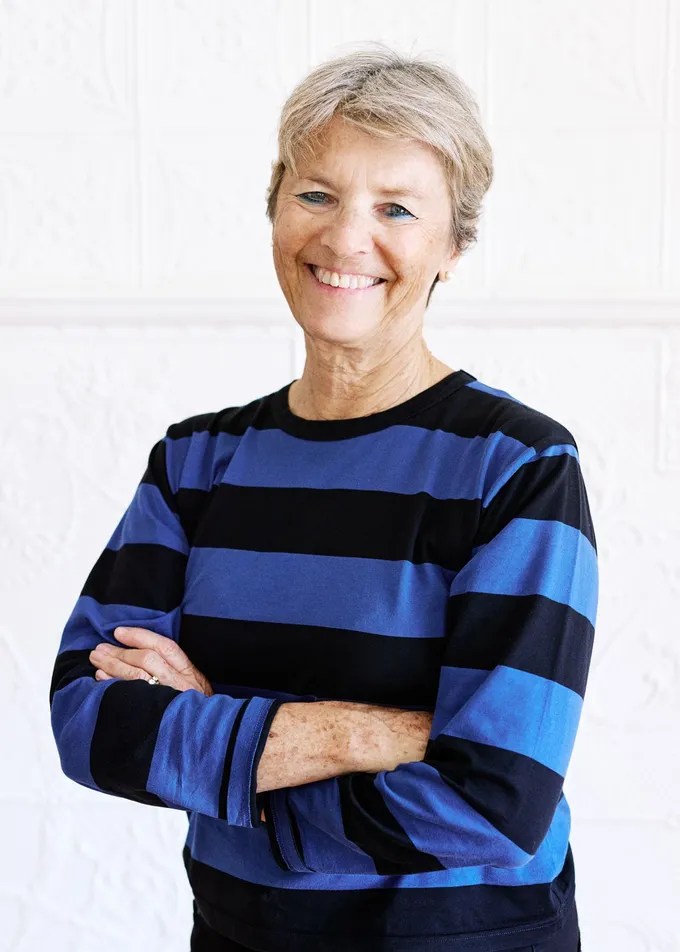
Thank you so much for this opportunity to share my books with your readers. If anyone wants to contact me, they can find me at jennie.orchard@bigpond.com.
‘Jorge Luis Borges once said that he always imagined that paradise would be a kind of library. Through literature, we enter an infinite place.’ (Colin McCann in The Gifts of Reading for the Next Generation)

 paperbarkwords.blog
One thought on “The Gifts of Reading for the Next Generation curated by Jennie Orchard”