
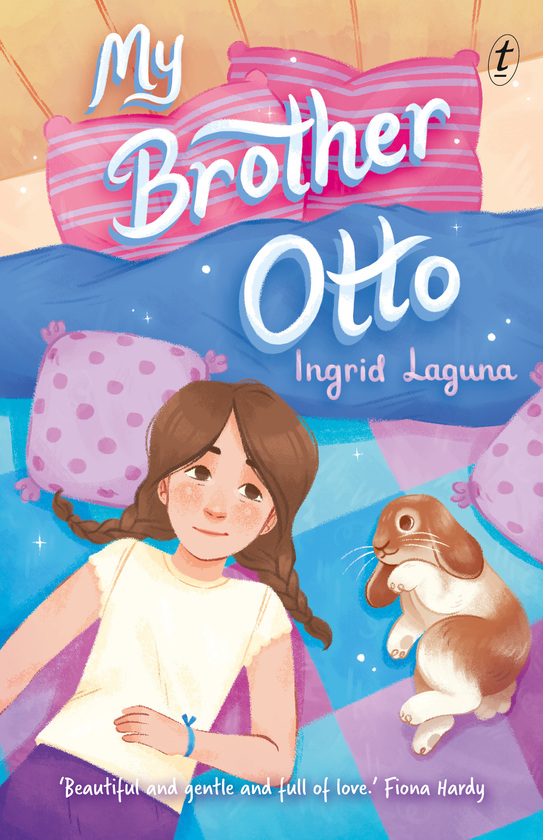
My Brother Otto
by Ingrid Laguna
(Text Publishing)
“In the middle of her desk was her laptop. She had whole folders of stories on there. She opened to a screen she had titled The Invisible Girl and added some notes. No one sees the girl.
Her colours are fading. She hides behind her cowgirl boots.”
(My Brother Otto)
Thank you for speaking to Joy in Books at Paperbark Words blog about your tender, heartbreaking novel, My Brother Otto, Ingrid.
Author Interview: Ingrid Laguna
I last interviewed you for Magpies magazine in 2019 about your thoughtful junior novel, Songbird. (Interview reproduced at the end of this post, with permission.)
What is something of significance that has happened in your professional life since then?
I have written and released five novels for young readers since then, including My Brother Otto. I have discovered that I am always learning and that the process for the development of each manuscript is different and unpredictable. I love that about writing!
Further detail:
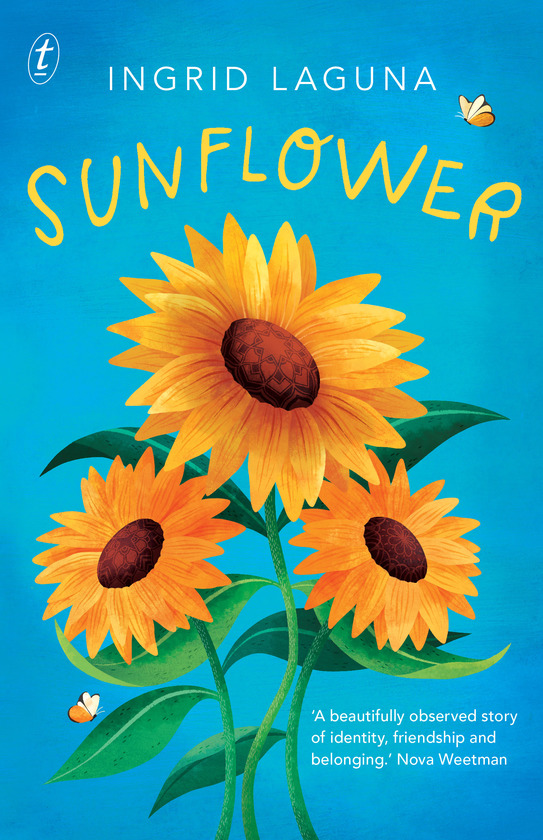
Songbird (Text Publishing), my debut children’s novel, was given Notable recognition by the Children’s Book Council of Australia and shortlisted for Speech Pathology Australia’s Book of the Year Award 2021. It has been published in Australia, NZ, the UK and the US, and is a feature text with Reading Australia.
The companion novel and sequel, Sunflower, was long listed for the ABIA and shortlisted for the Children’s Peace Literature Award. Bailey Finch Takes a Stand won the 2022 Environment Award for Children’s Literature (fiction), as well as Best Primary Resource and Best Chapter Book with Educational Publishing Awards Australia (EPAA) 2022. Kit & Arlo Find a Way (Consent for Young Readers), co-created with Vanessa Hamilton won the same awards with the EPAA in 2023.
I have written for numerous publications including The Monthly, The Age, Magpies Magazine and the AEU magazine. I was the Education Advisor for the Melbourne Writers Festival over two Festivals.
EDIE TELLS A LIE (Text Publishing) was released on 1 July, 2025 and My BROTHER OTTO was launched on Sunday 15 February, 2026.
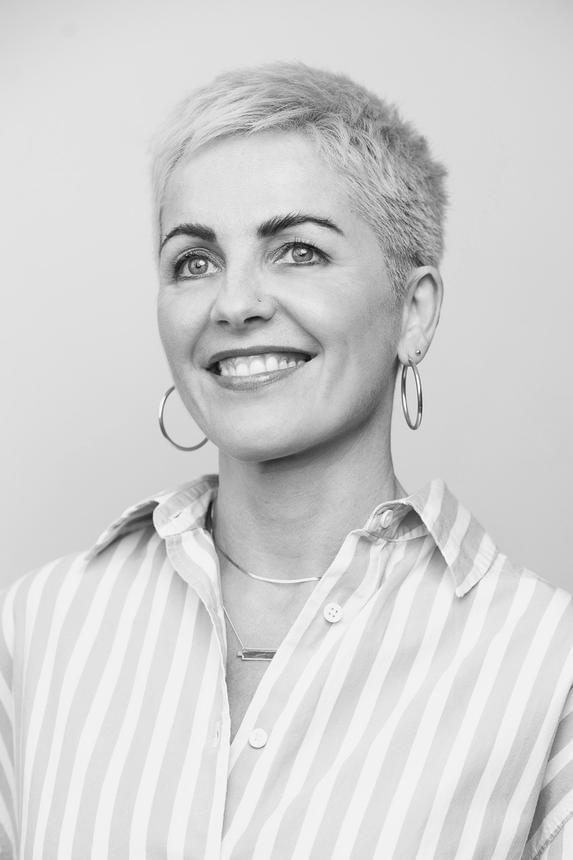
Where are you based and how are you involved in our children’s literature community?
I live in Coburg in Melbourne and am part of a great gang of kidlit (children’s literature) friends. We catch up regularly and support one another by going to each other’s launches. We read and provide feedback on one another’s writing. We provide praise quotes and launch one another’s books. I’m in a writing group with Fiona Hardy, Ailsa Wild and Katherine Colette and we go away together on writing retreats. Only other writers know what it’s like to live a writing life – the challenges and rewards.
In My Brother Otto, how does your protagonist, Quinn, fit into her family? She and her mother bond over the movie Love Actually (a curious choice?) but her mother hasn’t had time to listen to the seventeen songs on Quinn’s latest playlist.
Why does Quinn now feel so insecure?
Until now, at age eleven, Quinn has been the centre of her mum and stepfather’s (Alex) worlds. They have fussed over and cherished her and she has been in every photo. Since her mum became pregnant, everything is changing and all they talk about is Otto.
I’m not cute anymore, thinks Quinn. I’m not cute and I’m not interesting.
She is going to have to share her room with the baby and give up her beloved bunny, Disco. She doesn’t want things to change. She doesn’t want Otto in the world at all.
I love how Quinn is trying to win the writing competition. What is the significance of this in her life?
This is a subplot that provides insight into Quinn’s thinking and also provides something positive and hopeful. Quinn loves to write and she’s good at it. But also, if she wins the competition, she believes her mum and Alex will be proud and she will feel seen. Her writing will be published on the school website and she will read her final story at assembly with her parents there. The story ends with Quinn reading her third story, which is written from Otto’s perspective. This story supports the message that loss of a loved one is not the end of all good things. It is just the path of life. There is joy in loving someone so deeply.
Disco, Quinn’s rabbit, is a powerful symbol in the story. Could you briefly explain his role?
Including an adorable rabbit as a beloved pet for Quinn is relatable for young readers. I have learnt from my writing workshops in primary schools that so many kids have big feelings for the pets. It was also an effective plot vehicle, raising the stakes for Quinn when she is told she must give Disco away when Otto comes home.
How does Quinn grow and change during the traumatic experience that she and her family suffer?
Initially, Quinn feels increasingly invisible and she feels threatened. Everyone tells her how excited she must be.
‘You will love her more than you can imagine,’ said her neighbour, Nadya.
But Quinn couldn’t imagine.
When Otto is born at just twenty-six weeks’ gestation, it takes time for Quinn to fall in love with him, but she does. She sits by his crib in the intensive care unit after school and reads him stories. She tells him about their family and home and he clutches her pinkie. She helps the nurse with his cares and chooses little clothes for him. She becomes a proud and loving big sister. But she is also conflicted because she hadn’t wanted him in the world and now he is here but he is frail. Is this her fault? She learns that what her mum said was true: Love makes us bigger.
Your adult characters are authentically drawn to show their deep familial love. They are also realistically flawed. I also appreciated your representation of Quinn’s Year 5 teacher. Could you please explain why/how you have created Mr Mateo so empathetically?
I think stories are more interesting and engaging if characters are not stereotyped or predictable, because people aren’t! And the teachers I work with are diverse and passionate about their work and kind to their students.
I also wanted Quinn to have a relationship with an adult who was not just telling her how great it was that she was getting a baby brother. He had a different perspective and validated her feelings. ‘Change can be scary,’ he said.
You’ve crafted the story so sensitively. How did you balance the descriptions of trauma with brighter times?
My own experience of having two babies intensive care for a sustained period of time was just that! I often skipped into the NICU full of joy and anticipation of seeing my babies, delirious with motherhood, full of love. Then my babies went in and out of surgeries and up and down in their growth and development. Hope and joy and then worry and fear and back again, over and over. But isn’t this also just life? Even when there is illness and loss, there is also, surprisingly, room for humour and love and hope.
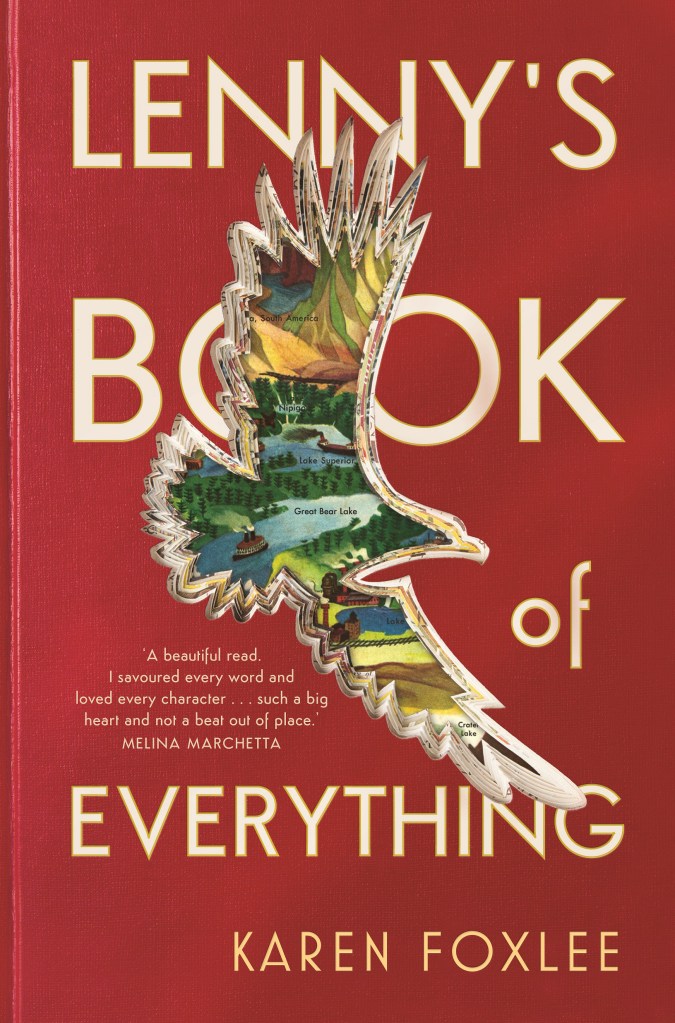
Quinn’s favourite books are Lenny’s Book of Everything and Fish Boy. Why have you chosen these books?
They’re two of my favourite middle grade books!
Who have you written this story for?
My boys, Jordan and Leo. They are such a big part of me.
“ ‘ I like stories with happy endings,’ said Quinn. ‘Even if they’re sad stories.’
‘I guess there is always hope,’ said her mum.
‘But not all stories have happy endings.’”
(My Brother Otto)
My Brother Otto at Text Publishing
**********
Other resources:
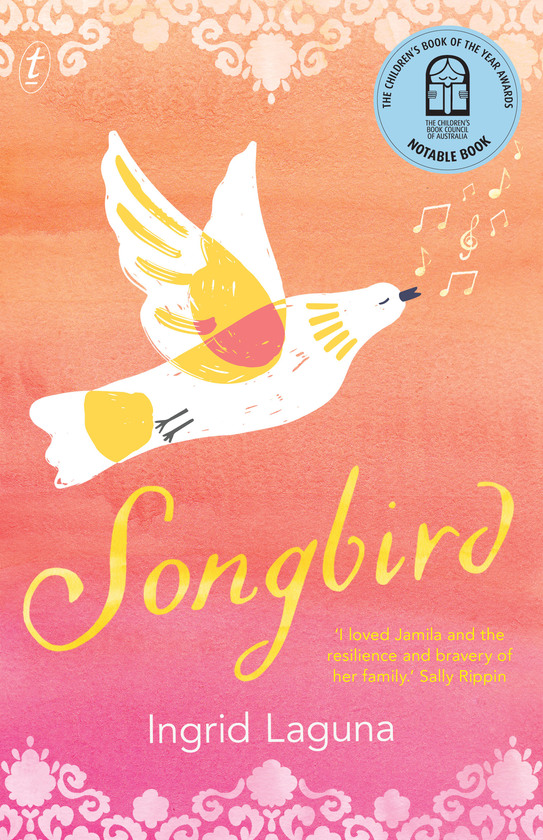
Songbird
Interview with Ingrid Laguna for Magpies magazine by Joy Lawn
(reproduced with permission)
Songbird by Ingrid Laguna (Text Publishing) is a tender, memorable novel for young readers with well-integrated musical features.
What has given you a heart for refugees?
In 2013, my fascination for language learning and teaching led me to working at an intensive English language school for school-aged new arrivals. At my campus in Broadmeadows, most students came from Iraq and Syria. Most had not left their home countries by choice. It was a unique setting and a steep learning curve. I quickly discovered that my students needed to feel safe and relaxed before they would be willing to take language risks, to try using new and unfamiliar English words.
I became increasingly creative in my approach to teaching, using drama games, songs, body percussion, listening relaxation and autobiographical writing. I got to know the kids, and some of what they had been through. They were warm and hopeful and grateful. I was struck by how resilient they were. I felt enormous respect for them, privileged to be their teacher and the recipient of their trust.
Foundation House, the Victorian Foundation for Survivors of Torture, suggested we don’t call our students ‘refugees’; instead describe them as people who have ‘come from refugee backgrounds’, because otherwise, when does it end? When do they stop being refugees? This resonated with me.
Could you tell us about Jamila, the protagonist of Songbird? Why is she called Songbird? What is the importance of music in this story?
Jamila is creative and empathetic, as well as ambitious and resilient. It is 2015 and she finds herself in a housing commission flat in Reservoir with her mama and her baby brother. She has been separated from her life-long best friend Mina. Mina gave Jamila her nickname Songbird because Jamila is always singing. When Jamila feels scared or worried, she makes up songs to take her away from the worries.
Jamila’s passion for singing and song writing comes from my own first-hand experience of the same. I spent many years playing music, touring Australian festivals and overseas, singing, song writing and drumming. I found music brought me back into myself; it calmed me and filled me up, the same way writing does now. For Jamila, singing is her refuge and it is also a vehicle for Jamila to shine in the story.
What impact does Jamila’s religious background have on her life?
Jamila’s religion informs her values and her identity to a great extent. She wears the hijab and is reminded of the Islamic community she is part of. She has grown up sharing in its rituals, traditions and beliefs. When Jamila goes with Mama to the airport to watch and wait in case Baba is coming, Mama reminds Jamila it is in God’s hands.
‘I give up,’ said Jamila.
‘In shaa Allah, he will come, Jamila.’ God willing.
Jamila’s faith helps her. When she is struggling, she can pray. When she gets good news, it is Allah she thanks:
She wanted to shoot her fists into the air and offer praise to Allah.
In her happiest moment in the story, Jamila is thankful to God:
Jamila held her arms out and spun in a circle. ‘Al Hamdu li’Allah,’ she said. Praise God.
In her new school in Melbourne, Jamila’s headscarf makes her visibly different to her classmates. Finn calls her ‘weird’. This differentiates Jamila from her peers and makes it harder for her to fit in.
How have you compared and contrasted Iraq with Australia in the novel? How is this story relevant for children living in Australia?
Early in the story, Jamila describes her country to her classmates:
Iraq is a beautiful country. There are mountains, lakes, rivers. There is a golden mosque. And Baghdad…it is a big city. On hot nights, people eat ice-cream in the streets. There is music…drumming and singing.
This reflects the enthusiasm expressed by my students about their home countries, despite the fighting and problems. Children in Australia are unlikely to have been exposed to positive imagery of countries such as Iraq because the media tends to show more troubling scenes of smoking rubble, shocked and grieving faces. Young readers can be reminded that the world is not just what the media tells us.
Jamila misses the spicy aroma of the marketplace in Iraq and the palms lining the Tigris river. She misses the music, the tabla and singing. She longs for the food of her country and the sound of her Arabic language.
Australia is a country at peace and Jamila feels safe. She describes Iraq:
People didn’t laugh so much as they walked the streets—bombs might fall on them, bullets might pierce the air.
How does one of your characters change and grow, and how would you like your readers to change after experiencing this story?
Through the story, Jamila discovers she is brave and capable. She realises she is not the only one keeping secrets and learns the power of speaking the truth.
Jamila put her hand on her hip and stood up straight. ‘I want to talk to Mrs Ward. It’s not good that I am in trouble. I want to explain how things are. I want her to understand.’
Jamila knows what it feels like to be singled out; she confronts the girl who bullies her friend:
Jamila fixed her gaze on Beza and pressed her hands into her armpits. ‘What is the colour of mean?’ she asked.
Jamila finds out that she is capable of making change.
Jamila stopped in front of the Refugee Support sign and turned to her mother. ‘Let’s go in,’ she said. ‘This is where we can get help.’ Something had to change in their lives.
Jamila is ashamed of being called home to help her mother with simple tasks, but as her belief in herself strengthens, Jamila is finally able to tell her classmates the truth.

 paperbarkwords.blog