
The Sydney Launch of The Tree of Ecstasy and Unbearable Sadness by Matt Ottley
It was both a privilege and heartrending joy to attend the launch of The Tree of Ecstasy and Unbearable Sadness by Matt Ottley at the Chauvel Cinema in Sydney’s Paddington last night. The movie of the work, composed by Matt and performed by a full orchestra and choir, was a superlative rendition of the book.
Matt’s unmatched genius came to the fore as we viewed this peerless work.
Margrete Lamond, publisher of Dirt Lane Press, framed her questions to Matt as a thank you to the significant people who have made this book and multimodal work possible.
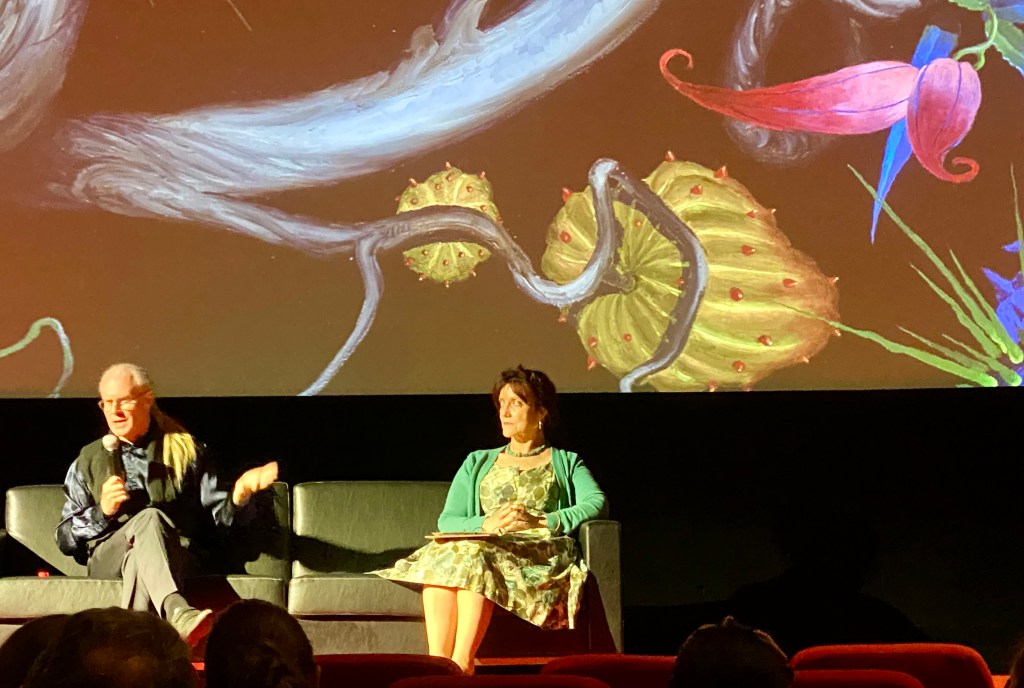
Matt spoke with honesty and vulnerability about the stigma of mental illness and how The Tree of Ecstasy and Unbearable Sadness reflects, not his own story, but psychosis. He is reaching out to people at a visceral and emotional level to enable us to understand psychosis through our own feelings and responses.
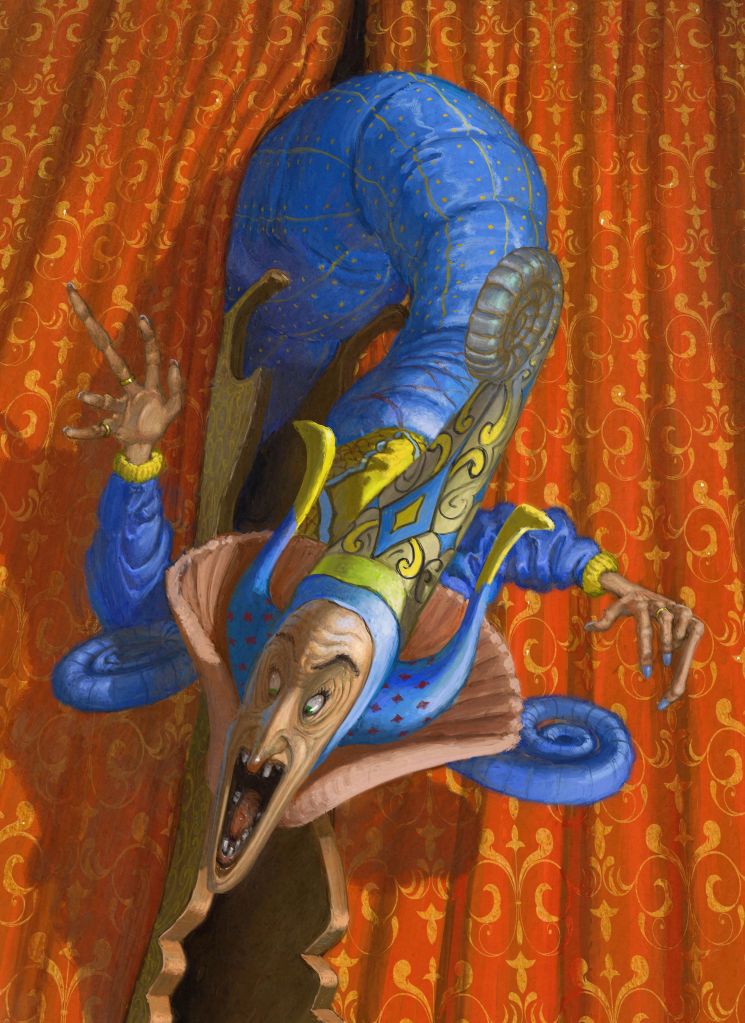
It is not for me to share here the depths of Matt’s personal story and raw pain. He explained that he is a human who has the condition of bipolar. “I am still here.”
He wrote a poem after a psychotic episode and the first idea that came to him when preparing to transform this into the book and multimodal work that we now celebrate was the title The Tree of Ecstasy and Unbearable Sadness. He continued to add words but his publisher Margrete helped him to cut back and refine the work to almost where it began.
The tenor sings the poignant words that were in the original poem but are not in the final version of the book: “I am here. Hear me.”
Matt urged that people with mental illness are not their illness. They need, not judgement, but love. “The thing that is most healing is love.”
The Tree of Ecstasy and Unbearable Sadness book, movie and launch will be a lifelong memory.
Sincere thanks to the organisers of the launch and for Matt’s ongoing generosity in answering my questions for the interview below and for a separate interview that appears in Magpies Magazine (March 2022).

My review of The Tree of Ecstasy and Unbearable Sadness appears in Magpies Magazine (March 2022) Reproduced at the end of this interview.
MY INTERVIEW WITH MATT OTTLEY AT PAPERBARKWORDS ABOUT HIS BOOKS
I have been a long-time admirer and collector of Matt Ottley’s work. Matt has an exceptional reputation for his artistic and sophisticated picture books. There are too many to list but include Teacup (written by Rebecca Young), Mrs Millie’s Painting, What Faust Saw, Luke’s Way of Looking (written by Nadia Wheatley), Sailing Home (written by Colin Thompson), Parachute, Sarah and the Steep Slope, Crusts and Tree (all written by Danny Parker), Suri’s Wall (written by Lucy Estela), Requiem for a Beast (for mature readers), Home and Away (written by John Marsden), The Incredible Freedom Machines (written by Kirli Saunders) and recently How to Make a Bird, written by Meg McKinlay, which won the 2021 CBCA picture book of the year award and the Prime Minister’s Literary award (children’s literature). Now Matt has created his masterwork, The Tree of Ecstasy and Unbearable Sadness.
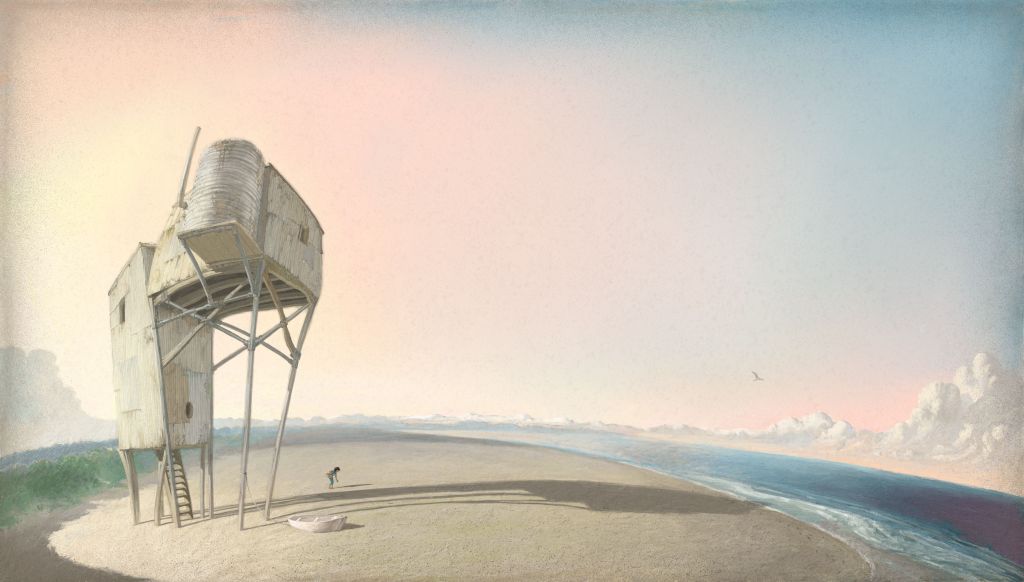
This interview with Matt is a brief retrospective of some of his books and techniques to coincide with the 2022 publication and launch of his new YA/adult picture book The Tree of Ecstasy and Unbearable Sadness (recommended 15 +), published by Dirt Lane Press. (A separate interview with Matt about this book and his work appears in Magpies Magazine, March 2022.)
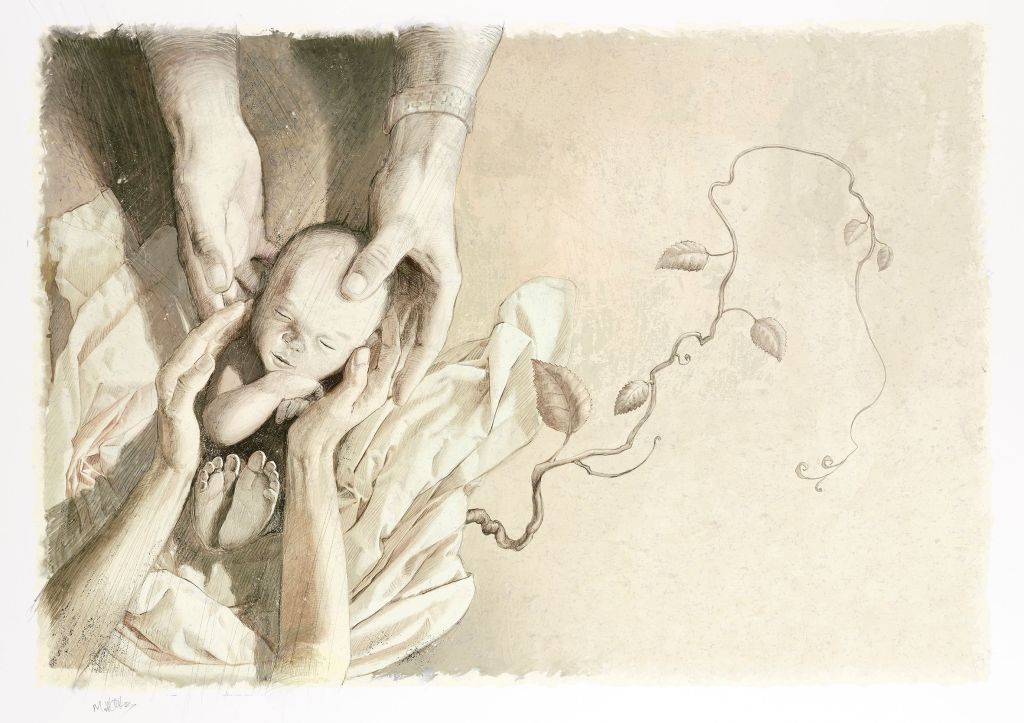
I believe The Tree of Ecstasy and Unbearable Sadness is one of the most important books across forms, genres and readerships created in Australia. It is Matt’s visual and written interpretation of his lifelong experience with mental illness. Matt is also a pioneer of multi-modal works and his musical composition for this book is performed by a professional orchestra.
Thank you very much for speaking with PaperbarkWords, Matt.
Q Background and Place
You have lived in a variety of places including Papua New Guinea, England and diverse parts of Australia. How may some of these places have affected your content, style and colours?
A
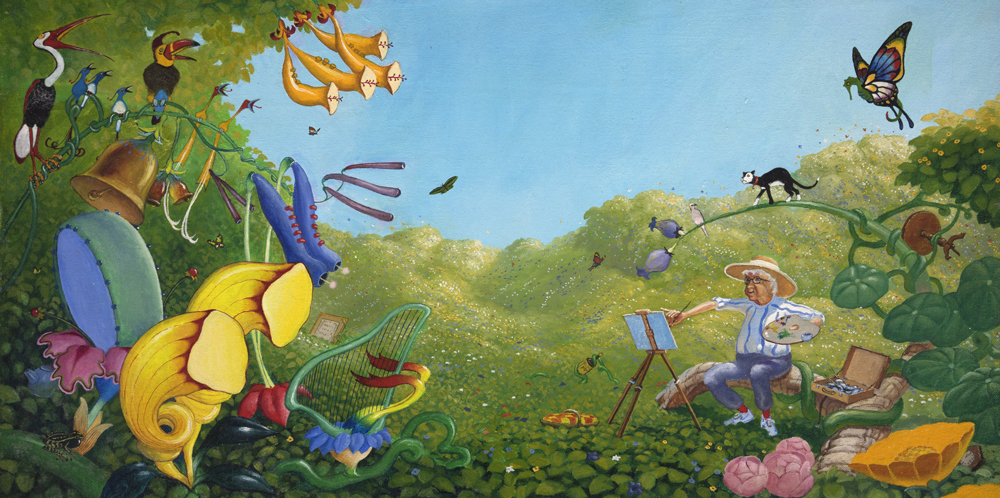
The first eleven and a half years of my life were spent in PNG, so that is probably the most important place in my formative experience. Possibly the difficulties I faced in adjusting to life in Australia when my mother and my brothers and I moved here was what has informed the social content of my work. I felt very much an alien in this country, with its different social and community values to those I’d been steeped in as a child. I appreciate having felt that difference now, as it did give me a slightly outsider’s view of Australian society. I think that the sense of awe and magic that I always felt about Melanesian culture in PNG found its way into books like the Faust stories, and there is a direct reference to the natural world of PNG in Mrs Millie’s Painting. As a child, one of my favourite things to do was to climb the vine covered trees in our back yard, and to make cubby houses up in their canopies. Mrs Millie is a story about someone who climbs to the top of a tree and has an adventure in its canopy. It’s interesting that I unconsciously chose an elder woman as my protagonist in that story. I guess the two fairly disempowered social groups within our society are children and old people. Perhaps Mrs Millie reflects how I felt about living in Australia as a young teenager.
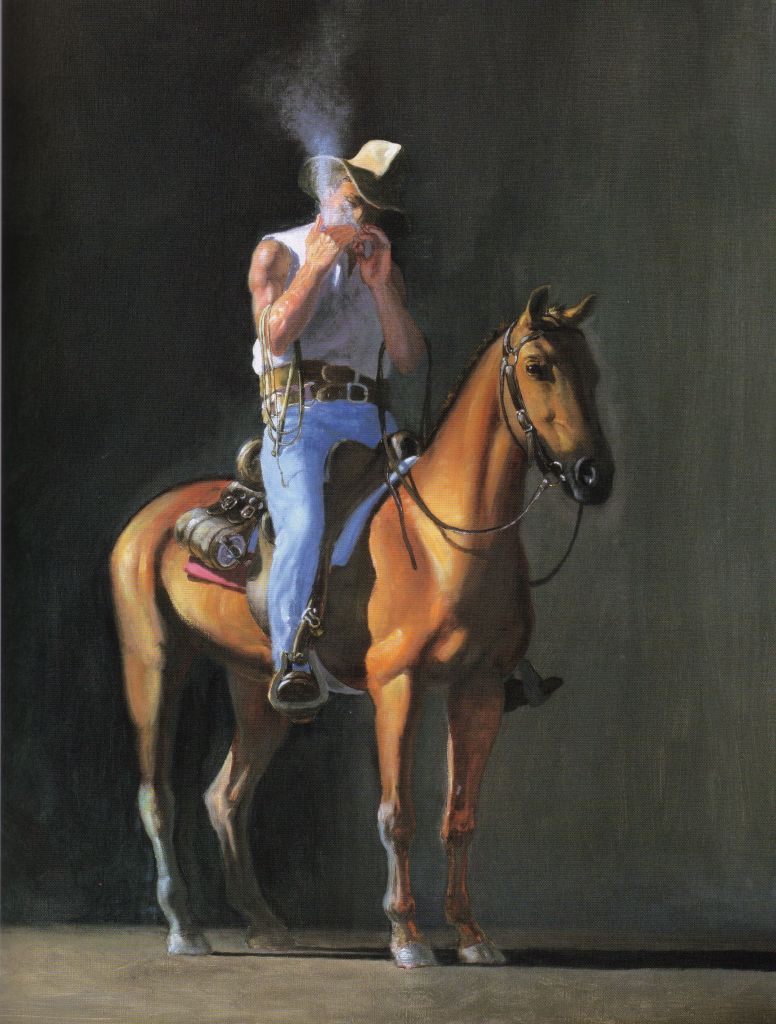
I worked as a jackaroo on some remote cattle stations as a late teenager and young adult. The story of the boy in Requiem for a Beast is fairly autobiographical and comes from some life changing experiences I had during those years in remote western QLD and Cape York. I spent three years in the UK as a young adult too, and it was there that I had the opportunity to really study my painting technique. I became more or less type cast as an equestrian painter in England, and discovered that horses were a magnificent way of fine-tuning my painting and drawing. Part of what I enjoyed about working on Requiem was painting the horses and cattle.
Q Natural World
Matt now lives surrounded by rainforest. How does the natural world infiltrate your work?
A
As stated above, my memories of the natural world in PNG have found their way directly into Mrs Millie’s Painting. Because I grew up in a tropical environment, I have always been drawn to lush landscapes. Perhaps that’s why there is a rich nature to the tones and shapes in my artwork? Certainly, the bush is always the place I go to rejuvenate. I have lived for short periods in suburbs and cities, but the place I always feel most at home in, is where there are trees around me. Without the solace of the natural world I’m not sure I would be able to sustain my work for too long.
Q Colour
You have synaesthesia and have said, “Synesthesia is a cross-wiring in the brain where the perception of one sense gets confused with the perception of another. For me, I see colors and shapes when I hear sounds. It’s strongest for things like bird song and music.”
Could this condition be an asset to you as an illustrator – creating an original vision and perspective?
What are the main colours that you love or need to use in your books?
A
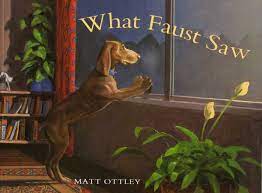
Being synaesthetic has, in a roundabout way, contributed to the narrative idea in one of my stories. I was listening to The Sorcerer’s Apprentice by Paul Dukas with my eyes closed, and was trying to grab hold of the shapes and colours that were constantly swelling out of the darkness and disappearing back into the darkness. That gave me the idea for a character who sees things that others can’t. That was where the central idea in What Faust Saw came from. Faust (a dog) sees aliens one night, but whenever a human is present, the aliens hide. I do allude to the pattern and shape I see when I hear music in a couple of my other books, Requiem for a Beast has cloud shapes that come out of what I see when I hear the opening string music I wrote for that work.
I’m red/green colourblind (although I know immediately that a certain tone in music is red or green—the synaesthetic experience seems to bypass the external perception of colour), so I guess the colours I like using are blue and yellow. I’m drawn to blue and yellow, though sometimes I try and avoid using too much of those colours because I also want my paintings to be balanced.
Q Music
In your soul, are you more musician or illustrator, or are they inseparable?
A
I have always struggled, professionally with what I should be doing with my time. Music and image have always been inseparable to me and I’m happiest when I’m either immersed in the world of sound or of colour and light, and often they’re the same. It took me a long while to feel comfortable with myself as a musician because without an inordinate amount of practice, I’m a fairly ordinary performer, but I’ve come to realise that my place as a musician is as a composer. I was always far more interested in playing my own music anyway. And I’m now at peace with myself as to whether I’m a composer or a book creator—I’m both, and with the Sound of Picture Books project – the ongoing project I have with the Literature Centre and the West Australian Symphony Orchestra – I’m combining both strands of my work. I write music for players in the orchestra (comprising a chamber orchestra in size) and these works are performed to narrated performances of the books, along with moving images from the illustrations, which are shown on a large screen behind the orchestra—truly multi-modal performances.
Q Mythical and Imagined Creatures
You incorporate mythical Greek creatures such as the Centaur and Minotaur in Requiem for a Beast as well as the beast itself. Suri’s Wall has buildings of medieval or ancient feel and mythological imaginings. You have created bright aliens in Crusts and alien machines in The Incredible Freedom Machines. How have your background or interests led you to these creations?
A
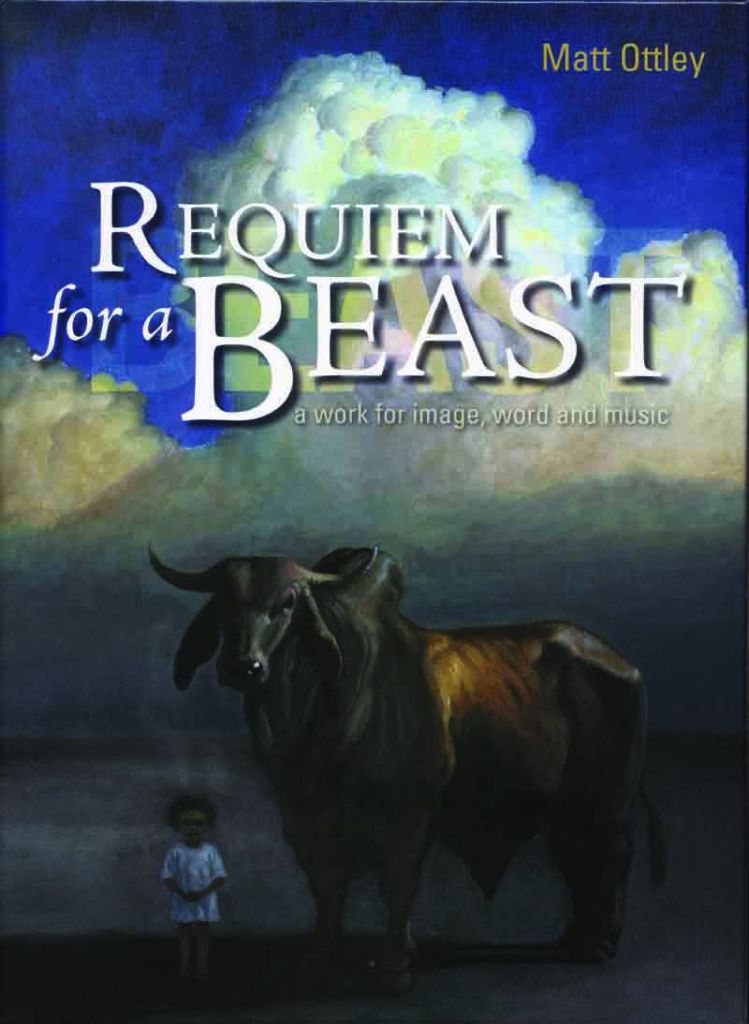
I first began exploring the story of the Minotaur when I was doing the work for Luke’s Way of Looking, back in 1998, and incorporated it in that book. The Minotaur seemed to me a perfect referencing narrative for Requiem for a Beast because of what it’s about.
I first became interested in exploring ancient artforms/ideas/architectures while I was studying music. I was reading some of the writings of the early 20th century Russian composer Igor Stravinsky, who said that (I’m paraphrasing here) new forms of music are arrived at because composers hear a work from another composer and become so enamoured with it that they try to ape it in their own fashion, but get it slightly wrong. In other words, honest creativity and artistic innovation is not something that can be divorced from the heritage. One’s creative impulse is ultimately undeniably connected to one’s cultural heritage. There was a movement through the mid 20th century in Western arts which was based on newness for the sake of newness. Sometimes one sees that attitude still persisting but those works never seem to hold on in the collective consciousness for long. For a work to be breathtakingly new and exciting, dangerous even in the way it confronts us, it still needs, I believe to be part of a pedigree, even if that pedigree is difficult to locate. I love the idea of referencing the complex connectedness of different, often disparate cultural ideas and modalities that make up any single cultural expression.
Q Languages
Where and why do Latin and Aboriginal Language appear in your work?
A
There is a mix of Bundjalung and Latin in Requiem for a Beast. Because the book itself contains themes of separation and alienation, I wanted there to also be something that elucidates the deeper aspects of humanity that connect us all, below the superficial level of cultural difference. I also chose the Latin text for another reason. I set the consecutive parts, or sections of the book in the form of the Requiem from the Catholic church’s liturgy. This is because at heart the original Requiem is about the grieving process, about resolution and finding peace. I thought this was appropriate given the story of the Stolen Generations coupled with the theme of a dysfunctional masculine culture underlying much of contemporary Australian society. The Aboriginal stories contain themes that either work in tandem with those of the Latin text, or work thematically in an ironic way. Either way, they are both expressing deeper threads of connectivity that runs through all of humanity.
Q Artistic Techniques: Shadows
Thinking specifically now about some of your artistic techniques, how do you use shadows in your illustrations?
A
I’ve often used shadows as an expression of the amazing power that our subconscious has in directing our everyday lives. Hyram and B (by Brian Caswell) was the book in which I used the motif of the shadow as a major theme. When either of the main characters is reminiscing, they are often looking directly facing their shadows. Something Brian said in one of his novels (he may have taken it from elsewhere, so I’m not sure if it’s his quote), ‘never be afraid of the shadow, because it proves the existence of light.’
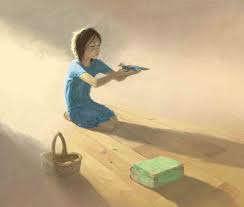
Sometimes I use shadows purely as a way of reinforcing a strong sense of side light. Beauty of form is, for me, most often enhanced by a strong side light.
Q Camera angles
Distinctive camera angles are a feature of your book illustration, e.g., in Tree, Sailing Home, Parachute, Requiem, Sarah’s Steep Slope and Teacup. How /why do you use these?
A
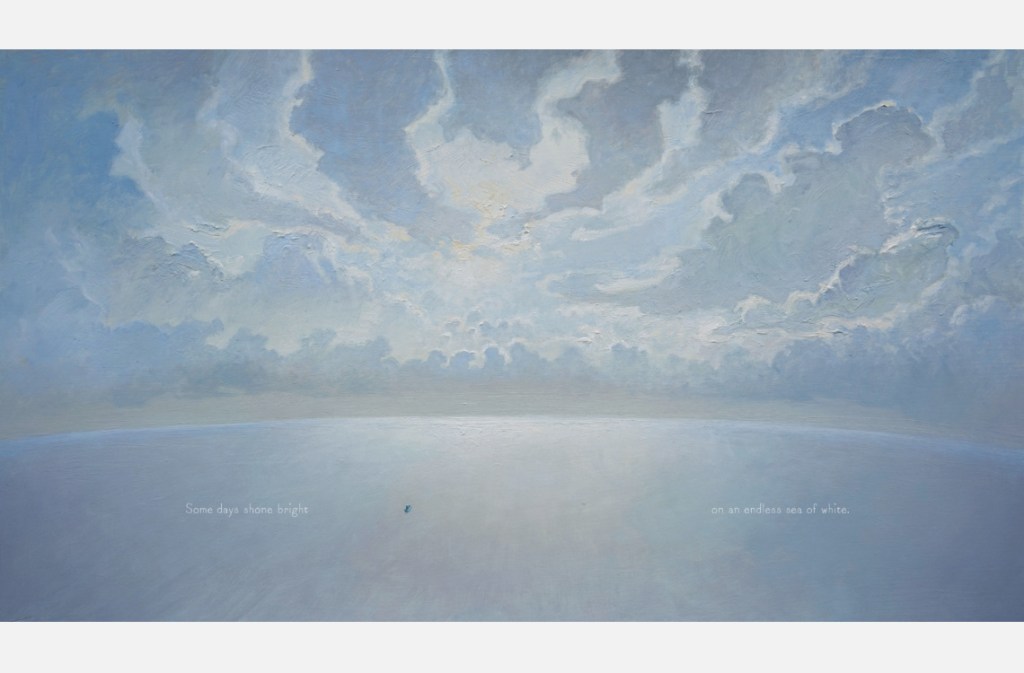
Most often the view point for the image is a reflection of an emotional state or mood I’m trying to express. When the boy is alone on the ocean in Teacup, for example, it seemed the most obvious and powerful way to express his alone-ness was to depict him as tiny on a vast ocean against a vast cloudscape. Again, in Sarah and the Steep Slope, the scariness of the giant slope surrounding Sarah was best shown by either low or very high viewpoints. To be looking up at something can either make that thing scary, by the colours and shapes around it, or powerful and protective, as in the low viewpoint image of the protecting tree in Tree.
Q Panels
For what purpose do you incorporate panels into Requiem, Parachute, (and some in) Tree, Teacup and Crusts?
A
Sometimes graphic sequencing is the best way to either show a motion sequence if you’re trying to convey that (something rising up, or tumbling for example), or if there is a lot of narrative information that needs to be conveyed in a limited spread space. If there is limited space sometimes deleting words and adding graphic sequences can convey much more narrative information than a greater word count would. That’s certainly true in Parachute.
Q Animals
You feature many animal creatures throughout your body of work, including domestic cats in Parachute and Mrs Millie’s Painting. Is this to engage child readers or do you simply love cats?
Elephants seem to be an important symbol in Suri’s Wall, Parachute and Teacup. Why elephants?
A
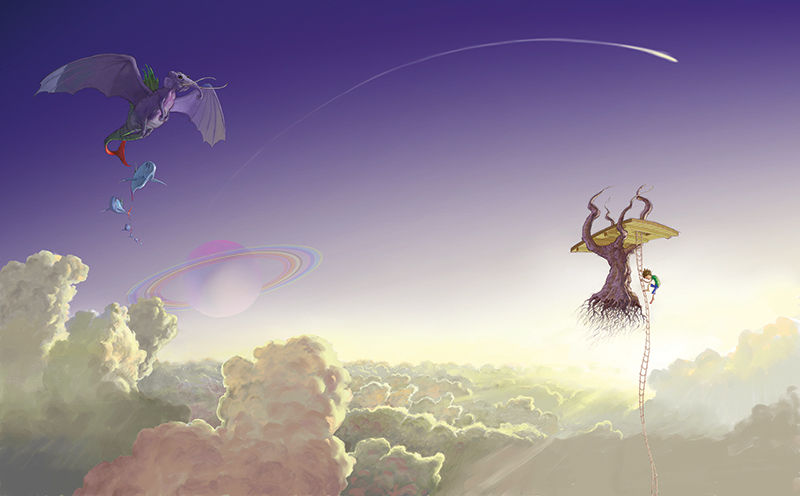
I love cats, as I do dogs. I’m neither a cat or a dog person, I have a fondness for all animals. Since being a child I have never actually had a cat as an animal companion however because I’ve lived most of my life in the countryside, only short periods in the suburbs. I was also, for many years, a wild life carer. I’ve been foster dad to many possums, bats, birds of various kinds as well as the odd antechinus. For that reason (wild life caring), I haven’t ever looked after a dog in Australia as an adult either. But so many families have cats and dogs it is also a point of resonation with my audiences that I include them in my books. I do also think that it is important for children to at some stage in their lives form a loving bond with a non-human animal. It’s something I like to occasionally gently promote. Elephants … hmmm. I’m not really sure. Perhaps it’s because elephants are such wonderful creatures to paint. There was a conscious decision to have an elephant flying in Parachute because it’s a huge, heavy animal and to have it flying adds to the surreal quality of the image. That’s why there are also fish swimming in the sky in Parachute – it’s just plain weird.
Q The Incredible Freedom Machines
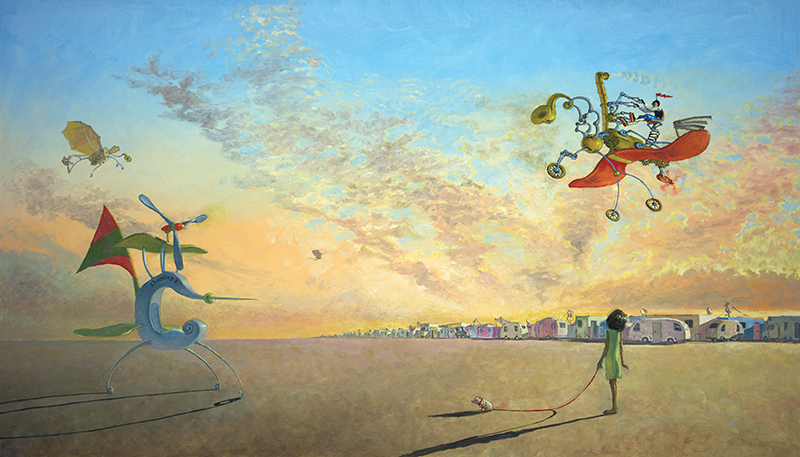
We’ll focus briefly now on one book, The Incredible Freedom Machines, which was shortlisted for the Prime Minister’s Literary Awards in 2019. Is this book almost a partial retrospective of your work? e.g., the garden from Mrs Millie’s Painting; Teacup’s sea creatures; the magical world of Suri’s Wall?
And, do you regard The Incredible Freedom Machines and Teacup as companion books even though they are written by different authors? If so, how?
A
I hadn’t intended The Incredible Freedom Machines to be any kind of retrospective, but if that is what some people will read into the images, I’m delighted. It’s probably coincidental that there is a flavour of Mrs M, Suri or Teacup in Freedom Machines because of the background subject matter in each book – I just like painting those things. I do actually think of Teacup and Freedom Machines as companion books because of the character stylisation and the painting techniques in each. The girl in Freedom Machines is also deliberately a little hard to place culturally. She, like the boy in Teacup, is the universal child.
Q Awards
Which award has meant the most to you?
A
This is a hard question for me to answer. The most beneficial awards have been the state Premier’s awards and the PM’s award because of the financial reward. An illustrator’s life is not usually one of high monetary gain. I am grateful for the CBCA award in the case of Requiem because the controversy that the award caused brought the book out of relative obscurity. I know that awards are important for raising one’s profile, but I think it is plain wrong to base an arts award on the sporting award model, which is what, by default happens. If one wins the 100 metres race, then one is unequivocally the best athlete. The arts aren’t like that – they’re entirely subjective. There is a high to very high chance that if you get different groups of judges, separate from each other, to judge the same arts competition, each group will come up with different winners. It’s a conundrum and I’m not sure what the answer is.
Thank you for your honesty and generosity in speaking to PaperbarkWords, Matt. It has been a privilege.
The Tree of Ecstasy and Unbearable Sadness at Dirt Lane Press
My review of How to Make a Bird by Meg McKinlay and Matt Ottley at PaperbarkWords
Read more about Matt and his work in my interview with him in the March 2022 issue of Magpies Magazine. This includes my review of The Tree of Ecstasy and Unbearable Sadness (also reproduced below).
THE TREE OF ECSTASY AND UNBEARABLE SADNESS (2022)
Matt Ottley, Dirt Lane Press, 136pp.
978 0 6480238 5 2 Hb $39.99
Review by Joy Lawn
Matt Ottley has drawn on his capacious and renowned artistic and musical virtuosity to bare his heart and mind in his monumental life’s work, The Tree of Ecstasy and Unbearable Sadness. This illustrated work is gloriously executed, although it is both excruciating and enlightening to read.
It portrays a boy born with a seed that made him see things invisible to others. It may be a gift. His gift showed him things so beautiful they made him cry. But it also tormented him with the pain of others. The seed becomes a tree whose flowers represent ecstasy and fruit, sadness. The extremes of emotion manifested by these progenies follow him into young manhood. He plummets into surreal nightmare scenes that almost destroy him but continues to seek the beauty that restores and uplifts him.
Ottley acknowledges that some of the young man’s experiences come from his own life but he writes in third person to create some distance, perhaps to protect himself, as well as the reader. His art here is, as always, magnificent, employing different styles and media. Sepia becomes full colour; delicacy becomes sumptuousness; shadow and silhouette become haunting characters; fragile yet supple line becomes fully realised three-dimensional space and, like the seed, genesis becomes metamorphosis, tempest and finally quietude.
The book is a complete work of art in itself but Matt Ottley has also composed an impressive professional orchestral and choral piece that extends and enhances the artistry.
The Tree of Ecstasy and Unbearable Sadness is recommended for readers 15 years and over. It is a seminal work that acknowledges and metaphorically inhabits and describes mental illness with tenderness and acuity. It is also for those who care enough to try to understand.


3 thoughts on “The tree of ecstasy and unbearable sadness”