
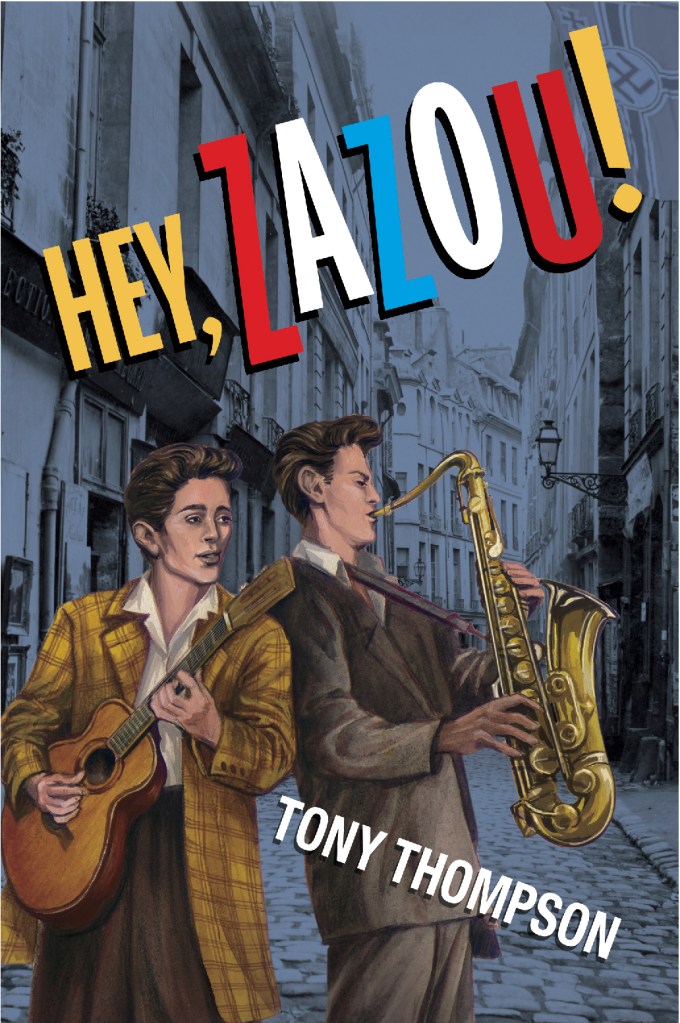
Hey Zazou!
by Tony Thompson
Published by Ford St
Guest author post by Tony Thompson for Paperbark Words
Hey, Zazou! is my new novel. It is set in Paris during the Second World War. To introduce it, I thought I would answer some questions that I’ve been asked over the years at schools, libraries, and festivals:
Where do you get your ideas? (A question that writers get a lot. I think it’s a good one!)
Hey Zazou! came from one sentence in a book that I was reading about Paris. It was a passing reference to a group of kids who, in the 1940s, defied everyone – their parents, their teachers, the police, the Vichy government, and the Nazis(!) – by wearing crazy clothes and listening to crazy music. It was irresistible. As a veteran of various 1980s subcultural milieus, I had some idea of just how much trouble one could cause by dressing oddly. But the stakes were very high for the Zazous in Paris while the Nazis were in charge. An occupied city is not the place to call attention to oneself. The young men wore tartan topcoats, wide trousers, brogues, brightly coloured shirts, and wild ties. Their hair was long and combed up into what would become known as a pompadour. The young women wore jackets with high shoulders, knee length skirts, patterned nylons and large heavy shoes. Bright red lipstick and big blond curls were obligatory. Together they danced to jazz but not the safe swing of Glenn Miller. The Zazous liked their jazz rough around the edges. Count Basie, Benny Goodman, Lucky Millinder, Slim Gaillard, and local hero, Django Reinhardt were all on the playlist. This was the music they jitterbugged to at illegal dances and parties.
Speaking of playlists, here’s one I made to go with the novel:
The idea of a novel about Zazous appealed to me for a few reasons. The first was music. Teenagers have a unique relationship with music that extends beyond simply enjoying it. A favourite song or artist is a life raft when the world seems to be sinking in a giant storm. I remember coming home from school thinking that everything would be okay once I had a Waterboys LP playing in my bedroom. The word Zazou comes from a Cab Calloway song called Zah Zuz Zah. The clothes were important but music was the fuel that the whole thing burned on. I had no trouble imagining that part!
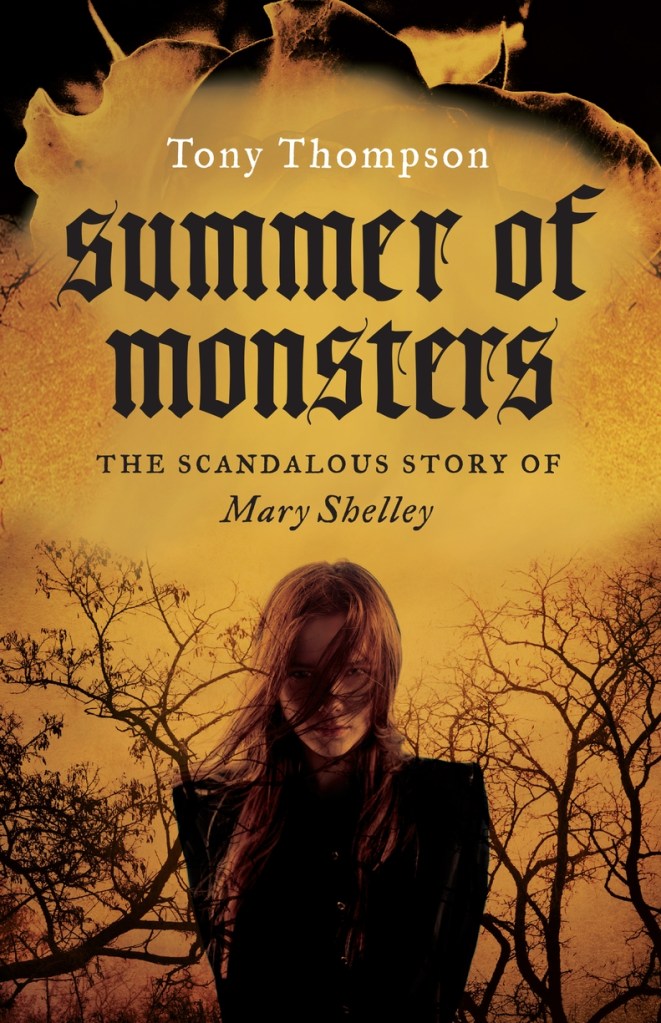
The second was the widely expressed view that the teenager was a) invented in the 1950s and b) invented by Americans. Neither is true. Adolescent subculture goes back a long way. My first book was about William Shakespeare. If Romeo and Juliet isn’t a play about teenagers, I must be missing something. It’s all there. My third book was a novel about Mary Shelley called Summer of Monsters. Mary and her half sister Claire were teenagers in that famous summer of 1816. Their companions, Lord Byron and Percy Shelley, may as well have been. The Zazous appealed to me because they seemed to closely resemble the various better-known teen subcultures that followed. There is something of the Teds, the Mods, and indeed the Punks, about the Zazous.
How do you get from idea to first draft? (another great question!)
I have to find what I call the ‘inside track.’ This is what I, and hopefully only I, can bring to the story. About the time I began to write Hey, Zazou!, my 10 year old son was diagnosed with severe dyslexia. He’d had a lot of trouble with reading and writing so it wasn’t a big surprise but it was on my mind, naturally. I wanted him to know that it would work out, and I went looking for a book to read to him about a character with dyslexia. I didn’t want the whole story to be about it. I wanted a book where it was there but wasn’t the main thing happening. I also didn’t want to tell a ‘dyslexia as superpower’ story. It’s not a superpower, it’s a pain in the backside mainly. I couldn’t find that book so I wrote one. My main character, Charlie, is a 15 year old with severe dyslexia. It enters the story at points, but he isn’t defined by it. I wrote the very first draft to read to my son to reassure him. He is currently working as a musician in the UK. It must have worked!
What do you do when you get stuck? (I’m an expert on this one!)
The best advice I’ve ever had on this matter came from Robert Gott, a wonderful Melbourne-based author and a good friend. He said, simply, ‘new character’. Readers will thus note that I got stuck a few times in Hey, Zazou! Once I had worked out Charlie, it was a matter of finding him some friends. The band that he forms in the story includes a resistance fighter, a juvenile delinquent, a Roma violinist, and a German soldier called Dieter.
Dieter began as a very minor character but became part of the fabric of the story. I have, throughout my life, met and bonded with people all over the world through music. I am fascinated by incidents where people on opposing sides of seemingly insoluble disputes sit down and play music together. It happens. Music has been used to inspire feelings of nationalism for war but I think it is far more powerful as a tool for peace. This is what Dieter came to represent in Hey, Zazou!
What does Hey, Zazou! ‘say’? (Do books have to ‘say’ something? I think they do!)
Charlie is determined to be a musician even though his city is occupied by the Nazis. His dream gets him a long way in this story, under very difficult circumstances. Hey, Zazou! is supposed to be a page turner but if it says anything, it says, ‘Dream Big!’

 paperbarkwords.blog