
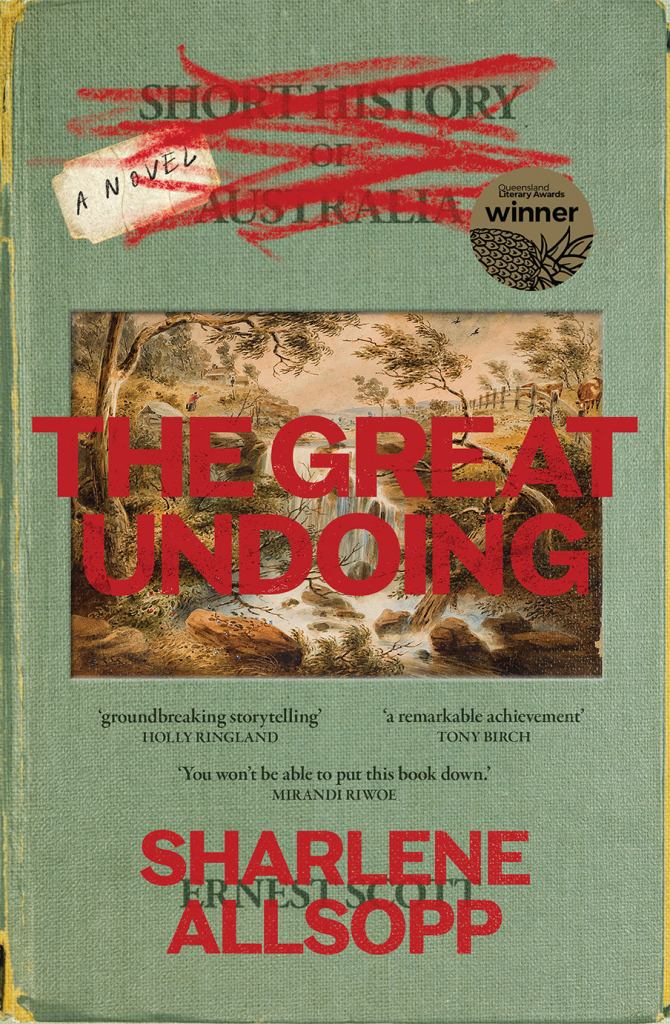
The Great Undoing by Sharlene Allsopp
(Ultimo Press)
“…there are other forms of history. There are songs and laments – poetry. There are ancient songlines. There is continued existence. There is thriving where there was once only surviving.
I drew a deep breath as I walked on that silent country, thinking these thoughts, searching for my own voice. Realising that I did, in fact, know my language. It is the language of heresy… language is our best defence …”
(The Great Undoing)
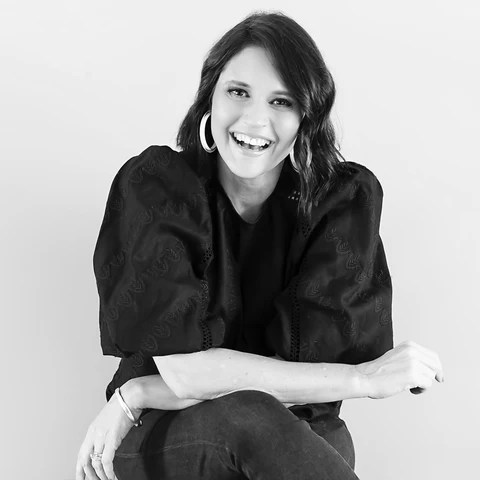
Author Interview: Sharlene Allsopp
Thank you for speaking to Joy in Books at PaperbarkWords blog, Sharlene.
Congratulations on your debut novel The Great Undoing being the 2024 Queensland Literary Awards Adult Fiction Winner and also being shortlisted for the People’s Choice Awards.
I was the chair of the QLA judging panel and an extract from our panel citation for The Great Undoing says :
“In The Great Undoing, Bundjalung author Sharlene Allsopp takes readers into a not-too-distant dystopic future. Allsopp dissolves the strictures and structures of conventional and consensus realism to give voice and form to First Nations philosophies of temporality, relationality and Country.
The Great Undoing is an anti-colonial collage in shape and style. In this impressive debut novel, Allsopp disrupts readers’ understandings of time, telling and place to ask how much of our histories are taken – and who gets to tell our stories.”
What is your background (including in the literary community), where are you based and what are you doing now?
I was born and raised on Bundjalung Country in and around Casino, Lismore, and Alstonville NSW. I moved to Meanjin/Brisbane at 19. For 8 years I worked in an organisation called Open Haven that I helped found for survivors of domestic abuse. Open Haven is a radical departure from the usual post-crisis frameworks.
I love the Meanjin/Brisbane writing community. I meet up with my writing group monthly and try to get to as many local author events as possible. I’m especially eager for Brisbane Writers Festival this year – a new venue at the Powerhouse and a new role for me as one of two First Nations’ guest curators.
I’m currently a casual academic at the University of QLD and a fulltime Higher Degree Research (HDR) student in creative writing, working on my second novel.
Could you tell us something of The Great Undoing’s road to publication?
I started writing The Great Undoing while I was a student at the University of QLD in a Kim Wilkins’ course on writing the genre novel. After the course finished, I just couldn’t let go of Scarlet Friday.
There was a moment, about a year in, when I realised that this might be a viable thing. So I took it seriously and booked in meetings with any local authors that would meet with me (Jessica White, Anita Heiss, Grace Lucas Pennington, among others), I went to author events to glean writing advice, and I applied for competitions. Most importantly I set aside all day every Friday to write.
My first success was getting shortlisted for an Overland writing residency in 2019, and then highly commended for a Boundless writing mentorship in 2020. That gave me so much confidence, so I applied for a Next Chapter fellowship with The Wheeler Centre (TWC). Winning one of those fellowships was my springboard. TWC were and are amazing. I got access to the wonderful Mirandi Riwoe as my mentor and lots of help navigating the publishing system. By the end of that year I had an almost finished manuscript which they sent out to my five preferred publishers. I had multiple offers and ended up with Ultimo Press where I have enjoyed every aspect of the process—even the editing!
Could you explain the book’s distinctive palimpsest title and cover?
I’m thrilled that the book as object matches the story inside.
My protagonist Scarlet Friday lives in a future world where nothing is printed on paper anymore. When the digital technology that holds the world together comes undone, she finds an old, faded history book in a basement. She writes The Great Undoing, her version of history that she calls her heresy, over the top of this [real life] history book. But she doesn’t fully erase the historian’s version of history. She allows some of his story to show through. Her lived experience interrogates which version of history is fiction or nonfiction, who is the more credible narrator of history?
The titular great undoing is a global undoing, but it is also a very personal undoing of worldviews, the self, her relationship to home, family, and Country, and of the truth.
How would you describe the novel’s genre and style? Why have you used this?
It’s a blurring of fiction and non-fiction, history and heresy, and dystopian future.
I think it’s too factual to be speculative fiction but it is poetry and song and history and fictional memoir.
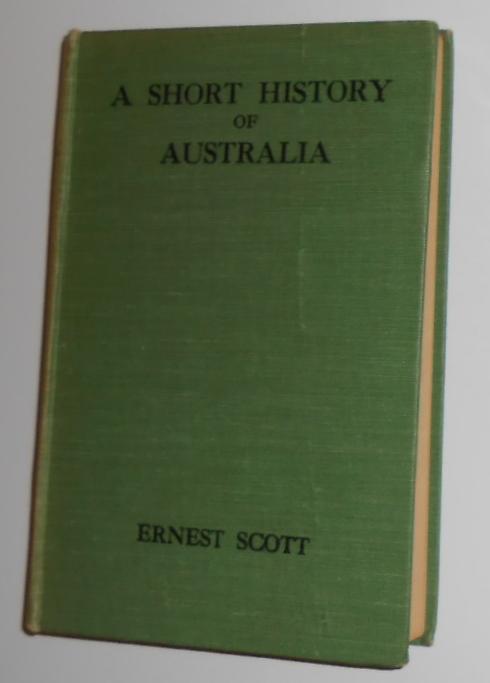
I had a realisation after reading Ernest Scott’s A Short History of Australia, that as a Professor of History at the University of Melbourne, he used a lot of fiction to write post-1770 history. So if that fiction—labelled history—has been powerful enough to form and sustain the national narrative, I’d use fiction to provide a counternarrative.
I also think that very few people ever go into a book shop and pick up a straight history book so why not entice them in with a novel? Why not invite a reader to wonder at the stories they have been told – is it fiction or nonfiction and why does it matter?
Could you please pitch the plot, themes and setting of The Great Undoing, including the idea of ‘myheresy’?
The Great Undoing is a rollicking, illegal adventure across the globe by Scarlet Friday, an Australia refugee. She is a Bundjalung woman who lives sometime in the future where the world is entirely run by a technology called BloodTalk. Her job, as a Truthteller in London, is to examine the historical record and ensure that the archive invites many voices into the record so that history doesn’t get the power to function as a monologue or as propaganda to prop up empires and power structures.
But while Scarlet is living and working in London, and in the throes of an exciting love affair with a famous rockstar, BloodTalk—the technology–comes undone and the world cannot function. Borders clamp shut, there is no access to information, music, communication.
She meets a stranger and together they sneak across the globe to get back home to Australia, each with very different motives. She grabs an old history book and writes over the top of its fading pages – her own record of the great undoing on the run. But as she records her version of history she realises that she has some difficult choices to make and truths to face. She has to reckon with her past before she can imagine her future.
Heresy is such a powerful word. People across time have been slaughtered for the ‘crime’ of heresy. I think that heresy is any story told to disrupt/dispute the homogenous metanarrative that the powerful insist is ‘the truth’. When I first wrote the word herstory (I hadn’t heard it used before, now I realise I was ignorant), I could see how much herstory resembled the word heresy, yet history holds this pretence of being the authoritative final word, at least to everyday people. That was why I left Ernest Scott’s words in the novel, so the reader can read his history and Scarlet’s heresy butted up against each other and decide which voice is more honest, more credible.
Place is very important in the novel and you describe place and Country beautifully. Could you give an example with which you are particularly pleased? Why?
Ooh that is a very tough assignment! I love the Lyrebird chapter where Scarlet describes how the lyrebirds spill her father’s secrets. How Country listens to grief and holds it safe.
I also love the two chapters that show her and her father fishing together. Fishing was a key experience of my childhood and those moments are reflected in those chapters—the lemongrass tea, the flora and fauna, the company, the love. I can’t disentangle those chapters from my own memories.
How are Scarlet and David ideals companions and/or foils?
It’s tricky to answer this without giving spoilers but I think David stands in for her absent father figure. In the bigger themes, he is the replacement that colonisation has delivered. He has an array of practical skills that have been lost by Scarlet’s generation so he has the capability to get her home. He has other secrets too, secrets that will reveal certain things to Scarlet along the way. I think that Scarlet also acts upon him and his ideas and way of being in the world.
They are foils in a sense because they see similar problems but choose to solve them very differently. I hope that there is a sense that they are an unexpected duo, yet complementary. I also wanted to deliver this idea of technologies that are convenient yet harmful. Someone designs something for connection and it is used for division – again so many religious texts and histories deliver that too. How can we choose connection?
Could you tell us about BloodTalk and Truth-Telling, songlines and language in the novel?
BloodTalk is a technology birthed out of a global pandemic that most of the world has reformed around. Essentially everything that you need to move through the world, every identity marker is inserted into your blood at birth.
This is absolutely a metaphor for the way Australia has defined, legislated, and controlled Aboriginal blood since the establishment of the colony. Blood has dictated our freedom or lack of it. What we could do and not do. BloodTalk is not new, just in a new package.
Songlines are not a cultural value that I was taught growing up. I once met a Gundungarra man who talked about his songlines as mapping the places and journeys of his life and his ancestors’ lives. There are many moments in the novel where Scarlet reclaims songlines and seeks out stories in song. I see songlines as maps but not maps to contain place, maps that connect humans and places. There’s too much to talk about in a paragraph!
Language features in the novel in many ways; stolen language, the power of language, the way language shapes us and what happens when we are forced to use foreign language, how ideologies are birthed in language and perhaps how we can tear them down with language. Who gets the power to wield language? I explore the power of words to create and destroy. As a writer I am a little obsessed with that power. Every action is in some way the outcome of a story we have told ourselves or that has been told to us. If we change the stories we tell ourselves, can we change the future?
How have you structured the novel, including its footnotes?
Nobody lives their life in linear time. Time might act like an arrow but that is not how our day unfolds. All day we live in the now, while thinking of the past and the future. We live now in the consequences of our past actions. Our present actions set up the future we will live in. We remember and reminisce. We tell stories and our memories are jogged by certain smells, etc. That is how we actually live – in a circular, or spiral relationship with time.
So, I set up the chapters in Now, Before Now, Long Before Now, Soon. I want the reader to feel a bit disoriented just like Scarlet is disoriented in the post-BloodTalk world, at least at first. I also want it to reveal that some stories and ideas are just as powerful now as they were centuries ago and maybe they always will be – for good and evil. Time is irrelevant, connection and relationship is what gives us meaning.
While Scarlet kept a ‘diary’ on the run, at its conclusion, she sits down at her desk and tears out all the pages, re-arranging them as she sees fit, to tell the story that she wants you to read, in the order she wants you to discover it. She wants power over herstory.
On the very first page—the epigraphs—where Scarlet allows Ernest Scott’s history to show through, he says;
In Australian history there are large spaces which need closer
study [. . .] It is hoped that the [. . .] [foot]notes [. . .] will assist
the reader, whose thirst is not assuaged by what is to be found
within these covers, to go to the wells and draw for himself.
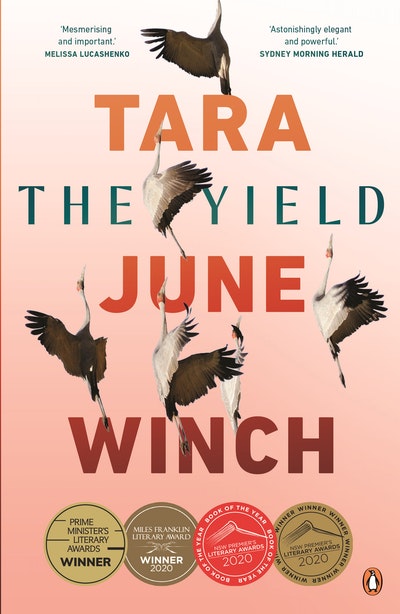
Scarlet helps the reader to do that. She footnotes, and quotes throughout, deliberately directing and engaging the reader in the act of hearing/telling/enacting history. History/storytelling is not a passive act. You have a part to play. Therefore, her heresy/truth sits within the pages of Noonuccal, Wright, Malouf, MacKellar, Langford-Ginibi, Winch, and other historical and contemporary meaning-makers. They are no more important than her. There is no hierarchy because all our stories matter and are meaningful. Not all stories are honest but they are all powerful. We should treat them carefully as Scarlet does. The physical book-object serves the main theme—to write meaningful history requires many voices. In Australia, for so long only one voice was welcome. Scarlet defies that by inviting many voices into her story, including the reader.
Why have you used intertextuality through literary works and other pieces, including The Wizard of Oz?
Whether we are conscious of it or not, all of us are the sum of the stories we tell ourselves and have been told about ourselves, or others. The intertextuality in the book actively acknowledges that. Scarlet cannot tell her own story in isolation. She cannot pretend that she entered the story as a blank slate, nor does she move through the world separate from other people’s stories. She finds herself articulated by others and there is great comfort in that truth.
What happens if I am surrounded by only one storyteller, or one set of stories, how does that affect my way of being in the world, of understanding people who are different to me? Stories connect us.
The Wizard of Oz illustrates how a worldview is a literal pair of glasses that colours how we see the world. In the Emerald City the citizens must wear the green lens, controlling how green they think their city is. Once removed, we see that the Emerald City is no more green than any other city. Yikes, it is a cutting indictment on so many things.
The actions of Oz (Australian pun intended) don’t differ much from the strategies of dictators and colonial nation builders all over. But, even though the story is named for the fraud, Dorothy and her friends are the true centre of the story—perhaps a little like A Short History of Australia.
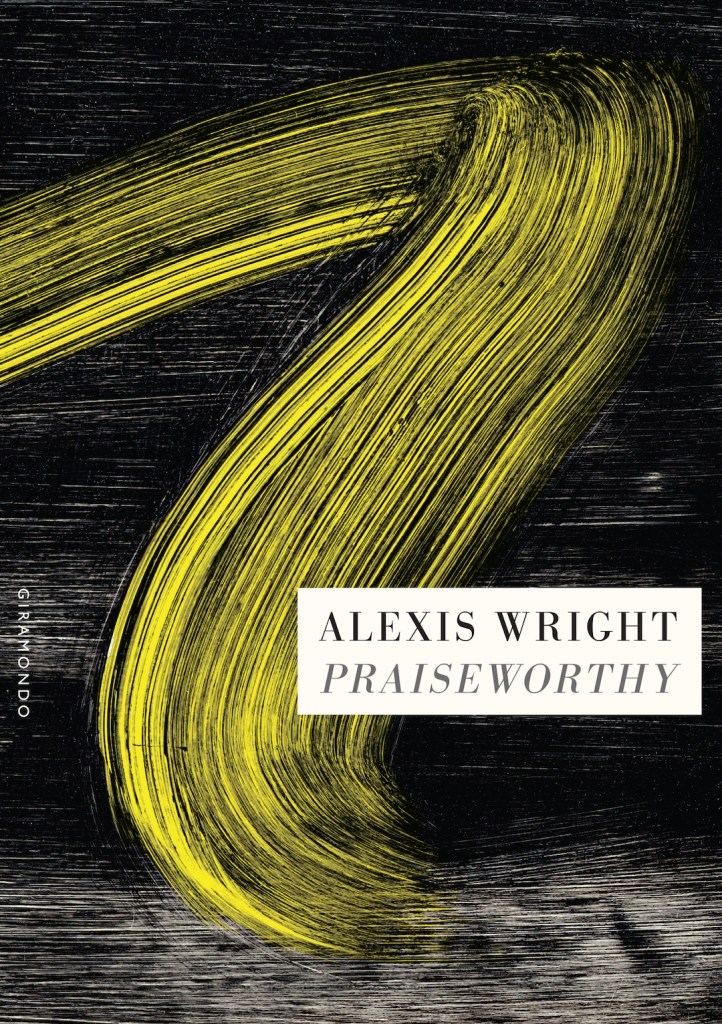
How and why have you incorporated luminaries such as Dr Miriam-Rose Ungunmerr-Baumann and acclaimed authors Tara June Winch, Oodgeroo Noonuccal, David Malouf, Alexis Wright and others?
To build on what I have said in the above question, many voices deliver more meaningful truth. Scarlet defines colonisation as the destruction of all voices except one. Her defence against that is to invite the richness of diverse voices into her own life and her story.
Why have you included Jesus’s story of The Good Samaritan?
I think that the Bible is one of the most powerful texts that has ever existed. It is used by people across time and class to inspire and justify certain ideologies and behaviours – some good, many heinous. And yet empires have hijacked so many of its stories and values for its own agendas and pretends that there is a single clear interpretation and application, even though it was written in ancient languages and into cultures that we cannot pretend to understand with certainty.
I wanted to use that to show how across time, rabbis—including Jesus, he was a rabbi—see stories and recorded instructions in the Bible as a many-sided prism with multiple meanings and applications and the idea was to view the stories from as many prisms as possible, to squeeze as much meaning out of a story as possible. It was inconceivable that there was a single meaning. In fact the job of a rabbi with authority was to reinterpret, and reapply a dynamic text, NOT diminish stories into immovable, static archives.
The USA calls itself Christian, yet its core values that inform its platforms don’t resemble its key text. It’s a pick-and-choose-your-own-verses-to-sustain-power-agendas ideology. One example; there are between 50-100 (I can’t remember, one google search says 400!) verses in the Bible about caring for immigrant/strangers/those who are displaced/are vulnerable. I don’t think there are more verses on any single topic, than that one. How do nations that pretend to Christian values have such a woeful record in those areas? Why isn’t the President of the USA thumping his fist on lecterns about expansive care for those people? It’s not Christan yet has redefined the word so that now the USA version of Christian has become Christian.
I think David’s outburst about the doctrine of hell illustrates this perfectly. Go read it (p. 265)! It’s a rejection of empire-building logic.
I’m intrigued by Scarlet’s comment, ‘… a villanelle isn’t only a house of sorrows. It’s also called a room of marvels.’ Could you tell us more …
A villanelle is a poem written in a specific traditional form. In the Cambridge Companion to Creative Writing I stumbled across a wonderful expansion of the word villanelle—
The villanelle, to borrow André Breton’s phrase, ‘is a room of marvels.’ Perhaps, given its preoccupation with the repetition of phrases, so characteristic of a mind in grief, it might well be a little house of sorrow. Its power derives from the braiding of two lines that are repeated throughout the poem, always at a small remove, until the fated couplet locks together in an epiphany. It works not on forward movement but on inevitability. The meaning of the word is both.
Again, an illustration that language is not singular. Scarlet’s beloved friend Sam defined her by the sorrowful version of a villanelle. She rejected the narrow definition and left room for herself to simultaneously embrace both sorrow and marvel. She is not one thing, but many.
What do you hope readers take from this book?
I hope they think it’s a beautiful story with beautiful moments and beautiful sentences. That even in all the ugliness, our humanity and our connections with each other and the world is infinite and meaningful.
I also hope that they see that it is a love story between Scarlet and herself, her Country, her family, her friends, her stories, and Dylan. That even in our greatest of undoings there is love and beauty on offer if we connect with each other and our stories. If we change the stories we tell about ourselves and others we can change our futures. That sounds a bit earnest, but I believe the only way to build a good future is to create stories about it first.
What are you writing now or next?
I’m working on my next novel.
Through a Glass, Darkly examines the agency of place to hold and value multiple stories simultaneously. The novel re-members dismembered bodies and memories and histories to interrogate the politics of collective memory and deliberate forgetfulness. I hope, fingers crossed, that it’s a gothic undoing of the great Australian novel set in France, haunted by colonisation, but another love story of self and family that thrives despite the liars who try to elevate only selective stories in the public memory.
I’ll deliver it to my publisher in February 26.
‘Sometimes the truth doesn’t make anything better. But it always makes it clearer.’ (The Great Undoing)
The Great Undoing by Sharlene Allsopp at Ultimo Press


