
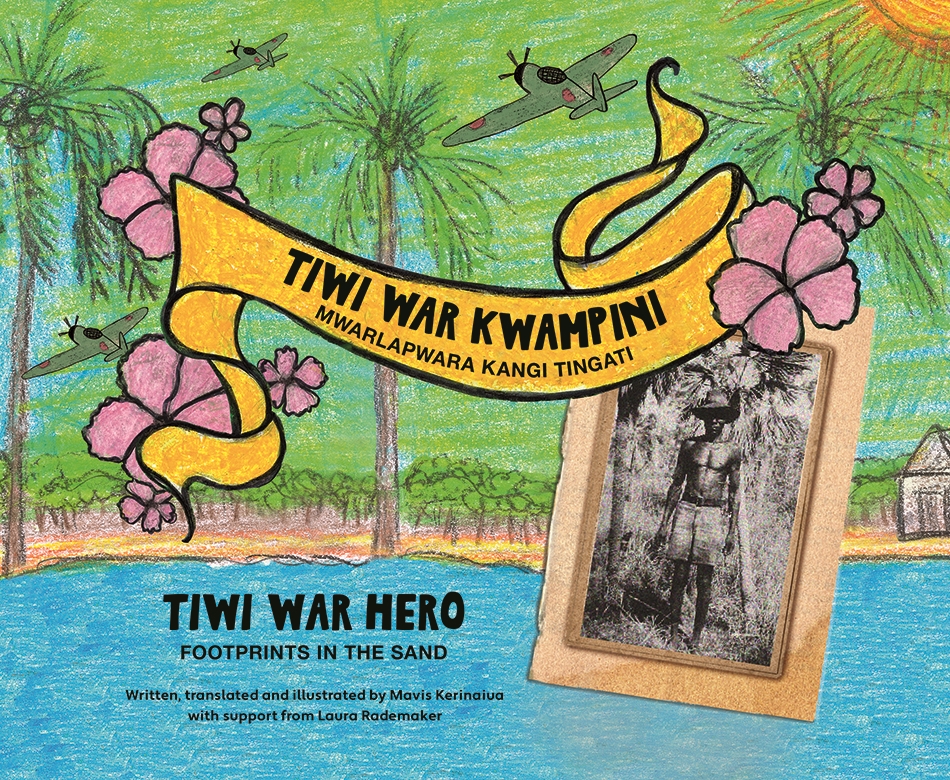
Tiwi war kwampini: Mwarlapwara kangi tingati (Tiwi War Hero: Footprints in the Sand) by Mavis Kerinaiua
Tiwi War kwampini: Mwarlapwara kangi tingati (Tiwi War Hero: Footprints in the Sand) written, translated and illustrated by Mavis Kerinaiua with support from Laura Rademaker
(Published by the Indigenous Literacy Foundation)
Disclaimer: Please be advised that this story contains images and names of people who have passed away, provided with permission of their families.
Thank you for speaking to Paperbark Words blog, Mavis.
This is a very important and heroic story. Thank you for bringing it to a wider audience as a picture book.
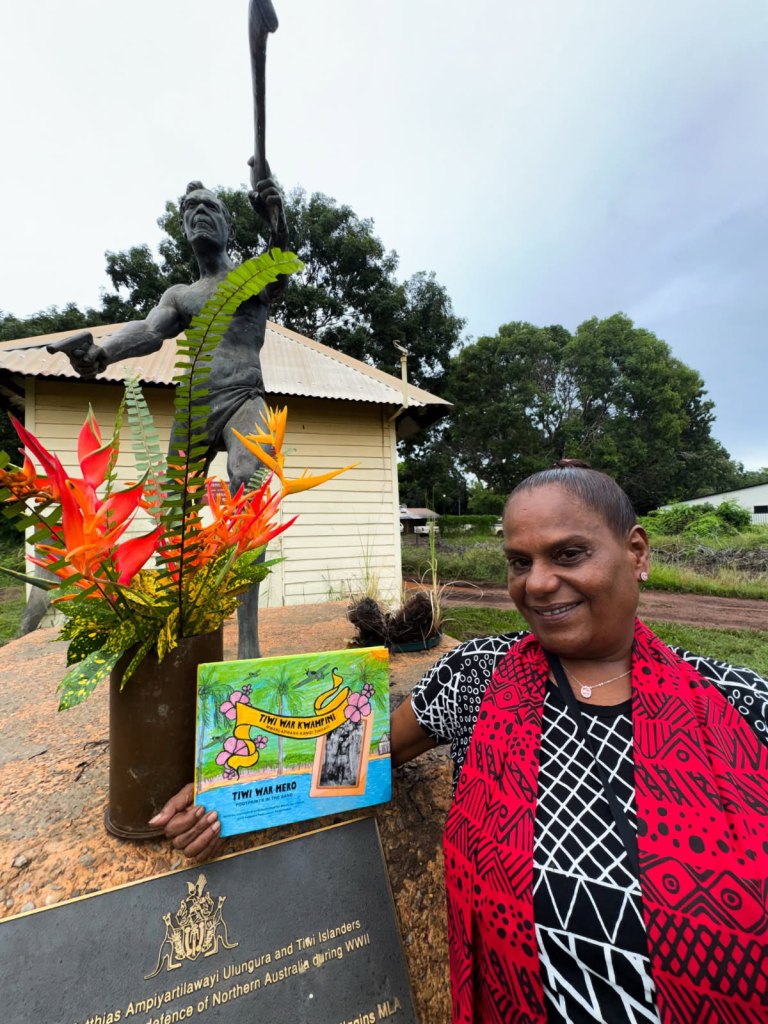
Could you please explain the three parts of your title?
- Tiwi War kwampini: Mwarlapwara kangi tingati
This is Tiwi for ‘Tiwi War Hero: Footprints in the sand”
2. Tiwi War kwampini = Tiwi War Hero
3. Mwarlapwara kangi tingati = Footprints in the Sand
‘Footprints in the sand’ is about leaving history, a legacy. It’s sentimental. It makes me think of leaving a mark in history, like tracks for us to follow, because we follow our ancestors in terms of leadership and looking after Country.
It’s important to share the stories to the younger generations, for relationships, kinship, so that the children know they belong to those heroes that worked for their Country.
Mavis, which part of the creating of the book did you most enjoy – writing, translating or illustrating?
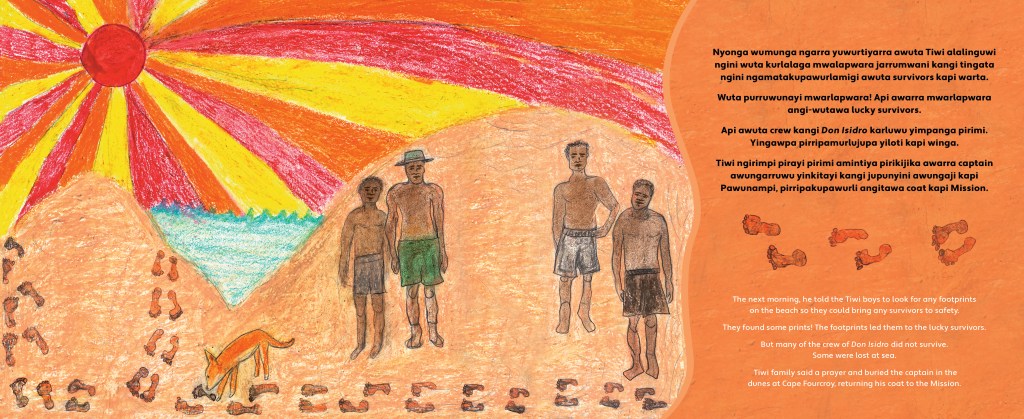
I loved all of it because of the story behind it. But my favourite part, if I had to choose, was illustrating. My favourite drawing is where they found the footprints.
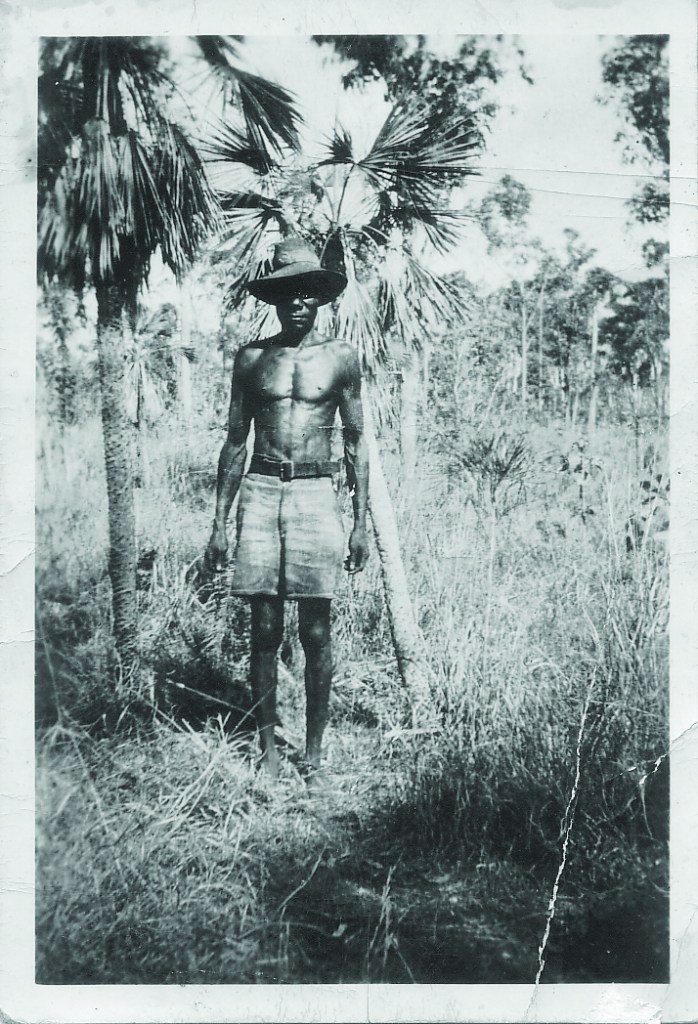
What is the most important thing we should know about your grandfather, Louie Purraputimali Munkara and the role and contribution of the Tiwi people in WWII?
That he was a Traditional Owner of Jikilaru and he defended the Country. He was a strong Tiwi leader.
How important was the role of the church and the Father in helping the people?
It was very important. The courage of the Tiwi people and Father McGrath and other Sacred Heart Priests was incredible. The priests stayed back and helped Tiwi while others evacuated.
What did the Tiwi people do with some of the American plane parts they salvaged?
I’m not sure what they did! I think they kept as much metal as they could reuse for other things. After the plane was salvaged, it was pushed off the cliff into Apsley Strait.
How have these events affected the Tiwi people into the future?
The trauma of the war did affect the Tiwi people, especially having to rebuild. Some of that trauma is still felt. But we’re also inspired by the bravery, the courage of those people looking after our Country. That also stays strong today.
What is something extra that the QR code tells us?
This is where you can listen to the audio. I recorded myself reading the book in Tiwi and English so you can listen.
Dual language is an important part of the book. Are there words in Tiwi that you use in the book that are very similar or very different to English?
The book uses a mixture of ‘old’ and ‘modern’ Tiwi. The ‘modern’ Tiwi is so that young people can understand it. I tried to keep the translation in Tiwi as exact as possible to the English. The Tiwi matches the English.
Your page composition is very interesting. On the first double page, what do the anchor and rainbow and red rocks mean?
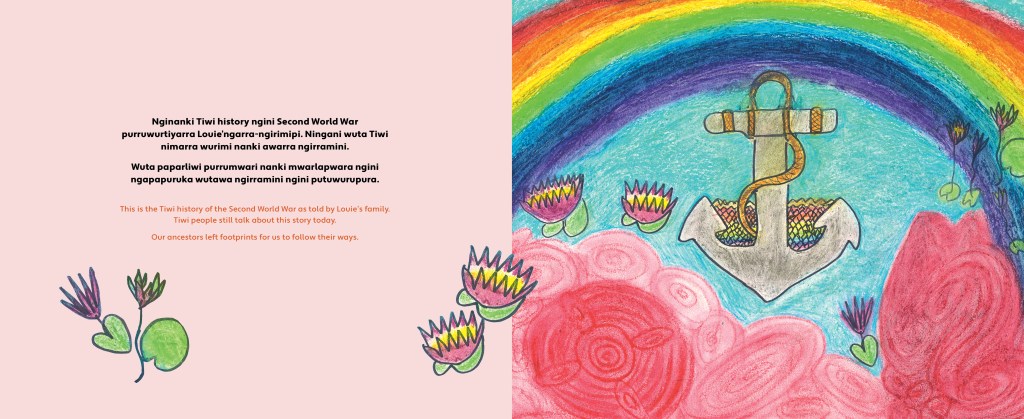
The rainbow is Ambiji, the Rainbow Serpent. Mangatu Lake, Louie’s Country, is where the Ambiji lives in the Dreamtime. The waterlilies are from Mangatu Lake too.
The anchor represents how strong the family is and Louie’s work around the wartime, especially with the ships. Today it’s also used on the football jersey for the Jikilaru Dockers! The anchor is a symbol for Jikilaru family.
The red rocks on this page are the Red Ochre, that was Louie’s totem.
What medium have you used to illustrate?
I used oil pastel crayons to make the colours bright. This was challenging – I should have stuck with watercolours! But I’d never done that.
What is behind the book’s dedication?
Ruthie was my mother. She was only a child when the war came, so it’s a children’s book for her.
What do you hope children learn or remember about Tiwi War kwampini: Mwarlapwara kangi tingati (Tiwi War Hero: Footprints in the Sand)?
I want Tiwi children to remember that it’s their family that defended Australia and to take on that leadership role in looking after Country.
Tiwi war kwampini: Mwarlapwara kangi tingati (Tiwi War Hero: Footprints in the Sand Footprints in the Sand) at the Indigenous Literacy Foundation
Other books about the Tiwi Islands at Paperbark Words blog


