
40 Years of Magpies Magazine: how children’s literature has changed by Joy Lawn
Feature article (reproduced with permission)
Magpies Magazine has always endeavoured to live up to its welcoming subtitle, ‘Talking About Books for Children’. It is now celebrating 40 years of professional, enthusiastic and faithful chronicling of Australian and other children’s literature with the purpose of getting books into the hands and hearts of children.
After four decades of continuous publication and now the only surviving (and thriving) hardcopy journal about Australasian children’s literature, Magpies is a hub for retrospective and current reflection and commentary on the power of the written and illustrative world through literature.
Through its longevity, ‘finger on the pulse’, and expert voices in communion with its highly valued readers, Magpies has formed a community itself. This manifests in an emanation of goodwill towards Magpies that radiates back to creators, industry and education professionals and all who love and share books.
Before you read further, why don’t you stop and reflect on changes you have witnessed in children’s literature. That is how I approached the framework and general content of this piece before commencing any research or interviews. However, please appreciate that we can only skim the surface in exploring some aspects of the past 40 years in this space.
Despite some changes, the core of Magpies has remained the same, as recounted by Jenny Stubbs, awarded trailblazing children’s literature promoter and Dr Robin Morrow, founder of the first children’s bookshop in NSW. These are two of several authorities, stakeholders and creators who have contributed to this article. (Disclosure: to form a broad cross-section, others were invited but unable to participate)
Recently I rediscovered my copy of the first issue of Magpies … The publication was based at The Singing Tree, a dedicated bookshop for children’s literature in WA. Note in the Editor’s Comments that the public were concerned about standards of literacy at the time, although research actually showed it had not dropped. The aim of the journal was to not only show what new books were being published but also ways of using books, articles on reading, authors and illustrators and bookshops specialising in children’s books …
When comparing this first edition with the most recent copies, the structure remains very similar to the first journal except it was about half the size. Reviews of books by Australian creators were indicated with the magpie image as they are now, but the majority of books reviewed were by overseas authors and publishers. This is 40 years after CBCA began to promote the Australian book industry, teacher-librarians were now well established in most schools, CBCA branches were becoming more active and more books by Australian authors were being published. Jump ahead another 40 years and most reviews and articles now focus on Australian creators published by Australian publishers with a special section dedicated to New Zealand publications and news. (JENNY STUBBS Director StoryArts Festival Ipswich, President Book Links Qld Inc and Ipswich District Teacher-Librarian Network, Coordinator CBCA Qld Readers Cup)
It’s hard to recall life before Magpies. My memories reach back to discussions at the IBBY/Loughborough Congress in Perth in 1985, which led to its gestation. It was exciting to welcome this magazine both readable and authoritative, showcasing Antipodean books but informing us of imported ones as well.
As an avid subscriber, reader and contributor to Magpies, I note some major changes over its forty-year span in the world of children’s literature. These include the increasing dominance of local titles; the now-thriving crop of books by Indigenous creators; the continued flourishing of picture books, though expensive to produce; and growth in number and range of YA fiction and graphic novels. Regrettable changes include the society-wide increase in distractions for young readers and their parents from books; eroding of influence of teacher-librarians and school libraries (disrespected or even abolished); challenges to survival of independent and knowledgeable booksellers; and an apparent mantra in some publishing circles that books for kids need to be in series, preferably by celebrity authors.
My hope is that Magpies will continue as a journal full of discerning reviews and in-depth articles which will fly the flag for quality books to entertain, enrich and empower young readers in future generations. (DR ROBIN MORROW AM Critic, former bookseller, Life Member IBBY Australia)
CREATORS and DIVERSE VOICES

A plethora of Australian children’s literature legends were published 40 years ago in the 1980s. Paul Jennings, Emily Rodda, Alison Lester, Bob Graham, Mem Fox, Graeme Base, Margaret Wild, Libby Hathorn, Jeannie Baker and others are still creating. Other luminaries include Ann James, Victor Kelleher, Robin Klein, Libby Gleeson, Jane Tanner, Julie Vivas, Junko Morimoto, Pamela Allen, Alan Baillie and John Marsden.
Diverse author and illustrator voices existed in the 1980s, although the prevailing influence was Anglo-Australian (Saxby, M. The Proof of the Puddin’, Ashton Scholastic,1993) but, following global and societal trends, alternative voices have become increasingly prevalent. First Nations, multicultural, LGBTIQA+, people with disabilities, diverse thinkers, representatives from disparate religious and anti-religious groups, and others can be found.
#OwnVoices was a popular umbrella hashtag originating in 2015 (a term since fallen from favour) that referred to people writing their own stories. Those writing or commissioning books now are more attuned to risks of appropriation and offense and generally ensure that people tell their own stories. Sensitivity readers are integral, as is continued awareness and heralding of unheard or underrepresented voices.
To focus on one of the groups mentioned above, our First Nations people have rightly been given many more publishing opportunities by Magabala Books, since bolstered by mainstream publishers. Their voices are reaching wider audiences and achieving awards recognition.
When I started in this industry over 2 decades ago there weren’t as many diverse titles as we have today. Now, everyone has a story.
As Australians, we were often influenced and favoured the publications coming out of the U.K. and often ignored our own stories.
And now, just in the last 10 years for example, there has been a meteoric rise in titles from Indigenous creators. (DUB LEFFLER is a Bigambul and Mandandanji Aboriginal storyteller and book illustrator)
Children’s picture books in Australia have undergone dramatic changes over the last 40 years. In the past decade, Indigenous stories have taken a more central role in shaping the narrative of Australia.
When I first started teaching, there were very few high-quality picture books that explored the diverse stories of Indigenous Australia. At that time, we mostly saw beautiful Dreaming stories and the occasional biographical text, but contemporary Aboriginal experiences were largely absent. Today, books are being created from a variety of language groups, reflecting lived experiences and incorporating Indigenous languages into the storytelling. Modern Australia prides itself on being a multicultural nation, but for a long time, the approach to storytelling was heavily influenced by an English-centric perspective. Now, however, we are witnessing the richness of our diverse population reflected in our stories.
That said, I feel the industry remains reluctant to publish books that push boundaries in the way that works like Margaret Wild’s Let the Celebration Begin did. These powerful, thought-provoking books that tackle difficult subjects in ways accessible to both children and adults are incredibly important.
Looking forward, I hope publishers will embrace more of these challenging, meaningful books—those that linger in the mind long after they’ve been read and re-read. (JASMINE SEYMOUR is a Dharug author-illustrator from the Hawkesbury and twice winner of the Prime Minister’s Literary Award)
BOOK CONTENT, ISSUES and THEMES
Book content and themes continue to reflect, and even forecast, society. Environmental issues of climate change remain one of the most pressing concerns. Content in the 1980s explored pollution and conservation, which is now often specifically translated into action for sustainable, ethical living. The ‘broken families’ of the 80s are now more often blended, co-habiting families, and domestic violence is exposed. Prior focus on external, global wars has been largely superseded by internal battles of mental illness and anxiety, accelerated by climate worry and the pandemic.
BOOK CATEGORIES and FORM
Picture books While traditional illustrative media is still used, digital illustration tools have been refined, validated and more widely utilised. Picture books are well-established across the age spectrum from birth to eighteen years. Many are world-class and the best can be regarded as works of art. Creators such as Freya Blackwood, Matt Ottley, Bob Graham and others continue to produce exceptional work.
Series Fiction proliferates (see my Editorial in Magpies May 2024) and is of uneven quality but the current best-sellers aren’t reaching the sales levels of Andy Griffiths and Terry Denton’s early Treehouse series. Why are we losing readers at this readership stage?
While we still have quality novels for children, is there some ‘dumbing down’ of books for children at the chapter book reading level? Are many children now reading at a lower level?
Young Adult (YA) has had a massive impact on the market in the last three decades (and from 2010 I received generous space and freedom to review it regularly for The Australian newspaper).
‘Kingmaker’ and independent publisher Walter McVitty published John Marsden’s first novel, So Much to Tell You in 1987, preceding his phenomenally influential ‘Tomorrow’ series. Since publication of Marsden’s books and Melina Marchetta’s Looking for Alibrandi, YAhas enjoyed a strong run of contemporary realism featuring important issues and sometimes lyrical prose, but the market seems to have generally narrowed to the commercially popular speculative fantasy and dystopian genres. However, works by diverse voices such as Jared Thomas, Will Kostakis and Ann Liang are cementing their stake in realist YA.
When I look back at how far Australian young adult fiction has come since I was in high school, it excites me about what’s now on offer to young people… I’d fallen into Australian young adult fiction reading as part of a monthly segment I created on a national radio programme … and continue to search out the latest Australian young adult fiction. I can immerse myself in an experience that isn’t my own or learn about the world from another diverse perspective. The fact that as an Indigenous reader, I can now pick up YA books written by Indigenous authors blows young Rhianna’s mind. There were few books when I was younger where I saw myself reflected back to me or the experience of what I was living in my small remote town. I’m glad that’s changed and young Indigenous people can actively pick up a book by an Aboriginal and Torres Strait Islander author now. (RHIANNA PATRICK is aTorres Strait Islander, freelance journalist and former QLD Rep. of LoveOzYA)
Middle Fiction (Middle Grade) While much contemporary YA has diminished (and some authors moved to writing for adults or children), middle fiction is filling some of the gap. We are currently seeing high quality novels for older children and young teens.
Graphic Novels and Verse Novels We’ve been experiencing a wider acceptance and proliferation of graphic novels, particularly since the early 2000s when it was the foremost topic I was asked to speak about at conferences. They vary in quality but alongside verse novels, and to a wider extent, are perhaps the best platform for showcasing experimental writing and illustration.
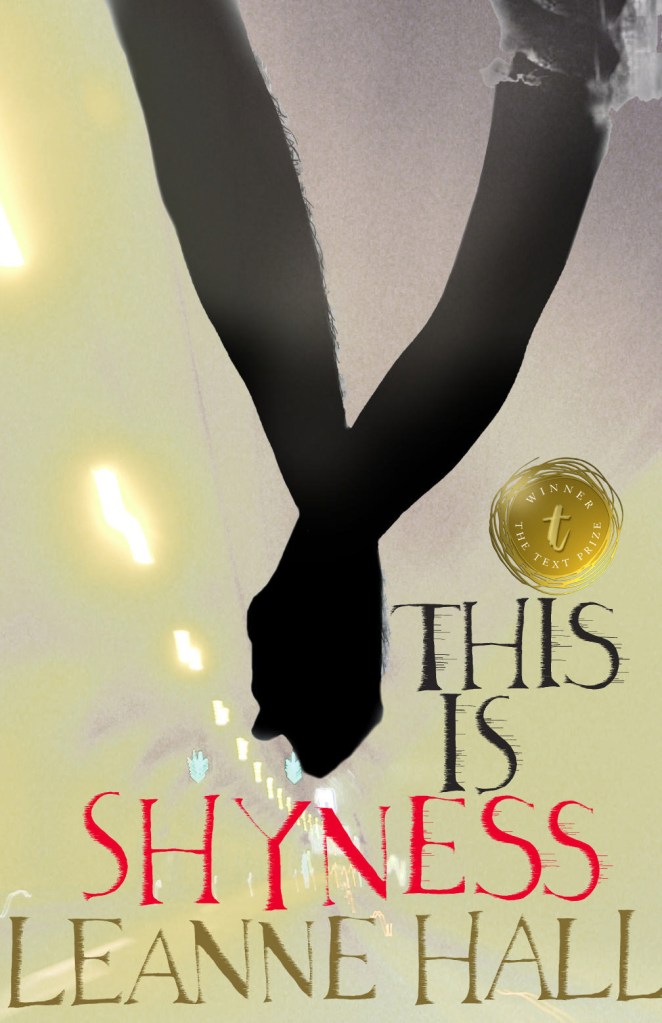
This leads to my observation that we seem to have passed a heyday of Australian experimental, avant-garde fiction. Some creators are still playing with postmodern and metafictive techniques and other literary devices but writing style generally seems to have become more conformist, and publishing is ‘safer’. Would Leanne Hall’s (2010) This is Shyness or Iris the Tiger (2016) or Kidglovs (2015) by Julie Hunt and Dale Newman be published today? The market is now conservative due to costs and a decline in readers.
Non-fiction and narrative non-fiction for young readers is an area to watch for its improved quality and diversity of form. I’m describing more books as ‘literary non-fiction’.
BOOKS AND PUBLISHING INDUSTRY
Farsighted and influential specialist children’s book editors and publishers, and designated publishing departments and houses of children’s books were established in Australia in the 1980s. Among these were Robyn Sheahan-Bright and Leonie Tyle’s Jam Roll Press (acquired by UQP in the 1990s), Omnibus Books (acquired by Scholastic in the 1990s), Walter McVitty Books (acquired by Lothian then Hachette) and Margaret Hamilton Books. Children’s publishing continues to fluctuate, with recent departures by prominent editors and publishers and further acquirements (most recently Text by PRH) destabilising industry confidence.
With the closure of notable independent children’s-only bookstores (except for Australia’s first, The Little Bookroom in Melbourne and a scattering of others (and, from an educational perspective, the loss of school libraries and teacher librarians), the industry and profession are looking shaky. Highly competitive and with few available jobs, it is almost impossible to get a foot in the door in publishing and, once there, remuneration is usually poor.
Publishers, bookstores and authors and illustrators are subsidising the cost of children’s books. One of our eminent book creators bemoaned privately to me about the miniscule amount of money they receive for each copy of their book sold.
Dr Belle Alderman from the National Centre for Australian Children’s Literature also makes the point that, New and emerging creators find it difficult to ‘break into’ publishing although SCBWI, literary agents and opportunities to ‘pitch’ works to publishers exist. Self-publishing is another way forward.
So generally, it’s difficult to enter the industry as a creator or industry professional and, once there, it’s hard to remain. Like most careers in the arts, rightly or wrongly, we do it ‘for love’. It’s often more a vocation than a sustainable career path.
AWARDS
Congratulations to the CBCA, which is celebrating its 80-year anniversary. There is much anecdotal feedback to suggest its award shortlists and Children’s Book Week activities significantly increase book sales and possibly book longevity. There is a plenitude of awards but it’s unclear how others are impacting sales. Equally significant is the cultural effect of awards that bring books to the attention of educational institutions and families.
Magpies has always been at the vanguard of advertising and supporting children’s fiction, in promoting and nurturing children’s authors and encouraging children to be involved with stories, books, and the fun and excitement of their literature.
Magpies fills a very important niche. It has helped to oversee the growth of a fledgling Australian local children’s literature world into the rich, global industry that it is today, even though this industry reflects a very different world from where we were forty years ago.
I find it reassuring that books are still being published for children and that these books are being promoted and discussed and recommended for kids to read and share. It is so very heartening, to learn of new authors being nurtured, of new titles being published and of a younger team of enthusiastic fans of this often-under-appreciated genre.
Magpies has had a big part in all of that growth. (RUSS MERRIN Magpies reviewer)
PROMOTION
Publishing houses have publicity and marketing departments and bookstores run events but increasingly authors and illustrators must publicise their own books through book launches and the like, the school and festival circuit and social media. The personal letter-writing of the past is not enough (although still commendable). Creators need to be performers, which suits celebrity writers, those with brands and extroverts, but is challenging for the many introspective toilers trying to find space in the public sphere.
Technology How young people read has obviously changed dramatically with the use of screens, e-readers and audio books. Tomes have been written elsewhere about this topic.
Online and in-person book and creator promotion (including book reviews) has snowballed through websites, databases, Substacks and socials by bloggers, bookstagrammers, booktubers and podcasters. These span the highly professional to the more conversational.
Book talks, books clubs and word-of-mouth are old-school but remain surefire ways of getting young readers excited about books.
The general loss of review space through mainstream newspapers is regrettable but Walter McVitty, children’s book reviewer for The Australian and The Age/Sydney Morning Herald in the 1970s and 80s commented that it “was limited” even then. (McVitty, W. A Life in Children’s Books, Lothian Books,2005) We need to support existing platforms and seek other innovative opportunities in the future.
If my knowledge of publishing history has shown me anything, it is that there have always been both fears of change, and opportunities celebrated in it. In the early twenty-first century, the growth of new technology and the internet appeared to predict the death of print and the supremacy of ebooks. Both still co-exist. But who knew that audible books would become such a big thing in the 2000s? Several publishers have come and gone, or merged with larger companies, but there is still an obvious appetite for championing children’s books, that has driven the establishment of new imprints. Online book sales, spearheaded by global companies such as Amazon, have grown enormously, but that development has also been incorporated in the business models of independent booksellers, which have more than pulled their weight in this market creating online and in-store author events, book clubs, and other strategies. (DR ROBYN SHEAHAN-BRIGHT AM President, IBBY Australia and Deputy-Chair, ACLF)
ALLIED INIATIATIVES
Among other allied initiatives, I will mention two that were inaugurated in 2011: the Indigenous Literacy Foundation and the black&write! Indigenous Writing Fellowships. As well as the seminal Australian Children’s Laureate Foundation, these organisations are positive, successful milestones in the changing landscape of the Australian children’s literature world.
TRANSLATION and INTERNATIONAL RIGHTS
Several contributors have referred to the importance of translation and international rights in raising the profile of Australian books world-wide.
ACKNOWLEDGEMENT and LEGACY
Final reflections and tributes follow from Jon Appleton and Allison Paterson as well as Dr Belle Alderman, some of Magpies’ longstanding, valued contributors and supporters.
The children’s book world knows and values Magpies especially its longevity, historical perspective, earlier commentary, range of reviewers, and articles giving valuable insights into writers and illustrators. Many of the reviewers have a long association with Magpies, giving us their valuable insights over many years. We Magpies readers come to know these reviewers and writers of articles. We greatly appreciate their knowledge and expertise. Profiles of creators and articles on particular topics are always appreciated. (DR BELLE ALDERMAN AM, Emeritus Professor of Children’s Literature, Director, National Centre for Australian Children’s Literature Inc))
Magpies offers context and continuity. With so much speculation about creative work being original, it’s vital to have a space to explore the origins of ideas and how they develop into their ultimate forms. It’s important to record how artworks are made – how media and technique are chosen or arrived at. And while it’s essential to give space to new voices, with new vocabularies to talk about writing and illustration, I value most of all Magpies’ seasoned contributors, some of whom have been writing for forty years or more, who can take the long-term view as well as the short-term perspective when it comes to reviewing books and making assessments on their deserved longevity (or not!). (JON APPLETON, freelance editor and writer)
For four decades, Magpies has consistently stood at the forefront of the evolving landscape of Australian and New Zealand children’s literature, playing a major role in the diversification and adaptation of our unique industry. Promoting and reviewing new releases, liaising with publishers and creators, raising the voices of emerging creatives and honouring the talents of our literary legends, Magpies has persistently adapted to varied economic climates and social change, while staying true to the evolving needs of readers. Through unerring vision, energy and dedication, Ray and James Turton gave wings to Magpies and empowered our industry’s trusted journal to soar. Congratulations! (ALLISON PATERSON Author, teacher librarian (ret’d), publishing consultant, Magpies contributor)
Thinking ahead, it is timely to hear from Magpies’ youngest regular reviewer and writer, Brenton Cullen.
And now celebrating 40 years of Magpies, where will they go in the future? Perhaps a social media presence? Maybe digitising the back issues? … And why shouldn’t Magpies be sold at newsagents around Australia? Whatever happens, it is vital we all continue to spread the word about Magpies. Support it, share it, discuss it, recommend it – and keep doing what Magpies has always done best: talk about books for children. (BRENTON CULLEN)
Despite the ‘headwinds’, Magpies Magazine has secured longevity and reputation by maintaining focus and high standards. It has been my privilege and pleasure to write for Magpies for the past 20 years and the editorial in recent years. We sincerely thank the Turton family for their vision and perseverance and to James as current editor.
Together we are all part of an important, inspiring and ‘uplifting’ community. Let’s catch the ‘tailwinds’ to fly high into an exciting future in children’s literature!
(Joy Lawn is a book advocate and judge who has been consultant for an independent children’s bookstore, blogs at Paperbark Words and is a freelancer in the industry.)


