
Spotlight on Jo Dabrowski
Inside the CBCA Shortlist
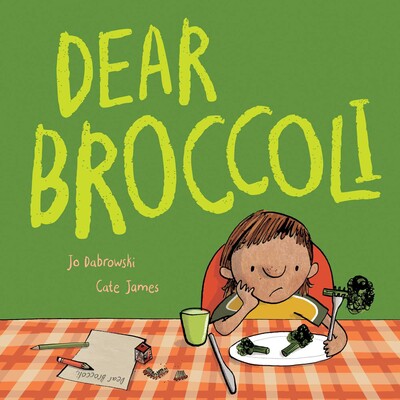
Dear Broccoli Shortlisted 2026 CBCA Picture Book of the Year
Written by Jo Dabrowski, Illustrated by Cate James (Affirm Press)
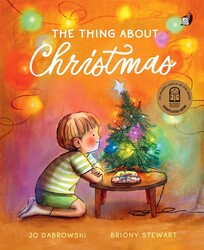
The Thing About Christmas Shortlisted 2026 CBCA Early Childhood
Written by Jo Dabrowski, illustrated by Briony Stewart (Little Book Press)
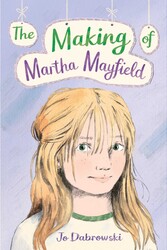
The Making of Martha Mayfield Notable Book 2026 CBCA Young Reader
Written by Jo Dabrowski (Affirm Press)
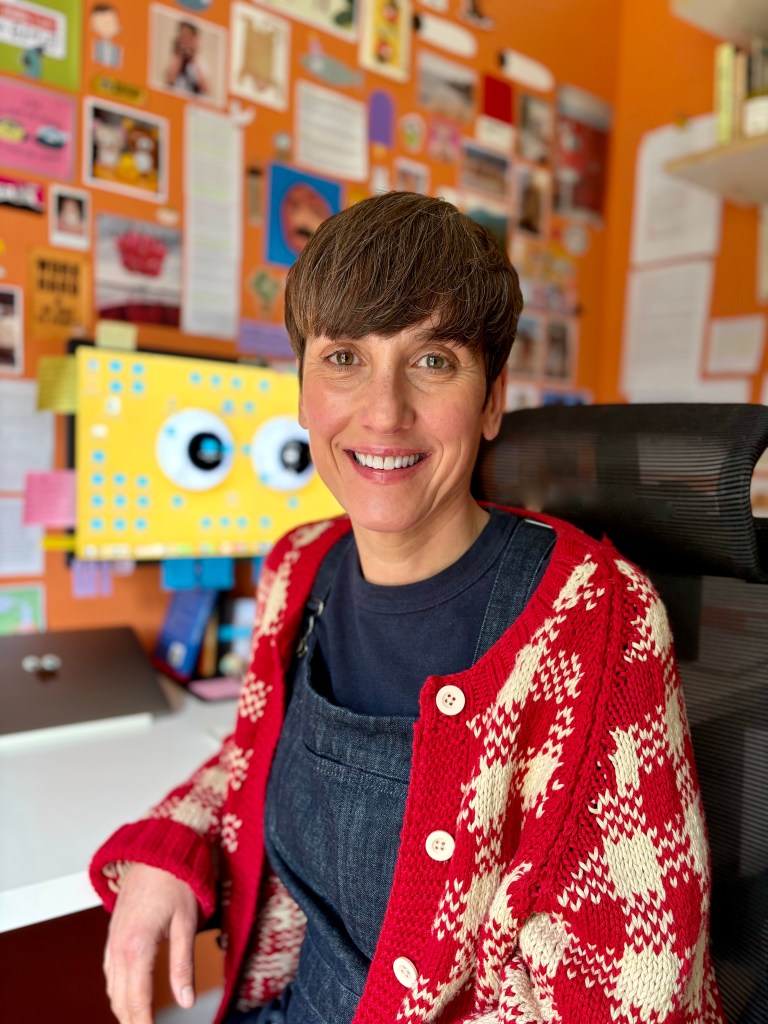
Author Interview: Jo Dabrowski
Thank you for speaking to Joy in Books at PaperbarkWords blog, Jo.
Congratulations on having two picture books shortlisted for the 2026 CBCA awards: one in the Picture Book of the Year category and one in the Early Childhood category, as well as a third book, a novel, being a notable book in the Younger Reader category.
Your books are full of wit and wisdom.
How have you been celebrating?
Thanks Joy. On the evening the shortlist was announced, I celebrated by having pizza out with my husband and our two boys. And the pizza even had broccoli on it! But I’ve also been doing a bit of internal celebrating by trying to use the CBCA stickers to silence my inner critic, or at least turn the volume down for a little while.
Where have you sprung from? As such a good writer, how have you stayed under the radar until now?
That’s such a kind question, I definitely don’t feel like I’ve ‘sprung’ from anywhere and I promise you I didn’t stay under the radar on purpose! I worked as a copywriter for many years, both in Melbourne and later in London, then, after having time off to raise my boys, I knew I wanted to get back into creative work without having to go back into an advertising agency.
I guess, like most writers, I spent a long time quietly beavering away at my ideas in the hope that one day they’d be published. I’d be lying if I said I wasn’t hoping that CBCA recognition would eventually come, I remember staring at those shiny stickers on book covers in my primary school library. It’s been a huge honour to be recognised this year.
You’ve scooped the pool with picture books for early childhood (The Thing About Christmas) as well as for school age (Dear Broccoli) and a novel for older children (The Making of Martha Mayfield). What are the unique features or challenges in writing for these divergent readerships and age-groups? Could you tell us something about the different styles you’ve used?
‘The Thing About Christmas’ is written in lyrical rhyming verse and uses a bit of repetition. It’s exactly the kind of book I would have enjoyed reading aloud to my boys when they were younger.
It’s very different to ‘Dear Broccoli’ which is told through an exchange of letters between a broccoli-hating boy and his vegetable nemesis. Frank’s slightly surly tone came easily to me. (Which might be a concern.) But I also had a lot of fun imagining Broccoli’s voice and had some interesting conversations with my editor about not making him too annoyingly professorial. Hopefully I struck the comedic balance between the two.
‘The Making of Martha Mayfield’ is written in first person, from Martha’s perspective. We not only get to hear all of Martha’s innermost thoughts and feelings but, because Martha has made a paper version of herself, that she uses to imagine how she wishes she could be, we also get to hear another, much pluckier version of Martha.
Writing for different readerships means I never feel bored. I can have a middle-grade manuscript on the go and when I need a break from it or if it’s with my editor, I dip into a picture book idea.
How do you put yourself into your characters?
With ‘The Making of Martha Mayfield’, it was more a case of how do I stop putting myself into my characters! Although the scenarios are fictional, I drew on a lot of my own anxieties about opening up, sharing ideas and taking risks. As well as the frustration that, quite often, the loudest, most confident people in the room enjoy most of the attention and rewards, even if they’re not always deserved.
Martha is in Grade Five and I feel particularly attached to those upper primary years. It’s a time that I remember clearly. I was ready to be someone else, but didn’t feel like I could do it at primary school. I couldn’t wait to start afresh. Sometimes I draw on feelings that I remember having, but really, I never have to go too far back in time. I’m still having those feelings today, I’m just a little better-equipped to deal with them. But my characters are always braver than I am!
Your characters show different way of thinking, behaving and doing (or ‘making’ in Martha’s case). What is your interest in ‘difference’?
I suppose, like lots of kids, I felt different when I was growing up. My parents were immigrants, they spoke with thick accents, my mum is a dressmaker and made most of our clothes. I had that classic internal struggle of wanting to be special and unique while, at the same time, wanting to be exactly like every other girl in my class.
I took great comfort in reading books about characters that didn’t fit in. I especially loved Anne Shirley, for her red hair, her bad temper and for not being at all like Josie Pye. I read ‘Anne of Green Gables’ over and over again. I hope there are readers finding the same comfort from some of my characters.
Your characters are creative. What do you wish everyone knew about creativity or being creative?
I’d like children to know that any ‘difference’ or ‘weirdness’ that they may currently feel is exactly what makes them wonderful. Those qualities are inherent to creativity. We all appreciate books, film, songs, paintings that we haven’t seen before. We don’t want our artists to make cookie-cutter work. We talk about art that ‘breaks the mould’. We’re always on the lookout for ‘different’ and ‘unique’ and ‘new’.
To children I’d like to say, embrace your inner ‘weirdo’. Don’t worry about what’s been done before. Make or paint or write or even just dress in a way that isn’t expected. I promise, people will admire you for it. Even if they don’t say so to your face.
You’ve written a whole picture book about broccoli. Dear Broccoli is hilarious, supremely clever, subliminally educational as well as entertaining, and loved by children and adults. Martha Mayfield, in your novel The Making of Martha Mayfield, hates broccoli pasta. What’s your own view on broccoli?
Having two books come out in the same month that both featured broccoli was completely unintentional. It wasn’t until my editor, Coral Huckstep, pointed it out while we were working on ‘Martha’ that I even noticed it.
Broccoli is my favourite vegetable. My husband does a delicious broccoli pasta that I love, and I love broccoli on pizza. I only wish my younger son agreed.
You channel interesting grandparents in your books? What are some of their idiosyncrasies?
In ‘Dear Broccoli’, Frank’s grandpa only eats things that are brown.
In ‘The Making of Martha Mayfield’, Martha’s grandmother is obsessed with Michelle Obama.
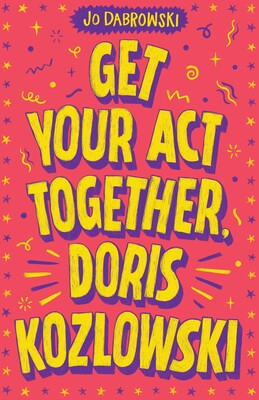
And in my first novel, ‘Get Your Act Together, Doris Kozlowski’, Doris’s Polish grandmother tries to solve a lot of problems with pork.
I like giving my older characters a sense of fun or making them behave badly. I think that their age allows them to get away with more. I also think of them as role models for my future self. I look forward to hanging up my sensible mum-ness and being a naughty granny.
You resolve your books very satisfyingly (and one has a completely unexpected ending with a twist). Could you tell us something about one of these endings?
I’m so pleased you think I resolve my books satisfyingly! A good ending is very important to me. There’s nothing I find more frustrating than investing all that time in reading a book only to be left feeling flat at the end. I don’t always need a happy ending, but I do like everything to be resolved and any loose story threads to be tied up.
When I had the idea for ‘Dear Broccoli’ I knew exactly how I wanted it to end. Knowing that Frank was going to outsmart Broccoli made it easier to write the story from start to finish. It made Frank’s character clearer. He’s a smarty-pants. He has an answer for all of Broccoli’s arguments. I imagine he’d be difficult kid to parent, but he was a lot of fun to write.
Martha Mayfield has ‘big ideas’. What is your next big idea?
I have a few picture books on the go that are in various stages of drafts. And I’ve started another middle-grade novel. This time the protagonist is a boy. He isn’t creative but, like Martha, he does have a few peculiar interests. There’s also a grandparent-type character in the book that I’ve been enjoying imagining many new quirks for.
How could you see each of these three books being used in schools?
Reading ‘Dear Broccoli’ could be a fun way to teach kids how to write persuasive text. Broccoli employs lots of different arguments and angles, including logic and emotion, to try and convince Frank to eat him.
‘The Thing About Christmas’ can be extended to all special occasions and celebrations. Children could explore whether their celebrations look like everyone else’s. The story is a lovely affirmation for kids whose families feel different but could also encourage empathy in children who are perhaps unintentionally judging those families for not adhering to the norm.
‘The Making of Martha Mayfield’ could be a way of showing children that there is never just one single way to answer a brief. When Martha, who is painfully shy, decides to apply for school captain she doesn’t suddenly become a great public speaker, instead she answers the application criteria in her own quiet way. Not everyone fits into ‘the system’, but there’s no harm in bending the rules a little and making the system work for you.
What difference do you think this critical acclaim will make to your books or career?
I’m not sure what difference it will make, but I’m hoping that it helps my books get noticed on the shelf. I work in a bookshop, and I see how many parents and grandparents come in and buy the same books that they read as a child. Particularly picture books. It’s very difficult to get your name out there as a children’s author. I hope these CBCA stickers will encourage booksellers to read and recommend my books.
I’m not sure I’ll ever be able to get three stickers in one year again, but I’ll certainly keep trying!
What have you been reading that you would like to recommend?
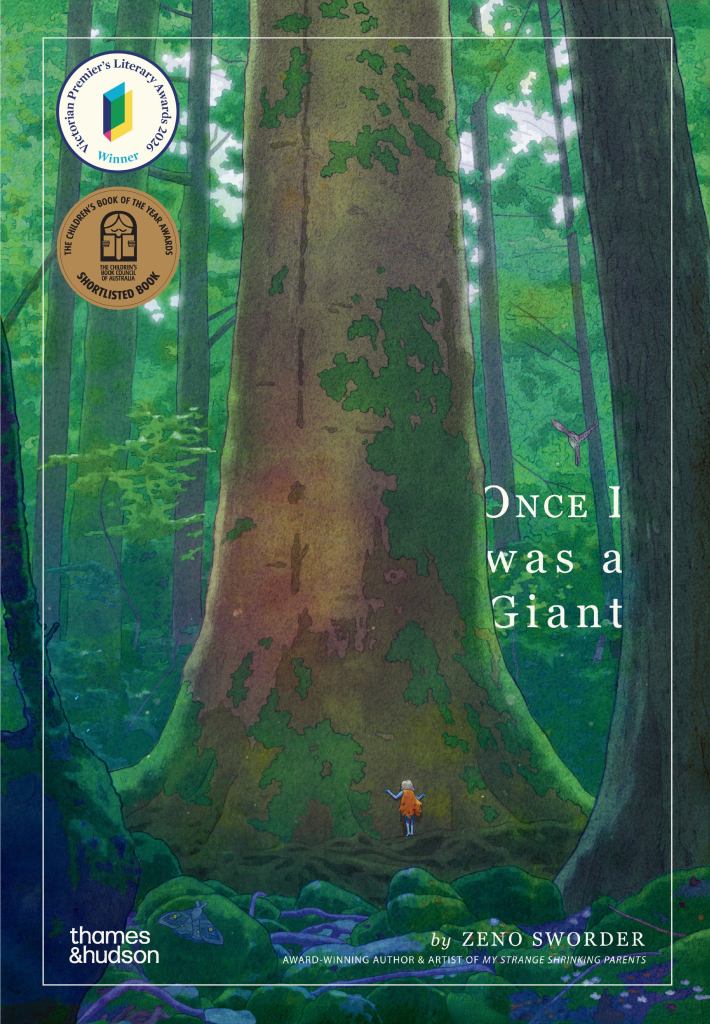
I loved Nova Weetman’s ‘Sonny and Tess’. I would have loved to have read it when I was starting high school. I’m envious of Nova’s ability to capture teen voices so authentically. I adore all of Karen Foxlee’s work, older and more recent. I’m constantly re-reading my favourite passages of ‘Lenny’s Book of Everything’. And, of course, I love Zeno Sworder’s ‘Once I was a Giant’, I’m always recommending it in the bookstore. I’ve also just finished ML Stedman’s ‘A Far-Flung Life’. It’s a wonderful story that shifts perspective between multiple characters brilliantly. Gripping and pacey, warm and witty, it made me weep.
How can your readers contact you?
I love getting letters from readers. The best way to get in touch is via the contact form on my website.
Congratulations to you and your teams at Affirm Press (Simon & Schuster) and Little Book Press, Jo. I’m sure that, after devouring these books, everyone will be very keen to read your next ‘big idea’.
Joy Lawn, in association with Dmcprmedia


3 thoughts on “Spotlight on Jo Dabrowski Inside the CBCA Shortlist”