
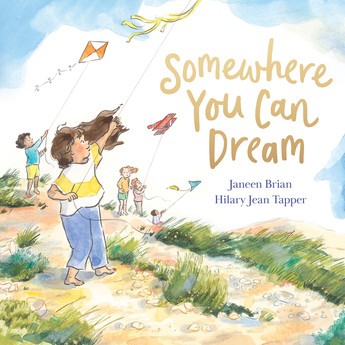
Somewhere You Can Dream
by Janeen Brian
& Hilary Jean Tapper
(Published by Allen & Unwin)
Guest author post by Janeen Brian about Somewhere You Can Dream for Joy in Books at Paperbark Words blog
‘Creativity needs space to breathe.’ This quote from Australian author-illustrator, Lisa Stewart, caused me to reflect on the space suggested. Did she mean head-space or physical space? A combination, perhaps, or an overlap of both?
Perhaps it was the former. A relaxed mind or clear head-space allows creativity a greater chance to take flight. A busy, cluttered mind allows little room for our imagination, holding tight to those constant threads of thought that bind us to the everyday, preventing ideas and wonderings from drifting in and out.
That particular theme lies within the pages of Somewhere You Can Dream, a picture book I wrote in 2024, which was then illustrated by Hilary Jean Tapper and published by Allen & Unwin in 2026.
But as I wrote, other thoughts rose to the surface.
Today, with the predominance of screens and devices, it is more important than ever that children are encouraged to have some distance away from devices that can hamper their natural curiosity or developing thoughts. Better that the screen is an adjunct to learning or pleasure, not an all-important necessity. Despite the moans of ‘I’m bored,’ given the freedom of time, children will find other ways to enjoy themselves. Ways that might include sensory exploration, inquisitive observation, wondering, creating or a sense of contentment or calmness within nature.
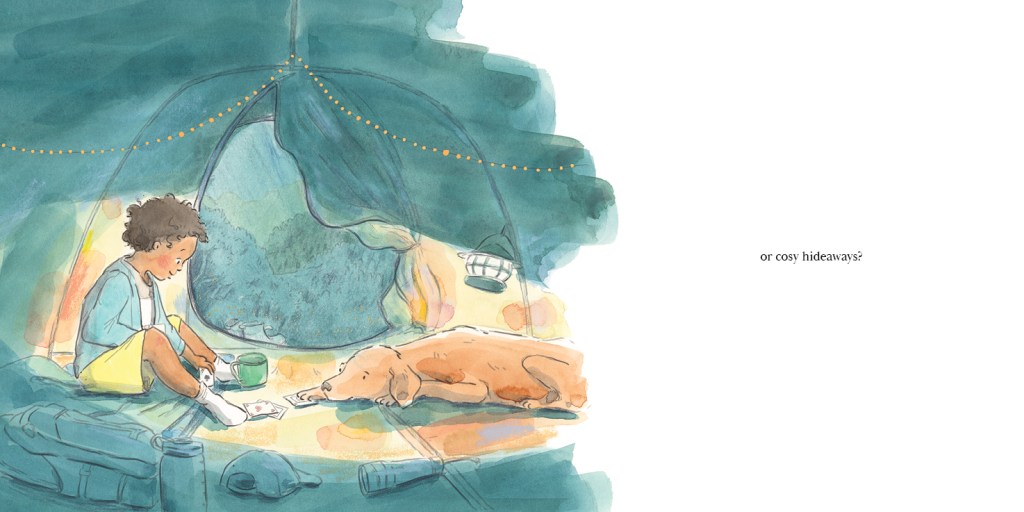
I also believe it’s essential that children own their own world apart from that of adults. And where better than places like cubby-houses or tree-forts; indoor places or places in the natural world where children can be children without adult involvement, no matter how gentle, supportive or enthusiastic? Those places not only allow the child’s mind to relax, and for imagination to flower and bloom, but they’re aid better mental health. In those special spaces, crowded inner or outer noise can slip away leaving and the mind and body in a meditative state.
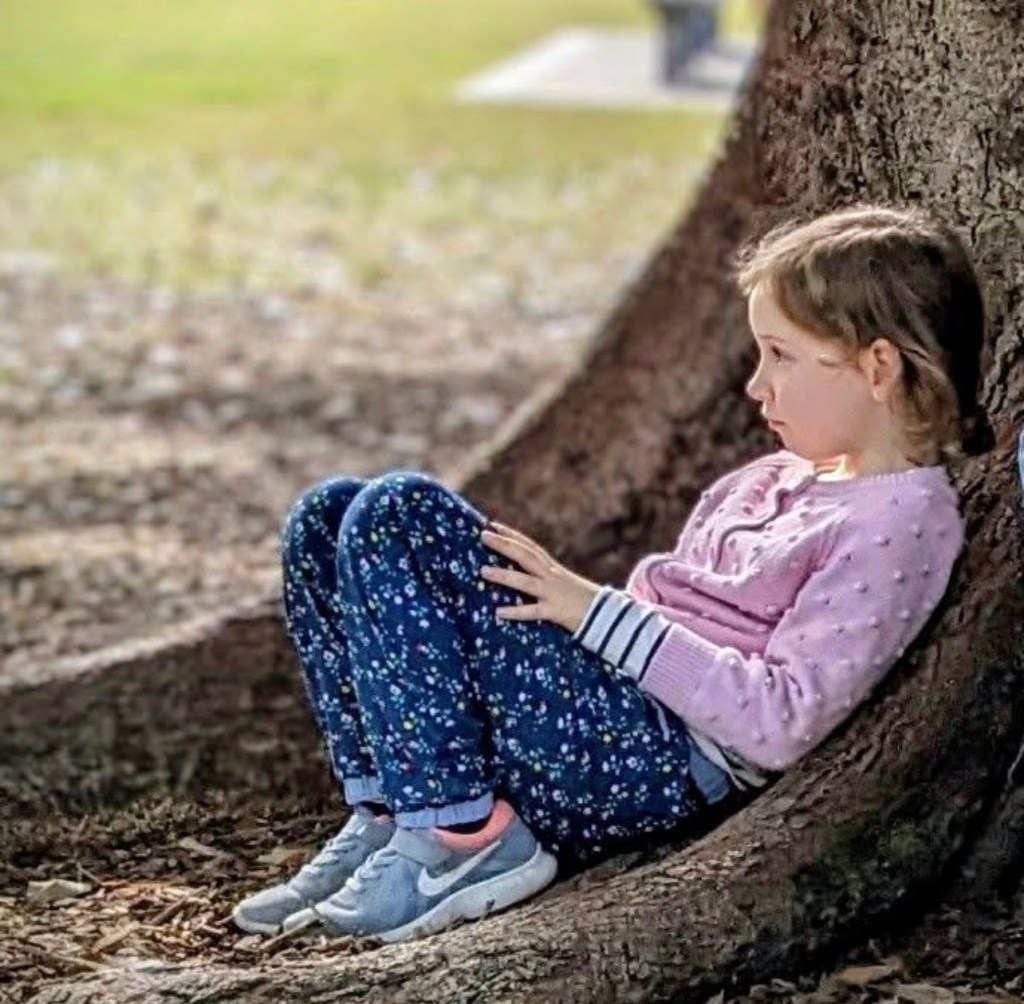
How many of us remember those hideaway places that promoted the telling of wild and wonderful stories, or creating adventures or silly games? Or perhaps those spaces were outdoors, in the freshness of nature; snuggled among seaside rocks, or in a park or forest, knees hunched, beneath a tree. Within a space of their own, the child is powerful, in charge, able to muse or sing or create or simply think. Spaces where memories and ideas are born.
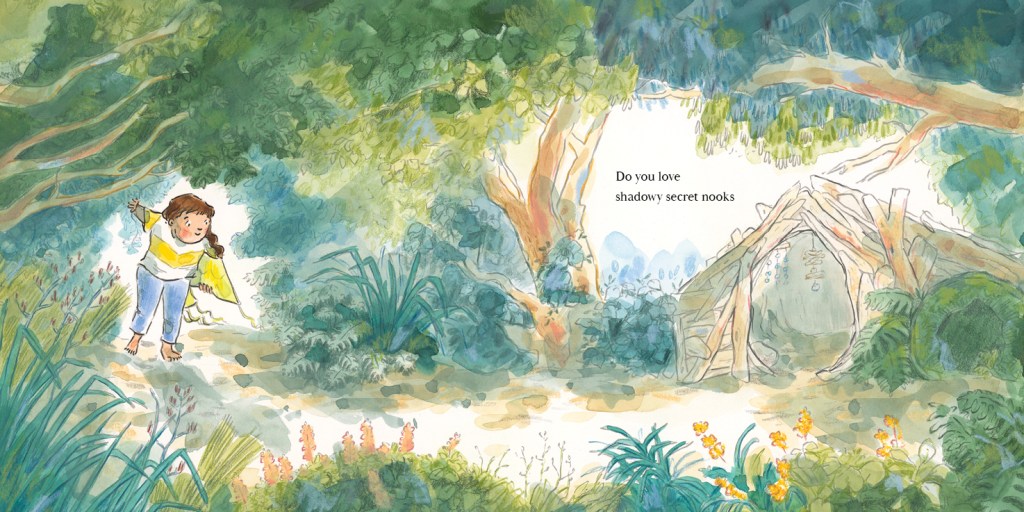
Look at the illustrations and see that each child is filled with emotion of one sort or another; tranquil, joyful or content. And notice the places that each child is in; each has found their own, unique space using little or minimal equipment.
Each published book has its own story, how it came to be and how it evolved. Somewhere You Can Dream began as a poem. It was called My Place. Your Place. But it was Dyan Blacklock, my agent, who saw its potential as a picture book and offered it to Allen & Unwin.
The poem, and ultimately the book, began one afternoon as I sat on the couch in my back room. Large windows offered a wide vista of my garden with its stonework, brick paving, mosaics, trees, lawn and flowers. I was filled with quiet delight. My thoughts then drifted to cubbyhouses, the kind I would make as a child, with blankets and towels flung over chairs and tables, indoors and outdoors and I recalled the utter joy of crawling into and curling up inside that space. Following that came memories of friends’ backyards, where we made cubbies among bushes, loving the secrecy and ownership of those leafy hideaways.
And so the poem began.
Originally, I wrote it from the ‘I’ perspective, as in ‘I love comfy little cubbies’, but the wonderful team at Allen & Unwin suggested a more questioning approach, asking the reader what they loved. So the idea was broadened, which allowed each reader to interpret or reflect on what is, or might be, their own special dreaming place.
Look carefully at the illustration at the beginning of the book. The ‘main’ girl character leaves her kite flying friends and, using the end-papers to continue her exploration, finally come upon a little cosy nook. It is the same place to which she returns at the end of the book and provides a lovely, visual, cyclic touch.
While this girl is shown forefront on the cover, sharing carefree flight time with kite flying friends, the back cover shows one of the other children, no longer kite flying, but nestled among the sand dunes, gazing peacefully at the sky. Each child has shifted. Each has found another place to dream.
Hilary Jean Tapper lives and works in New Zealand and as a child loved spending time in nature and still enjoys walking the hills behind her home each afternoon. She explained that in creating each of these characters, she began with a simple line which she then let grow organically, one line after another. She also spoke about how the colours she chose, using pencil, watercolour, gouache, ink and crayon, represented not only the particular environments in the story but the emotions she drew from the words.
I began this article with the quote, ‘Creativity needs space to create,’ and I’d like to thank the illustrator, publishers and designer who allowed space in Somewhere You Can Dream for the words to spread out and the illustrations to breathe.
-0-
And thank you, Joy, for the opportunity to talk about this book and question my own dreaming.
Somewhere You Can Dream by Janeen Brian & Hilary Jean Tapper at A&U
Janeen Brian and The Fix-It Princess at Paperbark Words blog


