
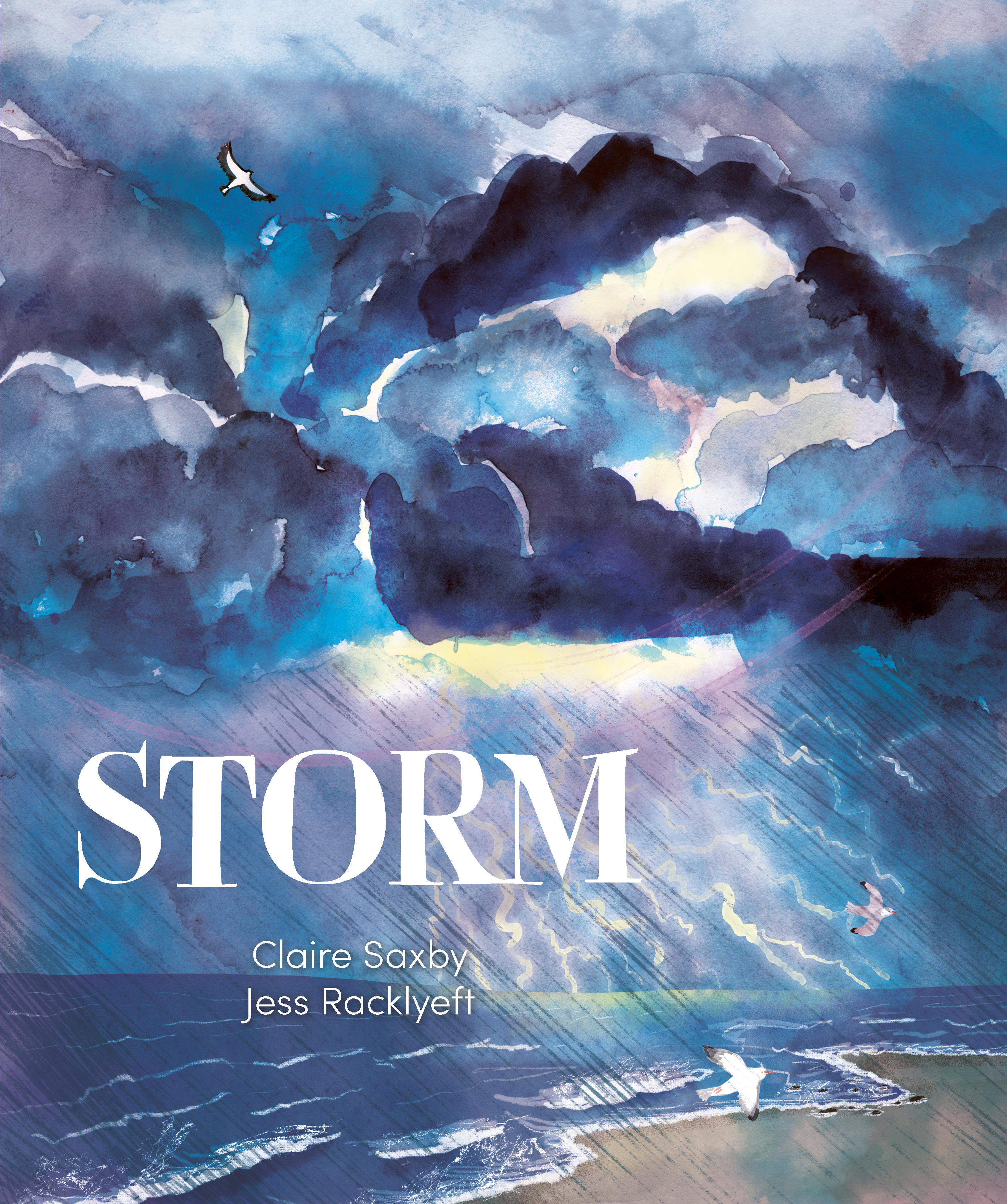
Storm by Claire Saxby and Jess Racklyeft
(Allen & Unwin)
Author piece about Storm from Claire Saxby for Joy in Books at Paperbark Words blog
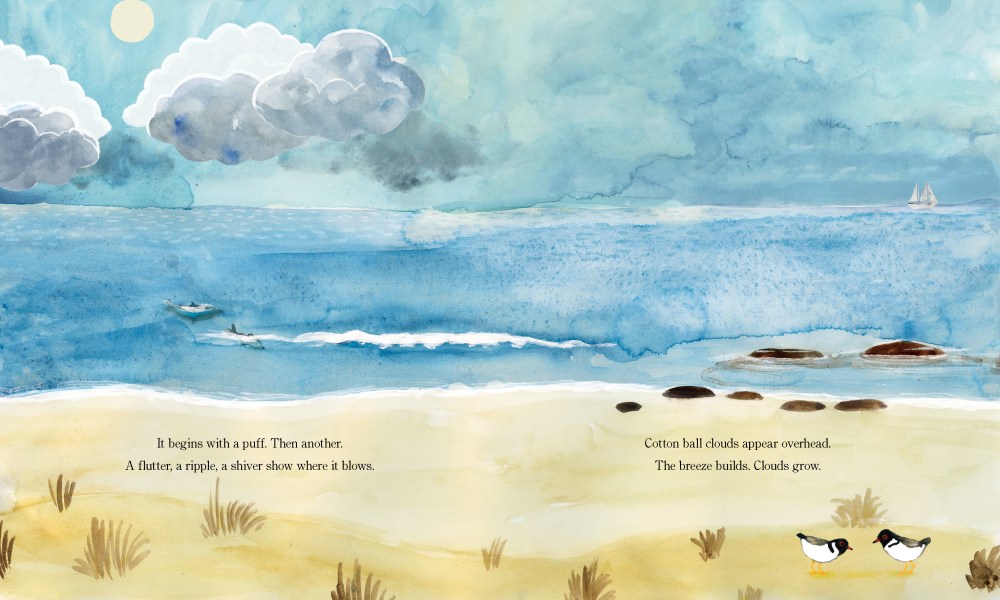
Jess and I have been lucky enough to work on several books together with the fabulous A&U publishing team. Trusting that Jess will find the spaces between my words and create her own visual narrative is such a gift. It doesn’t remove the white paper fever that strikes at the beginning of a new project, but it is important when the beginning can feel so solitary.
But Storm.
Storm is the fourth book Jess and I have made which focusses on the elements, after Iceberg (water), Tree (earth) and Volcano (fire), and looks at air. Hmm, but air can’t be seen, of course, so I had to create a story that showed what air does.
I decided to set this story on a beach at the end of a summer day when the sand is super-hot and the water gloriously cool. A storm, I thought, would be perfect.
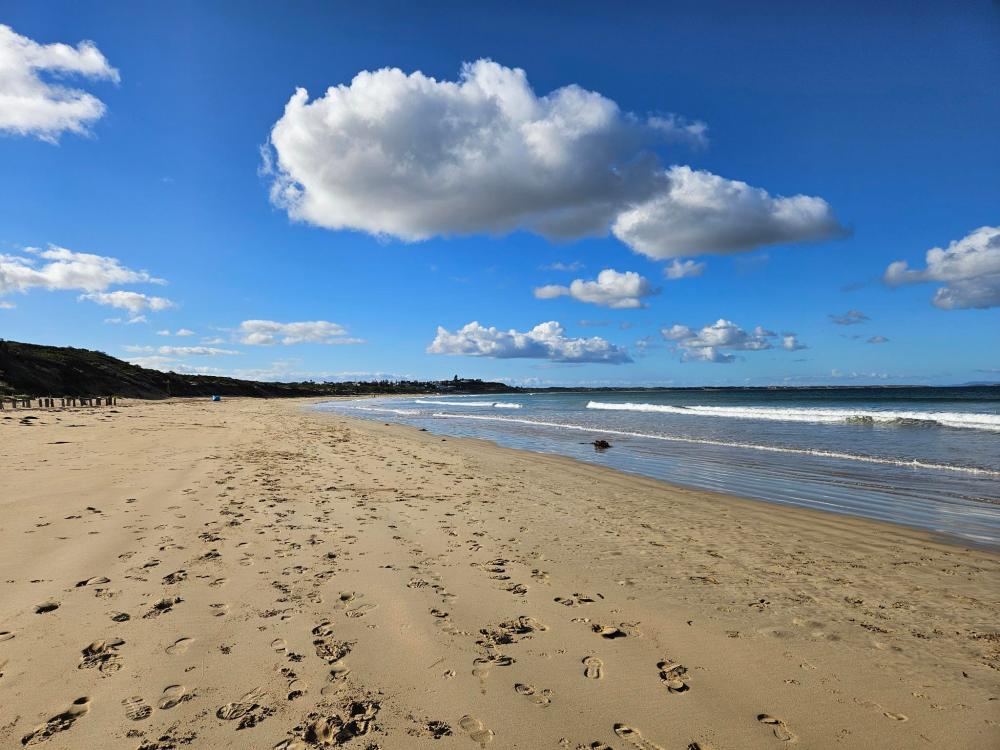
My first research was into cloud formation, the fundamentals of which I only dimly remembered from childhood. Which sorts of clouds make storms? Just how do they form and how do they grow? How does lightning happen? Rain? And storm winds? Aggh!
About this point in a new story, I begin to feel like I’m drowning in notknowingness – it should be a word – and I have to take a breath. I know, because I’ve been here before, that it will eventually make sense to me, if I plough on. And so I did.
Once I had the mechanics of a storm sitting on my shoulder, I wanted to look at who was affected by the storm and how. Not human beachgoers, because I knew what they did – when that wind changes, they pack up their buckets and spades and high-tail it for shelter.
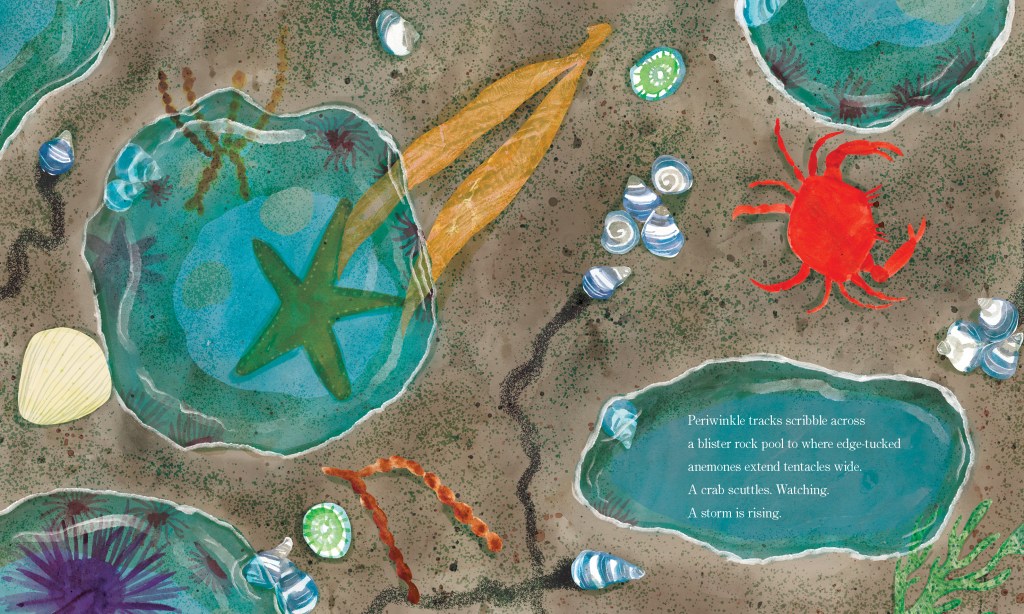
But what about the animals, on the reef, in rockpools, on the sand, and in the air, who all call the beach home? What do they do? I imagine the effects on each of these ecosystems separately, while acknowledging they are all connected.
I imagined the wave action changing below and on the surface of the sea, the wind warning that a storm is coming.
Then I start juggling, interweaving the growth of the storm with the effects it has on different parts of this connected world. I can’t juggle more than two balls at once, but somehow I love the challenge of juggling myriad elements in story. I want this story to be at once easy to read and understand, rich in content and language, so that readers have the opportunity to have an overview, or a close up view of this part of our world. I want them to feel the wind on their faces, to smell the salt air and to feel the water droplets.
When I think it is as good as it can be, I send it out to the publishing team and thence to Jess.
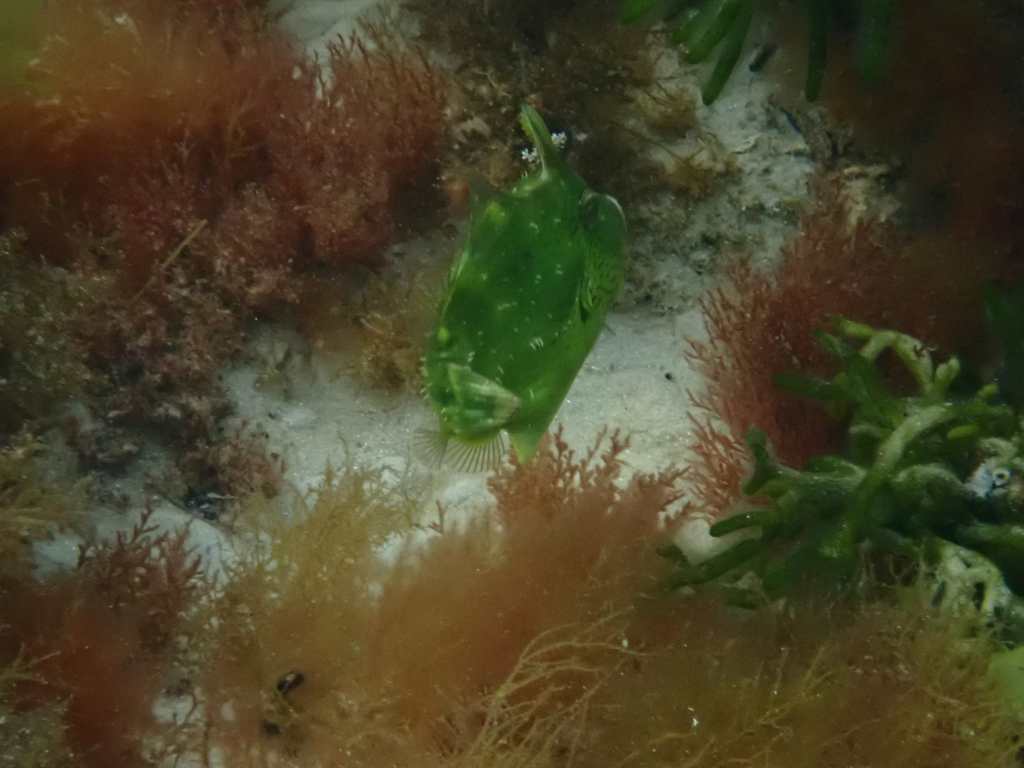
I hand over my research – not because I don’t trust Jess to do her own – but I hope there can be some shortcuts there for her. Because this is a beach book and we both run saltwater in our veins, there is much that we already know. But this time, in the bits I shared, along with photos of beaches I’d visited, was the image of a tiny green fish that I first saw while snorkelling in Williamstown, in inner west Melbourne. This green fish was the colour of sea lettuce and gently moving about on the edge of a reef. It was about 6-7 cm long with short spikes. I was lucky enough to capture two pictures before it decided to hide again. Neither photo is great, but it was enough for me to be able to research just what it might be (juvenile pygmy leatherjacket). I wanted my shy, tiny, green, spiky fish to have a life beyond the reef. It was an example of the wonder to be discovered if you slow down and look around, and Jess was kind enough to indulge me.
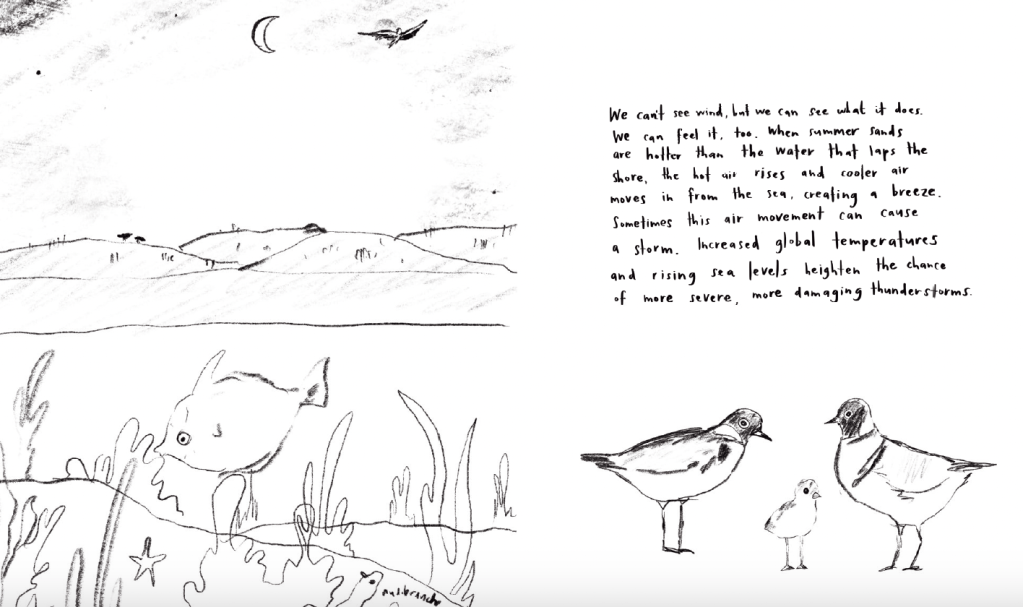
And isn’t it just beautiful? I love working with Jess and the A&U team and hope we can continue to make beautiful books together.
Storm aims to blow readers along with the storm, while they so down and experience the wonder that is our world.
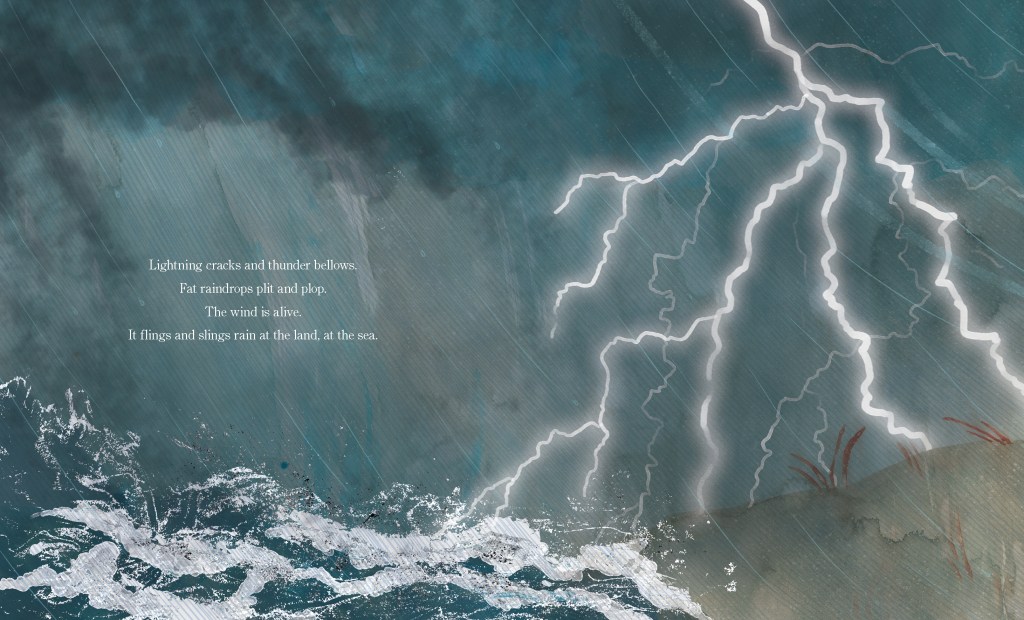
Iceberg at Paperbark Words blog
Jess Racklyeft about Big World, Tiny World: Forest at Paperbark Words blog
Our World Full of Wonder by Jevita Nilson and Jess Racklyeft at Paperbark Words blog


