
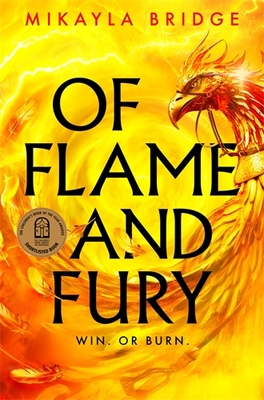
Of Flame and Fury
by Mikayla Bridge
INSIDE THE CBCA 2026 SHORTLIST
(Macmillan Australia)
“Though she’d loved those stories, they weren’t the real reason she’d latched on to Savita – at least, not in in recent years. Something about Savita’s immortality made Kel feel safe in a way that nothing else could. No matter what happened to her family, her friends, even Cendor, phoenixes – Savita – would always remain.”
(Of Flame and Fury)
Author Interview: Mikayla Bridge
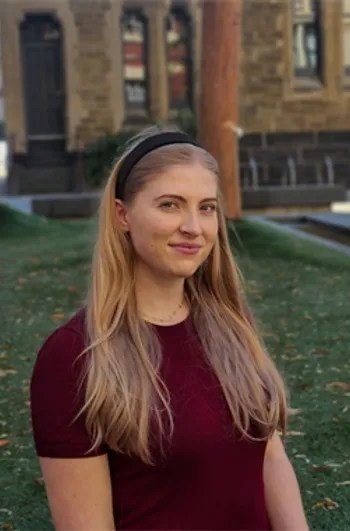
Thank you for speaking to Joy in Books at PaperbarkWords blog, Mikayla.
Congratulations on your unputdownable, cinematic YA fantasy novel Of Flame and Fury being shortlisted in the 2026 CBCA awards. It’s like a cross between The Hunger Games and Maggie Stiefvater’s The Scorpio Races – with phoenixes. It’s a brilliant concept.
Thanks for reaching out, Joy! And thank you, the CBCA shortlist feels surreal. It’s a dream to see the little golden sticker on Of Flame and Fury’s cover.
Why phoenixes? What are the different types of phoenixes in Of Flame and Fury? Could you introduce Savita and the world she lives in?
I’ve always been fascinated by the mythology of phoenixes across different cultures and mediums. They can symbolise so many different things and for a writer, they offer the perfect sandbox to play in. What role would phoenixes play in a world with humans? How would our relationship with mortality change if immortal creatures existed? Having a close bond with a phoenix, like our main character Kel does, would surely impact your understanding of death. That really intrigued me. They were one of those fantasy elements that I was simply waiting for the right book to fit them into.
(Also, I have a lifelong fear of birds, and I often wonder if this book was my subconscious’ attempt at exposure therapy: writing a novel about giant magical murder birds.)
In the Of Flame and Fantasy world, there are seven different subspecies of phoenixes: Blood, Cape, Carnel, Cinder, Harrow, Monarch and Spinel. I was very fortunate that my publishers let me include a short compendium at the start of the book, describing each subspecies and their unique colour, size, speed, intelligence and temperature. In my mind, the compendium is used by phoenix racing teams as a catalogue, to choose which subspecies of phoenix best suits their team’s strategy.
Savita, a carnel phoenix, belongs to our main character, Kel. She’s a fast, feisty creature, with the cunning and aggression that’s typical in her subspecies. If Kel had her way, Savita would be a perfectly amicable companion for the rest of her life. So, I wrote a phoenix that is stubborn, hot-tempered, and abhors domestication. Kel and Savita’s dynamic was my favourite part of the book to write.
What is a symbol you use in the story?
If we’re talking about literal symbols, the Howlers’ racing emblem is a great symbol for the larger story: the team’s emblem is a barbed infinity symbol, shrouded by flames. To me, this symbol can speak to various elements of the book. It’s most directly linked to phoenixes, and their immortal, fiery rebirth cycle. The emblem could also be linked to certain conspiracies in the book, surrounding phoenixes and their abilities. Lots of the characters in this book hide their truths behind barbs and flames, so it felt right to have their emblem depict that.
To what does the ‘Fury’ part of your title refer?
It’s open to the interpretation of the reader, but for me, fury is what defines the island, Cendor, where the story takes place. Beneath the dry grass, this island is pure fury and stubbornness.
Kel is very much an extension of that. She’s righteous, desperate and overwhelmed; all mirages for her grief. She has none of the tools she needs to process her emotions, and so fury is often the way her feelings manifest in the world.
Speaking more broadly, I want readers to turn the last page feeling furious, in the way that anger can be empowering. I want readers to feel confident enough to be very loud in their emotions. I want them to have the autonomy to voice and shout how they’re feeling, good or bad. The world needs to hear it.
Could you explain who is in the Howlers, seventeen-year-old Kel’s racing team, their roles and some of the dynamics between them?
The Howlers are a young, scrappy racing crew that takes part in Cendor’s deadly phoenix races. Kel primarily participates in these races for money. And because of ‘spoilers’, she has to team up with Coup, her long-time, arrogant rival.
Within each racing team, there are five roles to fill: a tamer, a rider, a winger, a technician, and a mitigator. Kel is the Howler’s tamer, responsible for the care, housing and training of their team’s phoenix, Savita.
Dira, Kel’s best friend, has a great, strategic mind, and so is their winger, in charge of race strategies. To Kel and Dira, phoenix racing is nothing but a means of survival. Then along comes Coup and Bekn, who seem to relish the fame and attention that accompanies the races.
Coup, the team’s rider, is a great mirror to hold up against Kel: he pokes and prods at Kel’s discomfort, and wields charm and charisma like weapons. On the surface, he’s everything Kel despise about racing.
Bekn, the eldest Howler and Coup’s older brother, is our mitigator, responsible for all things publicity and sponsorship. He’s tired, a chronic people pleaser, dry-humoured, and probably closest to my personality.
At the start of the book, the team’s technician, responsible for engineering all racing equipment, is a young, ambitious boy named Rube. We meet another character further into the book, Rahn, also fills a very important role in the team, and her presence within the Howlers really shifts certain dynamics in ways that I loved.
The racing tracks are amazing. Which are you most proud of creating? Why?
I’m so glad you enjoyed the races! Action sequences are my favourite thing to write. They play out in my head like story-boarded movie scenes. Everything is very explicitly choreographed. It helps me to outline exactly what is possible in every race, since each has a different terrain. I always need to understand the logistics to slip in appropriate moments of adrenaline, fear, relief, triumph.
The races also work as smokescreens for what each character is grappling with internally. The chaos and danger and magic of it all forced them to confront emotions they’d spent a long avoiding.
Choosing a favourite race is near-impossible. I have such strong memories attached to each. The ‘water’ race was in the very first draft; I could probably recite that scene from memory. And the race with weather sprites — it always reminds me of my partner, because we spent days brainstorming how wind pockets and turbulence would impact phoenixes’ flight patterns. But I think the race in Vohre Forest is my favourite. I love worldbuilding, so having a chance to meet and describe other phoenixes that we hadn’t previously seen was lots of fun.
If you were a rider, what would you love about racing?
If I were a rider, I know I’d die instantly. I’m so clumsy, with terrible spatial awareness. But I’m also an adrenaline junkie, so I’d probably love it, if we could remove the constant threat of spontaneous combustion that comes with phoenix racing.
As well as telling a fantastic tale of fantasy, action and romance, you integrate some issues well into the story. Could you tell us about some of these?
In any book, I’ll likely always subconsciously or consciously work in political issues in some capacity. I studied politics and international relations in university, and I love pulling apart and interrogating different government structures in fantasy books. It felt very organic to weave serious issues with Of Flame and Fury’s more magical chess pieces.
When I first had the idea for OFAF, the phoenixes and the Howlers came to me, first. After that, I realised that having commercialised phoenixes at the heart of an island’s economy and entertainment industry would create some pretty fiery moral dilemmas. Is it possible to respect any kind of sentient magic while profiting off of it? What would a functional capitalist society look like with this kind of uncontrollable magic at its centre? It all just unfolded from there.
The importance of respecting nature is an issue I needed to include, too. It was very important that I write phoenixes as wild, dangerous creatures with their own instincts and behaviours. The story’s resolution needed to involve the characters recognising that, rather than trying to tame or contort their differences.
How does AB, Armond’s Blight, impact the plot?
Grief plays a large role in OFAF. I never want to include death or health issues in a book purely for shock value; those themes deserve the space to explore their consequences and emotional fallout. That’s why AB drives much of OFAF’s plot, acting as the antithesis to the phoenixes’ immortality. It forces people to confront their own mortality through an uncontrollable plague that they can’t treat or trace. Over the course of the book, the importance of AB grows like a seed, eventually coming to fruition in a way that ties everything together for the characters.
I also think that my inclusion of a sickness like AB stemmed from writing OFAF during the early days of COVID lockdowns in Melbourne. It feels obvious in hindsight, but at the time I was drafting, I hadn’t realised that writing about AB was helping me process what was happening in the world.
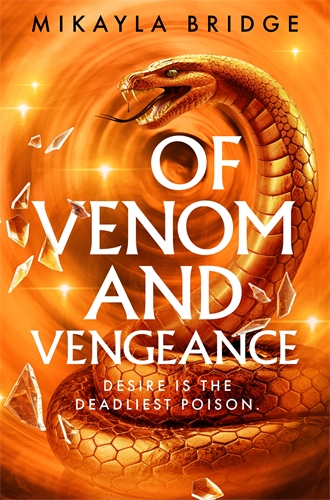
Without spoilers, what’s a teaser from the sequel to Of Flame and Fury, Of Venom and Vengeance?
I can’t wait for Of Venom and Vengeance to hit shelves soon! If Of Flame and Fury is fire and practicality, OVAV is glamour and facades. I’ve been calling it a Baz Luhrmann-directed YA fantasy: loud, indulgent, lavish, tragic, romantic. Set on the island of Ascira, a glittering tourist hub where magic is siphoned from sprites and traded as a commodity, the story picks up directly after OFAF, so you’ll see the consequences of the Howlers’ actions in play. But while it exists in the same world as OFAF, it follows a completely new cast of characters and can be read as a standalone.
The Howlers are such hopeful, earnest characters, and I wanted Of Venom and Vengeance’s cast to feel like their opposite. Written in dual POV, we follow Inna, the heiress to a magical criminal empire, and Rylan, a mysterious thief bent on avenging his family. When the two cross paths, they strike a deal to get their hearts’ desires — though of course neither realises that the other is planning to dispose of them the moment they get what they want.
Your two fantasy novels are already selling into the US and UK. How did that come about?
I love the phrase: ‘Luck is what happens when preparation meets opportunity.’ My publication journey has been defined by good timing and stubbornness. I was offered my two-book Australian deal as part of a joint deal with Macmillan in the US and UK. But if we rewind a few years, I had no clue that traditional publishing was even something that ordinary people could pursue. In my mind, authors were celebrities born upon pedestals.
I’ve loved reading and writing since I was very young. Both were an escape, an outlet, a guide. I’ve tried keeping diaries and journals, but never stuck with them. I think it’s because writing fiction is the way my brain makes sense of the world. Almost unintentionally, it helps me understand how I’m feeling.
But I really never considered myself a writer, or thought writing novels could be a career, until a few years ago. I went to Melbourne Comic Con with my sister, and we attended an author panel. One of the authors was asked how she became published, and she quickly ran through the process: write a book, query literary agents, and go on submission to editors at publishing houses. I remember sitting in the audience, stunned to learn that normal people could query international agents. As soon as that panel ended, I went straight back to the hotel my sister and I were staying in and created a querying spreadsheet with my dream agents. It all snowballed from there.
Thanks so much for answering these questions, Mikayla, and most of all for giving us such an imaginative, exciting reading experience.
Of Flame and Fury at Macmillan Australia

 paperbarkwords.blog
One thought on “Of Flame and Fury by Mikayla Bridge ”