
The Extraordinarily Wonderful Cassandra Golds: Life, Love and Books
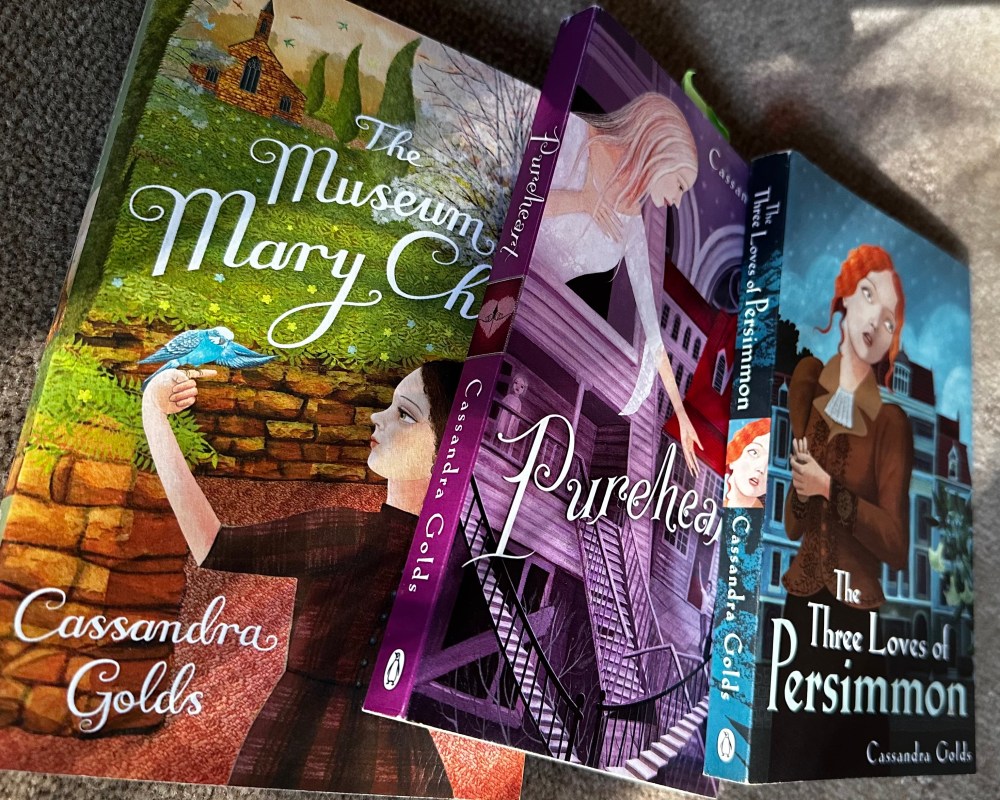
Cassandra shares her life, love and books with Joy in Books at Paperbark Words blog
The story of my books is really the story of my life—or at least, the story of my inner life. And that’s why my books are about brave mice and romantic quests and princes in dungeons and mad girls in lunatic asylums and the heart of things and above all love love love. Because that’s what my life—inside—has been like.
I grew up reading Hans Christian Andersen and C.S. Lewis and Nicholas Stuart Gray and yearning to write my own fairytales as a kind of ecstatic response to what I had read. I was the daughter of a vividly imaginative mother, with very intense emotions. I inherited both.
Michael and the Secret War
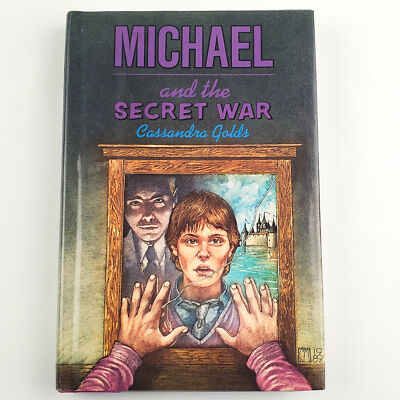
So, perhaps it’s not surprising that my first book—which was accepted for publication when I was 19—was about a boy called Michael and a mystical war fought across time, space and imagination, and how the mystical key to reality was SEI: Sympathy, Empathy and Identity. It was packed with things borrowed from Hans Christian Andersen and C.S. Lewis and Nicholas Stuart Gray… but it was also about my first, difficult year at University and the deep depression I’d been sent into upon my discovery, in Psychology I, of Freud. (That might have been the year I started seeing black dots everywhere—but more about that later.) Writing Michael and the Secret War in the Christmas holidays between my first and second year of University was a personal triumph, and all I wanted to do was go on writing book after book all through my life. But it didn’t turn out that way.
Clair-de-Lune
My second book was published 17 years later, after I had worked for many years at The NSW School Magazine, learned a great deal, been through a lot, including, I’m afraid, much depression and anxiety—but soaring visions, too— made a radio documentary that was broadcast on ABC Radio National, and written most of my six serialized graphic novels—including The Mostly True Story of Matthew and Trim—all illustrated by Stephen Axelsen. All that time I had been trying to write another book, and when finally, I did it, I knew it was time to leave The School Magazine and give all my time to writing books while I could. (One thing I had come to realize was that I couldn’t always write.) Clair-de-Lune was about a girl—an apprentice ballet dancer, twelve years old, in the 1850s—who could not speak, and why she could not speak, and how she came to learn how, and what she said when she did. In fact Clair-de-Lune was what I wanted to say, when at last, I could say it. Clair-de-Lune’s friend was the first of my brave mice, Bonaventure, who dreamed of starting a ballet school of his own, even though he was just a mouse.
(These first two are no longer in print, but you can get them online second-hand.)
Now that I was writing full-time, my books came more quickly. This was the third:
The Museum of Mary Child
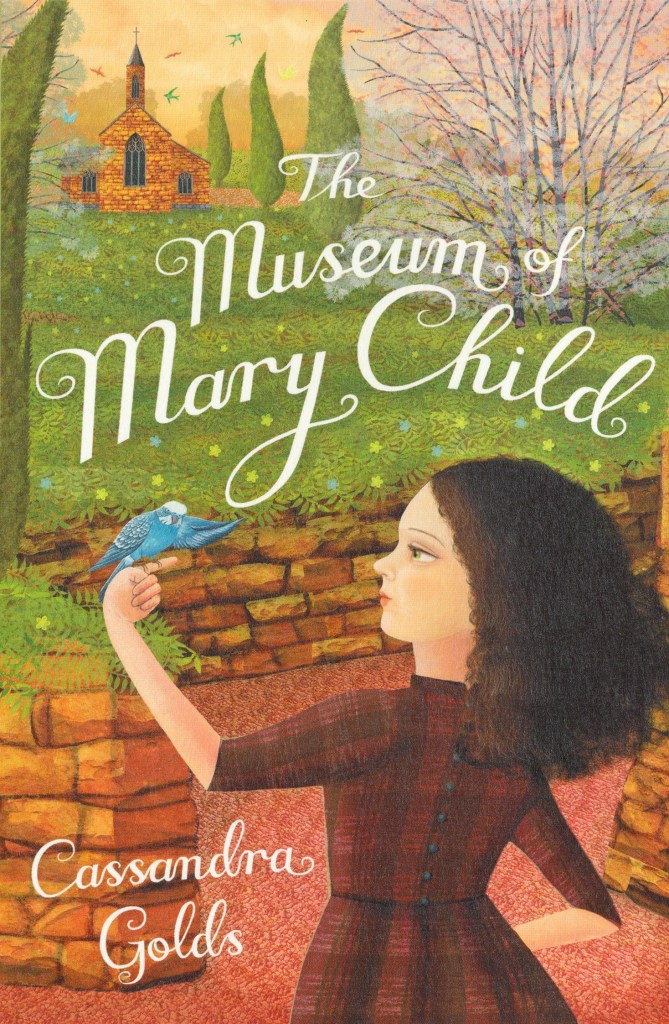
The Museum of Mary Child (https://www.penguin.com.au/books/the-museum-of-mary-child-9781742285146) is a fairytale, and a horror story, and a parable, and it was based on a dream I had—or a nightmare. It’s about a prison, and a madhouse. It’s about a Prince, and a mad girl. It’s about a beautiful doll, and a Society of Caged Birds, and love, and, of course, the Heart of Things. It’s set in the early nineteenth century, and it’s my best book, I think, but when I finished it, I was horrified, because I thought I had written something that was so strange that it would never be published. Fortunately, Penguin didn’t agree! Little did I know, back then, how much of The Museum of Mary Child was going to come true for me. For, one day, there would be a real madhouse, and a mad girl. But that was way in the future.
That was true of my next book, too.
The Three Loves of Persimmon
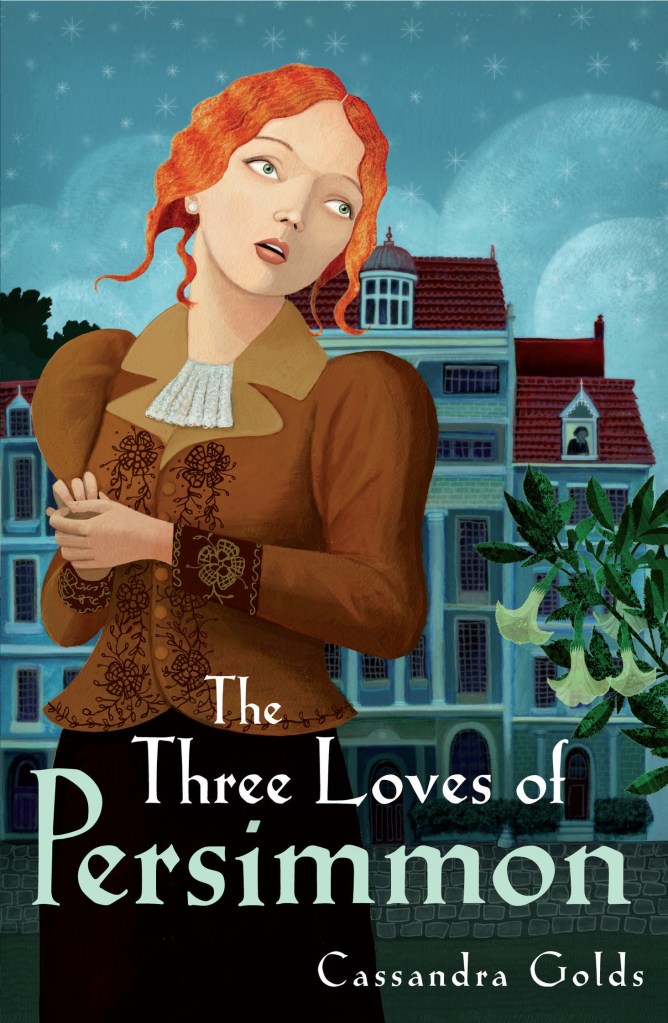
The Three Loves of Persimmon (https://www.penguin.com.au/books/the-three-loves-of-persimmon-9781742531168) is set in the Belle Epoque, and it’s about a young woman, a florist, called Persimmon, and a Mouse called Epiphany, and the epic journey out of themselves each of them take—Persimmon in a bid to find a love of her own, and Epiphany to escape her noisy home below the rail tracks and to find the fabled Place of Flowers. Their stories are told in tandem until, one fateful day, just once, they meet…and that changes everything. Persimmon’s love interests, the actor and the artist, were based on two unrequited loves of my own—the third I made up. Then the made-up one came true! The Three Loves of Persimmon won the Victorian Premier’s Literary Award in 2011. The judges said it was “outrageously charming”!
Pureheart
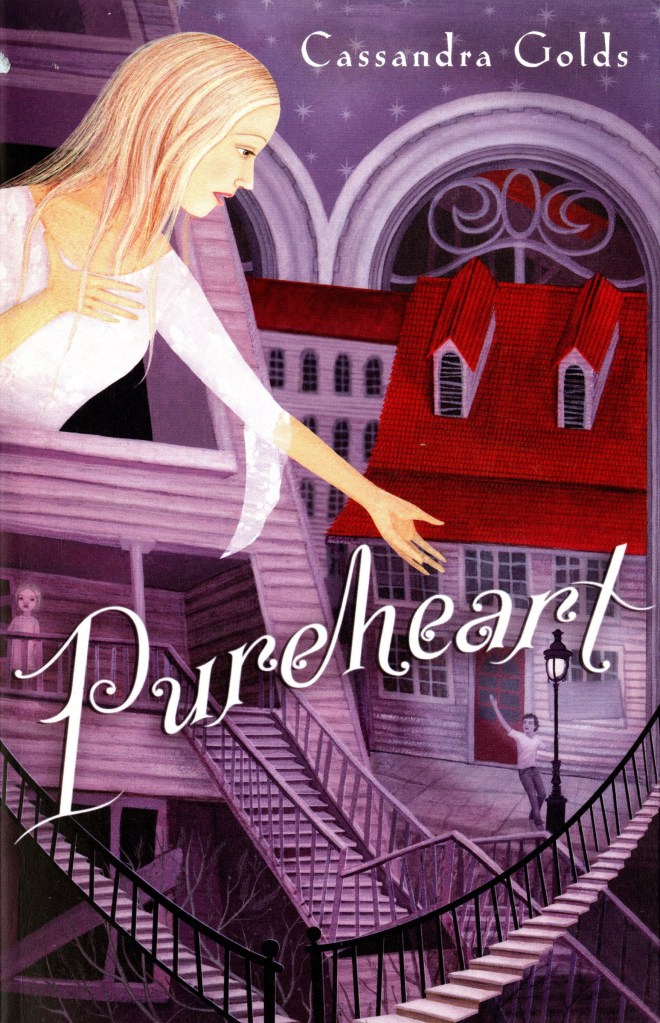
Well, that takes me up to age 48, when I fell in love, and had my love returned, for the first time. I wrote Pureheart (https://www.penguin.com.au/books/pureheart-97817425381980), my last book (so far!), and my only ghost story, because part of me felt that it was just too late, and that, like my heroine, my fate was to die before I had ever really lived. Pureheart is set in 1980 (the year I did the HSC), and was inspired by my love of Arthurian romance—and film noir. It is about a girl, Deirdre, and a boy, Gal, who love each other, and how Deirdre’s grandmother, Mrs Dark, conspires to keep them apart. And it is about how their eternal love triumphs anyway… As for me, it wasn’t too late—I married, late in life, and lived happily after!
But after that, it got harder and harder to write.
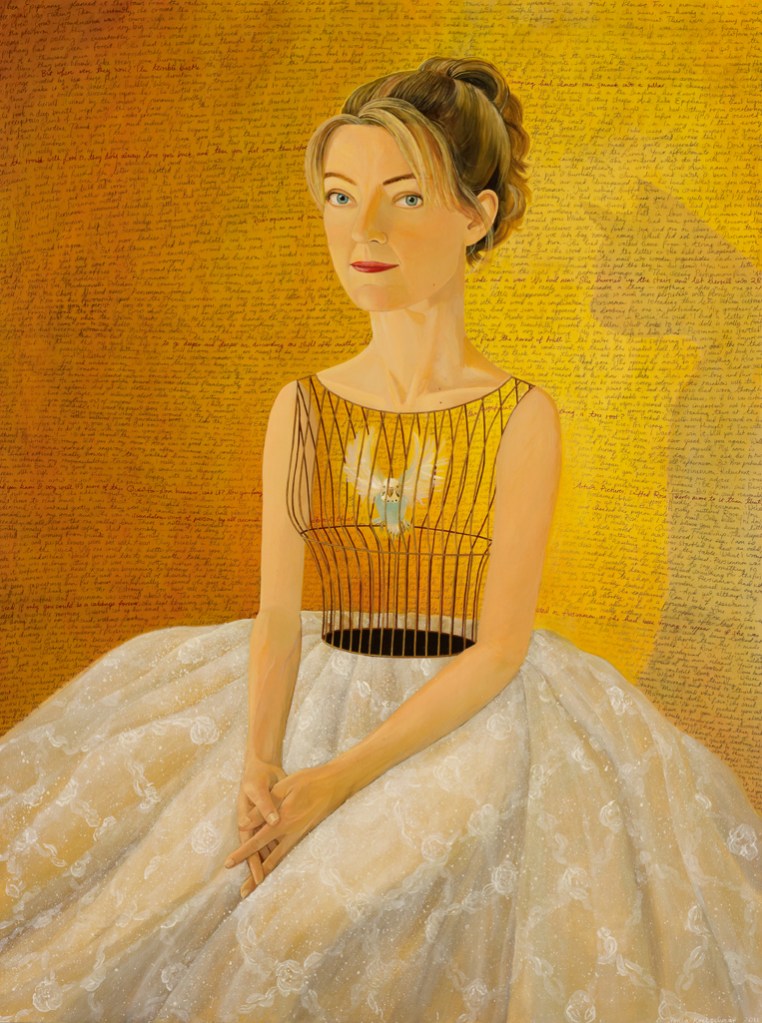
In 2011, Sonia Kretschmar, who had created the covers of all my novels except the first, painted a portrait of me called The Heart of Things (https://www.artgallery.nsw.gov.au/prizes/archibald/2011/28919/0). She entered it in The Archibald Prize, and it was selected to be hung in the public exhibition at The Art Gallery of NSW. In the painting, which is surrealist, my rib cage holds a fluttering bird, and behind me, the shadow of a great cat menaces it. I think it is a very perceptive painting, and it seems to me, looking back, that there has always been a shadowy, menacing cat in my life, and that that dreadful cat represents mental illness.
Ever since I was a child, there had been phobias and obsessions, anxiety and depression—and in fact, secretly, this had shaped my life, because some of my biggest decisions—and decisions that were made about me—were made under its influence. It was why, at the end of Year 7, I changed schools—probably the most influential decision of my life, because it led to me finding, or being found by, God. It was why, at the time I fell in love, I hadn’t left home, and at 48, was still living with my parents. It was why, when I was at university, I started seeing imaginary black dots everywhere.
It didn’t stop me finally leaving home, and marrying the love of my life. But it followed me, from my parents’ home, into my own. And there it renewed its attacks.
I was diagnosed belatedly as bipolar and, eventually, after years of intense anxiety and depression, had a psychotic breakdown. I stopped eating and drinking adequately, I stopped washing, I even stopped going to bed at night, and I was convinced I was in terrible trouble, with the Government, and was going to prison. That was when the real madhouse appeared—well, a psychiatric hospital, quite a pleasant place, really—and the mad girl? That was me.
I had always known that my imagination had its source in the extremes of my temperament—just as my mother’s had—for, throughout my life, there hadn’t only been anxiety and depression—there were unforgettable phases of elation too. The most important insights of my life have come to me through these phases.
And here’s the thing. My intense emotional phases—they went on for many months at a time—both inspired my writing and made it impossible.
So, after Pureheart, my mental health seemed to get worse, and for a long time the successive waves of it were exhausting and confusing. Of course, other things happened too. A completely new life opened up for me. Having a person of my own, especially to love, was infinitely and joyfully absorbing, and fulfilling in a way I had never experienced before. I started to move back and forth between Sydney, where my parents lived, and Melbourne, where my husband lived. Meanwhile my beautiful and fascinating mother—the inspiration of so much of my writing—got dementia and began to decline. And what with one thing or another, I couldn’t seem to gather the attention necessary to take up residence, full-time, in a world of my own creation, which was the only way I had ever written.
Life went on, and my mother died, and so did my grandmother, and, in a strange kind of way, I grew up.
And oddly enough, when I recovered from my psychotic breakdown, my mental health improved.
Since then, among other things, we have moved to Katoomba, found our dreamhouse and got a puppy, and now I am more well than I have ever been in my life.
Will I start to write again? I don’t know.
What I do know is that my heart’s journey outwards—the adventure of my life—which all my heros and heroines share—continues.
In the meantime, there is gratitude—for my husband, for my mother, for the brave mice and princes in dungeons—everything I’ve ever had the joy of writing—for the Heart of Things and for love love love. Whether I write, with one foot in the other world, or keep two feet in the day-to-day world, that is my true vocation.


Cassandra! What a wonderful paradox! I don’t know if I’ll ever write again, she says, in a brilliant piece of writing. I’m sorry you had to go through all that but so glad you’re ok now. May be your next book will be gritty domestic realism about happy married life with dog. I’d read it.
LikeLike