

EIGHTY-NINE QUESTIONS FOR AFTER by Ashleigh Barton
Lothian Children’s Books
Ashleigh Barton writes about her wise, compassionate middle-grade novel, Eighty-nine Questions for After for Joy in Books at Paperbark Words blog
Eighty-nine Questions After – Unanswerable Questions
Guest author post by Ashleigh Barton
Eighty-nine Questions for After centres around Ester Star’s list of unanswerable questions. The idea for this premise can be traced all the way back to the late nineties, when I, a curious kid and an insatiable reader, was flipping through a magazine belonging to my mother. I was stopped in my tracks by a story about JonBenét Ramsey, the six-year-old beauty pageant winner who was found dead in her home on Boxing Day. I hadn’t been much older than JonBenét at the time and her story fascinated me. In the years since, I’ve checked in hoping that there had been a breakthrough in the case but, despite advancements in technology, we still don’t know what really happened. Over the years, I inadvertently collected other unanswerable questions – my own family secrets, the disappearance of Madeleine McCann, Malaysian Flight 370, and so on. I’ve often half-joked that I hope that one day, in whatever life comes next, there will be someone there who can give me the answers. One day, it occurred to me that this quirky habit should belong to a book character and the title, Eighty-nine Questions for After, popped into my head. The character of Ester emerged soon after and I began to build a story around this girl – a young germophobic, hypochondriac who is collecting her own list of unanswerable questions as a coping mechanism for her fear of death.
When I set out to collect Ester’s questions, I thought finding eighty-nine would be impossible but I actually ended up with way too many – without even including the questions on my own list. I uncovered so many fascinating mysteries we’ll probably never solve – from strange occurrences like the Westall UFO sighting, to the whereabouts of stolen works of priceless art, and the origin and purpose of ancient relics like the Roman dodecahedron. There are missing people like the crew of the Mary Celeste or the prisoners who escaped from Alcatraz never to be seen again, as well as many mysteries based in science like dark matter or inexplicable natural formations or the existence of aliens. I would love to know the answers to all of Ester’s questions, as well as all my own.
New Friends in Unlikely Places

As I began to get to know Ester, I knew I had to put her in a place that would make her the most uncomfortable and so, when her after school care arrangement falls through, Ester is forced to spend her afternoons at her mother’s place of work: a palliative care home. It’s here that Ester makes two new friends who would unexpectedly change her life. Peter, a boy who also spends his afternoons doing his homework in the Sunflower Cottage common room, is gentle and kind, whilst no-nonsense Joan, an elderly patient, is more abrasive. Both these characters, in their own ways, help Ester to see that there is more to life than worrying about dying. When Ester learns about Joan’s own unanswerable question – what happened to her estranged sister – Peter is the one who encourages her to solve it and in doing so, Ester is forced outside her comfort zone.
A Larger-than-life Kind of Life
I knew that Joan needed to have lived a life much larger than the life Ester was allowing herself to live. It needed to have been big and exciting and filled with all the things that Ester would never dream of doing. The circus is what kept appearing in my mind – quite persistently, in fact – and as I began to research Australian circus history, it became clear that this really was the perfect fit for Joan’s story.
Joan grew up in the circus at the tail-end of the circus’s heyday, back when travelling circuses were a key form of entertainment for people all across the country. The rise of technology and other factors led to its downfall in the 1960s, which set the scene perfectly to tear Joan and her beloved sister, Winnie, apart.
Additionally, all the ways travelling circus performers had to pivot once their circus days were over so beautifully set up all the side characters Ester and Mackenzie meet along the way. A lot of these characters and their stories were inspired (very loosely) by true events. I was so fascinated by all the stories I read from people who lived the circus life or those who could recall the spectacle of the circus arriving in their towns. I only ever went to the circus once but I vividly remember it. It was my tenth birthday and I curled my hair especially for the occasion. I remember the whimsy and the excitement and the magic of it all. Movies and books I have loved over the years, like Water for Elephants and Big Fish, perhaps also played a role in subconsciously inspiring this plotline.
Balancing the Tone
As I wrote Eighty-nine Questions, I did stop to question several times whether or not it was okay to write a story for children that revolved around such heavy themes. I kept coming back to how much I loved, appreciated and sought out sad stories when I was a child and how much they helped me understand the world and empathise with the people within it. Nevertheless, I tried hard to balance out these sad themes with a light tone that, I hope, felt optimistic and uplifting and humorous at times. The characters Ester meets, particularly Mackenzie, contrast with her anxiety and help her to see that life, despite all of its darkness, can truly be beautiful and fun and wonderful in the best possible ways.
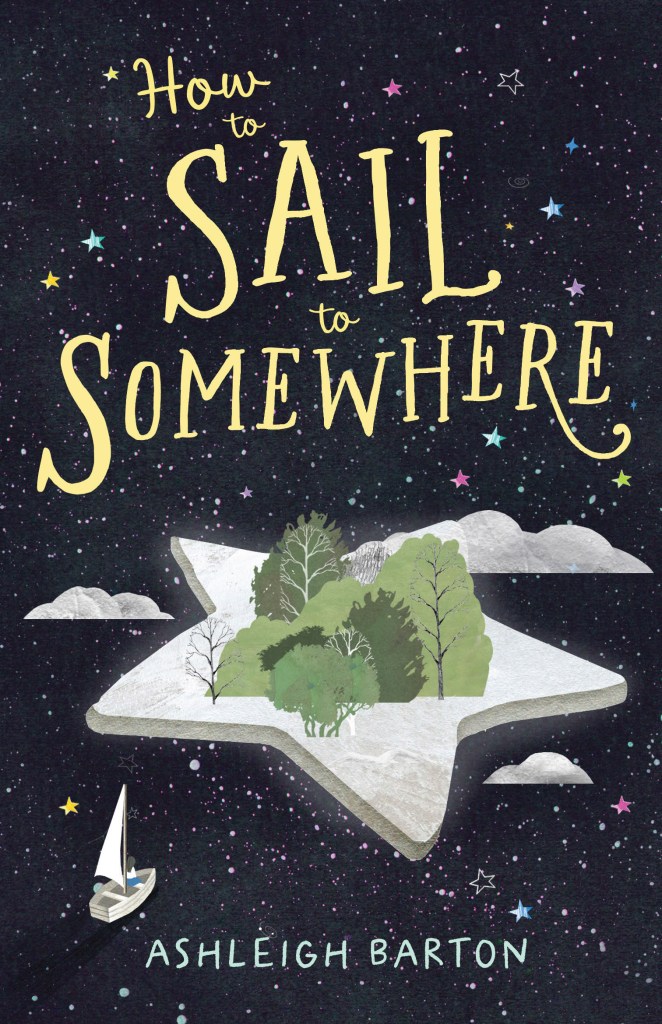
EIGHTY-NINE QUESTIONS FOR AFTER at Lothian Children’s Books
Review of Eighty-Nine Questions for After by Joy Lawn at Good Reading (link pending)
How to Sail to Somewhere at Paperbark Words
Solomon Macaroni at Paperbark Words


