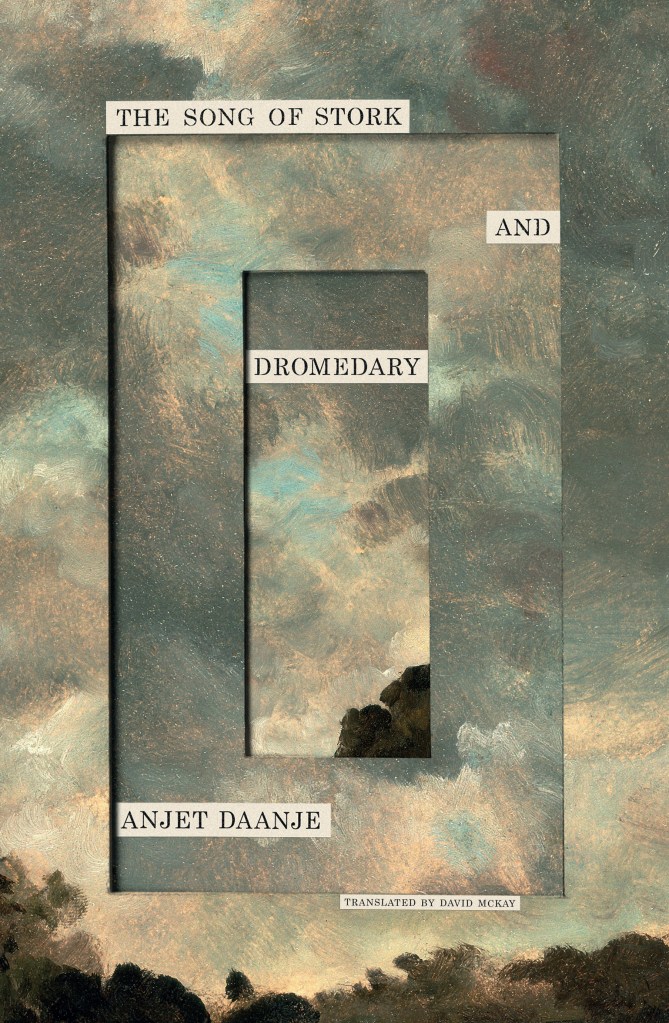
The Song of Stork and Dromedary by Anjet Daanje (translated by David McKay)
(Scribe Publications)
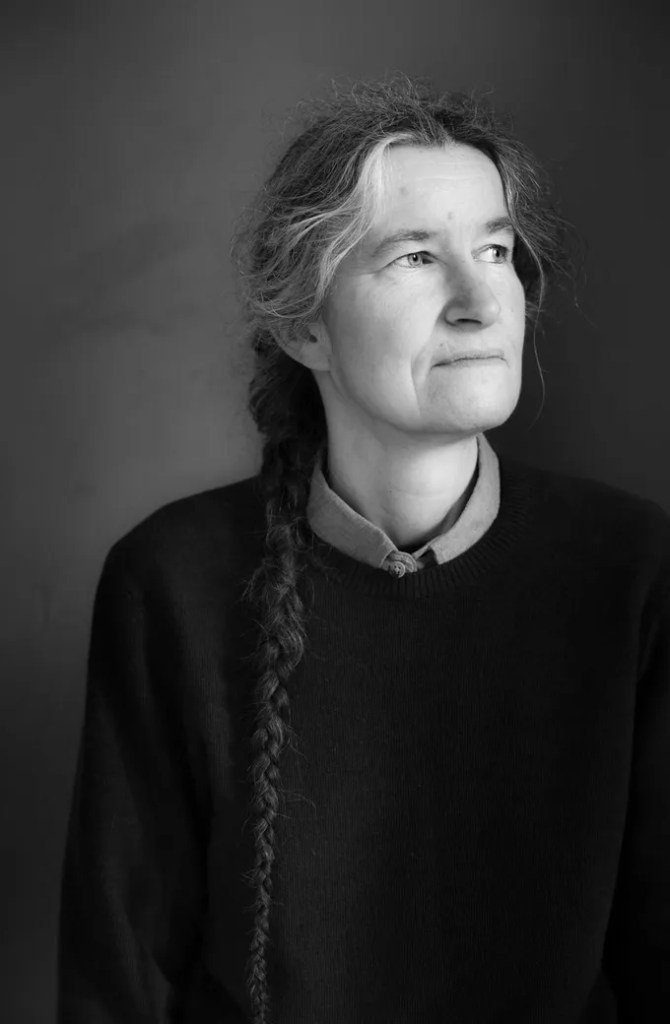
The Song of Stork and Dromedary is a masterful labyrinthine roman à clef. Dutch author, Anjet Daanje uses different voices and literary forms to inhabit sisters who represent the Brontë sisters, as well as others, to amplify their tale.
extract from The Song of Stork and Dromedary at PaperbarkWords blog:
(used with permission)
The Song of Stork and Dromedary by Anjet Daanje
(From chapter 2)
She was not the sole member of her remarkable family endowed with a talent for writing: Widow saw the light of day in the same year as Haeger Mass, by her younger sister Eliza May, who like Millicent published her sole novel under an androgynous pseudonym, in Eliza’s case Emery Drew. Both Widow and Haeger Mass caused a considerable sensation when first exposed to the public. Widow garnered particular praise and admiration and is now in its fifth edition.
There were whispers that Millicent Drayden was working on a second novel, the publication of which was ardently anticipated, but alas, it was not to be, in the brief and sorrowful life allotted her. Her début is all that remains to us of her genius.
I am cognizant of my good fortune in having taken the liberty of visiting Bridge Fowling one Sunday last year, a half-hour’s railway journey followed by an hour’s walk over hill and moor, culminating in a steep climb to the village on its precipitous perch, caked in soot and filth, blanketed in the smoke of several weaving mills, but possessing a magnificent view of the inhospitable Yorkshire hills. The parsonage, Millicent Drayden’s home till yesterday, is a gloomy place, situated directly beside the churchyard. Every glance out the window reminded her of Death.
In the church, I found a seat in the gallery. The clergyman preaching must have been Millicent Drayden’s husband, the Reverend Daniel Jennings, a man of stern aspect, not much above forty years old. But to my disappointment, I could not spot the woman for whom I had come. My eyes roamed the pews filled with farmers in rustic attire and factory workers, some of whom had succumbed to Morpheus, and at the remote end of the church, tucked under the gallery, between the altar and the wall, I descried a small, delicate woman dressed in deep mourning, seated in solitude on a pew intended for a family of six. Although I had never heard nor read a description of Millicent Drayden’s appearance, I knew in the twinkling of an eye that I beheld the author of Widow. She showed a remarkable similarity to Mercy Lee Everill, her novel’s protagonist: modest, but with uncommonly large, deep-set eyes and a penetrating look that betrayed the storms of passion concealed beneath that nondescript exterior.
After the service I wormed my way past the other churchgoers to the side door, which was close to Millicent Drayden’s pew. There I found her and was so bold as to address her. My frank demeanour took her by surprise, and at first she was a little provoked, I could see, but she recovered her composure when I offered a friendly introduction, told her how much I admired her novel, and explained that I had come to thank the writer who had granted me so many hours of unforgettable beauty. She laughed shyly and said in a soft, mellifluous voice, ‘Well, then, Mr Dwight, here I am.’ And she added in an ironic tone that my encounter with her must be a disappointment and hardly warranted the journey from Bradford. I assured her that she made the journey more than worthwhile, and that although I had thought myself unable to picture her, I could now see that she was precisely as she should be; whereupon she drew the acerbic conclusion that although she might not be a disappointment to me, she was to herself, for she found it terribly tedious to answer so exactly to anybody’s expectations. We broke into shared laughter, and I wish we could have bantered longer in that fashion, but her husband, Parson Jennings, broke in. When he had inquired who I was and learnt of my admiration for his wife’s work, he told me I was in the wrong place. ‘For her work is not here,’ he said, ‘but in your bookcase at home.’ He took her arm and led her outside without another word; she looked back for an instant before rounding the corner and nodded a cordial farewell.
Once the sting of her husband’s sharp reprimand had passed, it occurred to me that I would have done much the same in his place, and I saw her image before me again, as she had been when following him outside. I concluded that she was happy with him; like the heroine of her novel, she needed a strong man who could command her respect. If anybody deserved years of marital bliss, then surely it was she, after the deaths of her two parents and four sisters, and of course like any woman she preferred the simple joys of domestic life with her husband to the sterner satisfactions of writing, as disappointing as that may be to her readers.
I re-entered the church, in search of the stone beneath which Millicent Drayden’s entire family rests, and found it in the tiled floor between the altar and her pew. During every Sunday service, she must have read the sad series of names she knew so well and been aware that her loved ones were just beneath her feet. Inscribed in the stone was the name of her mother, Elizabeth Drayden, who died young, followed by those of Millicent’s two elder sisters, Sarah and Rebecca, and her younger sister Helen. Her father, the Reverend Robinson Drayden, and her most recent loss, her sister Eliza May, completed the mournful litany, and below them was just enough room for her own name, as if eternity were impatiently counting down her days. Below the austere names and dates of the other family members, I was struck by the inscription that accompanied Eliza’s name, no doubt added at Millicent’s request:
Eliza May Drayden
Died Dec. 12th 1847, in the 36th year of her age
Beloved sister of Millicent
Yes, Fancy, come, my Fairy love!
These throbbing temples softly kiss;
And bend my lonely couch above
And bring me rest, and bring me bliss.
Beneath those comforting lines, the stonecutter will soon chisel Millicent Drayden’s own name. She has passed away, but her stories live on in us.
May she rest in peace.
The Song of Stork and Dromedary at Scribe Australia (available 29/9/26 or pre-order through the Scribe website)