
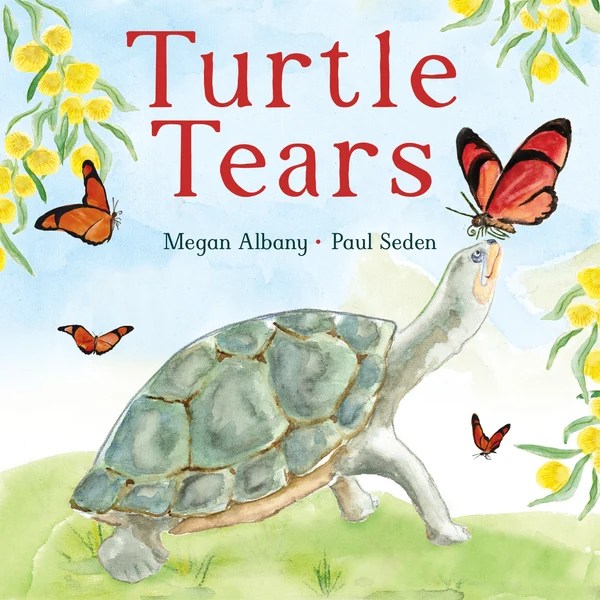
Turtle Tears by Megan Albany, ill. Paul Seden
(Magabala Books)
“ ‘We went all the way to Ecuador, in South America. The turtles there cry like we do,’ she says, wiping away a tear. ‘Except when they cry, butterflies flutter around and drink their tears.’”
(Turtle Tears)
Interview with Megan Albany, the author of Turtle Tears
Thank you for speaking to PaperbarkWords, Megan.
Could you please introduce yourself to us?
My name is Megan Albany and I’m a proud Kalkadoon woman living on the lands of the Minjungba and Nganduwal people of the Bundjalung Nation in the Northern Rivers of NSW. I’m a novelist, children’s author, journalist and songwriter, and I’ve always loved exploring the many different ways there are to tell a story. My first children’s picture book, Turtle Tears, illustrated by the wonderful Paul Seden, has just been published by Magabala Books. I love the curiosity children bring to stories and the profound and often hilarious words of wisdom that can come out of the mouths of babes when you’re sharing a picture book.
What is some of your background in stories, words and writing?
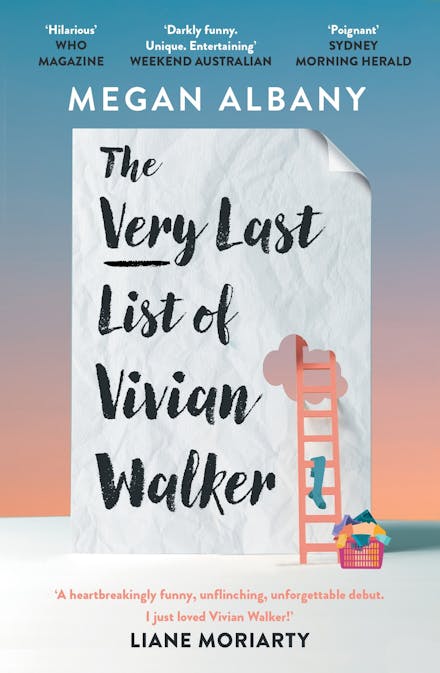
I’ve spent more than thirty years working with words, mostly as a journalist, although I’ve also written for television and theatre and spent many years writing songs. My first novel, The Very Last List of Vivian Walker, was published by Hachette in 2022, and my next novel, The Tuckshop Lady’s 12 Step Guide to Assimilation, has just been picked up by Bundyi, an imprint of Simon & Schuster – woohoo!
I’ve also recently completed a PhD in Creative Writing, exploring how Aboriginal humour can be used in fiction to talk straight about difficult subjects, particularly the incarceration of First Nations young people. As part of that research, I wrote a black comedy novel called Ten, which uses humour, irreverence, rage and love to confront the realities of our youth justice system.
I’m fascinated by how closely laughter and sadness can sit alongside one another, and I think that finds its way into most of the stories I tell, regardless of the age of my readers.
What gave you the idea for this story?
In some ways, Turtle Tears grew out of The Very Last List of Vivian Walker. While researching that book, I discovered that in South America there are butterflies that drink the tears of turtles. I was so taken with the image that it found its way into a conversation between Viv and her best friend, Aunty Sugar, which ends in them having a rather amusing disagreement about which of them is the turtle and which is the butterfly.
That image stayed with me long after I’d finished writing the novel. I kept thinking about what a beautiful metaphor it was for the way we share our sadness with those we love, and eventually it became the inspiration for my first children’s picture book.
What are turtle tears?
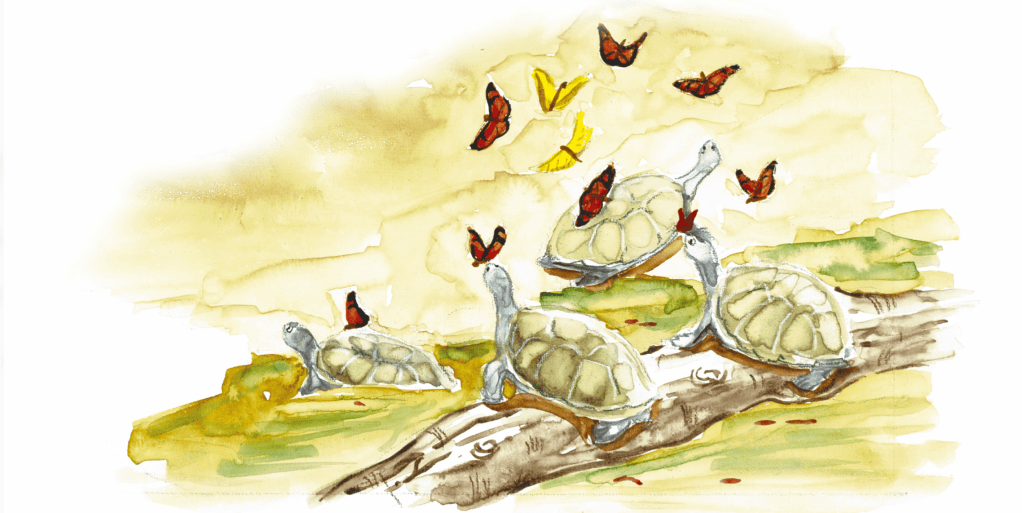
There’s a phenomenon in South America where turtles produce tears like humans do, although not necessarily for the same reasons. The scientific explanation for the turtles’ tears is it’s a way for them to release excess sodium. Sometimes nature comes up with far more extraordinary stories than anything we could imagine as writers.
What is the connection between turtles and butterflies?
When the turtles’ cry, butterflies, who need extra sodium, gather around them and drink their tears. While for scientists, that’s a perfectly good explanation for the relationship between turtles and butterflies, the storyteller in me likes to imagine that the butterflies are comforting the turtles.
There’s something quite magical about the idea of a creature as delicate as a butterfly being able to take away a little of someone else’s sorrow. I love the metaphor of grief becoming so much lighter when it’s shared and that something that sounds as though it belongs in a fairy tale is actually happening in the natural world.
How have you explored grief in a way that is helpful or comforting for young children in Turtle Tears?
I think Western culture can be uncomfortable talking about death and that, as adults, we sometimes feel we should shield children from this natural process. But children experience loss too, and by trying to protect them from grief we can inadvertently make them feel that their own sadness is something they need to hide.
In Turtle Tears, I explore what it feels like for a child to see the adults they love struggling with their emotions. The story begins after Ruby’s Pop has died and she notices that her Nan can’t stop crying. Rather than hiding her tears, Ruby’s Nan cries morning, noon and night. In fact, she cries so much that she even makes her chips soggy at dinnertime.
I wanted to allow room for humour to show that even in the midst of grief, there are often moments of laughter. I also wanted to show that there’s something comforting for children in knowing that grown-ups don’t always have all the answers and that it’s okay for all of us to cry.
How have you structured the story to give a sense of wonder, resolution or hope?
I love the way children can move so readily between the everyday and the extraordinary. I wanted to ground the story in the familiar world of a child and her family, while also drawing on the wonder of the natural world to explore something as complex as grief.
I think the challenge in writing a children’s book about grief is how to offer a sense of hope without suggesting that sadness is something that needs to be fixed. I didn’t want to write a story about how to stop being sad, but rather one about how we can be sad together.
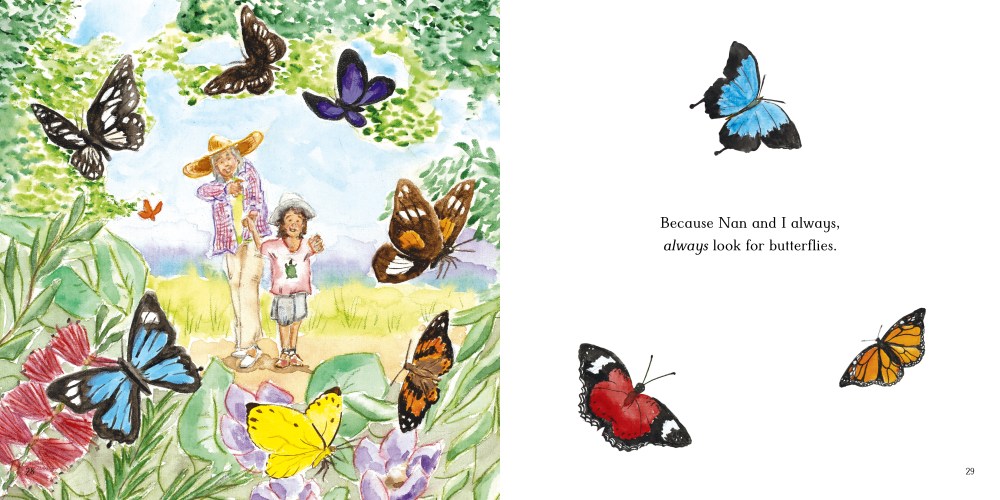
By the end of the book, Nan is still crying, but there’s a sense of hope in the fact that she and Ruby continue to look for butterflies together.
Which of Paul Seden’s watercolour illustrations particularly resonates with you? How or Why?
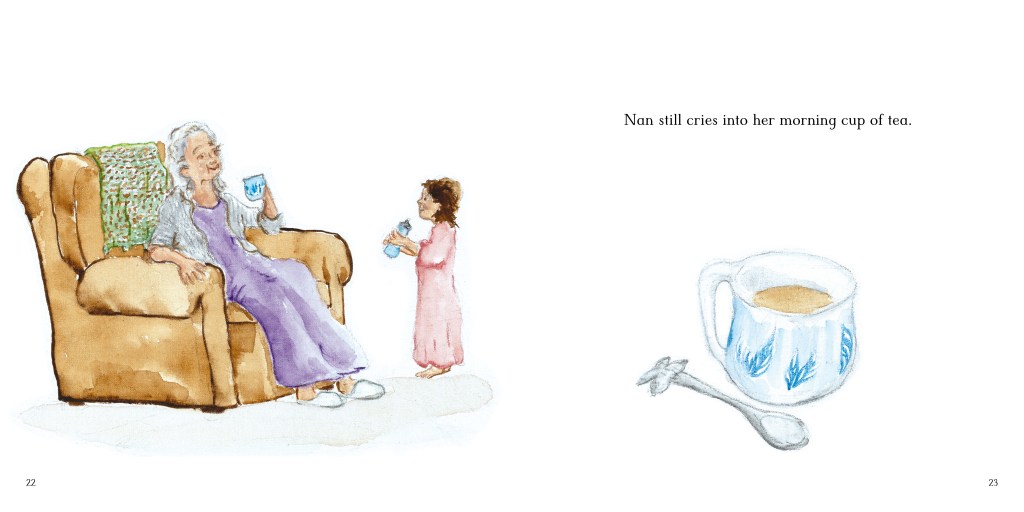
I particularly love the illustration early in the book where Nan is crying into her morning cup of tea. Paul has so beautifully captured Ruby’s emotions as she watches her Nan, unseen from the doorway. You can almost feel the weight of Nan’s sadness in Ruby’s little body.
I think it’s a lovely reminder of just how attuned children are to the emotions of those around them. Even when we don’t talk to children about grief, they feel it. It’s important that we notice and acknowledge their big feelings, rather than trying to shield them from our own.
While Paul has beautifully captured Nan’s sadness, there’s also something very self-contained about her sitting there with her grief, a cup of tea in her hand and a blanket over her lap. There’s a quiet dignity to the way she’s allowing herself to be sad. It’s also a wonderfully nostalgic image for me, capturing something of the slower, gentler pace of life I associate with my grandparents.
What do you hope children understand or remember from Turtle Tears?
I hope they remember that even if they feel helpless when someone they love is grieving, they don’t necessarily need to find the right words or try to cheer them up. I also hope they understand that sharing grief and crying together can help people feel less alone in their sadness. Sometimes you just need to be their butterfly.
What is a response from a reader that filled or warmed your heart?
I’ve had a couple of parents tell me that Turtle Tears has become their child’s favourite book and that they ask for it every night as their bedtime story. That surprised and delighted me, as I hadn’t really anticipated that a book about grief might become a child’s favourite. I’d like to think that, as well as finding comfort in the story, that they’re enjoying the humour in it.
There are books that were really formative for me as a child, and one of the great joys of becoming a parent was being able to share those stories with my now grown-up son.
The relationship children have with their favourite books can be a lifelong one, and it’s such a privilege as an author to be part of that experience. I love the thought that Turtle Tears might be a book a child looks back on fondly in years to come and that, who knows, might even offer them some comfort in their adult life.
What’s next from Megan Albany?
My next novel, The Tuckshop Lady’s 12 Step Guide to Assimilation, is due out in 2028, so it’s time to second-guess myself, pull my manuscript apart and then put it back together exactly the way it was. It’s a process otherwise known as editing! Thank goodness for the fabulous editorial team at Bundyi, not to mention endless cups of procrastination tea.
I’m also working on some more children’s picture books. One of the things I love about writing for children is that you can let your imagination run wild, safe in the knowledge that your readers’ imaginations will probably take them somewhere even more extraordinary.
In my spare time, when I could be cleaning my house, I’ve decided to give a little back through Write With Me, mentoring and coaching other writers who are crazy enough to embark on this writing adventure and who understand the peculiar joy of being wide awake at 3am with yet another ‘brilliant’ idea for their book.
Turtle Tears at Magabala Books


