
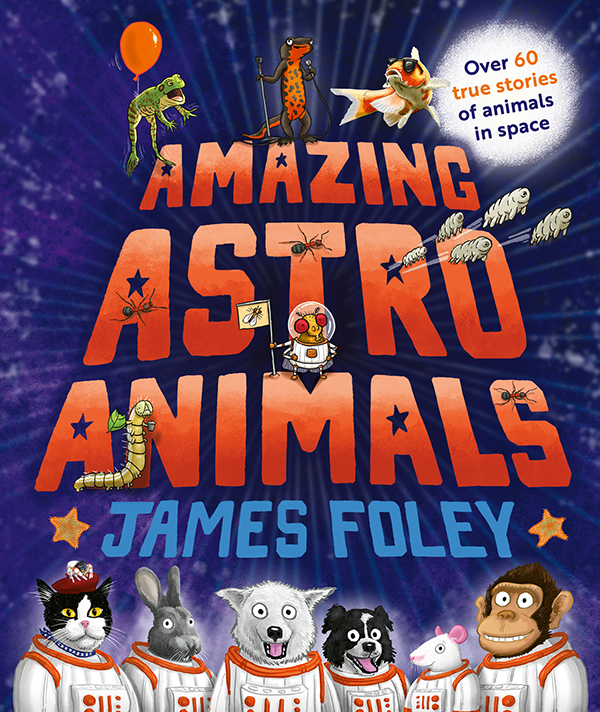
Amazing Astro Animals written and illustrated by James Foley
(Fremantle Press)
“Did you know that spiders have been to space?
So have bees and butterflies; bullfrogs and bobtail squid: quails and koi; geckoes, guinea pigs, goldfish; and a single solitary cat ….”
(Amazing Astro Animals)
Amazing Astro Animals is a master work. It is a comprehensive, fascinating compendium about creatures in space. I learned an enormous amount and it made me think.
Interview with James Foley, the creator of Amazing Astro Animals
Thank you for speaking with Paperbark Words, James.
Thanks, Joy!
How does Amazing Astro Animals tie in with any of your other works or books?
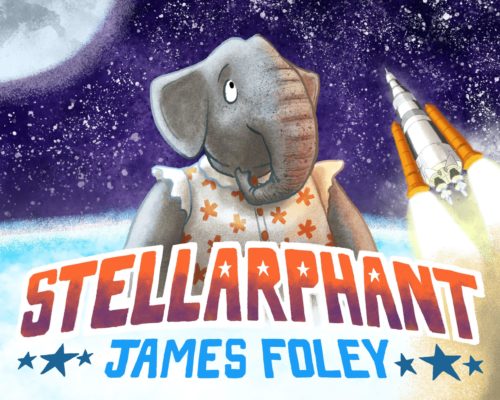
This is my very first non-fiction book, and it came out of research for my earlier picture book, Stellarphant. I kept finding more and more fascinating information about animals that had been to space in real life, and eventually I realised I wanted to turn it into a book.
What is the significance of your title Amazing Astro Animals (particularly the ‘Astro’ part)?
The book tells the true history of over 60 species that have been on space missions. There haven’t only been human astronauts; there have also been dogs and chimps and monkeys and mice and jellyfish and guinea pigs and frogs and a zoo-full of others.
What did you discover to be the most surprising creature to go to space? Intended or unintended? Why?
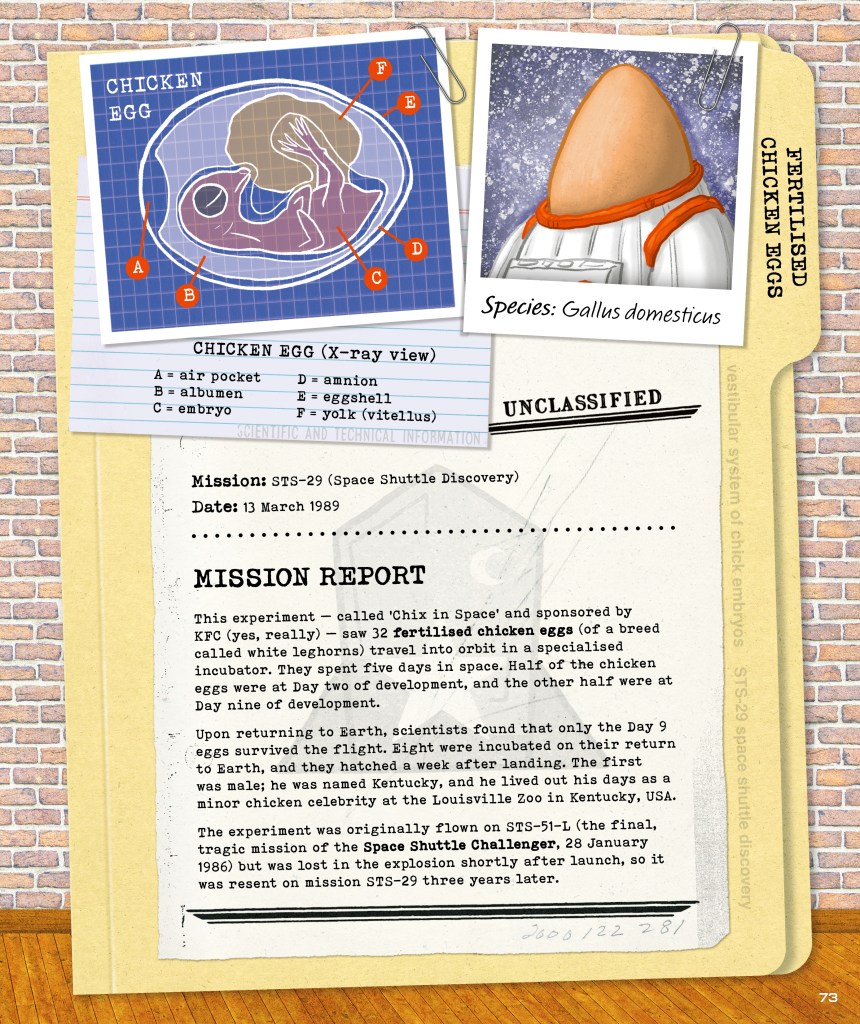
So many of them were surprising to me, because most are not well known to the general public. Even chicken eggs were once sent to space, and the experiment was sponsored by KFC (true!).
What is a surprising fact about training dogs or other animals to go to space?
The Soviet Union preferred to send dogs to space because they believed they were easier to train than primates. They sought out stray dogs as they thought they would be more resilient. They only chose female dogs as it was easier to fit them into suits that could manage their waste.
Which creature (or their story) do you have a soft spot for? Why?
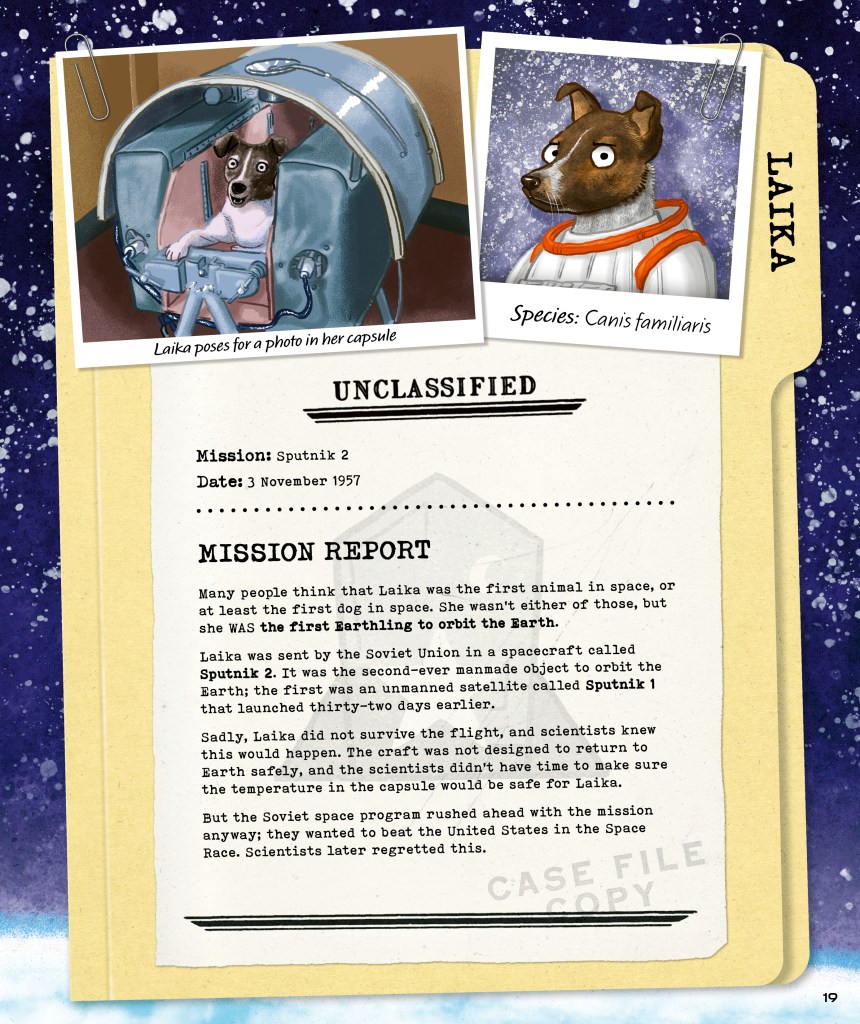
I feel very strongly for Laika; she’s one of the most widely known stories of an animal going to space, and also one of the most tragic. The Soviet space program knew that they didn’t have a way to bring Laika back home, but in their haste to bet the USA in the Space Race, they sent her anyway. It is a terribly sad story and I’m sure I’m not alone in wishing that the story had ended differently.
What is an ethical consideration when sending animals to space?
These days most animals that go to space come back safely. Scientists mostly send fish and insects these days; there are no more dogs or primates being sent up.
We may be aware of the American and Russian space race – and you cover this well in the book. Could you tell us something about Japanese or Chinese space study?
The little I know about Japanese space research involves them cooperating with NASA and the European Space Agency to put experiments on the space shuttles or the International Space Station. In contrast, the Chinese space program is solitary in its efforts, and very difficult to find information about (potentially due to my language barrier).
What have you discovered about life on the moon possibly becoming sustainable?
The Artemis program is so exciting! One way in which NASA hopes to make a lunar habitat sustainable is by finding ice in craters on the Moon’s south pole, and using it to set up aquaculture. It is entirely possible that lunar astronauts could farm fish as a protein source.
How or when can a symbiotic relationship during space travel be helpful?
When it comes to humans, we have a symbiotic relationship with the bacteria living in our digestive systems. The bacteria help us digest our food and provides an absolutely vital role in our health. Because the space environment is so different to life on Earth, scientists have to be sure that the bacteria in the guts of astronauts will continue to do their job properly and won’t be adversely affected by microgravity, radiation, etc.
What has been a benefit of space travel on a living creature?
In many of the short-term experiments I read about, the effect was neutral; animals would take a few days to adapt to weightlessness, but then would go about their lives as normally as possible. Silkworms have spent time in space, and experiments showed they tended to live a couple of days less than if they were on Earth, though their silk was longer and stronger. We know that for humans, the longer they spend in the space, the worse the effect on their health; they lose muscle mass and bone density quite rapidly in microgravity, so must exercise for several hours every day. However many astronauts talk about the positive psychological effect that comes from seeing the entire planet laid out before them; they realise that borders don’t exist and that all humans are one.
It’s exciting that high school students have played a part in advancing space study and travel. Could you briefly tell us something about one of these?
John Vellinger was in year 8 when he suggested sending chicken eggs to space. It took 10 years to get the experiment ready, by which time he was in college and able to practically assist with running the experiment, including developing and building the incubator. Many other students have suggested experiments, leading to the space flights of bees, moths, sea stars, ladybugs and jumping spiders!
What is another interesting fact that you uncovered?
The Soviets once had a trained dog run away on the morning of its space mission launch, so they found a random stray dog and put it in the rocket instead. It coped just fine and survived the mission, then was adopted afterwards!
The book is full of facts and fun. How have you incorporated humour into the book?
I like to make jokes, so it was natural for me to try to see the funny side where possible; I think it’s important to have humour, particularly with non-fiction, which can become quite dry otherwise. So I’ve included lots of little cartoon drawings throughout the book.
Your structure, composition and content is phenomenal. It even includes comics. What is an example of one of these at page level that you are particularly pleased with? Why?
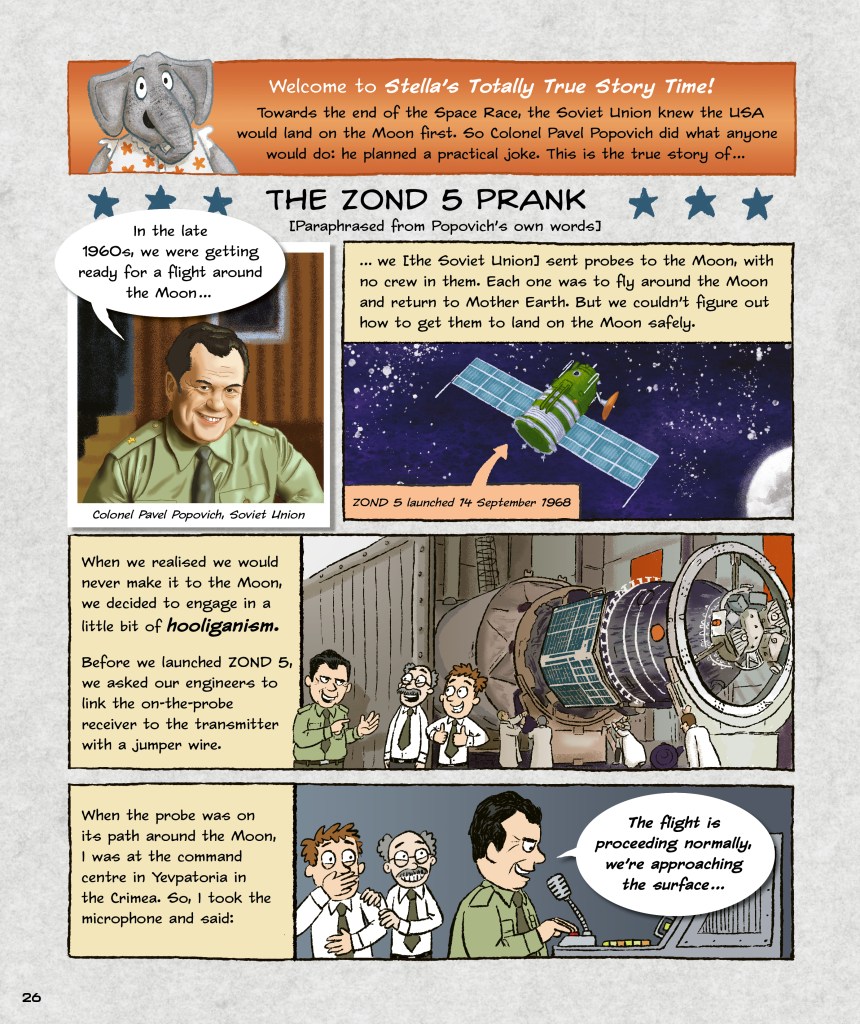
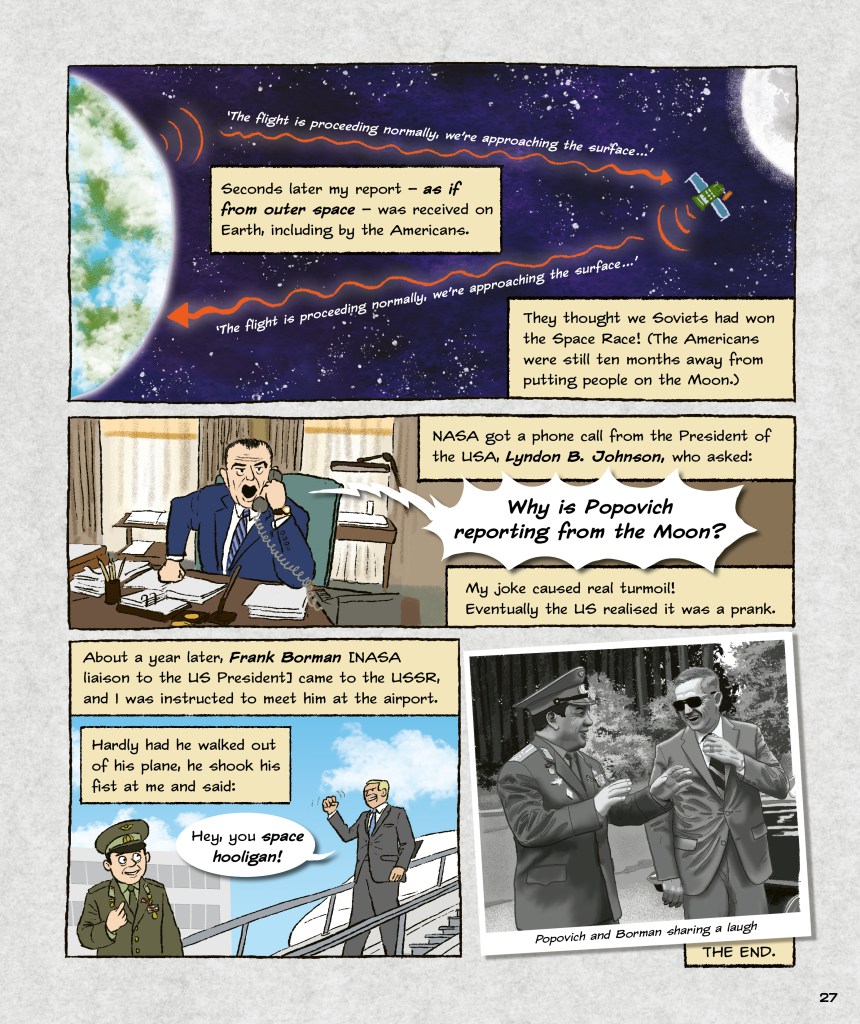
Thank you! I wanted to include some comics as a way to break up the structure of the book, but also because there were some stories that were easier to tell visually. So the story of the random stray dog was included as a comic; as was the missions of Soviet mannequin Ivan Ivanovich; plus the time that the Soviets pranked the USA into thinking they were making a surprise early landing on the Moon. These were so much fun to research and retell.
Thanks so much for your generous responses, James, and particularly for your amazing book.
Amazing Astro Animals at Fremantle Press
James Foley at Paperbark Words blog:


